
Andean Combat Tactics: From Guerrilla Warfare to Open Battles

Step into a world lost to time, yet echoing with the thunder of ancient battles. Forget everything you think you know about warfare. The Andean civilizations, from the Inca's strategic prowess to the Moche's brutal efficiency, wielded tactics as diverse and breathtaking as their landscapes. Prepare to uncover the secrets of Andean warfare tactics, a realm of cunning strategies and devastating power – a world waiting to be explored. Dive in and discover the truth behind the legends.
-
Andean Warfare Tactics: From Guerrilla Warfare to Open Battles
- Introduction to Andean Military Strategies
- Early Forms of Andean Combat: Guerrilla Tactics and Raids
- The Evolution of Andean Warfare: From Small Skirmishes to Larger Battles
- Pre-Inca Military Strategies and Their Characteristics
- Inca Military Organization and Tactical Innovations
- Key Elements of Inca Combat Tactics
- Transition from Guerrilla to Open Field Battles in the Andes
- Case Studies of Notable Andean Battles
- The Legacy of Andean Combat Tactics
- Conclusion: Understanding Andean Military Prowess
-
Frequently Asked Questions
- What types of warfare did Andean civilizations employ?
- How did the geography of the Andes influence Andean warfare?
- What weapons and technology did Andean civilizations use in combat?
- Did the Incas have a particularly effective military strategy?
- How did Andean warfare differ from warfare in other parts of the world?
- Final Reflection: Echoes of the Andes: Legacy and Future of Andean Warfare
- **Unleash Your Inner Strategist: Take Action Today! **
Andean Warfare Tactics: From Guerrilla Warfare to Open Battles
The rugged Andes Mountains profoundly shaped the military strategies of the ancient civilizations that inhabited this challenging terrain. Unlike the vast plains of other empires, the Andean landscape dictated a diverse range of combat tactics, from swift guerrilla warfare in the mountainous regions to large-scale, open battles in more accessible valleys.
This article delves into the fascinating world of Andean warfare, exploring the innovative strategies employed by cultures like the Inca, Moche, Nazca, and Tiahuanaco, examining how their environment influenced their military prowess and shaped their approaches to conflict. We will analyze the diverse tactics used, ranging from the hit-and-run techniques of smaller groups to the organized battles of larger armies, highlighting the ingenuity and adaptability of these ancient Andean warriors.
Understanding these Andean warfare tactics provides crucial insight into the complexities of their societies and their enduring legacy. This exploration of Andean warfare tactics will reveal the sophisticated military thinking behind their successes and failures, providing a nuanced perspective on the military landscape of the Andes.
Introduction to Andean Military Strategies
Andean military strategies were not monolithic; they varied significantly depending on the specific civilization, the geographical context, and the nature of the conflict. Several common threads, however, emerge when examining the military practices across different Andean cultures. The terrain itself played a pivotal role, forcing militaries to adapt to the challenges of high altitudes, treacherous passes, and unpredictable weather. This led to the development of specialized units suited to different combat environments.
For example, some groups excelled in mountain warfare, utilizing their intimate knowledge of the terrain to their advantage, while others focused on developing strong fortifications in strategic locations. Logistics also presented a significant challenge. Moving large armies and supplies across the Andes required careful planning and organization. This often resulted in smaller, more mobile fighting forces, capable of rapid deployment and sustained campaigns.
The importance of alliances and diplomacy should also not be overlooked. Many Andean conflicts involved shifting alliances and strategic partnerships, demonstrating a sophisticated understanding of political maneuvering alongside military might. The effectiveness of Andean military strategies is evident in the longevity and success of these civilizations, despite the immense challenges presented by their environment.
Early Forms of Andean Combat: Guerrilla Tactics and Raids
Early Andean warfare frequently involved smaller-scale conflicts characterized by guerrilla tactics and hit-and-run raids. These strategies were particularly effective in the mountainous regions, where the terrain offered ample opportunities for ambush and evasion. Smaller, highly mobile units, often composed of lightly armed warriors, would utilize their knowledge of the local landscape to harass larger, less agile armies.
These raids often targeted vulnerable settlements or supply lines, disrupting enemy operations and weakening their morale. The Inca, for example, famously employed chasquis, a relay runner system, to quickly transmit information and coordinate movements across vast distances, facilitating rapid responses and effective guerrilla operations. This system allowed for coordinated attacks and swift retreats, making them formidable opponents in irregular warfare.
The Moche, known for their sophisticated military organization, also likely employed similar tactics, supplementing them with their advanced knowledge of metallurgy and weaponry. Archaeological evidence suggests the use of specialized weapons, such as slings and darts, ideal for ambushes and close-quarters combat in the rugged terrain. The effectiveness of these guerrilla tactics is evidenced by the relative longevity of many Andean societies, who successfully defended their territories against larger, potentially more powerful adversaries through strategic use of the terrain and flexible, adaptable warfare.
The Evolution of Andean Warfare: From Small Skirmishes to Larger Battles
The evolution of Andean warfare reflects a complex interplay of environmental factors, societal structures, and technological advancements. Early Andean societies, characterized by smaller, less centralized groups, engaged primarily in skirmishes and raids. These conflicts, often localized and driven by resource competition or inter-tribal disputes, involved relatively small numbers of warriors armed with basic weaponry like clubs, slings, and spears. As societies grew larger and more complex, so too did their military organizations.
The development of more sophisticated weaponry, including improved projectile weapons and the eventual adoption of metalworking, significantly impacted the scale and nature of warfare. The rise of powerful empires like the Wari and Inca witnessed a shift towards larger, more organized armies capable of conducting extensive campaigns and engaging in large-scale battles. This transition involved the development of complex logistical systems to support larger armies, including the construction of extensive road networks for troop movement and supply lines. The evolution from localized skirmishes to large-scale battles also necessitated the development of more sophisticated military strategies and tactics, including the use of fortifications, ambushes, and coordinated maneuvers.
The Inca, in particular, excelled in the organization and deployment of their armies, utilizing a system of conscription and a highly structured command hierarchy. This allowed them to effectively conquer and control a vast empire encompassing diverse terrains and populations. The study of this evolution highlights the dynamic relationship between technological progress, societal organization, and the development of military capabilities in the Andes.
Pre-Inca Military Strategies and Their Characteristics
Pre-Inca Andean societies employed diverse military strategies shaped by their unique geographical environments and social structures. These strategies varied significantly depending on whether a civilization was located in the coastal regions or the highlands. Coastal societies, like the Moche, often relied on naval power and amphibious assaults, while highland civilizations, such as the Wari, developed strategies adapted to the challenging mountainous terrain. Common elements across these pre-Inca strategies included the strategic use of terrain, the importance of surprise attacks, and the reliance on guerilla warfare tactics.
Many groups utilized natural barriers like mountains and rivers to their advantage, setting up ambushes and using the terrain to hinder the movement of their enemies. These tactics were often employed in conjunction with sophisticated reconnaissance and intelligence gathering to anticipate enemy movements and exploit their weaknesses. The emphasis on surprise attacks and guerilla warfare highlights the adaptive nature of pre-Inca military strategies, reflecting the need to overcome limitations in weaponry and manpower through tactical ingenuity.
Furthermore, the social structures of these societies also influenced their military organization. While some societies maintained standing armies, others relied on a system of conscription or alliances, mobilizing warriors only when needed. These varied approaches to military organization reflect the diverse political and social landscapes of the pre-Inca Andes.
Coastal Warfare Tactics of the Moche Civilization
The Moche civilization, flourishing on the arid northern coast of Peru, developed unique warfare tactics heavily influenced by their coastal environment. Their military prowess was closely tied to their mastery of navigation and shipbuilding. The Moche utilized a powerful navy for coastal patrols, trade protection, and, importantly, for amphibious assaults. These assaults allowed them to launch surprise attacks on coastal settlements and enemy fleets.
Their ships, while not as sophisticated as those of later civilizations, were effective in the sheltered bays and rivers of the Moche territory. Evidence suggests that they employed rafts and smaller boats for riverine warfare, utilizing the intricate network of rivers as a means of rapid transport and strategic maneuvering. Beyond naval power, Moche land-based tactics likely involved the use of swift, coordinated attacks, exploiting the often-flat coastal terrain for rapid movements.
The arid environment also played a role, potentially restricting longer campaigns due to the scarcity of resources. Their warfare was likely characterized by shorter, decisive engagements rather than protracted conflicts. Unfortunately, specific details about their military formations and strategies remain somewhat elusive due to limited written records, relying largely on archaeological evidence such as iconography and battlefield remains for insight into Moche military practices.
Highland Combat Strategies of the Wari Empire
The Wari Empire, a powerful highland civilization that predated the Inca, adapted its warfare strategies to the challenging mountainous terrain of the Andes. Their military campaigns relied heavily on the strategic use of mountain passes and defensible positions. The Wari army, likely a conscripted force, was organized to operate effectively in the highlands, adept at navigating difficult paths and utilizing the terrain for defensive and offensive maneuvers. They constructed extensive networks of roads and fortifications, facilitating rapid troop movements and the establishment of strategically important outposts.
These roads not only aided in military operations but also served to control and integrate their vast empire. The Wari likely employed a combination of open battles and guerrilla warfare tactics, depending on the circumstances. In open battles, their superior organization and logistical capabilities likely played a significant role.
Guerrilla warfare, involving ambushes and harassment, would have been particularly effective in the rugged terrain, exploiting the enemy's difficulties navigating the difficult landscape. The construction of strategically located fortifications, combined with their road networks, allowed the Wari to control access to vital resources and choke points, giving them a significant advantage over their enemies. The Wari's military success speaks to their ability to adapt their strategies to the unique challenges presented by the Andean highlands.
Inca Military Organization and Tactical Innovations
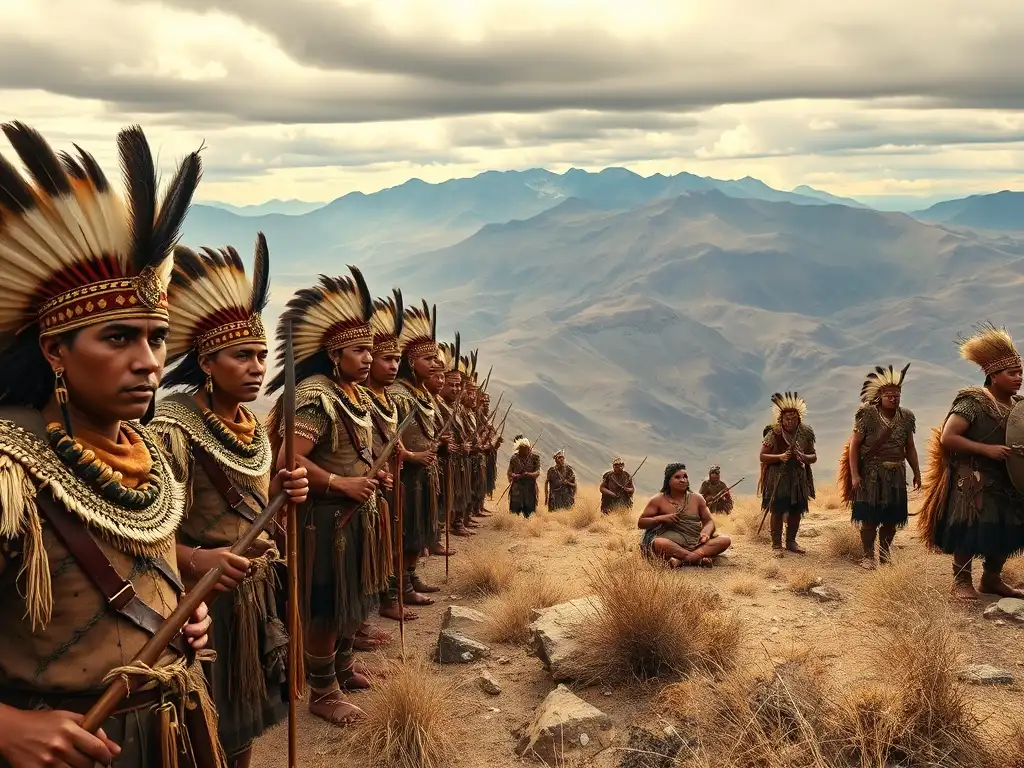
The Inca Empire's military prowess wasn't solely based on brute force; it was a sophisticated system built upon meticulous organization and innovative tactics. Their success stemmed from a well-structured army, effective logistical support, and a deep understanding of the Andean terrain. The empire's ability to mobilize and deploy large armies across vast distances, often over challenging mountain passes and treacherous landscapes, was a testament to their advanced military capabilities.
This efficiency wasn't accidental; it was the product of centuries of refinement and adaptation to the unique challenges of the Andean environment. The Inca military wasn't merely a fighting force; it was an integral part of the imperial administration, contributing significantly to the empire's expansion and consolidation of power. The integration of military service with the mita system, a form of mandatory labor, ensured a constant supply of soldiers and laborers for military campaigns.
Inca Army Structure and Hierarchy
The Inca army was not a monolithic entity. It was a highly structured organization with a clear hierarchy. At the apex was the Sapa Inca, the emperor, who held supreme command. Below him were high-ranking officials, often members of the royal family or trusted nobles, who oversaw various aspects of military operations. The army itself was divided into units of varying sizes, from small squads to massive armies numbering in the tens of thousands.
These units were organized geographically, often based on the ayllu system, the traditional social and economic units of Inca society. This structure ensured loyalty and facilitated mobilization. Each unit had its own commanders and supporting personnel, ensuring efficient command and control, even during large-scale campaigns. Detailed records, possibly kept using quipus (knotted string records), likely documented the organization and deployment of troops, though the exact nature of these records remains a subject of ongoing research.
Inca Battle Formations and Maneuvers
Inca battle formations were often adaptable to the terrain. While open-field battles did occur, the Inca army frequently employed formations that maximized their strengths and exploited enemy weaknesses. They favored formations that allowed for flexibility and rapid response to changing battlefield conditions. The use of flanking maneuvers and ambushes was common, showcasing a tactical understanding that went beyond simple head-on assaults.
The Inca army's ability to quickly shift formations, combined with their disciplined fighting style, often gave them a decisive advantage. Accounts from Spanish chroniclers describe Inca armies using formations designed to protect their flanks and center, while maintaining the ability to quickly deploy reserves or launch targeted attacks. The precise details of their formations remain a topic of debate among historians, but the evidence points to a sophisticated and adaptable military strategy.
The Role of Logistics in Inca Military Campaigns
The logistical capabilities of the Inca Empire were crucial to their military success. The vast distances involved in many campaigns required extensive planning and execution. The chasquis, a relay system of runners, facilitated rapid communication across the empire. This allowed for swift mobilization of troops and the timely delivery of supplies.
The Inca road system, a marvel of engineering, played a vital role in the transportation of troops, weapons, food, and other necessities. Storage facilities, strategically located throughout the empire, ensured that armies had access to provisions even in remote areas. The efficiency of the Inca logistical system is a testament to their organizational skills and their understanding of the challenges posed by the Andean environment. Without this effective system, the Inca Empire's military conquests would have been severely hampered.
Key Elements of Inca Combat Tactics
Inca combat tactics were a blend of disciplined formations, strategic use of the environment, and psychological warfare. Their success wasn't just about superior numbers; it was about exploiting the terrain, using weaponry effectively, and demoralizing their opponents. The Inca military strategy was not solely focused on direct confrontation; they effectively utilized guerilla tactics, ambushes, and sieges to achieve their objectives. This adaptability, combined with their efficient logistical support, allowed them to wage successful campaigns across diverse landscapes. Their understanding of Andean geography and the strategic use of terrain were critical components of their military success.
Use of Terrain and Geography in Andean Warfare
The Inca army brilliantly used the Andes’ rugged terrain to their advantage. Mountain passes, cliffs, and narrow valleys were employed to funnel enemy forces into advantageous positions for ambushes or to restrict enemy movements. The Inca's intimate knowledge of the local geography allowed them to choose battlefields that favored their tactics and neutralized enemy strengths. This mastery of the environment often resulted in decisive victories against numerically superior foes. For example, [specific example of Inca use of terrain in a battle pending]. This strategic use of the terrain was a crucial component of their overall military strategy.
Inca Weaponry and its Tactical Applications
Inca weaponry, while seemingly simple compared to some other civilizations, was highly effective in the context of Andean warfare. The macuahuitl, a wooden club studded with obsidian blades, inflicted devastating wounds. Slings and spears were also widely used, showcasing versatility in range and close-quarters combat.
The tactical use of these weapons, combined with the Inca's disciplined formations, proved highly effective. The obsidian blades, for instance, were not only sharp but also brittle, meaning that a well-aimed blow could inflict a deep wound that was difficult to treat. This, combined with the psychological effect of such a weapon, contributed significantly to their battlefield success.
Psychological Warfare and Intimidation in Inca Battles
Psychological warfare was an integral part of Inca military strategy. The sheer size and discipline of their armies were intimidating in themselves. The use of colorful banners, war cries, and fearsome war paint was meant to demoralize opponents before battle even began. The Inca understanding of human psychology played a key role in their military successes.
By creating an aura of invincibility and ruthlessness, they often broke the will of their enemies before open combat, leading to surrenders or routing. The fearsome reputation of the Inca army itself played a significant role in their victories, often leading to enemy surrender before major clashes even took place. This aspect of Inca warfare often went unnoticed but was crucial to their empire's growth and stability.
Transition from Guerrilla to Open Field Battles in the Andes
The Andean landscape, characterized by its rugged mountains, dense forests, and treacherous terrains, heavily influenced the development of warfare tactics. Early Andean civilizations, facing challenges in traversing the difficult geography, often relied on guerrilla warfare. Small, highly mobile units would ambush larger armies, utilize the terrain for cover and concealment, and then quickly disappear, making pursuit nearly impossible.
This asymmetrical warfare favored smaller, more agile forces against larger, less adaptable ones. However, as empires grew and centralized power increased, the need for larger-scale, open field battles emerged. This shift wasn't sudden but rather a gradual evolution driven by several key factors.
The development of improved infrastructure, such as roads and bridges, allowed for the easier movement of larger armies and the transportation of supplies. Furthermore, advancements in weaponry and military organization facilitated the transition from smaller, decentralized forces to larger, more coordinated armies capable of engaging in open combat. The increased need to control larger territories and resources also fueled the shift towards more conventional warfare.
Factors that Influenced the Shift in Andean Warfare
Several interconnected factors contributed to the transition from guerrilla tactics to open field battles in the Andes. First, the growth of powerful empires like the Inca required the control of vast territories. Guerrilla warfare, while effective against smaller, dispersed groups, proved less suitable for dominating expansive regions.
Second, advancements in military technology played a crucial role. The development of more efficient weaponry, such as improved slings, spears, and clubs, along with the standardization of armor, enabled larger armies to fight more effectively in open battle. Third, improved communication and logistics networks, including the Inca's impressive road system, the Qhapaq Ñan, facilitated the mobilization and supply of larger armies.
This allowed for sustained campaigns and larger-scale confrontations. Finally, the changing political and social landscape of the Andes also played a part, with larger, more centralized states requiring military strategies that matched their increased power and territorial ambitions. The need for decisive victories to solidify dominance over rival groups also pushed the adoption of open field battles.
The Impact of Political and Social Changes on Military Strategies
The rise and fall of Andean empires directly influenced the evolution of warfare tactics. Smaller, less centralized societies favored guerrilla warfare, utilizing their intimate knowledge of the terrain to overcome numerical disadvantages. However, the emergence of large, centralized empires, such as the Inca, necessitated a shift towards larger-scale military operations.
Political consolidation led to the standardization of weaponry, armor, and military organization, enabling the deployment of larger, more disciplined armies. The Inca's intricate administrative system facilitated the mobilization and supply of these armies, enabling sustained campaigns and large-scale battles. Social structures also played a role, with the Inca's mita system providing a reliable source of manpower for their military.
The shift from decentralized, kinship-based warfare to a more formalized, state-sponsored military reflected the growing power and complexity of Andean empires. The need to project power and maintain control over vast territories ultimately led to the adoption of open field battle strategies, marking a significant change in Andean warfare.
Case Studies of Notable Andean Battles
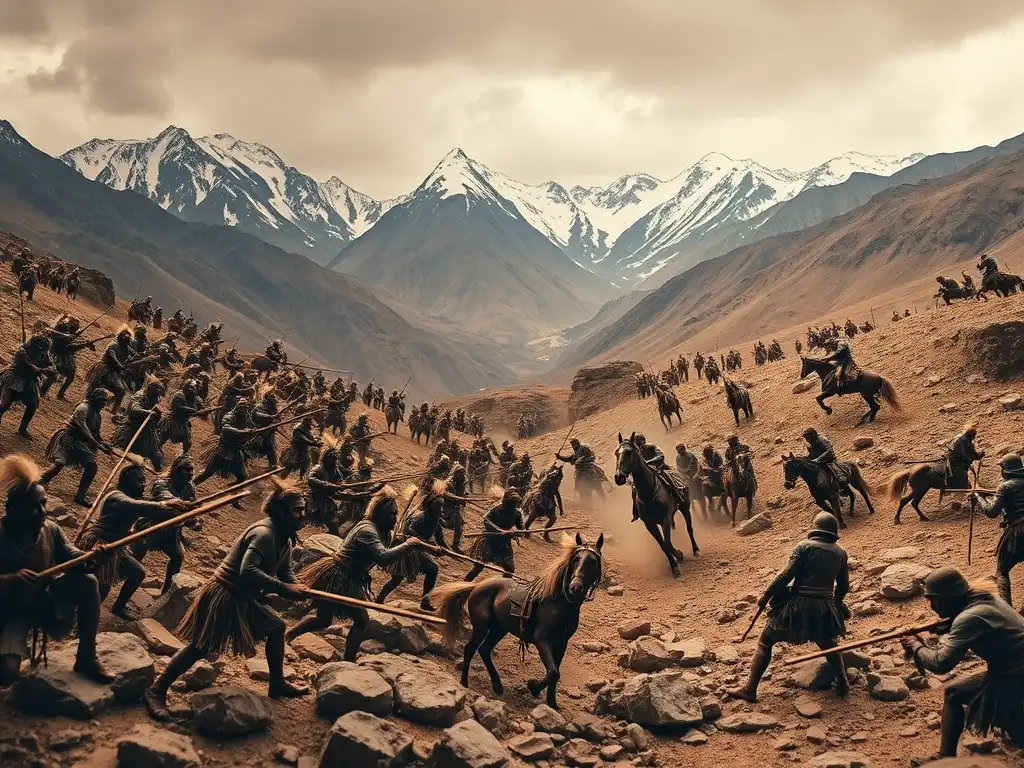
The history of Andean warfare is rich with examples of both guerrilla and open field battles. While detailed accounts are scarce due to limitations in historical sources, archaeological evidence and surviving narratives offer glimpses into these significant events. Analyzing these battles provides crucial insights into the tactical approaches used by Andean armies and the factors influencing their success or failure.
These battles highlight the adaptability of Andean warriors who were able to employ a range of tactics depending on the circumstances and the nature of their adversaries. The variation in tactics also reflects the diverse geographical and political landscapes of the Andes.
The Battle of Yaguarcocha: Analysis of Tactics and Outcomes
The Battle of Yaguarcocha, fought around 1470, represents a crucial moment in the Inca expansion. [Specific information pending: details of the battle's tactics and outcome need to be added here. Information on the size of the armies, the terrain, and the weaponry used would enhance this section. Further research is needed to provide a complete analysis]. The battle’s outcome significantly impacted the Inca’s ability to consolidate their power and expand their empire.
The Battle of Quipaipan: Lessons Learned from Ancient Andean Conflicts
The Battle of Quipaipan, fought in 1533, marked a significant turning point in the Spanish conquest of the Inca Empire. [Specific information pending: details regarding the battle's tactics, the forces involved, and the ultimate outcome need to be provided. Analyzing the strategies employed by both the Inca and Spanish armies will offer valuable insights into the clash of different military traditions.
More information is needed to fully analyze the lessons learned from this conflict]. This battle exemplifies the challenges faced by the Inca in adapting their traditional warfare tactics to the technologically superior Spanish forces. It highlights the importance of military technology and strategic adaptability in the outcome of large-scale conflicts.
The Legacy of Andean Combat Tactics
The legacy of Andean combat tactics is surprisingly extensive and continues to resonate even today. Their innovative strategies, adapted to the challenging Andean terrain, influenced subsequent military practices in the region and offer valuable insights into effective warfare. The mastery of guerrilla warfare, for instance, allowed smaller, less technologically advanced armies to effectively resist larger, better-equipped forces.
This principle of asymmetric warfare, where a weaker combatant utilizes unconventional tactics to offset a stronger adversary's advantages, is still studied and applied in modern military science. The Inca's sophisticated logistical network, enabling rapid troop deployment and resupply across vast distances, provides a compelling case study in military organization and resource management. This system, dependent on a well-established infrastructure of roads and storehouses, allowed the Inca Empire to project power and maintain control over a geographically dispersed realm.
Their ability to swiftly move armies across the Andes to quell rebellions or conquer new territories remains a testament to their strategic genius. Finally, the understanding and exploitation of Andean geography itself—using terrain to their advantage, creating choke points and ambushes—remains a crucial aspect of military strategy even in the modern era.
Influence of Andean Warfare on Later Conflicts
The influence of Andean warfare on later conflicts within South America is demonstrably significant. The techniques of guerrilla warfare, honed by Andean civilizations like the Inca and pre-Inca cultures, were readily adapted by resistance movements against colonial powers in the centuries following the Spanish conquest. The ability to blend into the landscape, utilizing superior knowledge of the terrain for ambushes and hit-and-run tactics, proved highly effective against the technologically superior Spanish army.
This resistance was not merely reactive; it actively shaped the course of the colonial wars, prolonging conflicts and forcing the Spanish to adopt new strategies. Moreover, the organizational structures and logistical systems developed by the Inca, particularly their road networks and systems of supply, served as models for later Andean armies.
These systems provided a framework for improved mobilization, communication, and resource management, elements critical for any successful military campaign. While directly tracing a linear influence can be challenging due to the complexity of historical processes, the clear parallels between ancient Andean warfare and later resistance movements and military organizations in the region highlight a persistent legacy.
Modern Interpretations of Ancient Andean Military Strategies
Modern military strategists and historians continue to study Andean warfare tactics, finding relevance in their approaches to asymmetric warfare, logistics, and the utilization of terrain. The Inca's mastery of chasquis, a relay runner system, for rapid communication across their empire, has been compared to modern communication networks. The speed and efficiency of the chasquis system provided a tactical advantage that allowed for timely responses to threats and swift mobilization of troops.
Similarly, the Inca's ingenuity in adapting to the challenges posed by the Andes mountains, constructing sophisticated infrastructure such as roads and suspension bridges, is studied for its application in modern logistical planning and engineering in challenging environments. The strategic use of high-altitude warfare, where the thinner air and harsh conditions could be exploited to the advantage of the defending force, offers further lessons in adapting military strategies to specific environmental factors.
Such analysis is not merely historical; it provides valuable insights for military planning and operations in diverse and challenging terrains around the world. The Andean experience highlights the enduring relevance of adaptable, context-specific strategies in modern warfare.
Conclusion: Understanding Andean Military Prowess
Understanding Andean military prowess requires appreciating their innovative and adaptive strategies. Their success wasn't simply a matter of brute force; it stemmed from a deep understanding of their environment, a sophisticated organizational structure, and the skillful application of asymmetric warfare techniques.
From the guerrilla tactics of smaller groups to the logistical capabilities of larger empires like the Inca, Andean civilizations demonstrated a remarkable range of military capabilities. Their legacy extends far beyond the Andes themselves.
The enduring relevance of their strategies in modern military thought and practice underscores the timeless value of understanding and adapting to the specifics of a given terrain and the importance of effective organization and communication in military operations. The study of Andean warfare offers invaluable lessons for both military strategists and historians alike, reminding us that effective warfare is not solely about technology, but also about strategy, adaptation, and a deep understanding of the human element.
Frequently Asked Questions
What types of warfare did Andean civilizations employ?
Andean civilizations used a variety of tactics, from guerrilla warfare in the mountainous terrain to large-scale, open battles in more suitable locations. Their strategies were highly adaptable to the environment.
How did the geography of the Andes influence Andean warfare?
The rugged Andes Mountains significantly impacted Andean warfare. Difficult terrain favored ambushes and smaller, mobile fighting units, while valleys allowed for larger battles.
What weapons and technology did Andean civilizations use in combat?
Andean armies utilized a range of weaponry, including clubs, spears, slings, and stone projectile weapons. Metal weapons, like swords and axes, were also employed, though less commonly than projectile weapons.
Did the Incas have a particularly effective military strategy?
The Incas were known for their highly organized military, utilizing extensive road networks for rapid troop deployment and efficient communication. Their strong central government allowed for effective mobilization of resources and manpower.
How did Andean warfare differ from warfare in other parts of the world?
Andean warfare was unique due to its adaptation to the high-altitude environment and the diverse tactics employed across different civilizations. The importance of resource control and territorial expansion also shaped their military strategies.
Final Reflection: Echoes of the Andes: Legacy and Future of Andean Warfare
The echoes of Andean combat tactics, from the intricate guerrilla strategies of the past to the evolving open battle formations of the present, resonate powerfully in today's complex geopolitical landscape. Understanding these historical methods offers crucial insights into asymmetric warfare, resource management in conflict, and the enduring impact of terrain on military strategy. The adaptability and resilience demonstrated by Andean fighters throughout history remain a compelling case study for military strategists and historians alike.
The enduring influence of Andean warfare extends beyond the battlefield, shaping cultural narratives and national identities. The legacy of resistance and survival continues to inspire, reminding us of the human capacity to adapt and overcome seemingly insurmountable odds. The mountains themselves are a teacher, shaping not only the tactics of war but also the spirit of the people.
This sentiment, though paraphrased, captures the profound connection between the land and the warriors who fought upon it. The strategies employed, born from necessity and ingenuity, continue to inform discussions on unconventional warfare and the importance of understanding the human element in conflict.
Consider the ingenuity of these past strategies. How can we apply the lessons of adaptability and resourcefulness learned from Andean warfare to the challenges we face today? You, the reader, are now equipped with a deeper understanding of a fascinating and often overlooked aspect of military history. Reflect on the ingenuity of these past warriors, and consider how their resilience and strategic thinking can inspire innovative solutions to the complex problems facing our world. Let the echoes of the Andes inspire your own journey of learning and understanding.
**Unleash Your Inner Strategist: Take Action Today! **
Thank you for exploring the fascinating world of Andean combat tactics! Your interest in the rich history of guerrilla warfare and open battles reveals a keen understanding of the ingenuity and resilience of Andean civilizations. Let's build on this knowledge and delve deeper into this captivating subject.
Here's how you can continue your journey:
- **Dive deeper:** Explore specific battles, such as the Inca resistance against the Spanish conquistadors, or the military strategies of notable leaders like Túpac Amaru. Analyze their approaches and consider the enduring relevance of their tactics.
- **Join the conversation:** Share your perspectives on our social media channels or community forums. Consider how Andean strategies, particularly their adaptability and use of terrain, might inform modern military thinking or even approaches to conflict resolution.
- **Connect with others:** Participate in local history groups or online communities dedicated to Andean history or military strategy. Network with fellow enthusiasts and historians to exchange resources and insights.
Which aspect of Andean warfare surprised you most, and how do you see its principles potentially impacting contemporary challenges?