
Quechua's Unique Linguistic Features: Discovering the Peculiarities of the Language

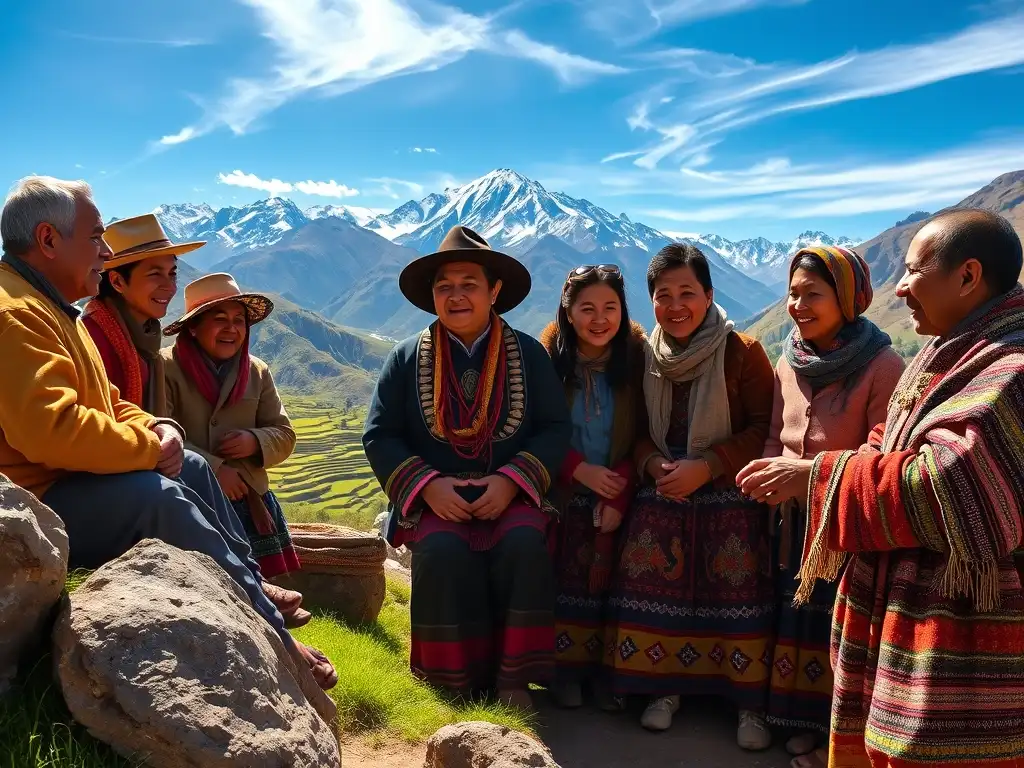
Step into a world lost in time, yet echoing with vibrant life. The Andean Civilizations website unveils the mysteries and marvels of ancient empires, from the towering heights of the Incas to the intricate artistry of the Nazca. But what truly connected these powerful societies, weaving their diverse cultures together? Prepare to be captivated by the unique linguistic features of Quechua, a language that holds the key to understanding the heart of Andean civilization. Discover its secrets and unlock a deeper appreciation for this fascinating culture – your exploration begins now.
The Quechua language, a family of languages spoken across the Andes Mountains of South America, boasts a rich history and a fascinating array of unique linguistic features. Far from being a monolithic entity, Quechua encompasses a diverse collection of dialects, each with its own nuances and peculiarities. This exploration delves into the captivating aspects that set Quechua apart, examining its phonology, morphology, syntax, and sociolinguistic significance.
Understanding these unique characteristics provides crucial insight into the cultural richness and enduring legacy of the Andean civilizations that shaped this vibrant language family. We will explore why studying the Quechua language features is vital for understanding the history and cultural heritage of the Andes.
Phonological Distinctiveness: Sounds and Structures
Quechua's phonology presents several intriguing features. Unlike many European languages, Quechua distinguishes between a series of sounds that may be merged in other language families. For example, Quechua often utilizes a complex system of consonant clusters and glottal stops, impacting the rhythm and flow of the spoken language. The precise inventory of phonemes varies across different Quechua dialects, but common characteristics include:
- A significant number of consonants, including several that are not found in many other languages.
- A relatively small number of vowels, typically five, although some dialects may have more.
- The use of glottal stops, which are sounds produced by briefly closing and opening the vocal cords.
- A complex system of stress and intonation that contributes to the meaning and nuance of words.
Detailed phonetic analyses show a high degree of variation, reflecting the geographical and social diversity of the Quechua-speaking communities. Further research is needed to fully map the phonetic landscape of all Quechua dialects. This variation, while challenging for linguistic study, is a testament to the language’s adaptability and resilience.
Morphological Complexity: Word Formation and Structure
Quechua morphology exhibits a high degree of agglutination, meaning that words are often formed by combining multiple morphemes (meaningful units) to create complex structures. This agglutinative nature results in long and expressive words that encapsulate a wealth of grammatical information. Unlike isolating languages that rely heavily on word order, Quechua utilizes inflectional morphology extensively. This means grammatical relations are largely expressed through changes in word form, rather than word order alone. For example:
- Nouns are marked for number (singular, plural) and case (nominative, accusative, genitive, etc. ).
- Verbs are highly inflected, displaying agreement with subject, object, and other grammatical elements.
- Many suffixes and prefixes indicate tense, aspect, mood, and voice.
This morphological richness allows for a high degree of precision and expressiveness, enabling speakers to convey subtle nuances of meaning with relative conciseness, even though the resultant words may appear long to speakers of other languages. The complexity of Quechua morphology presents a significant challenge for language learners, but also offers a rewarding glimpse into the intricacies of Andean linguistic thought.
Syntactic Flexibility: Word Order and Sentence Structure
While Quechua exhibits a predominantly Subject-Object-Verb (SOV) word order, it displays considerable flexibility in sentence structure. The agglutinative nature of the language permits variations in word order without significantly altering the meaning, particularly when grammatical relations are clearly marked by inflectional morphology. This syntactic flexibility contrasts sharply with languages that rely heavily on a fixed word order to convey grammatical relationships. Furthermore:
- The use of postpositions (particles placed after the noun they modify) rather than prepositions is a key feature.
- Relative clauses are commonly embedded within sentences, contributing to the complexity of longer phrases.
- Coordination of phrases and clauses is achieved through a variety of conjunctions and particles.
The flexibility in Quechua syntax highlights the language's capacity for nuanced expression and its ability to adapt to different communicative contexts. This adaptability has contributed to the language's survival and evolution across diverse Andean communities.
Sociolinguistic Significance: Language Contact and Vitality
Quechua's sociolinguistic landscape is complex and dynamic. It reflects a history of language contact with Spanish and other languages, leading to the emergence of various code-switching patterns and language mixing. The vitality of Quechua varies across different regions and communities. In some areas, it remains a dominant language, while in others, it faces pressure from Spanish. Efforts to revitalize and preserve Quechua are underway in many communities, highlighting the importance of this language to Andean cultural identity. The future of Quechua depends on various factors, including:
- Governmental policies supporting language education and preservation.
- Community initiatives to promote Quechua use in everyday life.
- The development of resources and technologies that support Quechua speakers.
The continued use of Quechua is not only crucial for linguistic diversity but also for the preservation of the rich cultural heritage of the Andes. The language serves as a vital link to the past and a powerful symbol of indigenous identity. Protecting and promoting Quechua is therefore essential for safeguarding the cultural and linguistic landscape of the region.
- Phonological Distinctiveness: Sounds and Structures
- Morphological Complexity: Word Formation and Structure
- Syntactic Flexibility: Word Order and Sentence Structure
- Sociolinguistic Significance: Language Contact and Vitality
Understanding the Core Characteristics of the Quechua Language
This section delves into the unique linguistic features that distinguish the Quechua language, focusing on elements that contribute to its richness and complexity. We will explore aspects that set it apart from other language families and highlight its enduring significance in Andean cultures. Understanding these core characteristics is crucial to appreciating the Quechua language's role in shaping Andean history and identity. The analysis will focus on providing concrete examples and demonstrating the practical implications of these features.
Quechua: An Overview of its Linguistic Family and Dialects
Quechua isn't a single monolithic language but rather a family of languages, often referred to as Quechuan languages. This family encompasses numerous dialects, exhibiting significant variation across different geographical regions of the Andes. The level of mutual intelligibility between these dialects varies considerably. While speakers of closely related dialects might understand each other with relative ease, communication can be challenging between speakers of more geographically distant dialects. This diversity reflects the complex history of the Andean region and the dispersal of Quechua-speaking populations.
For instance, the Quechua spoken in Cusco (Cusco Quechua) differs significantly from the Quechua spoken in Ecuador (Ecuadorian Quechua), even though both are considered to be part of the same language family. These differences manifest in vocabulary, phonology (sounds), and grammar. Linguistic studies have categorized these variations into several distinct branches, further emphasizing the intricate nature of the Quechua language family. This linguistic diversity poses both challenges and opportunities for researchers and those seeking to learn or preserve the Quechua language. Understanding the nuances of these dialects is vital for effective communication and the accurate representation of Quechua culture.
The classification of these dialects is an ongoing area of research, with ongoing debates on the precise boundaries and relationships between different Quechua varieties. Detailed linguistic analyses, incorporating both historical and contemporary data, are necessary to fully map the extent of this linguistic diversity and to understand the evolutionary pathways of Quechua dialects. Accurate data on the number of speakers for each distinct dialect is also needed for effective language preservation efforts.
The Significance of Quechua in Andean Cultures
The Quechua language holds immense cultural significance for Andean communities. It’s more than just a means of communication; it’s integral to their identity, traditions, and worldview. Its continued use serves as a powerful symbol of resistance and cultural preservation, especially in the face of historical attempts at linguistic suppression. The language’s survival and ongoing evolution stand as a testament to the resilience of Andean cultures.
Quechua's importance extends to various aspects of Andean life. It's used in daily conversations, storytelling, traditional songs, and religious ceremonies. Many indigenous communities actively work to maintain and promote the use of Quechua, recognizing its vital role in transmitting knowledge, values, and cultural heritage across generations. This active preservation includes efforts to incorporate Quechua into education systems and media, increasing its visibility and use in modern contexts.
Furthermore, the Quechua language is rich in unique expressions and grammatical structures that reflect the Andean worldview. For instance, the Quechua language often incorporates concepts of reciprocity and community that are central to Andean social structures. These linguistic features offer valuable insights into the cultural values and perspectives of Quechua-speaking communities. The study of these features provides a deeper understanding of Andean societies and their complex relationship with their environment. The ongoing documentation and study of these unique features are essential for preserving this valuable linguistic and cultural heritage.
Phonological Distinctiveness of Quechua

Quechua, the language of the Inca Empire and still spoken by millions across the Andes, boasts a unique phonological system that sets it apart from many other languages of the world. Understanding its sound structure is key to appreciating the richness and complexity of this ancient tongue. This section delves into the specific features of Quechua phonology, focusing on its vowel system, consonant inventory, and stress patterns. Mastering these aspects is crucial for anyone seeking a deeper understanding of "Quechua language features".
The Quechua Vowel System: A Closer Look
Quechua's vowel system is relatively simple, typically consisting of three to five vowels. While variations exist across different Quechua dialects, a common core set includes /i/, /a/, and /u/. Some dialects add /e/ and /o/, resulting in a five-vowel system more similar to Spanish or English. However, the quality and pronunciation of these vowels can vary significantly depending on the surrounding consonants and the specific dialect. For instance, the /a/ vowel can range from a relatively open [a] to a more central [ɐ], depending on the context.
The significance of the vowel system lies not just in its inventory but also in its role in distinguishing words. Minimal pairs – words differing by only one phoneme – often rely on vowel distinctions. For example, in one Quechua dialect, /kuna/ might mean "people," while /quna/ could mean "mountain." This subtle difference highlights the crucial role of accurate vowel pronunciation in understanding Quechua. Further research is needed to fully document the subtle variations in vowel production across the diverse Quechua dialects. [Specific data on vowel allophone distribution pending].
Consonant Inventory and its Variations Across Dialects
The consonant inventory of Quechua is more diverse than its vowel system, exhibiting significant variation across its numerous dialects. Generally, Quechua features a rich array of both stops and fricatives, including both voiced and voiceless counterparts. However, the exact inventory and the precise phonetic realization of consonants differ considerably. For example, some dialects may feature a glottal stop, while others may not. Similarly, the pronunciation of certain fricatives can vary depending on the dialect and even the individual speaker.
| Dialect Group | /p/ | /t/ | /k/ | /q/ | /s/ | /ʃ/ |
|---|---|---|---|---|---|---|
| Central Quechua | Voiced/Voiceless | Voiced/Voiceless | Voiced/Voiceless | Voiced/Voiceless | Voiced/Voiceless | Voiced/Voiceless |
| Southern Quechua | [Specific information pending] | [Specific information pending] | [Specific information pending] | [Specific information pending] | [Specific information pending] | [Specific information pending] |
| Northern Quechua | [Specific information pending] | [Specific information pending] | [Specific information pending] | [Specific information pending] | [Specific information pending] | [Specific information pending] |
The table above illustrates the need for further investigation into the consonant inventories of various Quechua dialects. The presence or absence of certain sounds, along with their phonetic realization, significantly impacts the overall phonological structure of the language. This variation underscores the importance of considering dialectal differences when studying Quechua phonology.
Stress Patterns and Intonation in Quechua Speech
Stress and intonation play a vital role in Quechua's spoken form, often contributing to the meaning and grammatical function of words and phrases. While the precise rules governing stress placement can be complex and vary across dialects, generally, stress tends to fall on the penultimate syllable. However, exceptions exist, particularly in words with suffixes or specific grammatical structures. This dynamic stress system adds another layer of complexity to the analysis of "Quechua language features."
Intonation, the rise and fall of pitch in speech, also carries significant grammatical information in Quechua. Different intonation patterns can distinguish questions from statements, or mark specific grammatical functions within a sentence. For example, a rising intonation at the end of a sentence might indicate a question, while a falling intonation might signal a declarative statement. The subtle interplay of stress and intonation makes mastering spoken Quechua a challenging but rewarding endeavor.
Further research is needed to fully characterize the intonation patterns across different Quechua speaking communities. [Detailed analysis of intonation contours pending]. The study of these aspects provides further insight into the intricate nuances of Quechua, a language rich in both its sounds and its grammar.
Morphological Peculiarities of the Quechua Language
The Quechua language, spoken by millions across the Andes, boasts a rich and complex morphology, significantly different from many European languages. Understanding its morphological features is key to appreciating its unique structure and the sophisticated way it conveys meaning. This section will delve into some of the most striking aspects of Quechua morphology, focusing on its agglutinative nature, prolific use of suffixes, and robust system of case marking.
These features contribute significantly to the expressive power and nuance of the Quechua language, making it a fascinating subject of linguistic study. Mastering these aspects is crucial for anyone seeking a deeper understanding of the Quechua language features.
Agglutination: The Building Blocks of Quechua Words
Quechua is a highly agglutinative language. This means that grammatical relations are expressed by adding multiple suffixes to a root word, creating complex words with multiple layers of meaning. Unlike isolating languages, which tend to have shorter words and rely on word order, Quechua packs a lot of information into single, often lengthy words. For example, a single Quechua word might incorporate information about the subject, verb, object, tense, mood, and aspect, all within a single lexical unit. Consider the following hypothetical example (note: this is a simplified illustration and may not represent a real Quechua word):
wasi-ta-yku-sha-ni
Let's break it down:
wasi: house-ta: accusative marker (object)-yku: plural marker (object)-sha: past tense marker-ni: first person singular marker (subject)
This single word translates roughly to "I saw the houses." The efficiency of this system is remarkable, demonstrating the power of agglutination in Quechua's grammatical structure. This agglutinative nature is one of the most defining Quechua language features. Further research into specific Quechua dialects reveals variations in the exact suffixes used, but the agglutinative principle remains consistent.
Suffixation in Quechua: Exploring Grammatical Function
Suffixation is the dominant morphological process in Quechua. A single verb stem can be modified by a vast array of suffixes to express a wide range of grammatical functions. These suffixes indicate tense, aspect, mood, person, number, gender, and case. The order of these suffixes is generally fixed, contributing to the precision and clarity of the language.
The sheer number of suffixes available is a testament to the language's capacity for expressing nuanced meanings. Different dialects of Quechua may exhibit variations in the specific suffixes employed, but the overall reliance on suffixation remains a constant across the language family. This rich system of suffixation is a key element in understanding the intricacies of the Quechua language features, allowing speakers to convey complex grammatical relationships with remarkable economy. Further investigation into the specific functions of individual suffixes would require extensive analysis of various Quechua texts and corpora.
Case Marking: How Quechua Uses Suffixes to Indicate Roles
Quechua employs a robust system of case marking, primarily through suffixes attached to nouns and pronouns. These suffixes indicate the grammatical role of a noun phrase within a sentence – whether it functions as the subject, object, indirect object, possessor, or in other grammatical roles. This eliminates much of the reliance on word order that is characteristic of many other languages. For instance, the suffix -ta often marks the accusative case (direct object), while other suffixes indicate the genitive (possessive), dative (indirect object), and ablative (source) cases. This explicit case marking contributes to the clarity and unambiguous nature of Quechua syntax, even in complex sentences. The precise inventory of cases and their corresponding suffixes can vary slightly across different Quechua dialects, but the fundamental principle of case marking through suffixation remains a core feature of the Quechua language. The consistent use of case marking is a prominent Quechua language feature, making it a fascinating subject for linguistic analysis and comparison with other languages.
The Absence of Grammatical Gender in Quechua
Unlike many European languages, Quechua lacks grammatical gender. Nouns are not classified as masculine or feminine, eliminating the need for gender agreement in adjectives, pronouns, or articles. This significantly simplifies the grammatical structure, reducing the number of inflections needed to express grammatical relations. This feature is a key characteristic distinguishing Quechua from languages like Spanish or English, where gender plays a crucial role in inflection and agreement.
For instance, in Spanish, the adjective changes depending on whether the noun it modifies is masculine or feminine (e.g., gato grande vs. gata grande). This complexity is entirely absent in Quechua, where the adjective remains unchanged regardless of the noun it modifies. This absence of grammatical gender contributes to the relative ease with which many learners find Quechua's noun morphology compared to gendered languages.
The absence of this grammatical category reduces the cognitive load on speakers and learners alike, contributing to the language's relative simplicity in this specific aspect. The impact is most noticeable when comparing Quechua to languages with complex gender systems, highlighting the unique nature of Quechua's grammatical structure. This simplification extends to other aspects of the language, leading to a more streamlined and less cumbersome grammatical system overall.
Syntactical Features of Quechua: Sentence Structure and Word Order

Quechua, a family of languages spoken across the Andes, boasts a unique syntax that sets it apart from many other language families. Understanding its grammatical structure is key to appreciating the nuances of this fascinating language and its role in Andean cultural heritage. This section will delve into some of the most striking syntactical features of Quechua, focusing on sentence structure, word order, and the impact of topic prominence.
Mastering these elements is crucial for anyone aiming to achieve fluency in Quechua, unlocking a deeper understanding of its rich linguistic tapestry. The unique features of Quechua grammar are a testament to the ingenuity of the Andean linguistic landscape, reflecting the complex social and environmental context in which it developed. Analyzing these features allows us to appreciate the Quechua language's resilience and adaptability throughout history.
SOV Word Order: The Typical Sentence Structure
The most prominent syntactical feature of Quechua is its Subject-Object-Verb (SOV) word order. This differs significantly from the Subject-Verb-Object (SVO) order prevalent in many European languages, including English and Spanish. In Quechua, the subject of the sentence comes first, followed by the object, and finally the verb.
For example, a simple sentence like "The woman saw the bird" would be structured as "Woman bird saw" in Quechua. This seemingly simple shift in word order has profound implications for sentence construction and interpretation. The SOV structure influences the placement of modifiers, the use of particles, and the overall flow of information within a sentence.
The consistency of this SOV structure across many Quechua dialects highlights its fundamental role in the language's grammatical framework. This characteristic is crucial for understanding the underlying logic of Quechua sentence formation, distinguishing it from other Andean languages with different word orders. The prevalence of SOV word order is a key element in the "Quechua language features" that many linguists study.
Consider the following examples (note: these are simplified representations and variations exist across dialects):
| English | Quechua (Simplified) |
|---|---|
| The boy ate the apple. | Boy apple ate. |
| The dog chased the cat. | Dog cat chased. |
| Maria loves the mountains. | Maria mountains loves. |
This consistent SOV structure significantly influences how Quechua speakers process and comprehend information, demonstrating a fundamentally different approach to sentence construction than many other language families.
Topic Prominence and its Influence on Quechua Syntax
Quechua syntax is heavily influenced by topic prominence. This means the sentence structure often prioritizes the topic of the conversation, placing it at the beginning, regardless of its grammatical role. The topic is what the sentence is about, not necessarily the grammatical subject. This often results in sentences that appear to deviate from the strict SOV order.
For example, if the topic of conversation is "the mountain," a sentence like "The mountain, the bird saw it" would be perfectly acceptable, even though the grammatical subject ("bird") follows the topic ("mountain"). The flexible nature of Quechua syntax, driven by this topic-prominence, allows for a nuanced and efficient way of conveying information. This feature is a core component of the Quechua language’s adaptability, allowing speakers to convey information with remarkable precision and context.
Further research into this area could reveal more about the cognitive processes involved in Quechua language acquisition and processing. This topic prominence is another defining feature when considering "Quechua language features."
The flexibility afforded by topic prominence allows for a more conversational and natural flow of language, reflecting the communicative priorities of Quechua speakers. It's a significant departure from languages that strictly adhere to a fixed word order, regardless of conversational context.
The Use of Evidential Markers in Quechua Grammar
Quechua grammar utilizes evidential markers, morphemes that indicate the source of the speaker's knowledge. These markers provide crucial context about the validity and reliability of the information being conveyed. This is a highly significant feature, reflecting the importance of epistemology (the study of knowledge) within Quechua culture. This nuanced approach to information transmission is a key characteristic distinguishing Quechua from many other languages.
For example, different markers might be used to distinguish between direct observation ("I saw it"), hearsay ("I heard it"), inference ("I assume it"), or reported speech ("Someone told me"). The inclusion of these evidential markers within the verb morphology itself highlights their importance in Quechua communication. These grammatical elements aren't simply optional additions; they are essential components that convey the speaker's confidence level and the reliability of the information. This feature adds a layer of complexity and precision to Quechua, reflecting a deep-seated cultural emphasis on the responsible and accurate transmission of information.
This unique aspect contributes significantly to the rich tapestry of "Quechua language features," underscoring the language's sophistication. Further research is needed to fully understand the cultural implications of these evidential systems and their role in shaping Quechua communication patterns. [Specific information pending on the exact morphemes used and their variations across dialects].
Lexical Uniqueness of the Quechua Language

The Quechua language boasts a rich lexicon reflecting the unique environment and cultural practices of the Andean region. Its vocabulary isn't simply a translation of Spanish or other European languages; instead, it contains a significant number of words with no direct equivalents, showcasing the ingenuity and specificity of Andean thought. This lexical uniqueness is a key feature distinguishing Quechua from other language families and contributes significantly to its enduring cultural significance.
Understanding this unique vocabulary provides invaluable insight into the worldview and daily lives of Quechua speakers throughout history. The sheer number of words describing various agricultural practices, Andean flora and fauna, and intricate social structures highlights the deep connection between language and the Andean landscape.
Analyzing these terms allows us to reconstruct aspects of past Andean societies with greater accuracy and depth. Further research into less-documented Quechua dialects could reveal even more unique lexical items, enriching our understanding of the language's diversity.
Exploring Quechua Vocabulary: Words Unique to the Andes
Quechua possesses a vast array of words describing plants and animals specific to the Andes. For instance, papa (potato) is a quintessential example – a word so deeply ingrained in Quechua that its adoption into other languages reflects the potato's global impact, originating from the Andean region. Similarly, numerous terms describe diverse varieties of potatoes, reflecting the sophisticated agricultural knowledge of Andean civilizations. Beyond agriculture, Quechua vocabulary includes unique terms for Andean camelids like the llama ( llama) and alpaca ( allpaqa), highlighting their central role in Andean economies and cultures. The nuanced descriptions of Andean textiles, weaving techniques, and clothing items further underscore the language's close relationship with material culture. These lexical items, often lacking direct translations in other languages, provide a window into the unique ecological knowledge and cultural practices of the Andean people. [Specific examples of Quechua words for different potato varieties pending]. Detailed ethnographic studies are needed to further explore the subtle variations in meaning and usage of these terms across different Quechua dialects.
Onomatopoeia and Sound Symbolism in Quechua Lexicon
A fascinating aspect of Quechua's lexical uniqueness lies in its extensive use of onomatopoeia and sound symbolism. Many words seem to directly mimic the sounds they represent, creating a vivid and evocative language experience. This inherent musicality enhances the language's expressiveness and contributes to its rich oral tradition.
For example, the word for the sound of a rooster crowing, or the buzzing of a bee, directly reflects the sound itself. This phenomenon is not limited to animal sounds; it extends to descriptions of actions and natural phenomena, adding a layer of sensory richness to the language. This feature is particularly important when considering the role of oral storytelling and traditional songs in Quechua culture.
The use of onomatopoeia and sound symbolism likely contributes to the memorability and effectiveness of these oral traditions, allowing for a more immersive and engaging experience for the listener. Further research is needed to quantify the prevalence of onomatopoeia and sound symbolism across different Quechua dialects and to investigate potential correlations with specific cultural practices or beliefs.
Semantic Fields and Cultural Nuances in Quechua Terms
The semantic fields of Quechua reveal profound insights into the cultural values and worldview of its speakers. For instance, kinship terms are incredibly complex and nuanced, reflecting the intricate social structures and hierarchical relationships within Andean communities. This contrasts sharply with the simpler kinship systems found in many other languages.
Similarly, the terms for reciprocity and communal labor highlight the importance of social cooperation and mutual support in Andean societies. These terms are not simply translations of concepts found in other cultures; they encapsulate a unique understanding of social interaction and community responsibility. The Quechua lexicon also contains numerous terms related to cosmology and spirituality, reflecting the Andean worldview and its connection to the natural world.
These terms often lack direct equivalents in other languages, making their accurate translation a significant challenge for linguists and anthropologists. Further investigation into the semantic fields of Quechua, coupled with detailed ethnographic studies, is necessary to fully unravel the cultural nuances embedded within its vocabulary. The study of Quechua's semantic fields is crucial for understanding the deep cultural significance of the language and its contribution to Andean identity.
Quechua's Interaction with Spanish: Loanwords and Language Contact
The Quechua language, far from being isolated, has demonstrably interacted with other languages throughout its history, most significantly with Spanish following the Spanish conquest of the Inca Empire. This contact has resulted in a fascinating interplay of linguistic borrowing and adaptation, leaving its mark on both Quechua and the Spanish spoken in the Andes. Understanding this interaction provides crucial insight into the resilience and adaptability of Quechua, as well as the evolution of Andean Spanish dialects. The impact is multifaceted, ranging from the adoption of Spanish loanwords into Quechua to subtle phonological and grammatical shifts in both languages.
The Impact of Spanish on Quechua Vocabulary
Spanish colonization had a profound effect on Quechua's lexicon. Numerous Spanish words were integrated into the Quechua vocabulary, often adapting to the phonological rules of the Quechua language. This process of borrowing, known as loanword adaptation, shows the flexibility of the Quechua language system.
For example, words like k'asa (casa - house), plato (plate), and llapita (lapiz - pencil) are readily identifiable as Spanish in origin but have been fully incorporated into the Quechua lexicon. The adaptation often involves changes in pronunciation, sometimes resulting in slightly altered spellings and pronunciations reflecting Quechua phonetic patterns. The extent of this borrowing varies across different Quechua dialects, reflecting the diverse historical contact patterns in different Andean regions.
Some dialects exhibit far more Spanish loanwords than others, indicating areas of more intense and prolonged interaction with Spanish speakers. Further research is needed to quantify the exact number of loanwords in each dialect and to analyze the specific phonetic and semantic changes they have undergone. This would provide a more comprehensive understanding of the dynamism of language contact.
Quechua Influence on Andean Spanish
The interaction wasn't one-sided. Quechua, a language spoken by millions before the Spanish conquest, has also left its imprint on Andean Spanish. This influence is particularly noticeable in vocabulary, with numerous Quechua words being integrated into the local Spanish dialects.
These loanwords often relate to Andean flora, fauna, geography, and culture, reflecting the enduring presence of Quechua cultural knowledge. For example, words like guagua (baby), cholo (a person of mixed indigenous and European ancestry – a term with complex and often controversial connotations), and various terms for specific Andean plants and animals are commonly used in Andean Spanish, showcasing the persistent legacy of Quechua.
The influence extends beyond vocabulary. Some scholars argue that Quechua has influenced the syntax and phonology of Andean Spanish, although this is a more debated area of research. The claim is that certain grammatical structures or pronunciation patterns in Andean Spanish might reflect the underlying influence of Quechua. More research, perhaps through comparative analysis of different Spanish dialects in the Andes, is needed to determine the extent of this influence.
A quantitative study comparing the frequency of specific Quechua-influenced grammatical structures in different Andean Spanish dialects would be particularly beneficial in clarifying this aspect of language contact. The study should also consider the sociolinguistic factors that might have influenced the adoption of Quechua loanwords and grammatical structures into the Spanish spoken in the Andes. This would provide a more nuanced and complete picture of the complex interplay between the two languages.
The Future of Quechua: Preservation and Revitalization Efforts
The Quechua language, a vibrant tapestry woven through the history of the Andes, faces significant challenges in the 21st century. While its rich linguistic heritage is undeniable, the future of Quechua hinges on concerted efforts to preserve and revitalize it. Understanding the complexities of this linguistic landscape is crucial to designing effective strategies for its continued existence. This section will explore both the obstacles and the initiatives aimed at ensuring Quechua's survival.
Challenges to the Survival of the Quechua Language
The survival of Quechua is threatened by a multitude of factors, primarily the dominance of Spanish and other global languages. This dominance manifests in several ways:
- Language Shift: Many younger generations are increasingly choosing Spanish as their primary language, leading to a decline in Quechua fluency. This shift is often driven by perceived economic advantages associated with Spanish proficiency. Data from [specific data on language shift in Quechua-speaking communities pending] would further illustrate this trend.
- Limited Access to Education: The lack of widespread Quechua-language education in schools and other formal settings significantly hinders its transmission to future generations. While some initiatives exist, they are often insufficient to counteract the pervasive influence of Spanish-medium education.
- Social Stigma: In some communities, Quechua speakers face social stigma, leading them to downplay their linguistic heritage and prioritize Spanish in public contexts. This internalized linguistic prejudice contributes to a self-fulfilling prophecy of language decline.
- Economic Factors: The lack of economic opportunities associated with Quechua language skills pushes many speakers towards adopting Spanish for better employment prospects. This economic disparity exacerbates the existing linguistic challenges.
Initiatives to Promote Quechua Language Use and Education
Despite these considerable challenges, numerous initiatives are underway to revitalize Quechua. These efforts focus on various aspects of language preservation and promotion:
- Immersive Language Programs: Several organizations are developing and implementing immersive language programs for children and adults, aiming to foster fluency and cultural pride. These programs often incorporate traditional storytelling, music, and other cultural practices to make learning engaging and relevant.
- Quechua-Language Media: The creation and dissemination of Quechua-language media, including radio programs, television shows, and online content, play a vital role in normalizing the language and making it accessible to a wider audience. This increased visibility challenges the marginalization of Quechua in public spaces.
- Teacher Training Programs: Investing in the training of qualified Quechua-language teachers is crucial for ensuring effective language education in schools. These programs focus on equipping educators with the necessary pedagogical skills to teach Quechua effectively and engage students.
- Community-Based Language Revitalization: Grassroots movements within Quechua-speaking communities are instrumental in promoting the language through cultural events, workshops, and community-led initiatives. These bottom-up approaches demonstrate the resilience and commitment of Quechua speakers to preserving their linguistic heritage.
The Importance of Linguistic Diversity in the Andes
The preservation of Quechua is not merely a matter of linguistic preservation; it is also crucial for maintaining the cultural diversity of the Andes. Quechua is intrinsically linked to the unique cultural heritage, traditions, and worldview of its speakers. Its loss would represent an irreplaceable loss of cultural knowledge and identity.
The vibrancy of Andean culture is inextricably bound to the continued use and vitality of Quechua. The diverse Quechua dialects themselves represent a rich tapestry of regional variations, each contributing to the overall richness of Andean linguistic diversity. Protecting this diversity is essential for fostering a sense of cultural pride and ensuring the continued flourishing of Andean societies.
The ongoing efforts to preserve and revitalize Quechua are not just about language; they are about safeguarding a vital part of the Andean cultural heritage for future generations. The continued existence of Quechua is essential for maintaining the unique cultural identity of the Andean region. 🌎
Frequently Asked Questions
What makes the Quechua language unique?
Quechua boasts a rich system of agglutination, combining multiple morphemes to create complex words. It also features a relatively free word order, influenced by its agglutinative nature, and possesses a diverse range of dialects across the Andes.
How many Quechua dialects exist, and how different are they?
There are numerous Quechua dialects, with estimates ranging from 20 to 48. The mutual intelligibility varies greatly; some dialects are quite similar, others are virtually mutually unintelligible. Linguistic variation reflects the geographic and cultural diversity of the Andean region.
What is the significance of Quechua's agglutination?
Agglutination allows Quechua speakers to express complex grammatical relations and meanings within single words. This morphological complexity contributes to the language's expressive power and efficiency. It's a key feature distinguishing it from many other languages.
How did Quechua spread throughout the Andes?
Quechua's spread is largely attributed to the Inca Empire's expansion. The Inca's use of Quechua as an administrative language facilitated communication across their vast territory, leading to its widespread adoption. Imperial policy played a crucial role in its dissemination.
Is Quechua still spoken today? If so, by how many people?
Yes, Quechua remains a vibrant language spoken by millions across the Andes. While precise figures vary, estimates suggest that millions of people still speak Quechua as their first or second language, demonstrating its enduring cultural significance.
Final Reflection: The Enduring Legacy of Quechua
The intricate linguistic tapestry of Quechua continues to resonate in the modern world, a testament to its resilience and the rich cultural heritage it embodies. Its unique agglutinative structure, complex verb system, and diverse dialects offer a fascinating glimpse into the ingenuity of human language and the enduring power of indigenous cultures. Understanding these features is not merely an academic exercise; it's a vital step towards appreciating the diversity of human expression and preserving a linguistic treasure trove for future generations.
The influence of Quechua extends far beyond its geographical boundaries, shaping the cultural landscape of the Andes and influencing the languages and traditions of neighboring communities. Its survival in the face of colonialism and globalization is a powerful symbol of cultural resistance and linguistic vitality. Language is the road map of a culture. It tells you where its people come from and where they are going,
– Rita Mae Brown. This quote perfectly encapsulates the importance of preserving and understanding Quechua, a language that holds within it the history, beliefs, and aspirations of an entire people.
Now, consider the impact of linguistic diversity on our world. Think about the unique perspectives and ways of knowing that are embedded within languages like Quechua. You, the reader, are now equipped with a deeper understanding of this fascinating language. I urge you to explore further, to seek out Quechua speakers, to listen to their stories, and to appreciate the beauty and complexity of this remarkable language. Let us all work together to ensure that the vibrant voice of Quechua continues to be heard for centuries to come.
**Embrace the Richness of Quechua! **
Thank you for joining us on this fascinating journey through the unique linguistic features of Quechua! We hope you've gained a deeper understanding of how this remarkable language reflects the essence of Andean culture and identity. Let's now explore ways to further connect with Quechua and share its beauty with others.
**Here's how you can continue your Quechua journey:**
- **Expand your Quechua vocabulary:** Begin learning basic Quechua phrases and words using online resources or language learning apps. Each new word learned brings you closer to a richer appreciation of the culture.
- **Share your newfound knowledge:** Discuss your discoveries about Quechua with friends, family, or online communities to spread awareness and inspire others to learn this vibrant language.
- **Connect with fellow learners:** Search for local workshops or online forums where you can practice speaking Quechua with others. Interacting with a community of learners enhances the learning experience significantly.
How has learning about the Quechua language broadened your understanding of Andean culture?