
The Genesis of Andean Civilization: Exploring the PreIncan Highland Genesis


Step into a world lost to time, yet echoing with the whispers of a magnificent past. Journey with us as we unravel the mysteries of the Andean highlands, long before the Inca Empire rose to prominence. Discover the surprising origins of PreInca Andean civilization, a story far richer and more complex than you might imagine. Uncover the secrets of these pioneering cultures and witness the ingenuity that shaped a civilization that continues to astound us today. Are you ready to explore the genesis of Andean greatness?
The Andes Mountains, a spine of towering peaks and deep valleys stretching along the western coast of South America, cradled the birth and development of some of the most fascinating and complex civilizations the world has ever known. While the Inca Empire often dominates narratives of Andean history, a rich tapestry of pre-Inca cultures laid the groundwork for its eventual rise.
This article delves into the origins of these remarkable pre-Inca Andean civilizations, exploring the multifaceted processes that led to the development of sophisticated societies in the challenging yet bountiful highlands. We'll journey back in time to uncover the early settlement patterns, technological innovations, and social structures that shaped the pre-Inca world, ultimately contributing to the vibrant cultural legacy of the Andes.
Understanding these pre-Inca roots is crucial for a complete appreciation of the Andean civilization's remarkable story and its enduring influence on the region. We will focus particularly on the "Pre-Inca Andean civilization origins" to better understand the complexities of this often-overlooked period.
Understanding the Roots of Pre-Inca Andean Civilization
The development of Andean civilization wasn't a sudden event but a gradual process spanning millennia. Early inhabitants of the Andes faced significant environmental challenges, including high altitudes, unpredictable weather patterns, and rugged terrain. Yet, these very challenges fostered remarkable adaptations and innovations in agriculture, technology, and social organization. The story of pre-Inca Andean civilization is one of resilience, ingenuity, and a deep connection to the land.
Understanding this complex interplay of environmental factors and human ingenuity is key to appreciating the achievements of these early Andean societies. The development of sophisticated irrigation systems, for example, allowed for the cultivation of crops at high altitudes, supporting larger and more complex settlements. This agricultural surplus, in turn, fueled social stratification and the emergence of specialized labor. The legacy of these early innovations is still visible today in the Andes, highlighting the enduring impact of pre-Inca cultures.
Early Settlement Patterns in the Andean Highlands
The Andean highlands, despite their harsh conditions, offered pockets of fertile land and resources that attracted early human settlers. The precise timeline of initial human occupation remains a subject of ongoing research, but archaeological evidence suggests a long and complex history of human adaptation in this challenging environment.
Initial Human Occupation and Adaptation
The earliest evidence of human presence in the Andes dates back to [specific information pending], with findings suggesting initial hunter-gatherer societies. These groups adapted to the high-altitude environment by developing strategies for hunting local fauna and gathering wild plants. Evidence suggests the use of rudimentary tools and technologies for hunting and processing food.
The survival of these early inhabitants was dependent upon their intimate knowledge of the environment and their capacity for adaptation to its ever-changing conditions. This adaptation was crucial for their survival, and it laid the foundation for future developments. The challenges of the Andean environment acted as a crucible, forging innovative solutions and pushing the boundaries of human ingenuity.
The Rise of Sedentary Lifestyles and Early Villages
Over time, the development of increasingly sophisticated agricultural techniques, particularly the cultivation of potatoes and other Andean crops, led to a shift towards sedentary lifestyles. The ability to cultivate crops reliably allowed for the establishment of permanent settlements, marking a significant turning point in Andean prehistory. These early villages, while relatively small, represent a crucial step towards the development of more complex social structures and the eventual rise of larger, more organized societies.
The transition from nomadic hunter-gatherer groups to settled agricultural communities was a gradual process, influenced by factors such as climate change, population growth, and technological advancements. This period witnessed the development of early forms of social organization, with evidence suggesting the emergence of leadership structures and specialized labor.
Key Pre-Incan Cultures Shaping Andean Civilization
The development of Andean civilization wasn't a singular event but a complex process spanning millennia, influenced by numerous cultures that laid the groundwork for the later Inca Empire. Understanding the "PreInca Andean civilization origins" requires examining these foundational societies and their contributions. The Andes weren't a monolithic entity; diverse groups adapted to varied environments, resulting in unique cultural expressions. However, certain patterns of cultural exchange and innovation emerged, creating a shared Andean identity long before the Inca.
This interconnectedness is crucial to comprehending the rich tapestry of Andean history. Tracing the evolution of societal structures, religious beliefs, and technological advancements across these cultures reveals a fascinating story of adaptation, innovation, and cultural exchange. The legacy of these Pre-Inca cultures continues to resonate in modern Andean societies.
The Influence of the Chavín Culture in the Highlands
The Chavín culture (c. 900-200 BCE), located in the northern Andes, exerted a significant influence on the development of subsequent Andean societies. While not directly responsible for constructing the massive urban centers of later periods, Chavín's impact was primarily cultural and religious. Their distinctive iconography, featuring jaguar and other zoomorphic motifs, spread throughout the Andes, suggesting a widespread network of interaction and exchange.
This cultural diffusion is evident in the art and religious practices of later cultures, indicating the powerful influence of Chavín religious beliefs and artistic styles. Archaeological evidence points to the adoption of Chavín artistic conventions by various groups, demonstrating the culture's pervasive impact across diverse regions. The unifying effect of Chavín's religious beliefs may have laid the groundwork for later large-scale political organizations.
The Chavín's sophisticated artistry, evidenced in their intricate carvings and ceramics, also set a high standard for subsequent Andean craftsmanship. Their influence extended far beyond their immediate geographic area, highlighting the importance of cultural exchange in shaping Andean civilization.
The Development of the Tiwanaku Culture and its Contributions
The Tiwanaku culture (c. 300-1000 CE), flourishing in the Lake Titicaca basin, represents a significant step in the evolution of Andean civilization. Known for its monumental architecture, including the impressive Akapana pyramid, Tiwanaku developed complex social and political structures. Their sophisticated agricultural techniques, including raised-field agriculture, allowed them to support a large population in a relatively harsh environment.
This technological advancement was crucial to their success and demonstrates their understanding of environmental challenges. The distribution of Tiwanaku's characteristic pottery and other artifacts across a wide area indicates a significant degree of influence and potential political control. They established extensive trade networks, connecting distant communities and fostering cultural exchange.
The Tiwanaku's sophisticated understanding of hydraulic engineering is evident in their complex irrigation systems, facilitating agricultural productivity and supporting a thriving urban center. Their legacy is visible in the subsequent cultures of the Andes, highlighting their crucial role in the development of Andean civilization. The collapse of the Tiwanaku state, however, remains a subject of ongoing research and debate amongst scholars.
Environmental Factors and the Pre-Inca Andean Civilization Origins
The dramatic geography of the Andes profoundly shaped the development of Pre-Inca civilizations. The challenges posed by altitude, climate, and resource scarcity fostered innovation and adaptation, leading to unique societal structures and technological advancements. Understanding the interplay between human societies and their environment is key to comprehending the "PreInca Andean civilization origins."
The varied ecological zones, from arid coastal deserts to high-altitude grasslands, required diverse strategies for survival and prosperity. The environmental pressures contributed to the development of specialized agricultural techniques and efficient resource management systems. The complex relationship between environment and society is a central theme in Andean archaeology.
The Impact of Altitude and Climate on Early Andean Societies
Altitude significantly impacted the lives of early Andean societies. The thin air at high elevations presented challenges to human physiology and agriculture. Adaptation to these conditions led to innovative solutions, such as the development of specialized crops adapted to high-altitude environments. The variability of climate, with distinct wet and dry seasons, necessitated sophisticated water management systems.
The impact of El Niño events, which brought periods of intense rainfall and flooding, also played a role in shaping societal structures and agricultural practices. Understanding the climatic variations and their influence on agricultural yields is crucial to understanding population dynamics and societal stability. The challenges posed by the environment contributed to the development of resilience and adaptive strategies that characterized Andean civilizations.
Resource Management and Agricultural Practices in the Highlands
The success of Pre-Inca civilizations depended heavily on their ability to manage resources effectively, particularly in the challenging highland environment. Innovative agricultural techniques, such as terracing and raised-field agriculture, allowed them to maximize crop yields in difficult terrain. These methods demonstrate a sophisticated understanding of soil conservation and water management. The careful management of water resources, including the construction of canals and irrigation systems, was crucial for sustaining large populations.
The efficient utilization of animal resources, such as llamas and alpacas, for transportation and wool production, also played a vital role in the Andean economy. The development of these sophisticated agricultural and resource management practices is indicative of the advanced understanding and ingenuity of Pre-Inca societies. Their approach to resource management serves as a valuable lesson for modern societies facing environmental challenges.
The Emergence of Complex Societies and Early Urban Centers
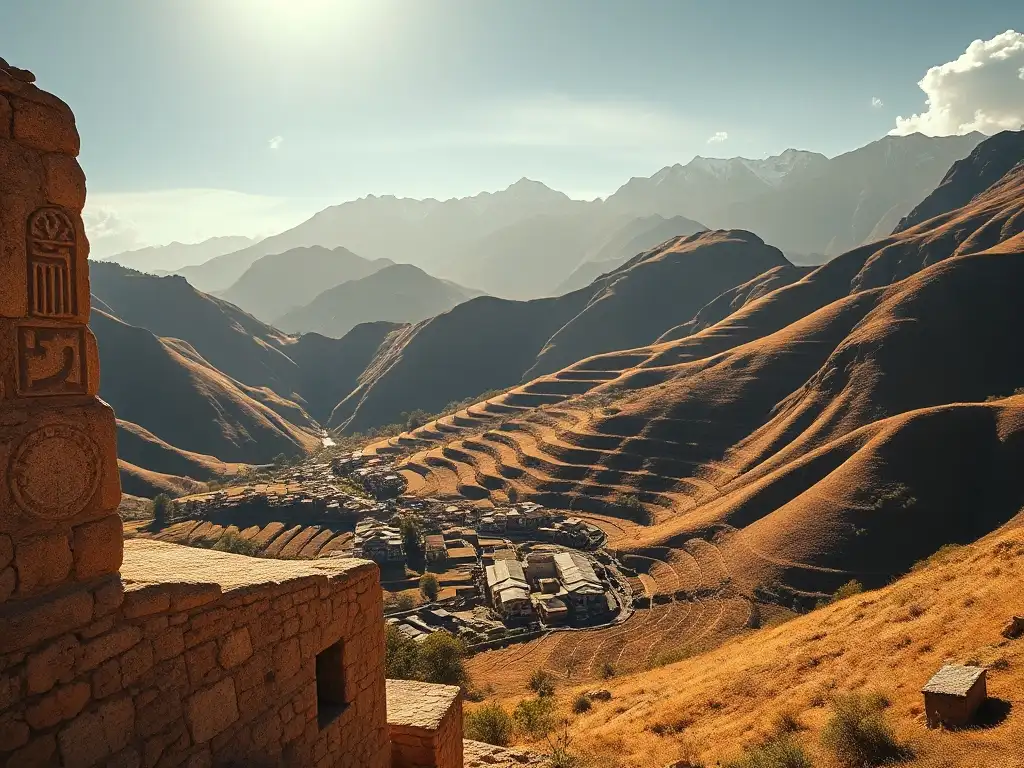
The development of complex societies in the Andean highlands wasn't a sudden event but rather a gradual process spanning millennia. Early agricultural innovations, particularly the domestication of potatoes and other Andean crops, laid the foundation for settled life and increased population density. This, in turn, fueled the need for more sophisticated social organization and resource management.
We see evidence of this in the rise of chiefdoms, characterized by hierarchical structures and centralized control over resources. These early chiefdoms weren't necessarily "states" in the classical sense, but they represented a significant step towards the complex political entities that would emerge later. The development of irrigation systems, crucial for agriculture in the arid highlands, further contributed to the growth of these early societies, allowing for surplus production and the specialization of labor.
This surplus was likely instrumental in supporting a growing population and the emergence of specialized craftspeople, religious leaders, and administrators. The evolution from simpler band-level societies to these more complex chiefdoms represents a key stage in the development of Pre-Inca Andean civilization origins.
The Evolution of Social Hierarchies and Governance
The evolution of social hierarchies in the Andean highlands is a fascinating study in how power structures developed alongside agricultural intensification and population growth. Early societies likely had relatively egalitarian structures, but as settlements grew and competition for resources intensified, social stratification became more pronounced. Archaeological evidence suggests the emergence of elites, individuals or families who controlled access to resources and held significant social and political power.
The nature of governance varied across different regions and time periods. Some societies may have been ruled by hereditary chiefs, while others may have employed more complex systems of governance involving councils or assemblies. The development of monumental architecture, such as ceremonial centers and elite residences, reflects the growing power and influence of these ruling elites.
Understanding the dynamics of power and governance in these early societies is crucial to comprehending the evolution of Pre-Inca Andean civilization origins and the eventual rise of the Inca Empire. Further research into burial practices and the distribution of artifacts can shed more light on the complexities of social hierarchy.
The Growth of Early Urban Settlements and Ceremonial Sites
The emergence of urban centers in the Andean highlands marks a significant shift in the pattern of settlement and social organization. These settlements were not simply larger villages but represented a new level of complexity in terms of urban planning, infrastructure, and social organization. Chavín de Huántar, for example, served as a major ceremonial center and exerted considerable influence over a wide region.
Its monumental architecture, including massive stone structures and intricate carvings, reflects the power and prestige of its rulers. Similarly, other sites like Paracas and Nazca show evidence of sophisticated urban planning and specialized crafts production. The growth of these early urban settlements was facilitated by factors like agricultural intensification, specialized labor, and the development of complex trade networks.
These urban centers served not only as administrative and economic hubs but also as religious and ceremonial centers, playing a vital role in the social and political life of the region. The growth and decline of these sites also offer valuable insights into the dynamics of Pre-Inca Andean civilization origins and their societal organization.
Tracing the Cultural Continuity Towards the Inca Empire
The Inca Empire, while undeniably unique, did not emerge in a vacuum. It inherited and built upon a rich tapestry of cultural traditions and practices developed by preceding Andean societies. Tracing this cultural continuity is crucial to understanding the full story of Andean civilization.
This continuity is evident in various aspects of Inca culture, from their agricultural practices and technologies to their religious beliefs and artistic styles. For example, the Inca's sophisticated system of terrace agriculture, which allowed them to cultivate crops on steep slopes, had its roots in earlier Andean agricultural techniques. Similarly, many of the Inca's religious beliefs and practices, including their veneration of mountains and ancestors, are traceable to earlier Andean traditions.
Recognizing these cultural threads helps us appreciate the Inca Empire not just as a singular phenomenon but as the culmination of a long and complex historical process. The study of Pre-Inca Andean civilization origins is vital for a complete understanding of Inca achievements.
Shared Traditions and Cultural Traits Among Pre-Inca Cultures
Despite regional variations, several shared cultural traits unite the various Pre-Inca Andean cultures. The widespread use of textiles, for example, is a hallmark of Andean civilization, with intricate weaving techniques evident in various cultures across different time periods. Similarly, the importance of religious rituals and ceremonial practices is consistently observed across different Pre-Inca societies.
The construction of monumental architecture, such as pyramids and temples, also serves as a unifying thread. These shared traditions suggest a degree of cultural exchange and interaction between different Andean societies, fostering a sense of shared identity and cultural continuity.
While each culture had its unique characteristics, understanding these shared traditions reveals a deeper understanding of the interconnectedness and shared heritage of the Pre-Inca Andean world, demonstrating strong links to the Pre-Inca Andean civilization origins. The presence of common iconographic motifs and stylistic elements in pottery and textiles further supports this idea of cultural exchange and shared traditions.
The Legacy of Pre-Inca Andean civilization Origins in Later Andean Societies
The legacy of Pre-Inca Andean civilization origins is profound and far-reaching, extending well beyond the Inca Empire. Many aspects of Andean culture, from agricultural techniques and technologies to religious beliefs and artistic styles, have persisted to the present day. The Inca Empire, while powerful and influential, did not erase the cultural achievements of its predecessors. Instead, it incorporated and adapted many Pre-Inca traditions, integrating them into its own cultural framework.
This cultural continuity is evident in the enduring influence of Pre-Inca artistic styles, religious practices, and social structures on later Andean societies. Understanding the legacy of Pre-Inca cultures is crucial for a comprehensive understanding of Andean civilization as a whole, highlighting the importance of studying Pre-Inca Andean civilization origins to understand the entire story. The continued presence of certain agricultural practices and technologies, for instance, demonstrates the remarkable resilience and adaptability of Pre-Inca innovations.
Conclusion: The Enduring Impact of Pre-Inca Highland Genesis
The development of Pre-Inca highland civilizations wasn't a linear progression, but rather a complex interplay of adaptation, innovation, and cultural exchange. From the initial hunter-gatherer societies to the sophisticated urban centers of Tiahuanaco and Huari, the trajectory reveals a remarkable capacity for societal evolution in a challenging environment. The ingenuity displayed in agriculture, particularly the mastery of terracing and irrigation, allowed for sustained population growth and the development of complex social structures. This agricultural success, in turn, fueled advancements in other areas, such as architecture, ceramics, and textiles, creating a rich tapestry of cultural expression that continues to fascinate and inspire us today. The legacy of these Pre-Inca cultures is not merely historical; it's a testament to human resilience and adaptability, providing valuable insights into sustainable living and societal organization.
Understanding their achievements helps us appreciate the foundations upon which later Andean empires, like the Inca, were built. Their innovations in agriculture, for instance, were directly adopted and expanded upon by the Inca, demonstrating the enduring impact of these earlier civilizations. The intricate network of roads, religious beliefs, and artistic styles all bear the imprint of these earlier societies, highlighting the profound and lasting influence of the Pre-Inca highland genesis on the entire Andean region. The study of these pre-Inca societies offers a compelling narrative of human progress, showcasing the remarkable ability of Andean communities to thrive in a demanding environment and leaving a rich legacy for future generations.
Their story is a crucial component of understanding the full scope of Andean civilization and its remarkable history. The intricate systems of social organization, religious belief, and technological advancement laid the groundwork for subsequent empires, enriching the vibrant tapestry of Andean culture. Their impact resonates even today, shaping our understanding of resilience, innovation, and the enduring power of human ingenuity in the face of adversity. 🗺️
- Understanding the Roots of Pre-Inca Andean Civilization
- Early Settlement Patterns in the Andean Highlands
- Key Pre-Incan Cultures Shaping Andean Civilization
- Environmental Factors and the Pre-Inca Andean Civilization Origins
- The Emergence of Complex Societies and Early Urban Centers
- Tracing the Cultural Continuity Towards the Inca Empire
- Conclusion: The Enduring Impact of Pre-Inca Highland Genesis
- What are some of the earliest PreInca Andean civilizations?
- How did the geography of the Andes influence PreInca cultures?
- What were some key technological advancements of PreInca Andean civilizations?
- What is the significance of the Chavín culture in PreInca history?
- How did PreInca societies organize their social structures?
Frequently Asked Questions
What are some of the earliest PreInca Andean civilizations?
Several early Andean societies laid the groundwork for later empires. These include the Chavín, Moche, and Nazca cultures, each with unique advancements in art, agriculture, and social structures. Their influence is visible in subsequent Andean developments.
How did the geography of the Andes influence PreInca cultures?
The rugged Andes Mountains significantly shaped PreInca civilizations. Adaptation to high altitudes, diverse climates, and limited arable land led to innovative agricultural techniques and unique societal structures. This challenging environment fostered resilience and ingenuity.
What were some key technological advancements of PreInca Andean civilizations?
PreInca cultures developed remarkable technologies, including advanced irrigation systems, sophisticated metallurgy (working with metals like gold and copper), and complex textile production. These innovations supported their growing populations and complex societies.
What is the significance of the Chavín culture in PreInca history?
The Chavín culture (c. 900-200 BCE) is considered a pivotal early Andean civilization. Their influence spread widely through religious iconography and artistic styles, impacting numerous subsequent cultures across the Andes. Their religious beliefs and artistic motifs are found throughout the region.
PreInca social structures varied, but many featured a hierarchical organization with specialized labor and religious elites. The development of complex social structures supported large-scale projects like irrigation and monumental architecture. The degree of complexity differed between cultures.
Final Reflection: Echoes of the Andes: A Legacy Unfolding
The intricate tapestry of Pre-Inca Andean civilization continues to resonate in the modern world, a testament to the ingenuity and resilience of its people. Understanding their innovations in agriculture, social structures, and spiritual beliefs provides a crucial lens through which to view not only the Inca Empire's rise but also the enduring challenges and triumphs of human civilization itself. The echoes of their achievements are still heard in the landscapes, traditions, and even the genetic makeup of the Andean region today.
The profound impact of Pre-Inca Andean cultures on subsequent societies is undeniable, shaping everything from agricultural practices to artistic expression. Their sophisticated understanding of their environment, their ability to adapt to extreme altitudes, and their complex social hierarchies offer invaluable lessons for contemporary societies grappling with similar challenges. As the anthropologist, John Murra, eloquently stated: The Andean world was not a static entity, but a dynamic system of interaction and adaptation.
This dynamic system, born from the ingenuity of Pre-Inca peoples, continues to inspire awe and wonder, reminding us of humanity's capacity for innovation and resilience in the face of adversity.
Consider the ingenuity of their terraced farming techniques, their mastery of metallurgy, or the breathtaking artistry of their textiles. These are not merely historical artifacts; they are powerful symbols of human potential. You, the reader, are now part of this ongoing conversation.
Take a moment to reflect on the parallels between the challenges faced by Pre-Inca societies and those we face today. How can we learn from their successes and failures to build a more sustainable and equitable future? Let the legacy of the Andes inspire you to explore the rich tapestry of human history and to strive for a world where innovation and resilience prevail.
Unveil the Rich Tapestry of Andean Heritage!
Thank you for beginning your exploration of the fascinating Andean civilization! We hope you're inspired by the profound history and rich cultural tapestry that shaped the Andean highlands long before the Inca Empire. Now, let's delve even deeper into this vibrant heritage.
Here are some ways to continue your journey:
- **Engage with Local History:** Immerse yourself in the past by visiting a local museum or cultural center showcasing Andean artifacts and stories. Experience the history firsthand!
- **Connect with a Community:** Share your passion and learn from others by joining online forums or social media groups dedicated to Andean civilizations.
- **Expand Your Knowledge:** Discover the diverse pre-Inca cultures of the Andes, such as the Moche, Nazca, and Tiwanaku, and uncover the lesser-known narratives that enrich our understanding of this remarkable region.
What aspect of Andean civilization captivates you most, and what's your next step in exploring it?