
The Unwritten Library: Exploring the Depth of Andean Memory


Dive into a world lost to time, yet whispering secrets from the heights of the Andes. Forget dusty textbooks; prepare to uncover the vibrant tapestry of Andean civilization history, a narrative woven from intricate textiles, breathtaking architecture, and a legacy of innovation that continues to astound. What hidden knowledge lies buried beneath the sands, waiting to be unearthed? Explore the fascinating world of Andean languages and unravel the mysteries of these remarkable cultures – your journey begins now.
The Andes Mountains, a spine of towering peaks running down the western coast of South America, are not only a breathtaking geological marvel but also the cradle of a rich tapestry of ancient civilizations. For centuries, scholars have focused on the tangible remnants of these cultures – the magnificent ruins of Machu Picchu, the intricate Nazca Lines, the stunning gold artifacts of the Moche. However, a crucial element often overlooked in understanding Andean civilization history is the power of oral tradition.
This unwritten library, passed down through generations, holds the key to unlocking a deeper understanding of their beliefs, social structures, and historical events, offering invaluable insights beyond the reach of archaeological digs and deciphered texts. This article delves into the significance of oral narratives in preserving and transmitting Andean cultural heritage, exploring how these stories serve as vital historical records and shaping our understanding of Andean societies.
We will examine the role of storytellers, the enduring power of myths, and the profound impact of oral tradition on the cultural landscape of the Andes. This exploration is crucial for a comprehensive appreciation of Andean civilization history, enriching our understanding of these fascinating and complex societies.
Understanding Andean Civilization History Through Oral Tradition
Understanding Andean civilization history requires moving beyond the limitations of written records. While some Andean cultures did utilize quipu (a system of knotted strings for record-keeping), a vast amount of historical, cultural, and societal knowledge was, and in many cases still is, transmitted orally. This oral tradition encompasses a wide range of forms, including myths, legends, songs, poems, and everyday narratives.
These oral narratives are not simply entertaining stories; they serve as repositories of historical information, ethical codes, and social norms, providing a unique lens through which to view the past. The richness and complexity of these oral traditions vary across different Andean cultures, reflecting the diverse histories and experiences of each group.
For instance, the oral traditions of the Inca Empire differ significantly from those of the pre-Inca cultures like the Moche or Nazca, each contributing unique perspectives to the overall understanding of Andean civilization history. Analyzing these differences allows for a nuanced and comprehensive understanding of the Andean world, highlighting both common threads and unique cultural expressions.
The Power of Andean Oral Narratives
The power of Andean oral narratives lies in their ability to transcend generations, preserving cultural memory and shaping collective identity. These narratives are not merely passive accounts of the past; they are actively engaged with and reinterpreted by each generation, adapting and evolving to reflect changing circumstances while retaining core elements of their original meaning. This dynamic interplay between past and present ensures that oral traditions remain relevant and meaningful, even in the face of significant social and environmental changes.
The use of mnemonic devices, such as repetitive patterns, songs, and symbolic imagery, further enhances the transmission and retention of these vital stories. This active engagement ensures that the stories continue to resonate with contemporary Andean communities and remain a vital part of their cultural heritage. The vibrant and enduring nature of these narratives speaks volumes about their significance in Andean societies.
Preserving the Past: Stories as Historical Records
Many Andean oral narratives function as historical records, preserving accounts of past events, migrations, and social structures. These stories often contain valuable information about warfare, alliances, agricultural practices, and religious beliefs, supplementing and sometimes challenging the information gleaned from archaeological findings.
For example, oral accounts of Inca expansion often detail specific battles, strategies, and the incorporation of conquered populations, providing a more nuanced understanding of the Inca Empire's growth and influence than written records alone can offer. These narratives provide a "bottom-up" perspective, offering insights into the experiences of ordinary people alongside those of rulers and elites.
Careful analysis of these narratives, considering their context and potential biases, allows researchers to reconstruct a more complete picture of Andean history. The accuracy of these oral histories is often debated, but their value lies not just in their factual accuracy but also in their reflection of the cultural values and beliefs of the communities that created and maintained them.
The Role of Storytellers in Andean Society
Storytellers played, and continue to play, a crucial role in Andean societies. They were not merely entertainers; they were keepers of knowledge, repositories of history, and shapers of cultural identity. Often respected members of their communities, these individuals possessed exceptional memory and rhetorical skills, capable of captivating audiences for hours with their narratives. Their performances were often accompanied by music, dance, and other forms of artistic expression, creating a powerful and immersive experience for listeners.
The role of the storyteller extended beyond mere entertainment; they served as educators, transmitting cultural values, moral lessons, and historical knowledge to younger generations. Their performances were integral to social gatherings, religious ceremonies, and community events, reinforcing social cohesion and cultural continuity. The loss of these traditional storytellers represents a significant challenge to the preservation of Andean oral traditions.
The Legend of Manco Capac and Mama Ocllo: Founding Myths of the Inca
The legend of Manco Capac and Mama Ocllo, the mythical founders of the Inca Empire, is a prime example of a founding myth that profoundly shaped Inca identity and worldview. This narrative, passed down through generations, tells the story of these siblings emerging from Lake Titicaca, tasked by the sun god Inti with civilizing the Andean region. The story details their journey, the establishment of Cusco as the capital, and the dissemination of Inca culture and social structures.
While the historical accuracy of this legend is debated, its enduring power lies in its ability to articulate core Inca values, such as obedience to authority, the importance of kinship ties, and the divine right to rule. This narrative provided a unifying framework for the diverse populations within the Inca Empire, reinforcing a shared identity and bolstering political legitimacy.
Its continued relevance in modern Andean communities highlights the lasting impact of oral traditions on shaping cultural identity and historical memory. The story’s narrative structure, use of symbolism, and its cultural impact demonstrate the power of Andean oral traditions in shaping both the past and the present.
Andean Memory Keepers: Guardians of Tradition
The survival of Andean civilization history hinges on the dedication and skill of its memory keepers. These individuals, often elders within their communities, played a crucial role in transmitting knowledge across generations, ensuring the continuity of cultural practices, beliefs, and historical accounts. Their profound understanding of their heritage served as the bedrock for societal stability and cultural identity.
Their role extended beyond simple recitation; they were active interpreters and custodians of a living history, constantly adapting narratives to reflect changing circumstances and societal needs. The meticulous preservation of their oral traditions demonstrates a sophisticated understanding of the importance of cultural memory and the power of storytelling to shape collective identity.
This oral tradition wasn't simply a passive recounting of events; it was a dynamic, evolving process, shaped by the community's experiences and interpretations. The memory keepers were not just storytellers; they were active participants in shaping the narrative of their people.
The Importance of Community Elders in Transmitting Knowledge
The weight of Andean civilization history rested heavily on the shoulders of community elders. Their advanced age granted them a lifetime of experience and a deep understanding of the complex web of traditions and beliefs that constituted their culture. This wasn't merely a matter of chronological age; it signified a mastery of the cultural knowledge accumulated over generations.
Elders acted as repositories of ancestral wisdom, passing down crucial knowledge through carefully crafted narratives, songs, and rituals. Their authority wasn't solely based on age but also on their demonstrated wisdom, skill in storytelling, and deep understanding of the interconnectedness of history, mythology, and practical life. The respect they commanded ensured the faithful transmission of knowledge and the preservation of cultural heritage.
The training of younger generations to succeed them was a critical part of their role, underscoring the continuous nature of this knowledge transfer. The relationship between elder and apprentice was a vital part of Andean cultural transmission, ensuring the continuity of oral traditions.
Techniques for Remembering and Reciting Complex Narratives
Andean memory keepers employed sophisticated mnemonic techniques to recall and recite extensive narratives. These techniques, honed over centuries, allowed them to accurately transmit complex historical accounts, genealogies, and mythological stories. The use of repetitive structures, rhythmic patterns, and symbolic imagery played a significant role in aiding memorization and recall. Songs, chants, and dramatic performances were also integral to this process, making the narratives more engaging and easier to remember.
Furthermore, the incorporation of physical gestures and props enhanced the memorability of the stories, transforming the oral tradition into a dynamic and multi-sensory experience. These techniques not only facilitated the accurate transmission of information but also ensured that the narratives remained vibrant and engaging for audiences of all ages. Detailed studies of these techniques are crucial to understanding the sophisticated memory systems utilized by Andean cultures.
The Yachaq and the Amauta: Roles in Inca Knowledge Transmission
Within the Inca Empire, specialized roles emerged dedicated to the preservation and transmission of knowledge. The yachaq, often translated as "wise one" or "teacher," played a crucial role in imparting practical knowledge related to agriculture, medicine, and engineering. Their expertise was essential for the effective functioning of Inca society.
In contrast, the amauta were primarily concerned with the transmission of historical narratives, mythology, and cosmology. They were the keepers of the empire's intellectual and spiritual heritage, responsible for maintaining the continuity of Inca traditions and beliefs. The distinction between these roles highlights the Inca's appreciation for both practical and theoretical knowledge, reflecting a sophisticated understanding of the interconnectedness of different aspects of their society.
The training and selection of yachaqs and amautas were rigorously controlled, ensuring the high quality of knowledge transmission within the empire. Their influence extended far beyond the immediate community, shaping the cultural landscape of the entire Inca realm.
Decoding the Symbolic Language of Andean Oral History
Andean oral history is rich in symbolism and metaphorical language. Understanding its nuances is critical to deciphering the true meaning behind the narratives. These narratives often blend historical events with mythical elements, requiring careful interpretation to separate factual accounts from symbolic representations. Metaphors and allegories were frequently employed to convey complex ideas and historical events in a memorable and engaging manner.
The use of symbolic imagery, often drawn from the natural world, further enriches the storytelling, adding layers of meaning to the narratives. The interpretation of these symbols requires a deep understanding of Andean cosmology and worldview. Without this context, the true depth and significance of the oral traditions might be lost. Scholars continue to unravel the complexities of this symbolic language, revealing new insights into Andean civilization history.
The Use of Metaphor and Allegory in Andean Narratives
Metaphors and allegories were not merely stylistic devices in Andean oral traditions; they were essential tools for conveying complex historical and philosophical ideas. For example, the journey of a hero might symbolize the cyclical nature of life and death, or the struggle between opposing forces could represent the tension between different social groups or ideologies. These allegorical narratives served as a powerful means of transmitting knowledge and values across generations.
They allowed for the encoding of complex ideas into easily memorable stories, ensuring the preservation of cultural heritage and the transmission of essential societal values. By deciphering these metaphorical layers, we gain a deeper understanding of the Andean worldview and the intricate ways in which they perceived the world around them. The use of allegory allowed for the subtle transmission of potentially controversial or sensitive information.
The Interwoven Nature of History, Myth, and Cosmology
Andean oral traditions seamlessly blend history, myth, and cosmology. These elements are not presented as separate entities but as integral parts of a unified worldview. Historical events are often framed within a cosmological context, linking them to the actions of mythical beings and the forces of nature. This interconnectedness reflects a holistic understanding of the world, where the human realm is inextricably linked to the supernatural and the natural environment.
The narrative structure often emphasizes cyclical patterns and the interconnectedness of all things, reflecting a worldview that emphasizes balance and harmony. Understanding this interconnectedness is essential for interpreting Andean oral traditions accurately. Separating history from myth would be a gross oversimplification, ignoring the profound interconnectedness that lies at the heart of Andean thought.
The Significance of the Condor, Puma, and Serpent in Andean Cosmology
The condor, puma, and serpent hold profound symbolic significance in Andean cosmology, representing powerful forces in the natural world and the spiritual realm. The condor, soaring high above the mountains, symbolizes the upper world and the celestial realm. The puma, the powerful predator of the Andes, represents the earthly realm and the strength of the land. The serpent, dwelling in the depths of the earth, symbolizes the underworld and the cyclical nature of life and death.
These three animals often appear together in Andean art and mythology, representing the interconnectedness of the three realms – the upper world, the earthly world, and the underworld. Their symbolic significance extends beyond mere representation; they embody the fundamental principles that governed Andean life, reflecting the importance of balance and harmony in their worldview. Understanding these symbols is key to deciphering the deeper meaning behind many Andean narratives and artistic expressions.
The Influence of Andean Oral Tradition on Cultural Identity
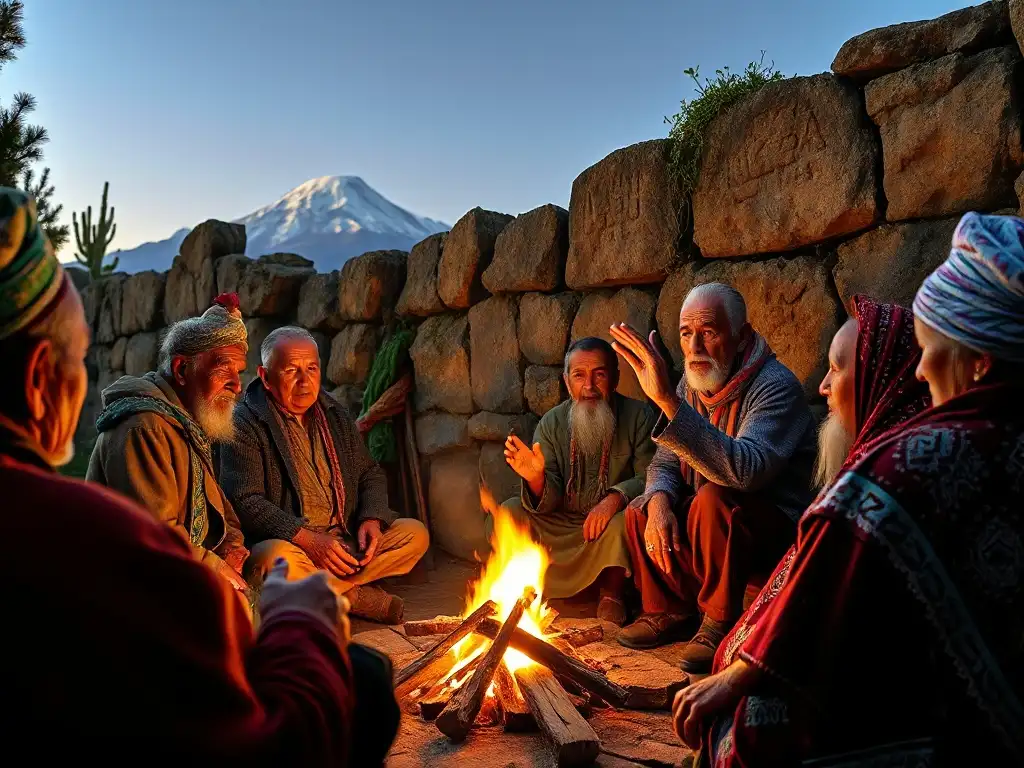
Andean oral tradition played, and continues to play, a pivotal role in shaping the cultural identity of Andean communities. For centuries, before the advent of widespread literacy, storytelling, songs, and rituals served as the primary means of transmitting knowledge, values, and beliefs across generations. This rich oral legacy profoundly impacted the way Andean peoples understood their place in the world, their relationship with their ancestors, and their connection to the land.
The intricate narratives, passed down through generations, provided a framework for understanding their history, cosmology, and social structures. These stories weren't merely entertaining; they were vital tools for cultural preservation and transmission, ensuring the continuity of Andean identity in the face of external pressures.
The vibrant tapestry of Andean cultures, with its diverse expressions and unique characteristics, owes a significant debt to this powerful oral tradition. The enduring strength of Andean cultural identity is, in no small part, a testament to the effectiveness of this ancient method of knowledge transfer.
Reinforcing Cultural Values and Beliefs
Oral narratives in Andean societies weren't simply recounts of past events; they actively reinforced core cultural values and beliefs. Myths and legends, often featuring powerful deities and ancestral figures, instilled a deep respect for nature, community, and reciprocity. Stories about the consequences of defying societal norms served as cautionary tales, reinforcing the importance of adhering to traditional customs and practices.
For example, narratives surrounding the Pachamama (Mother Earth) emphasized the importance of harmonious coexistence with the environment and the need for sustainable practices. These stories weren't abstract concepts; they were deeply embedded in the daily lives of Andean communities, shaping their interactions with each other and the natural world.
The consistent repetition and retelling of these narratives ensured the enduring influence of these values across generations, creating a cohesive cultural framework that guided Andean behavior and social interactions. This constant reinforcement of values through storytelling provided a powerful mechanism for maintaining social order and cultural continuity.
Shaping Collective Memory and Social Cohesion
Andean oral traditions played a crucial role in shaping collective memory and fostering social cohesion within communities. Shared narratives created a sense of belonging and a common identity, uniting people across geographical boundaries and social strata. Recurrent themes and motifs in stories, songs, and rituals strengthened communal bonds and reinforced a sense of shared history and destiny. The act of communal storytelling itself fostered social interaction and strengthened relationships.
Gathering together to listen to or participate in oral performances created opportunities for social bonding and the sharing of experiences. This collective experience of remembering and transmitting knowledge through oral traditions fostered a strong sense of unity and solidarity within Andean communities. The strength of these bonds has been crucial to the survival and resilience of Andean cultures throughout history. The intricate system of kinship and reciprocity, deeply ingrained in Andean society, was reinforced and perpetuated through these shared narratives.
The Importance of Ayni and Reciprocity in Andean Communities
The concept of ayni, a system of reciprocal exchange, lies at the heart of Andean social organization and is deeply interwoven with oral tradition. Stories and songs often illustrate the importance of ayni and the consequences of failing to uphold reciprocal obligations. These narratives reinforce the value of community cooperation and mutual support, emphasizing the interconnectedness of individuals within the social fabric. The principle of ayni extended beyond simple bartering; it encompassed a broader ethos of mutual assistance and shared responsibility. Oral traditions served as a powerful tool for transmitting this complex system of social exchange and ensuring its continuity across generations. The transmission of ayni through oral traditions instilled a deep sense of social responsibility and fostered a strong sense of community among Andean populations. This system, which is still relevant in many Andean communities today, showcases the enduring power of oral tradition in shaping social structures and values.
Challenges to Andean Oral Tradition and its Preservation
Despite its profound influence, Andean oral tradition has faced numerous challenges that threaten its survival and preservation. The impact of colonization, modernization, and globalization has significantly altered the transmission of this invaluable cultural heritage. The ongoing struggle to preserve these traditions underscores the urgency of developing effective strategies to safeguard this vital aspect of Andean cultural identity. The delicate balance between preserving ancient practices and adapting to modern realities presents a significant challenge for Andean communities.
The Impact of Colonialism on Indigenous Knowledge Systems
The arrival of the Spanish conquistadors in the 16th century marked a turning point in the history of Andean oral traditions. The colonial regime actively suppressed indigenous languages and cultural practices, aiming to replace them with European counterparts. The destruction of Inca quipus (knotted-cord record-keeping systems) and the suppression of indigenous rituals and ceremonies significantly disrupted the transmission of knowledge and cultural memory.
The forced conversion to Christianity also led to the suppression of indigenous belief systems and the replacement of traditional narratives with European religious stories. This systematic dismantling of Andean knowledge systems had a profound and lasting impact on oral traditions, leading to the loss of invaluable cultural information and hindering the continuity of indigenous cultural identity. The legacy of this colonial suppression continues to impact Andean communities today.
Modernization and the Loss of Oral Storytelling Practices
Modernization and globalization have presented further challenges to the preservation of Andean oral traditions. The spread of mass media, urbanization, and migration have led to a decline in the frequency of traditional storytelling events and the weakening of intergenerational transmission of oral knowledge. Young people, exposed to different forms of entertainment and communication, are often less interested in learning traditional narratives and practices.
The increasing use of Spanish and other languages in everyday life has also contributed to the erosion of indigenous languages, which are often the primary vehicles for transmitting oral traditions. This shift towards modern forms of communication and entertainment poses a significant threat to the vitality of Andean oral cultures. Efforts to counteract this trend are crucial for ensuring the survival of this rich cultural heritage.
Efforts to Revitalize and Promote Andean Oral Traditions
Despite the challenges, there are ongoing efforts to revitalize and promote Andean oral traditions. Indigenous communities are actively working to reclaim their cultural heritage and transmit their knowledge to younger generations. Educational initiatives, community-based projects, and the use of new technologies are being employed to document, preserve, and promote oral narratives, songs, and rituals. These initiatives aim to raise awareness about the importance of Andean oral traditions and to ensure their survival for future generations.
The increasing recognition of the value of cultural diversity and the growing interest in indigenous knowledge systems are creating new opportunities for the preservation and promotion of Andean oral traditions. The success of these efforts depends on the continued commitment of Andean communities and the support of international organizations and governments. The future of Andean oral tradition rests on the shoulders of those who strive to preserve and celebrate this invaluable cultural legacy.
The Enduring Legacy of Andean Oral History
Andean oral history represents a powerful and enduring legacy, a vibrant tapestry woven from countless threads of storytelling, song, and ritual. For centuries, before the advent of widespread literacy in the region, this oral tradition served as the primary means of transmitting knowledge, preserving cultural identity, and shaping societal structures. This wasn't simply a passive recounting of events; it was an active process of creation and re-creation, with narratives constantly evolving and adapting to reflect changing circumstances.
The stories themselves were not mere entertainment; they contained vital information about agriculture, astronomy, social customs, and spiritual beliefs. Think of the intricate knowledge of Andean cosmology encoded in myths and legends, or the practical wisdom embedded in agricultural songs passed down through generations.
These oral narratives were, and continue to be, a living testament to the resilience and adaptability of Andean cultures. The depth and complexity of this tradition highlight the inadequacy of solely relying on written sources to fully comprehend Andean civilization history.
The Importance of Acknowledging Oral Tradition in Understanding Andean Past
Acknowledging the crucial role of oral tradition is paramount to achieving a comprehensive understanding of the Andean past. For too long, the emphasis on written records – primarily those produced after the Spanish conquest – has skewed our perception of pre-Columbian Andean societies. Written accounts, often biased and filtered through a colonial lens, have frequently overshadowed the richness and complexity of indigenous knowledge systems preserved through oral transmission.
By prioritizing oral traditions, we gain access to perspectives that written records often fail to capture. This includes nuanced understandings of social structures, spiritual beliefs, and daily life that are essential for a more holistic and accurate reconstruction of Andean civilization history.
Ignoring oral accounts is akin to reading only a single chapter of a vast and intricate book, thereby missing the essential context and meaning of the larger narrative. The integration of oral history is not merely an addition; it is a fundamental shift in perspective that allows for a truly inclusive and representative understanding of the Andean past.
How Oral Tradition Complements Archaeological and Written Records
Oral tradition doesn't exist in isolation; it intricately complements archaeological and written records, enriching our understanding of Andean civilization history in ways that no single source could achieve alone. Archaeological findings, such as intricate textiles, sophisticated irrigation systems, and monumental architecture, provide tangible evidence of past societies. Written records, while often limited in scope and perspective, offer valuable insights into certain aspects of Andean life, particularly during the colonial period.
However, both sources often lack the depth and nuance provided by oral traditions. For example, while archaeologists might uncover evidence of a specific ritual, oral narratives can illuminate the meaning, purpose, and social significance of that ritual within the broader cultural context.
Similarly, written accounts might describe political structures, but oral histories can reveal the lived experiences of individuals within those structures, shedding light on social dynamics and power relationships. The convergence of these sources creates a more robust and nuanced understanding of Andean civilization history, providing a richer and more complete picture of the past.
The Future of Andean Memory: Ensuring its Transmission to Future Generations
The preservation and transmission of Andean oral traditions to future generations is a critical responsibility. The rapid pace of globalization, urbanization, and language shift threatens the vitality of these invaluable cultural resources. Many indigenous languages are in danger of extinction, carrying with them a wealth of ancestral knowledge.
To counter this, proactive measures are essential. These include supporting initiatives that document and archive oral narratives, promoting bilingual education programs that value indigenous languages, and fostering intergenerational dialogue within communities. Investing in community-based projects that empower indigenous storytellers and knowledge keepers is crucial.
Furthermore, integrating oral traditions into educational curricula can help ensure that future generations appreciate the richness and complexity of Andean civilization history. This commitment to preserving Andean memory is not merely a matter of cultural preservation; it is a vital step toward ensuring a more complete and accurate understanding of human history itself. The future of Andean memory hinges on our collective commitment to actively safeguarding and celebrating this rich legacy.
- Understanding Andean Civilization History Through Oral Tradition
- The Power of Andean Oral Narratives
- Andean Memory Keepers: Guardians of Tradition
- Decoding the Symbolic Language of Andean Oral History
- The Influence of Andean Oral Tradition on Cultural Identity
- Challenges to Andean Oral Tradition and its Preservation
- The Enduring Legacy of Andean Oral History
- What is the main focus of the "Andean Civilizations" website?
- How does the article, "The Unwritten Library," contribute to understanding Andean civilization history?
- Which Andean civilizations are discussed on the website?
- What makes the Andean civilizations unique in their historical context?
- Where can I find more information about specific aspects of Andean civilization history?
Frequently Asked Questions
What is the main focus of the "Andean Civilizations" website?
The website explores the rich history, culture, art, and technology of the ancient Andean civilizations. It covers major cultures like the Incas, Moche, Nazca, and Tiahuanaco, providing a comprehensive overview of their achievements.
How does the article, "The Unwritten Library," contribute to understanding Andean civilization history?
The article delves into the less documented aspects of Andean history, focusing on how memory and knowledge were preserved and transmitted without a written language. It highlights alternative methods of knowledge transmission.
Which Andean civilizations are discussed on the website?
The website prominently features the Incas, Moche, Nazca, and Tiahuanaco, but also touches upon other significant Andean cultures and their interrelationships. It provides a broad overview of the region's diverse history.
What makes the Andean civilizations unique in their historical context?
The Andean civilizations developed in a challenging geographical environment, mastering complex agricultural techniques, sophisticated architecture, and intricate social structures, all without a widespread written language. Their achievements are remarkable given these constraints.
Where can I find more information about specific aspects of Andean civilization history?
The website itself provides a wealth of information, organized for easy navigation. You can also explore the extensive bibliography and external links provided to delve deeper into specific topics.
Final Reflection: Echoes of the Andes, Whispers of Time
The intricate tapestry of Andean civilization continues to resonate in the present day, a powerful testament to the enduring legacy of a people who shaped their environment and left an indelible mark on history. Understanding their achievements, their struggles, and their sophisticated systems of knowledge is not merely an academic exercise; it's a crucial step in appreciating the rich diversity of human experience and fostering a more inclusive and informed global perspective. The stories woven into the fabric of Andean history offer invaluable lessons for navigating the complexities of our own time.
The enduring power of Andean memory lies not just in monumental structures like Machu Picchu, but in the subtle ways their traditions, beliefs, and innovations continue to shape contemporary Andean life and influence global discussions about sustainability, community, and resilience. The past is never dead. It's not even past.
– William Faulkner. This quote perfectly encapsulates the ongoing relevance of Andean civilization; its influence permeates the present, shaping our understanding of the past and informing our vision for the future. We see echoes of their ingenuity in modern agricultural practices, their spiritual connection to the land in contemporary environmental movements, and their intricate social structures in ongoing debates about equitable societies.
Consider the depth of knowledge embedded within the unwritten library of Andean memory – the oral traditions, the intricate systems of knotted strings (quipus), the subtle nuances of agricultural practices passed down through generations. You, the reader, are now part of this ongoing conversation. Explore further. Seek out the voices of Andean communities, delve deeper into the archaeological discoveries, and challenge yourself to understand the complexities of this remarkable civilization. Let the echoes of the Andes inspire you to appreciate the richness of human history and the enduring power of cultural memory.
Unveil the Secrets of Andean Memory Today!
Thank you for joining us on this enlightening journey through the rich history of Andean civilization. Your curiosity has deepened your understanding and fostered a connection with this vibrant culture. Let's continue celebrating and sharing this remarkable heritage!
- Explore Andean history firsthand: Visit local museums and cultural centers to witness artifacts and learn the stories behind them.
- Engage with the Andean community: Join online forums, attend webinars, or participate in discussions to share your insights and learn from others' perspectives.
- Share your discoveries: Discuss what you've learned with friends and family, perhaps even hosting a gathering to explore Andean traditions, cuisine, or art.
What aspect of Andean culture most captivates you, and how will you share this newfound knowledge with others?