
The Exchange of Crops in the Andes: A Network of Trade and Cultural Diffusion

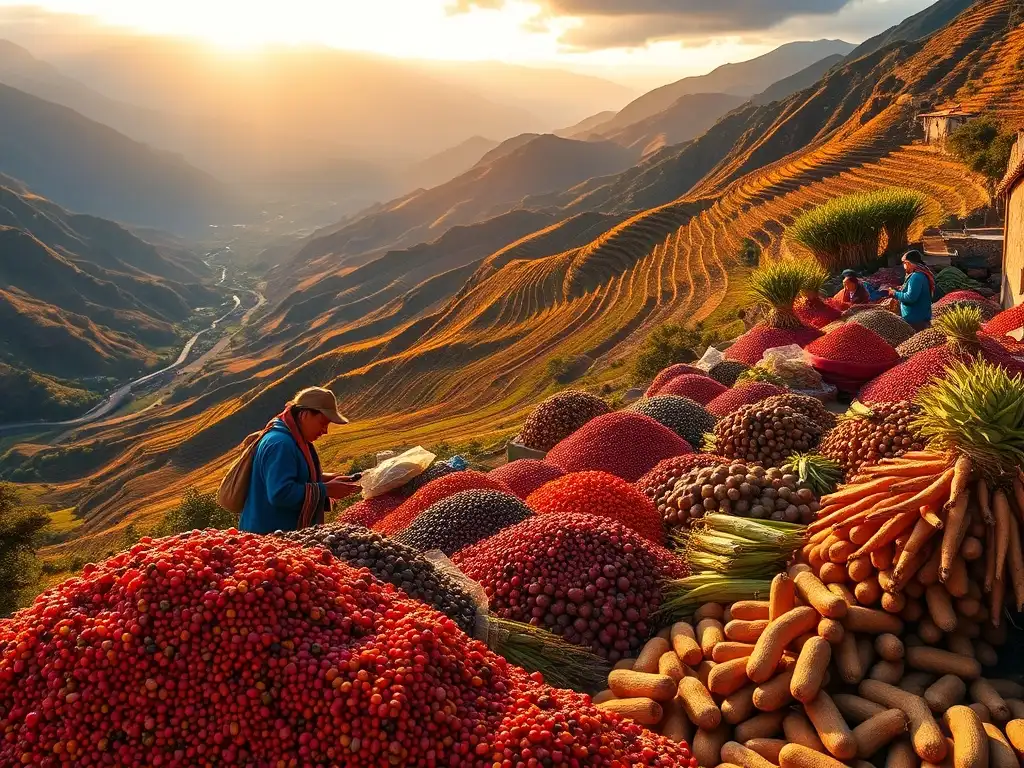
Unravel the mysteries of the Andes! For centuries, a sophisticated network thrived, connecting disparate cultures across towering peaks and arid valleys. Discover the secrets behind the remarkable Andean crop exchange network, a vital artery of trade and cultural diffusion that shaped the destinies of the Incas, Moche, Nazca, and Tiahuanaco. Prepare to be amazed by the ingenuity and interconnectedness of these ancient civilizations – their story awaits.
-
The Andean Crop Exchange Network: A Deep Dive into Trade and Cultural Diffusion
- Introduction to the Importance of Crop Exchange in the Andes
- Pre-Inca Agricultural Trade Routes and Networks
- The Inca Empire and its Impact on the Andean Crop Exchange
- Key Crops in the Andean Exchange System
- Mechanisms of the Andean Crop Exchange
- Cultural Diffusion through the Andean Crop Exchange
- The Legacy of the Andean Crop Exchange Network
- Conclusion: Understanding the Enduring Significance of the Andean Crop Exchange
-
Frequently Asked Questions
- What was the significance of the Andean crop exchange network?
- Which crops were most commonly exchanged in the Andean network?
- How did the Andean crop exchange network function?
- What role did geography play in shaping the Andean crop exchange network?
- How did the Andean crop exchange network contribute to cultural diffusion?
- Final Reflection: Weaving the Threads of Andean Exchange
- Unveil the Rich Tapestry of Andean Culture!
The Andean Crop Exchange Network: A Deep Dive into Trade and Cultural Diffusion
The Andes Mountains, a spine of towering peaks running down the western coast of South America, nurtured a diverse array of ancient civilizations. These societies, including the Incas, Moche, Nazca, and Tiahuanaco, didn't exist in isolation. Their remarkable achievements in agriculture, architecture, and social organization were significantly shaped by a complex and extensive network of crop exchange.
This article delves into the intricacies of the Andean crop exchange network, examining its impact on the economic, social, and cultural development of these fascinating civilizations. We'll explore the pre-Inca trade routes, the role of regional centers, and the lasting legacy of this vital system, showcasing how the exchange of agricultural products fueled innovation and cultural diffusion throughout the Andes. Understanding this network is crucial to appreciating the full complexity and interconnectedness of Andean societies and their remarkable adaptation to a challenging environment.
The efficient and sophisticated system of crop exchange facilitated not only economic prosperity but also the spread of agricultural knowledge, technologies, and cultural practices, creating a vibrant and interconnected Andean world. This investigation into the "Andean crop exchange network" will illuminate the sophisticated strategies employed by these ancient peoples to overcome geographical barriers and build a thriving agricultural economy.
Introduction to the Importance of Crop Exchange in the Andes
The diverse geography of the Andes, ranging from arid coastal deserts to high-altitude plains and lush Amazonian foothills, fostered a remarkable biodiversity of crops. However, the uneven distribution of these resources necessitated a sophisticated system of exchange. Coastal communities, for example, might have excelled in fishing and cotton production, while highland communities specialized in potatoes, quinoa, and other high-altitude crops.
The exchange of these goods wasn't simply a matter of economic trade; it was a fundamental element of survival and cultural interaction. This intricate network fostered interdependence, facilitating the spread of agricultural techniques, knowledge about different crops, and even religious and artistic ideas. The absence of a centralized, unified empire for much of the pre-Inca period highlights the sophisticated self-organization required to maintain such a widespread and effective exchange system.
The sheer scale and complexity of this network demonstrate the advanced social and logistical capabilities of Andean societies long before the arrival of the Inca. The exchange wasn't haphazard; evidence suggests planned routes and established trading hubs facilitated the movement of goods across vast distances and varied terrains.
Pre-Inca Agricultural Trade Routes and Networks
Before the Inca Empire unified much of the Andes, a vibrant network of agricultural trade already existed. Archaeological evidence, such as the discovery of diverse crop remains at sites far from their origins, points to extensive exchange across significant geographical distances. This trade wasn't limited to agricultural products; textiles, pottery, and other valuable goods were also exchanged, further solidifying the interconnectedness of Andean communities.
The absence of standardized weights and measures suggests a system based on reciprocity and trust, further highlighting the complex social structures that underpinned this economic activity. The routes themselves were likely adapted to the challenging Andean terrain, utilizing established pathways, river valleys, and mountain passes. The development of these routes, and the ongoing maintenance of them, would have required significant collaborative effort and a degree of centralized planning, even without a single overarching authority.
Early Evidence of Agricultural Product Exchange
Early evidence of agricultural product exchange in the Andes comes from various sources. Archaeological excavations at sites like [Specific site name pending] have unearthed remnants of crops not native to the immediate region, indicating long-distance trade. Analysis of pottery shards and textile fragments often reveals patterns and styles consistent with different regions, pointing towards exchange networks. Furthermore, isotopic analysis of human remains can reveal dietary patterns that reflect the consumption of crops from diverse geographical areas.
This multifaceted approach provides a compelling picture of the extent and sophistication of pre-Inca agricultural exchange. The consistent presence of non-local crops at numerous sites across vastly different ecological zones strongly supports the existence of a well-established, long-standing network connecting diverse Andean communities. The sheer volume of evidence points to a system that was not only extensive but also deeply ingrained in the social and economic fabric of Andean life.
Regional Trade Centers and their Role
Certain locations served as pivotal regional trade centers, facilitating the exchange of goods and information. These centers often possessed advantageous geographical locations, such as river valleys or mountain passes, offering easy access to multiple trade routes. [Specific examples of trade centers pending] These centers likely played a crucial role not only in the physical exchange of goods but also in the dissemination of agricultural knowledge and techniques.
The presence of specialized artisans and craftspeople in these centers further suggests a level of economic and social complexity that facilitated the efficient operation of the exchange network. The strategic placement of these centers, coupled with the evidence of specialized production and exchange, indicates a level of planning and organization that was far more advanced than previously thought.
The development of these regional hubs highlights the importance of cooperation and communication in maintaining a successful and sustainable trade network across the diverse Andean landscape. The long-term success of these centers speaks to the enduring strength and resilience of the Andean crop exchange network.
The Inca Empire and its Impact on the Andean Crop Exchange
The Inca Empire, at its zenith from the 15th to the 16th centuries, significantly reorganized and expanded the pre-existing Andean crop exchange network. Prior to Inca rule, exchange was largely a regional affair, facilitated by smaller-scale networks and reciprocal gift-giving. The Inca, however, with their sophisticated administrative system, implemented policies that dramatically increased the volume and reach of crop trade throughout their vast empire.
This involved not only the efficient movement of goods but also the standardization of practices and the integration of diverse agricultural systems. The Inca's centralized control allowed for the redistribution of surplus crops from fertile regions to areas less productive, ensuring food security throughout the empire and mitigating the effects of localized droughts or crop failures.
This centralized system, while highly effective in managing resources, also fostered a greater degree of cultural exchange and homogenization across the different Andean regions. The impact of Inca rule on the Andean agricultural landscape was profound and long-lasting, shaping the patterns of crop exchange and cultivation for centuries to come.
Inca Infrastructure Facilitating Crop Distribution
The Inca’s mastery of engineering played a crucial role in their ability to manage and distribute crops effectively across their empire. Their extensive road network, the Qhapaq Ñan, served as the arteries of this system, facilitating the movement of goods and people between distant regions. These roads, often paved and meticulously maintained, were strategically placed to connect agricultural centers with urban populations and administrative hubs. Relay stations and waypoints provided rest stops for travelers and storage for goods in transit.
Bridges, some incredibly sophisticated for their time, spanned rivers and gorges, ensuring continuous connectivity even across challenging terrain. The careful planning and construction of this infrastructure underscore the Inca's commitment to efficient and reliable crop distribution, a vital element in maintaining social order and economic stability. The sheer scale of the Qhapaq Ñan and its associated infrastructure remains a testament to the Inca’s organizational prowess and engineering skills.
The Role of the Qollqas (Storage Facilities) in the Exchange
The qollas were strategically located granaries and storehouses integral to the Inca's system of crop exchange and redistribution. These structures, built from stone and often integrated into the landscape, served as vital hubs for the accumulation and distribution of agricultural surpluses.
Their construction varied depending on location and climate, with some being simple structures while others were complex, multi-chambered buildings. The qollas not only facilitated the storage of crops but also played a crucial role in regulating the flow of goods and ensuring food security during times of scarcity.
The Inca's meticulous record-keeping system allowed them to track the quantity and type of crops stored in each qolqa, enabling efficient management of resources and strategic redistribution to meet the needs of different regions and populations. The qollas represent a sophisticated example of the Inca's administrative capacity and their understanding of the importance of logistical planning in maintaining social stability and economic prosperity.
Standardized Measures and Currency in Trade
The Inca Empire implemented a system of standardized measures and a form of currency to facilitate fair and efficient trade within their extensive network. While they did not use coinage in the same way as many other civilizations, they utilized a system based on quipus, knotted cords used for record-keeping, to track quantities of goods and services. This system allowed for accurate measurement and accounting of traded goods, ensuring transparency and preventing disputes.
The Inca also used standardized units of measurement for various crops, ensuring consistency across different regions. While the precise details of their system are still being researched, the evidence suggests a sophisticated understanding of economic principles and a commitment to creating a fair and regulated market. This standardized approach played a vital role in the success of the Andean crop exchange network under Inca rule, promoting trust and efficiency in trade.
Key Crops in the Andean Exchange System
The Andean region boasts an incredible diversity of crops, many of which were vital to the region's economy and culture for centuries. The exchange of these crops facilitated not only the sustenance of large populations but also the spread of agricultural knowledge and practices. The most important crops were often adapted to specific altitudes and microclimates, leading to a complex interplay of agricultural specialization and trade. This intricate system resulted in a robust and resilient food supply, highlighting the ingenuity of Andean agricultural practices.
Maize (Corn) and its Varieties
Maize, or corn, was a staple crop throughout the Andes, with numerous varieties adapted to different ecological zones. From the high-altitude choclo to the sweeter varieties grown in lower elevations, maize's versatility made it a crucial component of the Andean diet and a key commodity in the exchange network. Its nutritional value, ease of cultivation (once established), and ability to be stored for extended periods contributed to its importance.
Different varieties were traded between regions, reflecting both ecological specialization and cultural preferences. The exchange of maize seed and knowledge contributed to the diversification of crops within different communities, enhancing resilience and food security.
Potatoes: Diversity and Distribution
Potatoes, another cornerstone of the Andean diet, exhibit an astonishing level of biodiversity. Thousands of varieties exist, each adapted to specific altitudes, soil conditions, and climates. The high Andes, in particular, are renowned for their potato diversity.
This diversity was a crucial element of the Andean crop exchange network, with different varieties traded between regions to ensure food security and adapt to varying environmental conditions. The exchange of potato varieties also facilitated the spread of agricultural knowledge and techniques related to cultivation and storage. The resilience of potatoes and their adaptability to diverse environments made them a reliable and essential part of the Andean food system and trade network.
Quinoa and its Importance in the Andean Diet
Quinoa, a highly nutritious grain, holds significant cultural and nutritional importance in the Andes. Its high protein content and adaptability to harsh conditions made it a valuable crop in the exchange network. Quinoa was not only a staple food but also played an important ceremonial role in many Andean cultures.
Its cultivation and trade connected different communities, contributing to the social and economic fabric of the region. The exchange of quinoa seeds and cultivation techniques helped to spread this valuable crop across the Andean landscape, further solidifying its importance in the diet and culture of the region. The nutritional value and cultural significance of quinoa contributed to its central role in the Andean crop exchange system.
Other Vital Andean Crops: Oca, Ulluco, and Mashua
Beyond maize, potatoes, and quinoa, a wide array of other crops contributed to the richness and diversity of the Andean exchange network. Oca, ulluco, and mashua are examples of Andean root crops that were widely cultivated and traded. Each possesses unique nutritional properties and adaptations to specific ecological niches. Oca, with its slightly acidic taste, was often consumed fresh or processed into beverages.
Ulluco, with its varied colors and flavors, offered a versatile ingredient for different dishes. Mashua, known for its ability to grow at high altitudes, provided an important source of nutrition in challenging environments. The exchange of these crops, along with techniques for their cultivation and preservation, enriched the Andean agricultural landscape and fostered a complex and interconnected exchange network. These root crops, along with many others, highlight the remarkable diversity and resilience of Andean agriculture and its crucial role in the sustenance of the population.
Mechanisms of the Andean Crop Exchange
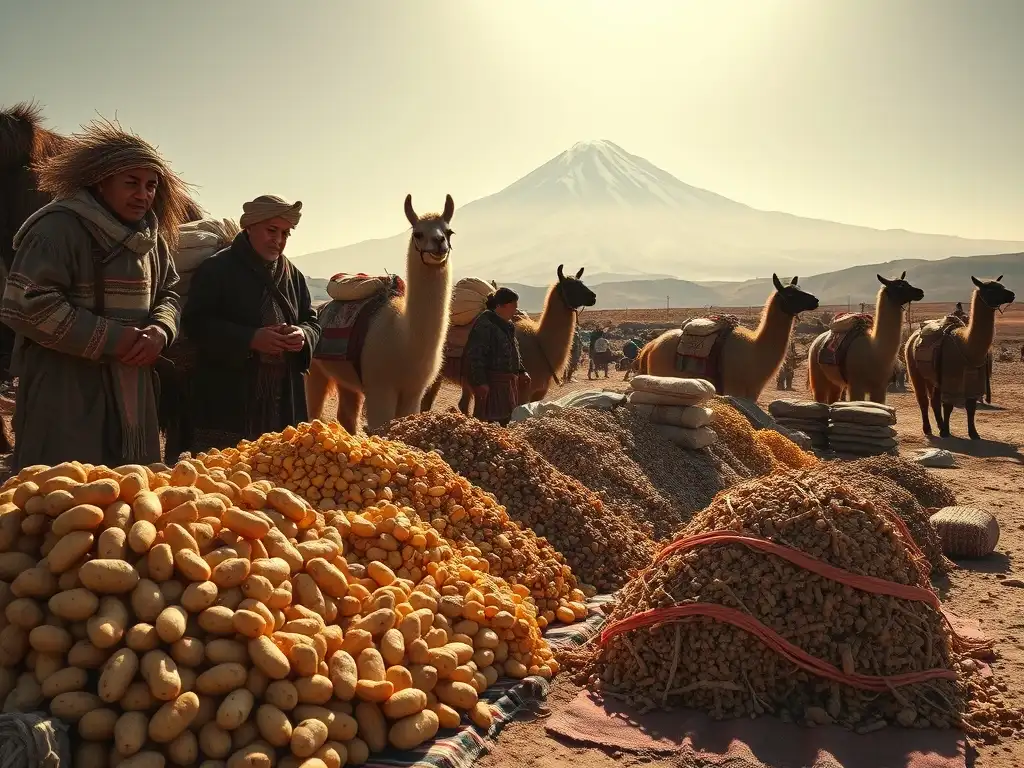
The intricate Andean crop exchange network relied on a sophisticated interplay of various mechanisms, facilitating the movement of agricultural goods across vast distances and diverse ecological zones. This wasn't a haphazard system; rather, it was a carefully constructed network reflecting centuries of adaptation and refinement. The success of this network hinged on several key components, including well-established trade routes, effective transportation systems, and robust social structures that governed exchange.
Understanding these mechanisms is crucial to appreciating the scale and complexity of Andean agriculture. The system wasn't solely based on economic transactions; it was deeply interwoven with social obligations and reciprocal relationships, solidifying community bonds and ensuring the continuous flow of essential resources. The efficient movement of goods wasn't simply a matter of supply and demand; it was a fundamental element of Andean societal structure, contributing significantly to the stability and resilience of these remarkable civilizations.
Bartering and Reciprocity Systems
Bartering formed the cornerstone of the Andean crop exchange. Communities specialized in producing specific crops suited to their local environments – potatoes in the highlands, maize in the valleys, cotton in the coastal regions. This specialization led to a system of reciprocal exchange, where communities traded their surpluses for goods they lacked. For example, a highland community might exchange potatoes for maize or cotton textiles from lower-altitude settlements.
This wasn't simply a commercial transaction but often involved complex social obligations and reciprocal gift-giving, strengthening social ties and ensuring the continued flow of resources even during periods of scarcity. The system was deeply embedded within the social fabric, functioning as a form of social insurance and fostering inter-community cooperation. Archaeological evidence suggests the existence of formalized reciprocal exchange systems, evident in the distribution of similar artifacts and goods across geographically distant sites.
Specialized Markets and Trade Fairs
Beyond bartering, the Andean civilizations developed specialized markets and trade fairs. These weren't random gatherings but rather organized events occurring at specific locations known for their strategic importance. These markets served as central hubs for the exchange of a wide range of goods, including agricultural products, textiles, pottery, and precious metals.
The scale of these markets varied, ranging from small local gatherings to large regional fairs that attracted traders from across vast distances. The presence of standardized weights and measures in certain regions suggests a degree of economic sophistication and regulation within these markets, ensuring fair exchange and preventing exploitation. Furthermore, the location of many of these markets near significant geographical features, such as river crossings or mountain passes, highlights their role in connecting disparate regions and facilitating long-distance trade.
The Role of Llamas in Transporting Goods
Llamas played a crucial role in the Andean crop exchange network, serving as essential pack animals for transporting goods across challenging terrains. Their ability to navigate mountainous regions and carry substantial loads made them indispensable for moving agricultural products and other commodities over long distances. The domestication of llamas significantly enhanced the efficiency and reach of the exchange network, allowing for the transport of goods to communities otherwise inaccessible by other means.
Their importance extended beyond mere transportation; llamas also provided wool for textiles, meat for sustenance, and dung for fertilizer, further integrating them into the fabric of Andean society. The efficient use of llamas, combined with well-established trail systems, represents a remarkable feat of logistical organization and adaptation to the Andean environment.
Cultural Diffusion through the Andean Crop Exchange
The Andean crop exchange network wasn't merely an economic system; it also served as a powerful mechanism for cultural diffusion, facilitating the spread of agricultural knowledge, technologies, and traditions across vast geographical areas. This exchange fostered a remarkable degree of cultural interconnectedness, shaping the identities and practices of Andean communities. The movement of crops was often accompanied by the movement of ideas, beliefs, and artistic styles, creating a rich tapestry of cultural exchange. This intermingling of cultures is reflected in the diversity of agricultural practices and beliefs found across the Andean region.
The Spread of Agricultural Knowledge and Techniques
The exchange of crops inevitably led to the exchange of agricultural knowledge and techniques. Farmers learned from each other, adopting new cultivation methods, irrigation systems, and crop varieties adapted to different environments. This constant exchange of information helped to improve agricultural yields and adapt to changing environmental conditions.
The sharing of knowledge wasn't limited to practical techniques; it also encompassed beliefs and rituals related to agriculture, further strengthening the interconnectedness of Andean communities. The spread of agricultural innovations, such as terracing techniques or advanced irrigation systems, showcases the dynamic nature of Andean agricultural development, driven by continuous learning and adaptation.
Impact of Crop Exchange on Andean Diets and Traditions
The Andean crop exchange had a profound impact on the diets and culinary traditions of the region. The availability of a wide range of crops from different ecological zones led to diverse and nutritious diets. The exchange of crops also contributed to the development of unique culinary traditions, as communities adapted recipes and cooking methods to incorporate new ingredients.
Festivals and rituals centered around particular crops further highlighted their cultural significance, demonstrating the deep entanglement of food, culture, and social life in Andean societies. The diversification of diets, fueled by the crop exchange, contributed to the overall resilience and health of Andean populations.
Cultural Significance of Specific Crops in Different Regions
Different crops held distinct cultural significance in various Andean regions. For instance, maize was a staple crop across many regions, but its symbolic meaning and ritualistic uses varied. Potatoes, highly versatile and adaptable to diverse environments, were central to the highland cultures, representing not just sustenance but also a core element of their identity.
Similarly, coca leaves, with their religious and medicinal significance, held a prominent place in Andean societies, illustrating the profound interconnectedness between agriculture, religion, and social life. The diverse meanings attributed to specific crops highlight the richness and complexity of Andean cultures and their intricate relationship with their environment. The exchange of these crops, therefore, also facilitated the exchange of deeply rooted cultural beliefs and practices.
The Legacy of the Andean Crop Exchange Network
The Andean crop exchange network left an indelible mark on the region's history, shaping its cultural landscape and agricultural practices for millennia. The intricate system of trade routes and reciprocal gift-giving fostered not only economic prosperity but also a remarkable degree of cultural exchange and adaptation. The movement of crops wasn't merely a transfer of goods; it represented the dissemination of knowledge, techniques, and beliefs associated with cultivation, processing, and consumption.
This interconnectedness facilitated the development of diverse agricultural systems adapted to the varied Andean ecologies, from the high-altitude puna grasslands to the coastal deserts. The legacy of this network is evident in the remarkable biodiversity of Andean crops and the sophisticated agricultural techniques still practiced today.
The network's resilience in the face of environmental challenges and social upheaval underscores the ingenuity and adaptability of Andean societies. Understanding this legacy is crucial for appreciating the complexity and richness of Andean civilization and its enduring impact on the region.
Influence on Modern Andean Agriculture
The influence of the ancient Andean crop exchange network on modern Andean agriculture is profound and multifaceted. Many crops cultivated today, such as potatoes, maize, quinoa, and beans, are direct descendants of those exchanged throughout the pre-Columbian period. The sophisticated irrigation systems, terracing techniques, and crop rotation methods developed by ancient Andean farmers continue to inform modern agricultural practices.
These traditional techniques, often adapted to meet contemporary challenges, are proving remarkably resilient and sustainable. Furthermore, the knowledge of traditional crop varieties, their cultivation, and processing methods, passed down through generations, is invaluable in maintaining biodiversity and adapting to climate change. Many modern Andean farmers still utilize traditional seed saving practices, ensuring the genetic diversity of their crops.
This deep-rooted connection to the past significantly impacts the sustainability and resilience of Andean agriculture in the present. For example, the resurgence of quinoa cultivation as a globally recognized "superfood" is directly linked to the preservation of ancient Andean agricultural knowledge.
Lessons for Sustainable Agriculture and Food Security
The Andean crop exchange network offers invaluable lessons for achieving sustainable agriculture and ensuring global food security in the 21st century. The ingenuity of Andean farmers in adapting crops to diverse ecological zones, their sophisticated water management techniques, and their emphasis on crop diversification provide a compelling model for sustainable agricultural practices. The network's resilience in the face of environmental challenges and population growth highlights the importance of ecological balance and biodiversity in ensuring food security.
The focus on local knowledge and community-based management of resources offers a compelling alternative to industrialized, large-scale agriculture. By studying and implementing aspects of the Andean system, we can learn to create more resilient and sustainable agricultural systems capable of feeding a growing global population while minimizing environmental impact. This includes emphasizing crop diversity, reducing reliance on synthetic inputs, and incorporating traditional knowledge into modern agricultural practices.
Preserving Traditional Knowledge and Practices
Preserving the traditional knowledge and practices associated with the Andean crop exchange network is crucial for maintaining biodiversity, ensuring food security, and safeguarding cultural heritage. This requires a concerted effort to document, protect, and promote traditional farming techniques, seed saving practices, and the knowledge of diverse crop varieties. Supporting local farmers and communities in maintaining their traditional agricultural systems is essential. This includes providing them with access to resources, training, and markets that value their traditional products and knowledge. Furthermore, efforts to integrate traditional knowledge with modern scientific research can help to further refine and adapt ancient farming techniques to meet the challenges of the present. The preservation of this rich heritage is not only a matter of cultural significance but also a key to achieving sustainable agriculture and ensuring food security for future generations. This includes initiatives to create seed banks preserving heirloom varieties and supporting community-based agricultural research.
Conclusion: Understanding the Enduring Significance of the Andean Crop Exchange
The Andean crop exchange network stands as a testament to the ingenuity, adaptability, and interconnectedness of ancient Andean societies. Its enduring legacy is visible in the region's diverse agricultural landscape, the resilience of its farming communities, and the wealth of traditional knowledge that continues to inform modern practices.
Understanding the complexity and significance of this network is crucial for appreciating the rich tapestry of Andean civilization and for drawing valuable lessons for achieving sustainable agriculture and ensuring global food security. The network's emphasis on biodiversity, resource management, and community-based approaches offers a compelling model for a more sustainable and equitable future.
The continued study and preservation of this ancient system are essential for safeguarding both cultural heritage and the future of Andean agriculture. The "Andean crop exchange network" represents not just a historical phenomenon, but a living legacy that continues to shape the region and offers valuable insights for the world.
Frequently Asked Questions
What was the significance of the Andean crop exchange network?
The Andean crop exchange network was crucial for the survival and prosperity of ancient Andean civilizations. It facilitated the distribution of vital food resources across diverse ecological zones, ensuring food security and supporting population growth. This network also fostered cultural exchange and interaction.
Which crops were most commonly exchanged in the Andean network?
Key crops exchanged included potatoes, maize, quinoa, beans, and coca. The specific crops varied depending on the altitude and climate of the region, creating a complex system of resource sharing. Specialized crops were traded for those not grown locally.
How did the Andean crop exchange network function?
The network relied on a combination of reciprocal exchange, tribute systems, and market trade. Extensive trail systems connected different regions, facilitating the movement of goods and people. Specialized transport systems were also employed, like llama caravans.
What role did geography play in shaping the Andean crop exchange network?
The diverse geography of the Andes, with its varied altitudes and climates, was fundamental. It created ecological niches where different crops thrived, making exchange essential for survival. The challenging terrain influenced the types of transport and trade routes used.
How did the Andean crop exchange network contribute to cultural diffusion?
The exchange of crops also facilitated the spread of ideas, technologies, and religious beliefs. Interaction between different groups fostered cultural blending and innovation. This exchange is evident in the shared artistic motifs and architectural styles found across different Andean cultures.
Final Reflection: Weaving the Threads of Andean Exchange
The intricate network of crop exchange in the Andes wasn't merely a system of trade; it was the very lifeblood of a vibrant civilization, a testament to human ingenuity and collaboration, and its echoes resonate powerfully in our interconnected world today. Understanding this ancient system offers crucial insights into sustainable agriculture, resilient communities, and the enduring power of cultural exchange in shaping societies. The lessons learned from the ingenuity of Andean farmers remain strikingly relevant in the face of modern challenges like climate change and food security.
The enduring legacy of the Andean crop exchange network profoundly shaped not only the agricultural landscape but also the cultural identity of the region. The sharing of crops, techniques, and knowledge fostered a sense of interconnectedness and mutual dependence that transcended geographical boundaries. This collaborative spirit is a powerful reminder of the potential for human cooperation to overcome adversity. The mountains themselves are not barriers, but rather pathways that connect us,
a Quechua proverb aptly states, reflecting the spirit of this ancient exchange. This resonates deeply with me, highlighting the importance of understanding and celebrating the interconnectedness of our world.
Consider the impact of this ancient network on your own life. How can we, in our modern context, learn from the ingenuity and resilience of the Andean people? Think about the food on your plate – where did it come from?
Who were the hands that cultivated it? Let this reflection inspire you to appreciate the interconnectedness of our global food system and to support sustainable and equitable practices that honor the rich history of agricultural exchange and the wisdom of those who came before us. Let us strive to build a future where collaboration and respect for diverse cultures are as vital as the crops we cultivate.
Unveil the Rich Tapestry of Andean Culture!
Thank you for exploring the intricate world of Andean crop exchange! Your curiosity highlights the vital link between trade and the development of Andean civilizations. Let's delve deeper into this fascinating topic.
- Join the discussion: Share your thoughts on Andean crop exchange in the comments below. What aspect finds you most intrigued?
- Expand your knowledge: Explore our resources section for articles, documentaries, and further insights into Andean trade and cultural practices.
- Share this discovery: Share this article with friends and on social media to help others appreciate the richness of Andean civilizations.
How might modern trade practices benefit from studying the sophisticated networks of the ancient Andes?