
Aymara Place Names: Deciphering the Meaning of Andean Toponyms

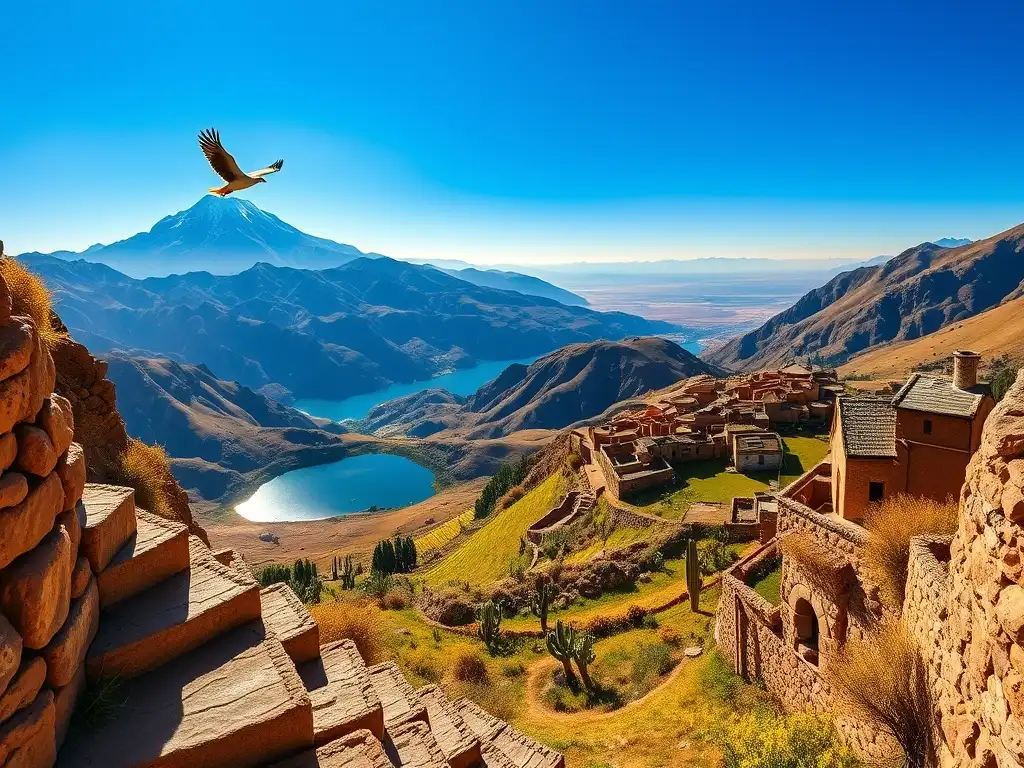
Unravel the mysteries woven into the very landscape of the Andes! Journey through time as we delve into the fascinating world of ancient Andean civilizations, exploring their intricate cultures, breathtaking artistry, and remarkable ingenuity. But what secrets do the mountains themselves hold? Discover the captivating story behind Aymara place names and unlock the meaning hidden within these powerful toponyms – a journey that will redefine your understanding of the Andes. Prepare to be amazed.
The majestic Andes Mountains, a spine of earth stretching along the western edge of South America, are home to a rich tapestry of cultures and histories. Among these, the Aymara people stand out, their enduring legacy etched not only in their vibrant traditions and intricate art but also in the very names they gave to the land they inhabited.
This article delves into the fascinating world of Aymara toponymy – the study of place names – revealing the insights these names offer into the Aymara worldview, their relationship with the environment, and their enduring connection to the Andean landscape. Understanding Aymara place names unlocks a deeper comprehension of their history, culture, and the profound meaning they imbue in the geographical features that shaped their lives.
We will explore the linguistic roots, cultural significance, and the methods used to decipher the meaning behind these often-cryptic yet evocative names, ultimately enriching our understanding of "Aymara place names meaning."
Introduction to Aymara Toponymy: Unveiling the Landscape's Language
Aymara toponymy is more than just a list of names; it's a window into the Aymara understanding of their world. The names given to mountains, rivers, valleys, and settlements are rarely arbitrary. Instead, they reflect a deep connection to the natural environment and often describe key geographical features, significant events, or important cultural elements. For example, a mountain might be named for its shape (" Jallalla," meaning "great mountain"), its color (" Phuyu," meaning "red"), or a mythical association.
Similarly, a river's name might reflect its characteristics (swift-flowing, meandering) or its importance as a source of life and sustenance. The careful observation of these naming patterns reveals a sophisticated system of classification and an intimate knowledge of the land. Deciphering these names requires a nuanced understanding of Aymara linguistics, its rich vocabulary, and the cultural context in which these names were created and passed down through generations.
Understanding the etymology—the origin and history of a word—is crucial in uncovering the true meaning of these ancient place names. This requires careful analysis of linguistic roots and morphemes (meaningful units within a word), often comparing them to related Quechua words and other Andean languages. The process is intricate and often requires collaboration between linguists, anthropologists, and historians.
The Significance of Place Names in Aymara Culture
Aymara place names are not merely geographical markers; they are integral to Aymara cultural identity and worldview. They represent a powerful link to ancestral lands and traditions, reinforcing a sense of belonging and continuity. The oral transmission of these names, passed down through generations, underscores their importance in maintaining cultural memory.
Many names hold deep spiritual significance, reflecting the Aymara reverence for nature and the sacredness of particular places. These sites are often associated with myths, legends, and important historical events, making them crucial elements in the Aymara collective consciousness. Furthermore, the names themselves often reflect the socio-political structure of Aymara society, with some names indicating the location of former settlements or administrative centers.
The study of Aymara toponymy, therefore, offers valuable insights into the social organization, beliefs, and historical experiences of the Aymara people. The persistence of these names, despite centuries of colonization and cultural pressures, testifies to the resilience and enduring cultural strength of the Aymara people and their deep connection to their ancestral lands. Analyzing these names provides a powerful tool for understanding their history and cultural significance, revealing layers of meaning embedded within the seemingly simple names of Andean places.
Linguistic Roots of Aymara Toponyms: Understanding the Language
The Aymara language, a vibrant and ancient tongue spoken in the Andes Mountains, holds the key to understanding many place names in the region. Its influence extends across Bolivia, Peru, Chile, and Argentina, leaving a rich tapestry of toponyms reflecting the deep connection between the Aymara people and their environment. Understanding the linguistic roots of these place names requires delving into the structure and vocabulary of the Aymara language itself.
The language, classified as a member of the Aymaran family, boasts a complex system of morphology and syntax, resulting in place names that are often rich in meaning and historical context. Many words combine to create compound names, signifying a combination of geographical features or historical events. Successfully deciphering these names requires careful consideration of the various components and their individual meanings within the Aymara lexicon.
Furthermore, the evolution of the language over centuries has impacted how certain place names are interpreted today, necessitating a historical linguistic approach to fully appreciate their etymology. This interdisciplinary approach, combining linguistic analysis with historical and geographical context, offers a powerful tool for understanding the cultural heritage embedded within Aymara place names.
Aymara Grammar and its Influence on Place Names
Aymara grammar significantly shapes the structure of its place names. The language uses agglutinative morphology, meaning that grammatical information is conveyed through the addition of suffixes and prefixes to a root word. This process often results in lengthy place names composed of multiple morphemes, each carrying specific meaning.
For example, the location of a place, its characteristic features (like a river or mountain), or even its historical significance might be encoded within the name's structure. Understanding the order of these morphemes and their grammatical functions is crucial for accurate interpretation. The use of possessive suffixes, for instance, can indicate ownership or association with a particular group or individual.
Similarly, the use of locative suffixes can pinpoint the precise location described in the name. This grammatical complexity necessitates a thorough understanding of Aymara morphology to correctly analyze and translate these place names. Without acknowledging this grammatical structure, mistranslations and misinterpretations are likely to occur, hindering a true understanding of the toponym's meaning and historical significance.
Common Aymara Words Found in Toponyms
Several common Aymara words repeatedly appear in place names across the Andes. Words related to geographical features, such as uma (water), qala (rock or stone), and lluq'i (lake), frequently form the basis of many toponyms. These words often combine with other morphemes to provide more specific descriptions.
For instance, a place name might incorporate uma combined with a suffix indicating location or size, giving a more precise meaning like "the big water" or "the water of the valley." Similarly, words relating to flora and fauna, such as wiña (vine) or llama, are also common. These words reflect the importance of the natural environment in the lives of the Aymara people.
Finally, words referring to human settlements or activities, such as marka (town) or pata (place), often feature prominently in toponyms, indicating the historical presence and activities of Aymara communities. Analyzing the frequency and combination of these common words provides valuable insights into the cultural and environmental significance of specific locations.
Analyzing Aymara Place Names: A Guide to Interpretation
Deciphering the meaning of Aymara place names requires a systematic approach. It's not enough to simply translate individual words; understanding the context and the grammatical relationships between words is crucial. This process involves several key steps.
First, carefully transcribe the place name, paying attention to spelling variations and dialectal differences. Next, break down the name into its constituent morphemes, identifying the root words and any prefixes or suffixes. Then, consult Aymara dictionaries and linguistic resources to determine the meaning of each morpheme.
Finally, consider the geographical and historical context of the place name, which can shed light on its meaning and significance. This multi-faceted approach combines linguistic analysis with historical and geographical research, allowing for a more comprehensive understanding of these names and the stories they tell. The process can be challenging, requiring expertise in both Aymara linguistics and Andean history, but the rewards of uncovering the rich cultural heritage embedded in these names are significant.
Identifying Key Components in Aymara Toponyms
A crucial step in interpreting Aymara place names lies in identifying the key components that make up the toponym. This involves recognizing the root word, which often denotes a geographical feature, animal, plant, or human activity. For instance, the root word qala (rock or stone) in a place name indicates a rocky or mountainous area. Identifying prefixes and suffixes is equally important as they add layers of meaning, specifying location, size, or ownership. A suffix like -ni might indicate location, meaning "at" or "in," while a prefix like jana- might suggest a large or important place. The combination of these elements provides a more nuanced understanding of the place name's meaning. For example, a place name might combine qala (rock) with -ni (location) and jana- (large), resulting in a meaning such as "at the large rock" or "in the great stone place." This detailed breakdown is essential for accurate interpretation.
Common Suffixes and Prefixes in Andean Place Names
Aymara place names frequently utilize suffixes and prefixes to modify the meaning of the root word. Common suffixes include -ni (location), -ta (place), and -ku (place of). These suffixes provide crucial contextual information, clarifying the spatial relationship or function of the place described. For example, qala-ta would mean "rock place," while uma-ni would translate to "at the water." Prefixes, on the other hand, often indicate size, importance, or other descriptive elements.
jana- (large), ch'ixi- (small), and suyu- (region) are among the common prefixes. These prefixes and suffixes, when combined with root words, create a complex and nuanced system of meaning within Aymara place names, making the analysis challenging but rewarding. Understanding these common morphemes is essential for accurately interpreting the meaning of the toponym. The absence of this knowledge can lead to significant misinterpretations.
Examples of Aymara Place Name Meanings: Case Studies
Several Aymara place names offer compelling case studies for understanding the complexities of toponym interpretation. [Specific examples of Aymara place names and their detailed meanings pending]. Detailed analysis of these names reveals how the combination of root words, prefixes, and suffixes conveys rich information about the geographical features, historical significance, and cultural importance of the location.
Analyzing these case studies demonstrates the importance of a careful and systematic approach to interpreting Aymara toponyms, highlighting the need for linguistic expertise and historical contextualization. Further research and documentation of these names are crucial for preserving and understanding the rich cultural heritage embedded within them. The comparison between different place names with similar elements can also illuminate subtle variations in meaning and usage across different regions and dialects.
Geographical Distribution of Aymara Toponyms: Mapping the Language
The Aymara language, with its rich tapestry of place names, boasts a geographical distribution primarily concentrated in the Andes Mountains, encompassing parts of Bolivia, Peru, and Chile. This distribution isn't uniform, however. Certain areas exhibit a significantly higher density of Aymara toponyms than others, reflecting historical population centers and the enduring influence of Aymara culture. Understanding this distribution requires analyzing historical migration patterns, linguistic shifts, and the lasting impact of pre-Columbian settlements.
The intricate relationship between geography and language is crucial for unraveling the story embedded within these place names. Further research into historical maps and demographic data would significantly enhance our understanding of this dynamic distribution. The spread of Aymara toponyms also reveals insights into the historical reach and influence of Aymara-speaking communities. Their presence in seemingly disparate locations highlights the interconnectedness of Andean societies and the enduring legacy of Aymara culture across the region.
Areas with High Concentration of Aymara Place Names
Several regions display a notably high density of Aymara place names. The Altiplano, the high plateau region of the Andes, is one such area. Cities like La Paz, El Alto (both in Bolivia), and Puno (in Peru) feature numerous Aymara toponyms in their surrounding areas, reflecting the historical and ongoing presence of Aymara-speaking populations.
The Lake Titicaca basin, a crucial area for Aymara civilization, exhibits another high concentration. Many villages and geographical features around the lake retain their original Aymara names, testament to the enduring cultural significance of this region. The southern altiplano of Bolivia, particularly around the departments of Oruro and Potosí, also displays a rich tapestry of Aymara toponyms, indicative of a strong historical Aymara presence.
Identifying and cataloging these areas is crucial for understanding the historical distribution and linguistic influence of the Aymara language. Further research, potentially involving GIS mapping techniques, could help us better visualize and understand these concentrations.
The Influence of Aymara Toponymy on the Andean Region
Aymara toponyms haven't merely marked specific locations; they've profoundly shaped the cultural landscape of the Andean region. The prevalence of Aymara names in place-names across Bolivia, Peru, and Chile underscores the language's deep historical roots and its significant contribution to the region's cultural heritage. These names are not merely labels; they often carry rich historical, cultural, and ecological meanings, reflecting the close relationship between the Aymara people and their environment.
The influence extends beyond mere nomenclature; it shapes our understanding of the region's history, its ecology, and the indigenous perspectives embedded within the landscape. For instance, the names of mountains and rivers often carry stories of creation myths, spiritual significance, or historical events, offering a unique lens into the Aymara worldview.
The Importance of Preserving Aymara Place Names: Cultural Heritage
The preservation of Aymara place names is paramount for safeguarding a vital aspect of Andean cultural heritage. These names are not simply geographical markers; they are living repositories of history, culture, and identity. They encapsulate centuries of knowledge, traditions, and beliefs passed down through generations of Aymara speakers.
The loss of these names represents a significant loss of cultural memory, severing the connection between the present and the past. The continued use and understanding of these names are essential for maintaining cultural continuity and recognizing the invaluable contribution of Aymara culture to the Andean region. Their preservation is, therefore, not just a linguistic endeavor, but a crucial step in protecting a rich and diverse cultural heritage.
The Role of Aymara Toponyms in Maintaining Cultural Identity
Aymara place names play a crucial role in maintaining Aymara cultural identity. The continued use of these names in everyday speech and official documentation reinforces the language's vitality and sustains a sense of community among Aymara-speaking populations. These names represent a tangible link to ancestral lands and traditions, reinforcing a sense of belonging and continuity.
When these names are replaced or forgotten, a part of the Aymara cultural identity is eroded, weakening the connection to their heritage and history. Therefore, the preservation of Aymara toponyms is directly linked to the preservation of Aymara cultural identity and the ongoing vitality of the Aymara language. Efforts to revitalize and promote the use of Aymara place names are crucial for strengthening Aymara cultural identity in the face of globalization and linguistic homogenization.
Efforts to Document and Protect Aymara Place Names
Several initiatives are underway to document and protect Aymara place names. Linguistic research projects are actively engaged in compiling comprehensive lists of Aymara toponyms, recording their etymologies, and documenting their cultural significance. Community-based projects work directly with Aymara communities to ensure that local knowledge and perspectives are incorporated into these documentation efforts. The establishment of linguistic archives and digital databases is helping to preserve this valuable information for future generations.
However, further collaborative efforts between linguists, historians, local communities, and government agencies are necessary to ensure the long-term preservation and promotion of Aymara toponyms. These efforts require sustained commitment and resources to achieve their goals effectively. The protection of Aymara place names requires a multi-pronged approach involving not only documentation but also education and community engagement.
Aymara Toponymy and its Connection to Andean Cosmovision
Aymara toponymy, the study of Aymara place names, offers a fascinating window into the Andean cosmovision—the worldview that shaped the lives and beliefs of the Aymara people for centuries. Unlike many naming systems focused solely on practical considerations, Aymara place names often reflect a deep connection to the spiritual and physical landscape. The names themselves aren't arbitrary; they are carefully chosen to reflect the unique characteristics of a location, its relationship to the surrounding environment, and its significance within the broader Aymara worldview.
This intricate relationship between place and meaning is evident in the numerous examples found throughout the Andes, highlighting the profound importance of the land in Aymara culture. Understanding these names requires appreciating the Aymara understanding of the interconnectedness of all things – the mountains, rivers, and even the smallest plants and animals all hold a vital place within their cosmological framework.
This holistic perspective is crucial to deciphering the often symbolic and layered meanings embedded within Aymara place names. The names aren't just labels; they are narratives, reflecting the Aymara people's intimate relationship with their environment and their deep spiritual understanding of the world around them.
How Aymara Names Reflect the Andean Worldview
Many Aymara place names incorporate elements that directly reflect the Andean worldview, emphasizing the interconnectedness of the physical and spiritual realms. For example, names frequently incorporate references to natural features like mountains ( Awki, meaning father mountain), rivers ( Mama, meaning mother river), or specific plants and animals, reflecting the Aymara belief in the animistic qualities of nature. The use of terms like Pachamama (Mother Earth) or Tata Inti (Father Sun) in place names underscores the reverence for these powerful forces that govern life in the Andean region.
The orientation of settlements and the placement of significant landmarks often align with the Aymara understanding of cardinal directions and their associated energies. This connection between the physical layout of a place and its spiritual significance is clearly reflected in the names themselves, providing valuable insights into the Aymara cosmological system.
Furthermore, names often incorporate references to historical events or mythological figures, further enriching their meaning and connecting the present to the past. Studying these naming conventions reveals a complex system of knowledge embedded within the landscape itself, illustrating the Aymara people's deep understanding of their environment and their place within it.
The Spiritual Significance of Place in Aymara Culture
For the Aymara, place is not merely a geographical location; it is a sacred space imbued with spiritual significance. Mountains are considered sacred entities, often viewed as ancestral spirits or deities. Rivers are seen as life-giving forces, representing the flow of energy and the interconnectedness of all living things. Certain locations are believed to possess special powers or be connected to the spirit world.
This spiritual dimension is reflected in Aymara place names, which frequently evoke feelings of reverence and awe. The names themselves are not just descriptive but also evocative, calling to mind the spiritual power associated with a particular place. This deep-seated connection between place and spirituality is fundamental to Aymara culture and identity.
The oral tradition plays a vital role in transmitting the meaning and significance of these place names across generations, ensuring the continuity of Aymara cultural heritage. The preservation of these names is therefore crucial for safeguarding the spiritual legacy of the Aymara people and their unique relationship with the Andean landscape. The loss of these names would represent a significant loss of cultural knowledge and spiritual understanding.
Conclusion: The Enduring Legacy of Aymara Place Names
The study of Aymara place names provides a compelling insight into the rich tapestry of Aymara culture and its profound connection to the Andean landscape. These names are not simply labels; they are living testaments to a vibrant cosmology, a sophisticated understanding of the natural world, and a deep-seated spiritual connection to the land.
They represent a powerful legacy, passed down through generations, that continues to inform Aymara identity and worldview. Preserving and understanding these names is essential for appreciating the enduring cultural significance of the Aymara people and their unique contribution to Andean civilization.
Further research into Aymara toponymy is needed to fully unlock the wealth of knowledge embedded within these powerful and evocative place names, offering a deeper understanding of Aymara history, beliefs, and the enduring connection between people and place. The continued study of "Aymara place names meaning" is crucial for safeguarding this invaluable cultural heritage for future generations.
Further Exploration of Aymara Toponyms and Andean Languages
Understanding Aymara place names offers a fascinating window into the rich tapestry of Andean linguistic history. The Aymara language, still spoken by millions across the Andes, reveals much about the cultural and geographical landscape through its toponymy. Many place names reflect the close relationship between the Aymara people and their environment, often referencing natural features like mountains, rivers, and valleys. For example, names incorporating words like qullu (high) or maya (water) are extremely common, pointing to the importance of altitude and water sources in Aymara life and settlement patterns. These geographical references are not merely descriptive; they often carry deeper symbolic meaning, reflecting spiritual beliefs and historical events. Further research into these meanings requires careful consideration of both the linguistic aspects and the broader socio-cultural context. Detailed ethnographic studies, combined with linguistic analysis, are crucial to unlocking the full meaning of these ancient names. The intricate relationship between language, landscape, and culture is particularly evident in Aymara toponymy.
The study of Aymara toponyms is not isolated; it's intricately woven into the broader field of Andean linguistics. Comparing Aymara place names with those from other Andean languages, such as Quechua, reveals fascinating insights into historical interactions and migrations. Similarities and differences in naming conventions can shed light on the relationships between different Andean cultures and the spread of linguistic influences across the region.
For instance, the presence of shared linguistic roots in place names across different language families might indicate ancient trade routes or shared cultural practices. Conversely, the absence of such shared roots can point to distinct linguistic and cultural boundaries.
This comparative approach, therefore, provides a crucial tool for reconstructing the complex history of the Andean region and understanding the dynamics of language contact and change. The interconnectedness of Andean languages is clearly reflected in their toponyms, creating a rich source of information for historical linguists and anthropologists.
Moreover, the ongoing documentation and preservation of Aymara toponyms is of paramount importance. As many Aymara communities face challenges related to language shift and cultural assimilation, the preservation of their place names becomes a vital aspect of maintaining cultural heritage. This requires collaborative efforts between linguists, historians, community members, and government agencies to record, document, and promote the use of Aymara place names.
Digital archiving, community-based language revitalization projects, and the incorporation of Aymara toponyms into educational materials are all crucial steps in ensuring the survival and continued use of this rich linguistic heritage. The future of Aymara toponymy depends on the collective commitment to preserving and celebrating the cultural significance of these unique and meaningful place names. The effort is not merely about preserving words; it's about preserving a culture, a history, and a way of life deeply connected to the Andean landscape.
- Introduction to Aymara Toponymy: Unveiling the Landscape's Language
- The Significance of Place Names in Aymara Culture
- Linguistic Roots of Aymara Toponyms: Understanding the Language
- Analyzing Aymara Place Names: A Guide to Interpretation
- Geographical Distribution of Aymara Toponyms: Mapping the Language
- The Importance of Preserving Aymara Place Names: Cultural Heritage
- Aymara Toponymy and its Connection to Andean Cosmovision
- Conclusion: The Enduring Legacy of Aymara Place Names
- Further Exploration of Aymara Toponyms and Andean Languages
Frequently Asked Questions
What are Aymara place names?
Aymara place names are toponyms originating from the Aymara language, spoken by indigenous communities in the Andes region. They often reflect the geography, flora, fauna, or cultural significance of a specific location.
Why are Aymara place names important?
They provide valuable insights into the history, culture, and worldview of the Aymara people. Studying them helps us understand their relationship with the land and their rich heritage. They are also crucial for preserving cultural identity.
How can I learn more about the meaning of specific Aymara place names?
You can consult linguistic resources, ethnographic studies, and local community members. Many academic papers and books delve into the etymology of Andean toponyms. Collaboration with Aymara communities is essential for accurate interpretations.
What are some common themes found in Aymara place names?
Common themes include geographical features (mountains, rivers, lakes), flora and fauna (plants, animals), and cultural or mythological references. Understanding these themes helps decipher the meaning of many place names.
Are there resources available to help translate Aymara place names?
While comprehensive dictionaries are limited, several online resources and academic publications offer guidance. However, due to the complexity of the language and regional variations, expert consultation is often advisable for accurate translations.
Final Reflection: Unraveling the Tapestry of Aymara Place Names
The enduring power of Aymara place names offers a vital connection to a rich cultural heritage, a living testament to the resilience of Andean communities. These names, far from being mere geographical labels, are windows into a complex history, revealing intricate social structures, environmental knowledge, and spiritual beliefs that continue to shape the landscape and its inhabitants. Understanding their meaning is not simply an academic exercise; it is a crucial step in preserving and celebrating a vibrant cultural legacy.
The influence of Aymara toponymy extends far beyond the immediate geographical locations; it resonates within the collective memory and identity of the Andean people. These names, passed down through generations, whisper stories of ancient migrations, agricultural practices, and cosmological understandings. They are a tangible link to the past, shaping present-day perceptions of place and belonging. The land remembers. It holds the echoes of our ancestors, their hopes, their struggles, their triumphs.
This sentiment encapsulates the profound connection between the Aymara people and the places they name, a bond that transcends time and continues to inform their lives.
Consider the implications of this knowledge. What stories do the place names near you tell? What can you learn by researching the etymology of the places you inhabit or visit?
I urge you to explore the rich tapestry of Aymara toponymy, and indeed, the place names of any indigenous culture. By understanding these names, we not only gain a deeper appreciation for the past, but we also contribute to the preservation of cultural diversity and the empowerment of indigenous communities for generations to come. Let us actively participate in the ongoing conversation, ensuring that these voices, etched into the very landscape, are heard and understood.
Unveil the Stories Behind Andean Toponyms!
Thank you for exploring the fascinating world of Aymara place names with us! We hope you've discovered the rich meanings and cultural significance embedded within these Andean toponyms. Now, let's put your new knowledge to use!
- Delve into your local Aymara heritage by researching place names at libraries or museums, uncovering their historical meanings.
- Share your discoveries with friends and family on social media, sparking conversations about Aymara culture and language.
- Consider starting a discussion group—either in your community or online—to explore the profound influence of Andean civilizations on modern geography.
Which Aymara place name has most surprised you, and how has it changed your perspective on the Andean landscape? We'd love to hear your thoughts!