Current Issues and Perspectives

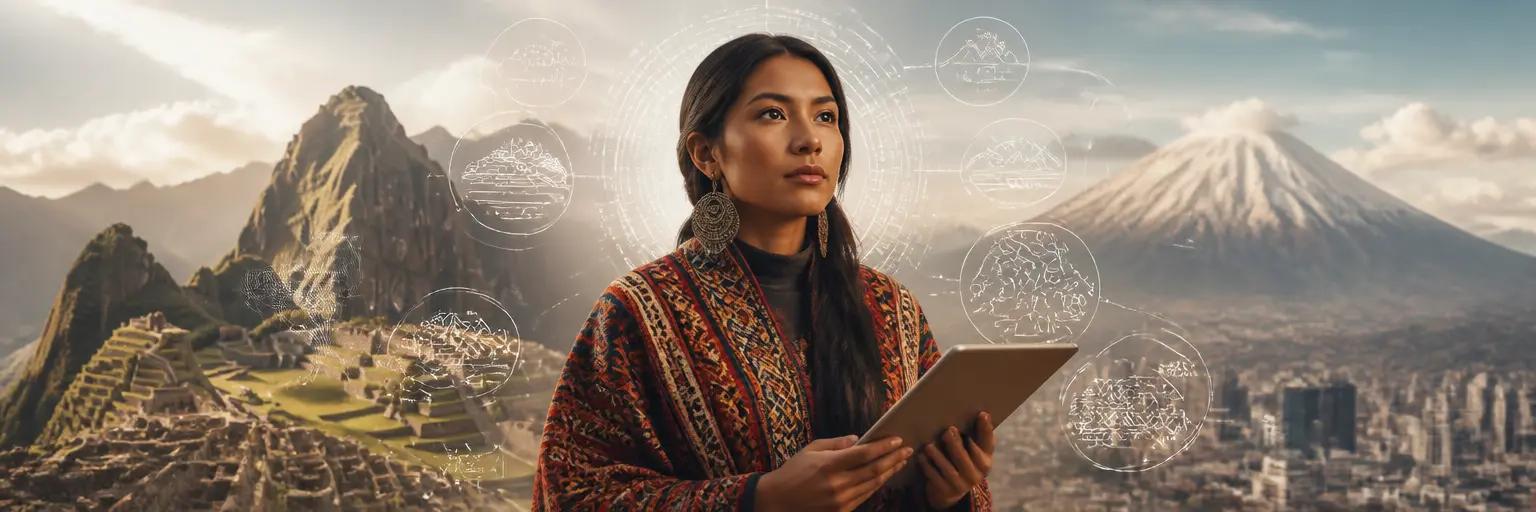
Explore how scholars, communities, and creators are reshaping our understanding of Andean history 🏔️. Discover modern interpretations of the Inca, Moche, Nazca, and Tiahuanaco civilizations through contemporary research, Indigenous perspectives, archaeology, cultural heritage, and debates about identity and memory. Gain fresh insight into the region’s enduring legacy and its relevance to today’s world.

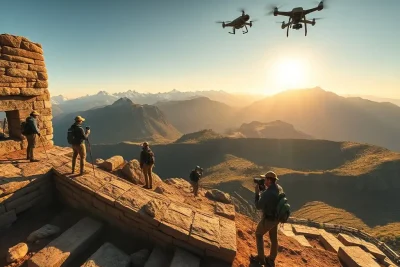
Modern Interpretations of Andean History explores how historians, archaeologists, Indigenous scholars, anthropologists, and cultural institutions are reexamining the past of the Andes. Within the broader category of Current Issues and Perspectives, this subcategory connects new research with the enduring legacy of the Inca, Moche, Nazca, and Tiahuanaco civilizations. Readers can discover how evidence, technology, oral traditions, and Indigenous knowledge are reshaping our understanding of Andean history, culture, art, science, politics, and identity.
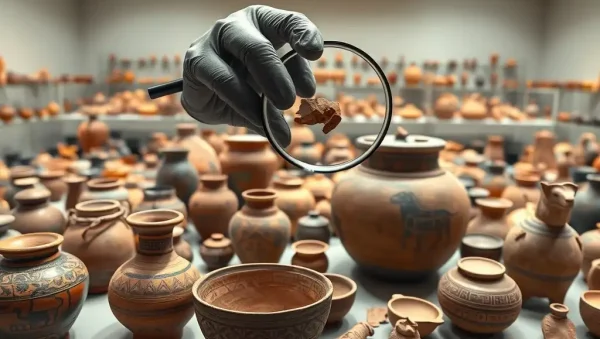
Articles in this section examine the latest interpretations of major Andean civilizations, including the Inca Empire, Moche society, Nazca culture, and Tiahuanaco civilization. Readers can expect accessible explanations of archaeological discoveries, historical debates, settlement patterns, religious practices, agricultural systems, trade networks, architecture, and technological achievements.
Modern scholarship often challenges older assumptions about political power, social organization, gender roles, and cultural exchange in the Andes. Content will show how researchers compare archaeological evidence, colonial documents, environmental data, and Indigenous oral histories to create more complete accounts of Andean civilization.
This subcategory explores decolonial approaches to Andean history and questions the interpretations produced through earlier European and colonial frameworks. Readers will learn how Indigenous communities, local researchers, and contemporary Andean intellectuals are reclaiming authority over their heritage and challenging narratives that portrayed ancient societies as isolated, primitive, or historically static.
Expect discussions of heritage ownership, cultural representation, museum practices, archaeological ethics, and the importance of Indigenous perspectives. These topics help explain why the study of the ancient Andes is not only about the past, but also about identity, justice, memory, and cultural rights in the present.
Andean history survives through more than monumental ruins and excavated artifacts. This section considers oral traditions, language, ritual practices, agricultural knowledge, textiles, music, community celebrations, and sacred landscapes as valuable sources for understanding the past and its continuing influence.
Readers can explore how Quechua, Aymara, and other Andean communities preserve historical memory through living cultural traditions. The content highlights the relationship between ancient practices and modern life, showing how farming methods, ecological knowledge, spirituality, and community organization continue to shape Andean societies.
Modern technology is transforming the study of Andean civilizations. Articles may examine the use of satellite imagery, LiDAR, geographic information systems, radiocarbon dating, DNA research, digital mapping, 3D reconstruction, and non-invasive archaeological surveys to investigate landscapes and settlements hidden beneath forests, soil, or modern development.
These methods provide new insight into ancient roads, irrigation systems, ceremonial centers, agricultural terraces, urban planning, and long-distance exchange. Readers will discover how interdisciplinary research combines archaeology, climate science, geology, biology, and digital humanities to produce more detailed interpretations of Andean history.
The Andes have always been shaped by dramatic environments, including high-altitude plateaus, deserts, valleys, glaciers, and tropical foothills. This section investigates how ancient communities adapted to droughts, floods, volcanic activity, changing temperatures, and limited water resources.
Readers will learn how historical research can inform present-day conversations about climate change, food security, water management, biodiversity, and sustainable agriculture. Ancient terracing, irrigation, crop diversification, and ecological planning offer important perspectives on resilience and environmental adaptation in the modern Andes.
Andean heritage plays a powerful role in contemporary politics, tourism, education, and national identity. This section examines how sites, symbols, languages, monuments, and historical figures are used to represent the past in Peru, Bolivia, Ecuador, Chile, Argentina, and Colombia.
Content will address the benefits and challenges of heritage promotion, including cultural tourism, repatriation, looting, commercialization, conservation, and community participation. Readers can expect balanced discussions of how ancient Andean history influences modern identity while also revealing disagreements over who controls, interprets, and benefits from cultural heritage.
Modern interpretations of Andean history depend on collaboration across many fields. This subcategory brings together insights from archaeology, anthropology, history, art history, linguistics, environmental studies, genetics, museum studies, and Indigenous research methodologies.
Readers can expect clear summaries of important discoveries and debates, with attention to the evidence behind competing interpretations. Reliable, nuanced, and context-rich content makes it easier to understand how knowledge about the ancient Andes changes as new sources, technologies, and perspectives become available.
Modern interpretations are new ways of understanding Andean civilizations based on recent archaeological discoveries, advanced technology, Indigenous knowledge, environmental research, and critical analysis of earlier historical accounts. They often provide more complex views of societies such as the Inca, Moche, Nazca, and Tiahuanaco.
Indigenous perspectives are essential because many Andean communities maintain oral histories, languages, traditions, and cultural practices connected to ancient societies. Including these perspectives supports more accurate, respectful, and inclusive interpretations while challenging colonial assumptions about Andean culture.
Tools such as LiDAR, satellite imaging, digital mapping, radiocarbon dating, and DNA analysis allow researchers to study archaeological sites and landscapes with greater precision. These technologies can reveal hidden settlements, ancient roads, irrigation networks, migration patterns, and environmental changes without damaging fragile sites.
Ancient Andean societies developed sophisticated strategies for managing water, cultivating crops at different elevations, building terraces, and adapting to difficult environments. Studying these practices can provide useful ideas for modern discussions about climate resilience, sustainable agriculture, and water conservation.
New research shows that Andean civilizations were diverse, innovative, and connected through trade, migration, diplomacy, conflict, and cultural exchange. It also moves beyond narrow accounts focused only on rulers and monuments by examining ordinary communities, women, laborers, farmers, artisans, and Indigenous knowledge systems.