
Andean Civilizations Through a New Lens: Challenging Conventional Histories

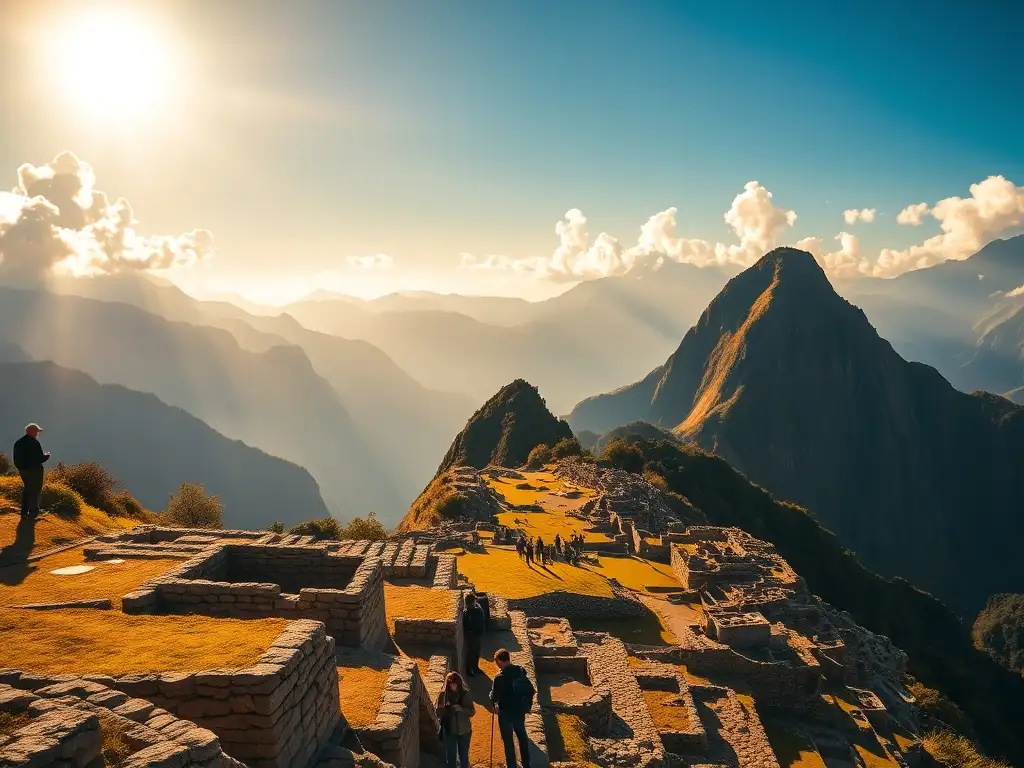
Step into a world lost to time, yet echoing with untold stories. Forget everything you think you know about the Andean civilizations. This isn't your typical history lesson; we're diving deep into the mysteries and marvels of the Incas, Moche, Nazca, and Tiahuanaco, challenging established narratives. Prepare to be captivated by our Andean civilizations history review, a journey that will rewrite your understanding of these fascinating cultures. Dare to explore the unexpected… your perspective will never be the same.
-
Andean Civilizations History Review: Challenging Conventional Narratives
- Re-evaluating Andean History: Beyond the Inca Empire
- Traditional Perspectives on Andean Cultures: A Critical Analysis
- New Methodologies in Andean Civilization Research
- Alternative Interpretations of Andean History
- Challenging the Narrative of Conquest and Colonialism
- Modern Interpretations of Andean Civilizations: A Continuing Dialogue
-
Frequently Asked Questions
- What makes this article on Andean civilizations different from others?
- Which Andean civilizations are covered in this article?
- What kind of technological advancements are discussed in the article?
- How does the article address the cultural aspects of Andean civilizations?
- Where can I find more information on the topics discussed in this article?
- Final Reflection: Echoes of the Andes: Reimagining the Past, Shaping the Future
- **Unveil the Rich Legacy of Andean Civilizations! **
Andean Civilizations History Review: Challenging Conventional Narratives
The study of Andean civilizations has long been dominated by narratives centered around the Inca Empire, often overshadowing the rich tapestry of cultures that preceded and existed alongside them. This Andean civilizations history review aims to challenge these conventional histories, offering a nuanced perspective that acknowledges the complexity and diversity of Andean societies.
We will explore how modern scholarship is re-evaluating existing interpretations, moving beyond the limitations of past methodologies and biases to reveal a more complete and accurate picture of these fascinating cultures. This revised understanding not only enriches our knowledge of the past but also offers valuable insights into the enduring legacy of Andean societies and their impact on the modern world.
We will delve into the intricacies of various Andean cultures, examining their unique achievements in agriculture, engineering, art, and social organization, while also critically analyzing the historical narratives that have shaped our understanding of these remarkable civilizations. This exploration will provide a fresh perspective on the Andean civilizations, prompting a reevaluation of long-held assumptions and fostering a deeper appreciation for the multifaceted history of this remarkable region.
Re-evaluating Andean History: Beyond the Inca Empire
For centuries, the Inca Empire has dominated narratives surrounding Andean history, often overshadowing the contributions of earlier and contemporaneous civilizations. This focus, while understandable given the Inca's impressive political and administrative achievements, has led to a skewed understanding of the overall Andean historical landscape. Modern scholarship is actively working to rectify this imbalance, highlighting the significant advancements and cultural achievements of societies such as the Moche, Nazca, and Tiahuanaco, among others.
These cultures developed sophisticated irrigation systems, intricate textiles, and impressive monumental architecture, demonstrating a high level of technological and artistic prowess long before the Inca's rise to power. Recognizing the distinct characteristics and contributions of these pre-Inca and non-Inca Andean cultures is crucial for a comprehensive understanding of the region’s rich and complex past.
The diverse social structures, religious beliefs, and artistic expressions of these civilizations are being meticulously examined, revealing a dynamic history far more intricate than previously acknowledged. This renewed focus offers a more accurate and holistic portrayal of the Andean world, enriching our understanding of its historical development and cultural diversity.
Traditional Perspectives on Andean Cultures: A Critical Analysis
Traditional interpretations of Andean cultures often suffer from inherent biases and limitations, hindering a complete understanding of their complexity. These biases, often stemming from colonial perspectives and limited archaeological data, have shaped how these civilizations have been represented historically. It is crucial to acknowledge these shortcomings and actively work towards a more objective and nuanced understanding. A critical examination of these traditional narratives reveals several key areas needing reassessment, allowing for a more accurate and comprehensive picture to emerge. Examining these issues with a modern perspective is vital for a fair and accurate representation of Andean history.
Eurocentric Biases in Andean Historiography
Many early accounts of Andean civilizations were written from a distinctly Eurocentric perspective, often interpreting Andean practices and beliefs through a Western lens. This resulted in misinterpretations and biased representations, often portraying Andean cultures as primitive or inferior compared to European societies. This bias is evident in the way Andean art, religion, and social structures were analyzed and categorized, often fitting them into pre-existing European frameworks rather than appreciating their unique characteristics.
Modern scholars are actively working to decolonize Andean historiography, challenging these Eurocentric interpretations and providing more accurate and culturally sensitive analyses. This involves critically evaluating existing historical sources, incorporating Indigenous perspectives, and employing methodologies that avoid imposing Western biases onto the past. This critical re-evaluation is essential for constructing a more accurate and respectful understanding of Andean civilizations.
Limitations of Archaeological Interpretation
Archaeological interpretations, while crucial for understanding Andean societies, are not without limitations. The methods and theories used in archaeological analysis have evolved over time, and earlier interpretations may now be considered outdated or incomplete. Furthermore, the inherent limitations of archaeological data—the incompleteness of the record, the potential for bias in excavation and interpretation—must be considered.
Modern archaeological research utilizes more sophisticated techniques and a greater awareness of potential biases, leading to more nuanced interpretations of Andean cultures. By integrating interdisciplinary approaches that incorporate ethnohistory, linguistics, and other fields of study, a more complete and comprehensive understanding of Andean civilizations is being developed. This ongoing process of refining and expanding our understanding highlights the dynamic nature of historical research and the ongoing quest for a more accurate representation of the past.
New Methodologies in Andean Civilization Research
Understanding Andean civilizations requires a multifaceted approach, moving beyond traditional historical narratives. This necessitates the adoption of new methodologies that incorporate diverse perspectives and advanced technologies. The field has experienced a significant shift towards interdisciplinary collaboration and the integration of cutting-edge scientific techniques. This allows for a more nuanced and accurate reconstruction of the past, challenging previously held assumptions and offering fresh insights into the complexity of Andean societies.
The limitations of relying solely on textual sources or isolated archaeological findings are increasingly being recognized, leading to a more holistic and comprehensive understanding. This evolution in methodology has spurred significant advancements in our comprehension of Andean history, culture, and societal structures. The integration of various disciplines allows researchers to contextualize findings within a broader framework, leading to more robust and less biased interpretations. This shift acknowledges the limitations of single-discipline approaches and emphasizes the importance of collaborative efforts.
Interdisciplinary Approaches to Understanding Andean Societies
The study of Andean civilizations is no longer the sole domain of archaeologists and historians. Anthropologists, linguists, botanists, and even specialists in climate science now contribute vital insights. For example, analyzing ancient pollen samples allows researchers to reconstruct past environments and understand the impact of climate change on Andean societies.
Similarly, linguistic studies can shed light on cultural interactions and migrations. This interdisciplinary approach allows for a more comprehensive understanding of the complex interplay between environmental factors, social structures, and technological advancements. By combining data from different disciplines, researchers can develop more robust and nuanced interpretations of the past.
A prime example is the study of agricultural practices, where archaeological evidence of irrigation systems is combined with botanical analysis of ancient crops to understand the sophistication of Andean agriculture and its impact on societal development. This collaborative effort leads to a richer and more accurate understanding of Andean societies than any single discipline could achieve alone.
Ethnohistorical Analysis: Uncovering Indigenous Voices
Ethnohistory plays a crucial role in challenging conventional narratives by incorporating Indigenous perspectives and oral traditions. This methodology involves analyzing historical accounts written by Europeans alongside Indigenous oral histories and traditions, providing a more balanced and nuanced understanding of the past. For too long, scholarly interpretations have relied heavily on colonial accounts, often biased and incomplete.
Ethnohistorical research actively seeks to recover and analyze Indigenous voices, providing crucial counterpoints to dominant narratives and revealing a far more complex picture of Andean societies. This approach acknowledges the importance of considering multiple perspectives and challenging Eurocentric biases that have long shaped historical interpretations.
The incorporation of Indigenous knowledge systems adds invaluable depth and authenticity to our understanding of Andean cultures and their interactions with the outside world. This process is often painstaking, requiring careful cross-referencing and interpretation of different sources, but the results are invaluable for creating a more accurate and just historical record.
Advances in Archaeological Science and Dating Techniques
Recent advancements in archaeological science and dating techniques have significantly impacted our understanding of Andean civilizations. Improved radiocarbon dating methods, alongside advancements in DNA analysis and isotopic studies, provide more precise chronologies and insights into population movements, dietary habits, and social structures. These advancements allow for a more refined understanding of the timelines of different Andean cultures and their interactions.
For example, the use of ancient DNA analysis can help determine the origins and migrations of different populations, challenging previous assumptions about the development of Andean societies. The application of these technologies has yielded remarkable results, refining our understanding of the chronology of major events and allowing researchers to build more accurate models of the past. Furthermore, these advancements help to resolve long-standing debates about the relationships between different Andean cultures and their contributions to the overall development of Andean civilization.
Alternative Interpretations of Andean History
Traditional narratives often present a simplified and linear view of Andean history, frequently focusing on the Inca Empire as the pinnacle of Andean achievement. However, recent scholarship challenges this perspective, emphasizing the complexity and dynamism of pre-Inca societies and the diverse range of cultural interactions that shaped the region.
This re-evaluation necessitates a deeper examination of the contributions of various Andean cultures to the rich tapestry of Andean civilization. The focus shifts from a hierarchical model to one that acknowledges the significant achievements and influences of numerous pre-Inca societies, highlighting the region's rich cultural diversity and long history of innovation.
The Complexity of Pre-Incha Andean Societies
The pre-Inca period was far from a monolithic entity. Numerous sophisticated societies, such as the Moche, Nazca, and Tiwanaku, flourished in different regions, each with unique cultural expressions, technological achievements, and social structures. These societies developed complex irrigation systems, sophisticated artistic styles, and intricate religious beliefs, demonstrating a high level of social organization and technological innovation long before the Inca Empire rose to prominence.
Dismissing these accomplishments as merely precursors to Inca civilization is a significant oversight. A more accurate representation recognizes their significant contributions to the overall development of Andean culture and challenges the idea that the Inca Empire was a singular, isolated phenomenon. Understanding the complexity of these societies is crucial to gaining a complete picture of Andean history.
The Inca Empire: A Reassessment of Power and Control
While the Inca Empire undeniably exerted significant political and military influence, recent research challenges the notion of absolute centralized control. Evidence suggests a more nuanced system of governance, involving local autonomy and negotiated power-sharing. The Inca's success may have stemmed from their ability to adapt and integrate existing social structures, rather than solely imposing their will.
Overemphasizing the Inca's control obscures the agency and resilience of other Andean populations. A more accurate portrayal acknowledges the dynamic interaction between Inca rule and local traditions, highlighting the complexities of imperial power and the ongoing resistance and adaptation within the empire itself. This reassessment of Inca power requires a more nuanced understanding of the relationship between the imperial center and the peripheral regions, moving beyond simplistic narratives of conquest and subjugation.
Challenging the Narrative of Conquest and Colonialism
The traditional narrative surrounding the Spanish conquest of the Andes often portrays a simplistic story of superior European forces overcoming inferior indigenous populations. This perspective, however, overlooks the complexities of Andean societies and the nuanced ways in which they interacted with and resisted colonial rule. Recent scholarship challenges this narrative by emphasizing the agency and resilience of Andean communities in the face of overwhelming odds.
For example, the Inca Empire, far from being a monolithic entity, was composed of diverse ethnic groups with varying levels of integration and loyalty to the ruling elite. This internal diversity played a significant role in shaping the outcome of the conquest, with some groups actively collaborating with the Spanish while others fiercely resisted.
The impact of disease, often cited as a primary factor in the fall of the Inca Empire, was also far more complex than initially understood, interacting with existing social structures and power dynamics to produce devastating results. The narrative of conquest, therefore, needs to be reframed to account for the heterogeneity of Andean societies and the complexities of resistance and collaboration.
The Impact of Spanish Colonization on Andean Societies
Spanish colonization drastically reshaped Andean societies, leading to profound demographic, economic, and social transformations. The introduction of new diseases decimated indigenous populations, leading to a dramatic decline in population numbers. The Spanish imposed new economic systems, such as the encomienda and repartimiento, which forced indigenous labor into mining, agriculture, and other extractive industries. These systems resulted in widespread exploitation and suffering, leading to the destruction of traditional social structures and economic practices.
The imposition of Catholicism also significantly altered religious beliefs and practices, with indigenous religious traditions being suppressed and replaced by Christian doctrines. However, indigenous populations were not passive recipients of these changes. They actively resisted colonial rule, adapting and negotiating with the Spanish to preserve aspects of their culture and identity.
Indigenous Perspectives on the Colonial Era
Understanding the colonial era from indigenous perspectives is crucial to challenging traditional narratives. Oral histories, preserved through generations, offer invaluable insights into the experiences and perspectives of Andean communities during this period. These accounts often contradict the official colonial records, highlighting the resilience and agency of indigenous populations.
For example, many oral traditions detail strategies of resistance, both overt and covert, used by Andean communities to maintain their cultural identity and autonomy. These accounts reveal a far more complex and dynamic picture of the colonial encounter than the simplistic narratives of conquest and subjugation. Integrating these perspectives into historical analysis is essential for a more complete and accurate understanding of the colonial period.
Reclaiming Andean Heritage in the Modern Era
The ongoing process of reclaiming Andean heritage in the modern era is a testament to the enduring strength and cultural vitality of Andean communities. This reclamation takes many forms, including revitalizing indigenous languages, preserving traditional knowledge systems, and promoting indigenous art and cultural practices. Indigenous communities are actively participating in the reconstruction of their history, challenging colonial narratives and contributing to a more comprehensive understanding of the past.
This active engagement with their heritage serves not only to preserve cultural identity but also to empower indigenous communities and promote self-determination. The efforts to preserve and promote indigenous languages, for example, are crucial in recovering lost knowledge and ensuring the continuation of cultural traditions.
Modern Interpretations of Andean Civilizations: A Continuing Dialogue
Modern interpretations of Andean civilizations are constantly evolving, reflecting new discoveries, methodological advances, and a growing awareness of the importance of incorporating indigenous perspectives. This ongoing dialogue challenges traditional Eurocentric interpretations and fosters a more inclusive and nuanced understanding of Andean history and culture. Archaeological discoveries continue to reshape our understanding of Andean societies, revealing previously unknown aspects of their social structures, technologies, and beliefs.
The Importance of Oral Traditions in Reconstructing History
Oral traditions play a vital role in reconstructing the history of Andean civilizations. These traditions, passed down through generations, offer invaluable insights into the worldview, social structures, and historical experiences of Andean communities. While oral traditions require careful analysis and contextualization, they provide crucial information that is often absent from written records. They offer alternative perspectives, challenging dominant narratives and providing a more complete picture of the past. Their significance in understanding Andean history cannot be overstated.
The Role of Indigenous Communities in Research
The active participation of indigenous communities in research is essential for a more accurate and ethical understanding of Andean civilizations. Their knowledge and perspectives are invaluable in interpreting archaeological findings, understanding oral traditions, and reconstructing the history of their own communities. Collaborative research approaches, which prioritize indigenous voices and perspectives, are crucial for avoiding the biases and misinterpretations that have characterized previous historical accounts. This collaborative approach ensures that research is not only academically rigorous but also culturally sensitive and respectful.
Future Directions in Andean Civilizations History Review
Future research on Andean civilizations should prioritize interdisciplinary approaches, integrating insights from archaeology, anthropology, linguistics, and other fields. Furthermore, it is crucial to continue incorporating indigenous perspectives and knowledge, ensuring that research is conducted in collaboration with and benefits indigenous communities. The development of new technologies and methodologies, such as advanced imaging techniques and digital humanities tools, will also play a key role in advancing our understanding of Andean civilizations. A continued focus on challenging conventional narratives and embracing diverse perspectives will ensure a more complete and accurate understanding of this rich and complex history.
Frequently Asked Questions
What makes this article on Andean civilizations different from others?
This article offers a fresh perspective, challenging conventional narratives and presenting new interpretations of Andean civilizations' history. It explores lesser-known aspects and diverse viewpoints, providing a more nuanced understanding.
Which Andean civilizations are covered in this article?
The article explores the rich history of several key Andean civilizations, including the Incas, Moche, Nazca, and Tiahuanaco. However, it also touches upon smaller, less-studied groups to provide a broader picture.
What kind of technological advancements are discussed in the article?
The article examines the impressive engineering feats of the Andean civilizations, highlighting their mastery of agriculture, irrigation systems, and metallurgy. It also discusses their advancements in textiles and ceramics.
How does the article address the cultural aspects of Andean civilizations?
The article delves into the religious beliefs, social structures, and artistic expressions of these civilizations. It explores the significance of ceremonial sites and the role of mythology in shaping their societies.
Where can I find more information on the topics discussed in this article?
The article includes a comprehensive bibliography and suggests further reading on the specific Andean civilizations and themes explored. It also points to relevant museums and archaeological sites.
Final Reflection: Echoes of the Andes: Reimagining the Past, Shaping the Future
The intricate tapestry of Andean civilizations continues to resonate in the modern world, challenging our preconceived notions of history and demanding a more nuanced understanding of societal development. Their sophisticated agricultural techniques, complex social structures, and remarkable engineering feats offer invaluable lessons for sustainable living and collaborative governance, lessons that remain strikingly relevant in our increasingly interconnected and environmentally challenged world. We must actively seek to understand their legacies, not just as historical artifacts, but as vital threads in the ongoing narrative of human civilization.
The enduring power of Andean culture is evident not only in the breathtaking archaeological sites that still stand today, but also in the vibrant traditions and artistic expressions that persist in contemporary Andean communities. Their resilience in the face of adversity, their profound connection to the land, and their rich spiritual heritage offer a powerful counterpoint to the often-dominant narratives of Western history. The past is never dead. It's not even past.
– William Faulkner. This quote perfectly encapsulates the enduring influence of Andean civilizations, whose echoes reverberate through the present, shaping our understanding of the past and informing our vision for the future.
Consider the innovative agricultural practices of the Inca, their intricate systems of terracing and irrigation, their deep understanding of ecological balance. These are not merely historical curiosities; they are blueprints for sustainable development that we can and should adapt to address the pressing environmental challenges of our time. You, the reader, are now equipped with a new perspective on Andean history. Let this knowledge inspire you to question established narratives, to seek out diverse voices, and to actively participate in building a more inclusive and sustainable future, informed by the wisdom of the past.
**Unveil the Rich Legacy of Andean Civilizations! **
Thank you for exploring the captivating world of Andean civilizations with us! We hope you gained fresh perspectives and intriguing insights that challenge traditional understandings of this rich history. Now, let's continue your journey of discovery.
Here are some ways you can deepen your understanding and engage further with this fascinating topic:
- **Explore further:** Delve into our extensive resources and articles to uncover lesser-known stories and remarkable individuals from Andean history.
- **Share your insights:** Join our community by commenting on this article or sharing your favorite historical discoveries on social media. Let's discuss!
- **Attend an event:** Look for local lectures or forums focused on Andean civilizations to connect with other enthusiasts.
What aspect of Andean history most surprised you, and how will this new knowledge influence your perspective? We'd love to hear your thoughts!