
Comparing Moche Religion to Other Andean Belief Systems

Step into a world lost to time, yet echoing with vibrant life. Journey through the breathtaking tapestry of Andean civilizations, uncovering the secrets of their ingenious artistry, advanced engineering, and profoundly spiritual beliefs. But what truly set the Moche apart? Our exploration into Moche religion compared to other Andean civilizations will unveil surprising similarities and striking differences, challenging your understanding of this fascinating era. Dare to delve deeper and uncover the mysteries that await.
-
Moche Religion Comparison: Exploring Andean Belief Systems
- Introduction to Moche Religious Practices
- Moche Deities and Supernatural Entities
- Comparing Moche Gods to Other Andean Pantheon
- Moche Rituals and Ceremonies
- Contrasting Moche Rituals with Neighboring Cultures
- The Role of Moche Priests and Shamans
- Andean Shamanism: A Comparative Perspective
- Moche Art and Religious Symbolism
- Iconography in Andean Religious Expression
- Moche Burial Practices and Afterlife Beliefs
- Funeral Rituals Across Andean Civilizations
- Moche Cosmology and Worldview
- Contrasting Moche Cosmology with other Andean Worldviews
- Moche Religion's Influence on Later Andean Cultures
- Legacy of Moche Beliefs in the Andean Region
- Conclusion: Understanding the Moche Religious Landscape within Andean Traditions
-
Frequently Asked Questions
- How did Moche religion compare to that of the Inca?
- What were some key similarities between Moche and Nazca religious beliefs?
- How did the Tiahuanaco religion influence, or differ from, the Moche religion?
- What role did human sacrifice play in Moche religion compared to other Andean cultures?
- What are the main sources used to study Moche religion compared to other Andean belief systems?
- Final Reflection: Echoes of the Moche: A Legacy in Stone and Spirit
- Unveil the Rich Tapestry of Andean Belief Systems!
Moche Religion Comparison: Exploring Andean Belief Systems
The Moche civilization, flourishing along the northern coast of Peru from approximately 100 CE to 800 CE, left behind a remarkable legacy of art, architecture, and intricate social structures. Understanding their religious beliefs is crucial to comprehending the complexities of their society and its place within the broader tapestry of Andean civilizations.
This article delves into a comparative analysis of Moche religious practices, examining their pantheon of gods, rituals, and worldview in relation to other prominent Andean belief systems, such as those of the Nazca, Tiahuanaco, and Inca cultures. We will explore the similarities and differences, highlighting the unique aspects of Moche religion while situating it within the larger context of Andean spiritual development and the evolution of religious thought across the region.
This comparative approach allows for a richer understanding of the Moche's place within the diverse religious landscape of ancient Peru, shedding light on the shared threads and unique innovations that characterized their spiritual life. The keyword "Moche religion comparison Andean civilizations" will be explored through detailed analysis of key religious figures, rituals, and iconography.
Introduction to Moche Religious Practices
Moche religious practices were deeply intertwined with their daily lives, influencing everything from agriculture and warfare to social hierarchy and artistic expression. Evidence suggests a complex system of beliefs centered around a pantheon of deities, often depicted in elaborate ceramics and monumental architecture. The Moche were skilled artisans, and their pottery provides invaluable insights into their religious world.
Representations of ritual scenes, deities, and supernatural beings are abundant, showcasing a vibrant and dynamic spiritual landscape. These depictions often feature elaborate costumes, headdresses, and symbolic objects, reflecting a sophisticated understanding of religious symbolism. Furthermore, the Moche's mastery of irrigation systems suggests a close relationship between their religious beliefs and their agricultural practices, with deities likely associated with fertility, water, and the harvest.
Archaeological evidence, such as the discovery of richly adorned tombs and ceremonial centers, further illuminates the importance of religious rituals and practices within Moche society. Analysis of these sites reveals the elaborate preparations undertaken for religious ceremonies, reflecting the significant investment of resources and social organization dedicated to their religious beliefs. The scale and complexity of these practices underscore the central role of religion in shaping Moche society and its interaction with the natural world.
Moche Deities and Supernatural Entities
The Moche pantheon included a diverse array of deities, each with unique attributes and roles. While a complete understanding remains elusive due to the limitations of surviving sources, we can identify several prominent figures through iconographic analysis of their pottery and other artifacts. For example, the Ai Apaec, often depicted as a fanged deity with elaborate headdresses and regalia, is frequently interpreted as a war god or a representation of power and authority.
Other significant deities included those associated with fertility, such as the depiction of powerful female figures possibly representing earth goddesses or figures linked to agricultural abundance. Beyond the anthropomorphic deities, the Moche also depicted various supernatural entities, including monstrous creatures and hybrid beings, which may have symbolized natural forces or represented aspects of the underworld. These supernatural beings, often portrayed in dramatic and sometimes violent scenes, suggest a complex cosmology that encompassed both benevolent and malevolent forces.
The stylistic variations and contextual differences in the representation of these deities across different Moche sites suggest regional variations in religious beliefs or perhaps the evolution of the pantheon over time. Further research and analysis of newly discovered artifacts are needed to fully understand the complexity of Moche cosmology and the roles of these supernatural entities within their belief system.
Comparing Moche Gods to Other Andean Pantheon
Comparing the Moche pantheon to those of other Andean civilizations reveals both similarities and striking differences. While a comprehensive comparison requires further research and detailed analysis, some preliminary observations can be made. For instance, the emphasis on powerful, often violent, deities is a feature shared with some other coastal cultures, contrasting with the more overtly agricultural focus of some highland cultures.
Unlike the highly structured Inca pantheon with its clearly defined hierarchy, the Moche pantheon appears more fluid and less formalized, with multiple interpretations and representations of similar deities across different sites and time periods. The use of iconography and symbolism to depict deities also varies across different Andean cultures, reflecting different artistic conventions and cultural values. While the Nazca culture, for example, is known for its intricate geoglyphs and their potential religious significance, the Moche expressed their religious beliefs primarily through their elaborate ceramics.
Similarly, the Tiahuanaco culture, with its monumental architecture and sophisticated religious iconography, presents a different approach to religious expression when compared to the Moche's emphasis on ceramic representations. A detailed comparative study of iconography, ritual practices, and cosmological beliefs across these cultures would provide a more complete picture of the diversity and interconnectedness of Andean religious thought. Further research focusing on the specific attributes and roles of comparable deities across different Andean cultures will be crucial in understanding the evolution and diffusion of religious ideas across this geographically diverse region.
Moche Rituals and Ceremonies
Moche religious practices were deeply intertwined with their daily lives and agricultural cycles. Evidence from their elaborate burial sites and stunning ceramic artwork reveals a complex system of rituals and ceremonies centered around ancestor veneration, fertility, and the forces of nature. Elaborate sacrifices, including human sacrifice in some instances, were a significant part of their religious practices, often performed to appease deities or ensure successful harvests. These sacrifices, depicted vividly in Moche pottery, weren't simply violent acts; they were ritualized events, integral to the Moche worldview and their relationship with the supernatural.
The sacrifices often involved carefully selected individuals, possibly elites or prisoners of war, suggesting a structured and highly symbolic process. Furthermore, the Moche performed ceremonies involving offerings of food, drink, textiles, and precious metals. These offerings, discovered in tombs and ceremonial contexts, demonstrate the importance of material wealth in their religious system and the belief in the power of reciprocal exchange with the gods.
The precise nature of many rituals remains speculative, as the Moche did not leave behind written records. However, the artistic representations on their pottery offer invaluable insights into the dramatic and often brutal aspects of their religious life. Archaeological findings consistently show a meticulous attention to detail in both the execution and placement of offerings, suggesting a deeply ingrained and highly formalized religious structure.
Contrasting Moche Rituals with Neighboring Cultures
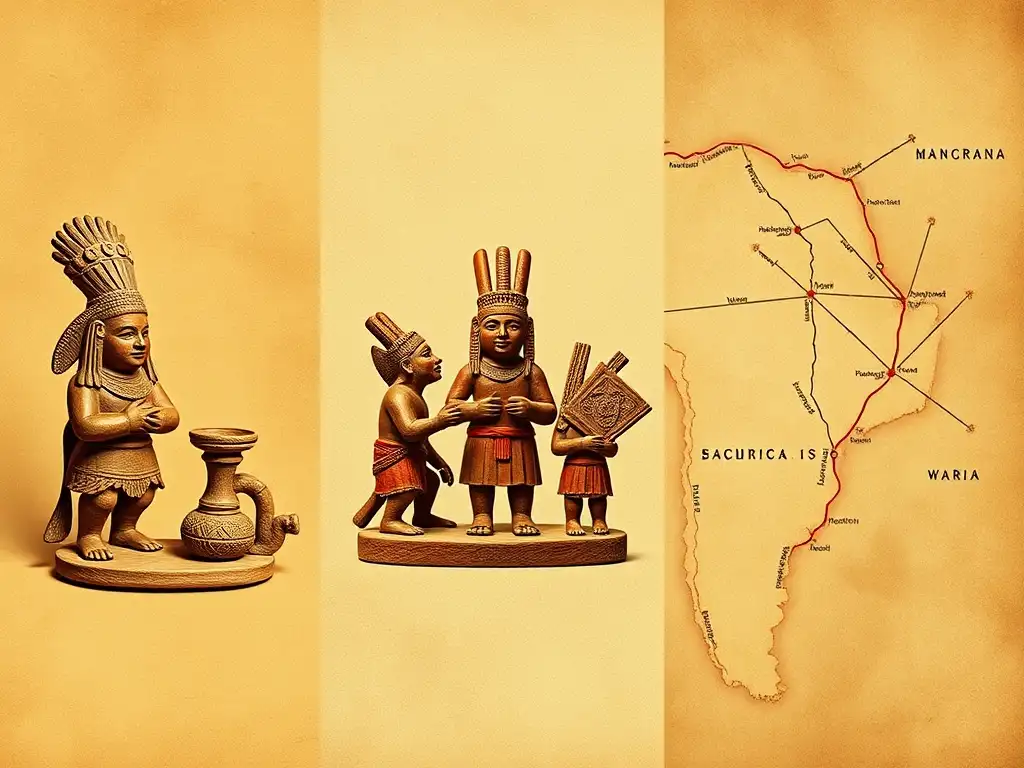
While the Moche shared some common threads with other Andean civilizations in their religious beliefs – such as the importance of ancestor veneration and agricultural fertility – their practices differed significantly. Compared to the Inca, for instance, whose religion involved a complex pantheon of deities and elaborate state-sponsored rituals, the Moche religion seems more focused on localized cults and individualistic expressions of faith. Inca religious practices were highly centralized, overseen by a powerful priestly class serving the emperor. The Moche, conversely, appear to have lacked a similarly centralized religious hierarchy, with rituals potentially overseen by local priests or shamans.
The Nazca culture, known for its enigmatic geoglyphs, also displayed a distinctly different religious landscape. While both the Nazca and the Moche employed elaborate burial practices and made significant offerings, the Nazca's focus on geometric designs and possibly astronomical observations suggests a different approach to understanding and interacting with the spiritual world. The Tiahuanaco culture, with its monumental architecture and sophisticated cosmology, also presents a marked contrast.
Tiahuanaco religion, with its emphasis on water and sun worship, suggests a more formalized and possibly more theocratic structure than what is observed in Moche society. The differences underscore the regional variations in Andean religious beliefs and the unique characteristics of the Moche worldview. More research is needed to fully understand the nuances of these interactions and the extent of religious exchange between these different cultures.
The Role of Moche Priests and Shamans
The role of Moche priests and shamans remains a subject of ongoing scholarly debate, as direct evidence is limited. However, based on iconographic evidence from their pottery, it is evident that these individuals held significant social and religious authority. Moche artwork often depicts figures adorned in elaborate headdresses and regalia, performing rituals and mediating between the human and divine realms. These individuals likely played a crucial role in interpreting omens, conducting ceremonies, and communicating with the supernatural world.
The precise hierarchy among these religious figures is unclear. Some scholars suggest a distinction between priests and shamans, with priests potentially associated with state-sponsored rituals and shamans involved in more individualistic or localized practices. The presence of elaborate tombs containing rich offerings suggests that some priests and shamans achieved considerable social status and power within Moche society.
These individuals may have been responsible for managing the temple complexes and overseeing the performance of important rituals, ensuring the continuation of the Moche religious traditions. Further research into Moche social organization and the analysis of additional archaeological findings are crucial to refine our understanding of the roles and responsibilities of these influential figures within their religious system. The complexity of Moche religious imagery hints at a sophisticated understanding of the spiritual world and a highly organized religious structure, even if the details remain partially elusive.
Andean Shamanism: A Comparative Perspective
Andean shamanism, a pervasive spiritual practice across various cultures of the Andes, offers a crucial lens through which to compare and contrast Moche religious beliefs with those of other Andean civilizations. While the specifics varied between cultures, the core principles of shamanic practice – interaction with the spirit world, the use of hallucinogens for altered states of consciousness, and the ability to heal and influence the natural world – were common threads. The Moche, for instance, likely employed shamans in rituals involving their powerful deities and ancestor veneration, a practice echoed in the religious traditions of the Nazca and Tiwanaku.
However, the specific deities and rituals differed significantly. The Nazca, known for their elaborate geoglyphs, may have utilized shamanic practices in a more overtly cosmological context, connecting their earthly rituals to celestial events and constellations. Similarly, the Tiwanaku, with their monumental architecture, integrated shamanic practices into their complex state religion, potentially using them to legitimize their power and control over vast territories.
The extent to which shamanism influenced the daily lives of individuals within each culture also varied, with some societies exhibiting a more widespread integration of shamanic practices than others. Further research into the archaeological record, particularly the analysis of grave goods and iconography, can illuminate the nuances of shamanic practices within each civilization and provide a richer understanding of the role of shamanism in the broader context of Andean religious life. The comparison highlights both the shared spiritual underpinnings and the diverse expressions of Andean shamanism across different cultures.
Moche Art and Religious Symbolism
Moche art provides invaluable insights into their religious beliefs. Their pottery, renowned for its intricate detail and lifelike depictions, serves as a primary source for understanding their pantheon of gods and goddesses, ritual practices, and cosmological views. The frequent portrayal of deities engaged in various activities, such as warfare, agricultural fertility, and ritual sacrifice, reveals the importance of these themes in Moche society.
For example, the recurring motif of the Decapitated Warrior, often depicted in elaborate ceremonies, suggests a complex relationship between warfare, sacrifice, and the spiritual realm. Unlike some other Andean civilizations that emphasized monumental architecture to express their religious beliefs, the Moche prioritized smaller-scale, highly detailed artistic expressions. The detailed depictions of human sacrifice in Moche pottery, for example, are far more graphic and explicit than those found in the art of other cultures, suggesting a potentially more visceral and direct engagement with the spiritual world.
This directness contrasts with the more abstract or symbolic representations found in, say, Nazca pottery, where religious imagery is often integrated into more complex narratives. Comparing the artistic styles and iconography of the Moche with those of other Andean cultures, such as the Tiahuanaco, highlights both the unique artistic expressions of the Moche and the shared Andean themes of fertility, power, and the supernatural.
Iconography in Andean Religious Expression
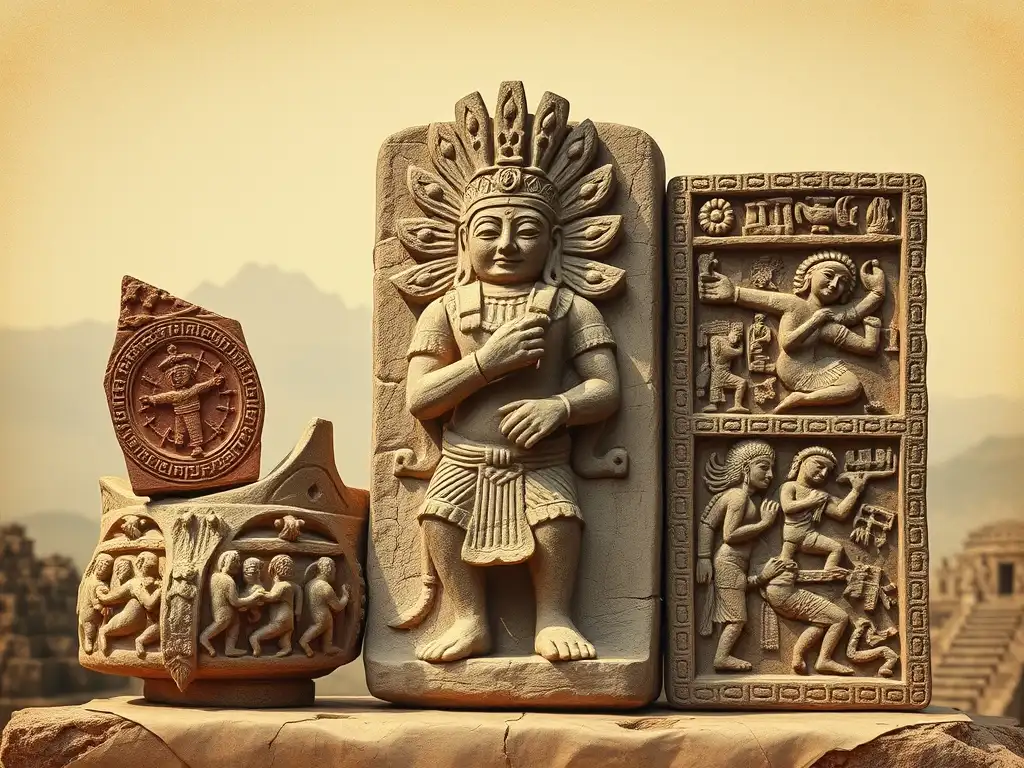
The iconography of the Moche, Nazca, and Tiahuanaco, among other Andean civilizations, reveals both shared and distinct approaches to religious expression. While many Andean cultures used similar symbolic representations – such as stylized feline imagery connected to power and hunting, or representations of serpents and birds associated with fertility and the afterlife – the specific context and meaning of these symbols often varied significantly. The Moche, for example, frequently depicted anthropomorphic deities with exaggerated features, often engaged in dynamic scenes of ritual and violence.
This contrasts with the more geometric and abstract style of Nazca iconography, where figures are often stylized and integrated into complex patterns and narratives. The Tiahuanaco, on the other hand, employed a more monumental and architectural approach, expressing their religious beliefs through massive stone structures and intricate carvings, often depicting stylized figures with imposing features and symbolic headdresses. Analyzing the recurring motifs and their variations across these different cultures provides crucial insights into the evolution and diversity of Andean religious thought.
For example, the depiction of specific deities, such as the Ai Apaec in the Tiahuanaco culture, can be compared to similar, yet distinct, representations in Moche art, revealing both shared cosmological concepts and specific cultural adaptations. Careful comparative analysis of Andean iconography illuminates the complex interplay between shared cultural heritage and unique regional expressions of religious belief.
Moche Burial Practices and Afterlife Beliefs
The Moche people, inhabiting the northern coast of Peru from approximately 100 CE to 800 CE, held complex beliefs about death and the afterlife, reflected vividly in their elaborate burial practices. Unlike some simpler burial traditions, Moche interments weren't merely the disposal of the deceased; they were elaborate rituals demonstrating a deep engagement with the spiritual realm. Evidence suggests a belief in an afterlife where the deceased continued to exist, requiring provisions for their continued sustenance. This is strikingly apparent in the rich grave goods frequently found accompanying Moche burials.
These included finely crafted ceramics depicting scenes of daily life, warfare, and mythical creatures, as well as gold and silver ornaments, textiles, and food offerings. The careful placement of these items within the tombs indicates a deliberate effort to equip the deceased for their journey into the afterlife. The presence of sacrificed individuals, often servants or even captives, points to a belief in a hierarchical afterlife mirroring the social structure of the living.
Furthermore, the careful preservation of bodies through mummification, albeit less sophisticated than later Inca techniques, suggests a desire to maintain the physical integrity of the deceased for their continued existence. The sheer variety and artistry of Moche grave goods demonstrate a strong investment in the rituals surrounding death and the profound importance attributed to the afterlife in their worldview. This elaborate preparation for the afterlife contrasts with simpler burial customs found in some other Andean cultures, highlighting the unique aspects of Moche funerary practices.
Funeral Rituals Across Andean Civilizations
Comparing Moche funeral rituals with those of other Andean civilizations reveals both similarities and striking differences. While the provision of grave goods was common across many Andean cultures, the scale and artistry of Moche offerings stand out. The Nazca, for example, also practiced elaborate burials, but their focus often centered on textiles and intricate pottery depicting their iconic line drawings. While both cultures demonstrated a clear concern for the deceased's afterlife, the Moche emphasis on human sacrifice and the sheer quantity of grave goods points to a more pronounced belief in a complex, hierarchical afterlife.
The Tiahuanaco, known for their monumental architecture and sophisticated religious beliefs, also had complex burial practices. However, their burial sites often featured less lavish grave goods than those of the Moche, focusing more on symbolic items and social status. The Inca, a later civilization, practiced mummification on a grand scale, preserving their rulers and elite members for veneration.
Their elaborate funeral processions and mausoleums reflected a similar concern for the afterlife, but the Inca state's centralized power influenced a more standardized and formal approach compared to the seemingly more localized and varied Moche rituals. The differences in funerary practices reflect the unique social structures, religious beliefs, and technological capabilities of each Andean civilization. Understanding these variations provides crucial insights into the diverse religious landscapes of the Andes.
Moche Cosmology and Worldview
The Moche cosmology, reflected in their art and burial practices, reveals a complex worldview deeply intertwined with nature and the supernatural. Their ceramics frequently depict deities and mythical beings interacting with the natural world, suggesting a belief in a dynamic relationship between the human and spiritual realms. Evidence from their iconography suggests the presence of powerful deities associated with the sea, the sky, and the fertile lands, essential elements for their coastal existence.
The frequent depiction of warfare and human sacrifice in their art suggests a belief system that incorporated both violence and ritualistic practices to appease or honor these deities. Unlike some Andean civilizations with more clearly defined pantheons, the Moche deities appear more fluid and context-dependent, their representation varying widely across different artifacts. This suggests a less rigidly defined religious structure compared to, for example, the Inca's highly structured religious hierarchy.
The Moche worldview, as interpreted from their art and archaeology, appears to have been intensely focused on maintaining a balance between the human and supernatural worlds, a balance reflected in their agricultural practices, their complex social structure, and, most notably, their elaborate funeral rituals. The Moche's vibrant and dynamic artistic expressions continue to offer valuable insights into their complex religious beliefs and understanding of the cosmos. Further research into Moche iconography and settlement patterns could help to refine our understanding of their intricate cosmology and its evolution.
Contrasting Moche Cosmology with other Andean Worldviews
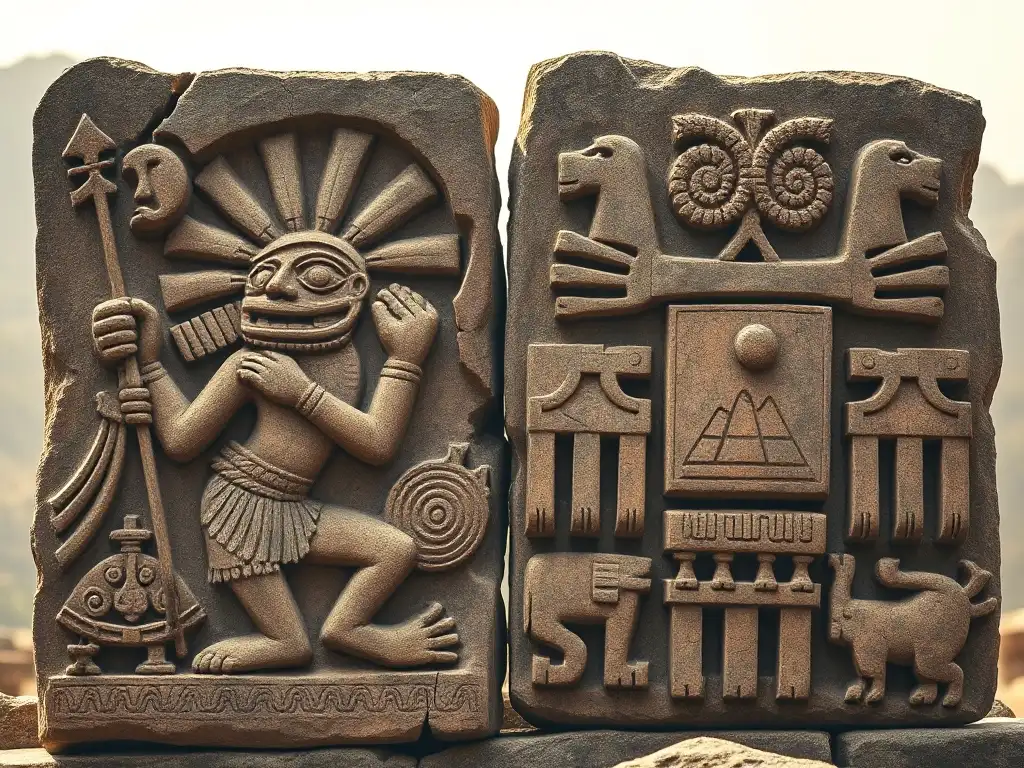
The Moche cosmology, while sharing some common threads with other Andean civilizations, possessed unique characteristics. Unlike the highly structured and centralized religious system of the Inca, the Moche worldview was more localized and reflected in their art and iconography. Their pantheon, for instance, featured powerful deities associated with the sea, warfare, and fertility—a reflection of their coastal environment and societal structure. While the Incas emphasized a creator god, Viracocha, and a strict hierarchical cosmology, Moche religious expression was more fluid and less rigidly defined.
The emphasis on ancestor veneration, however, was a commonality shared across many Andean cultures, including the Moche. The Moche, through their elaborate burial practices and intricate ceramics depicting rituals, showcased a deep respect for their ancestors, believing them to be intermediaries between the living and the supernatural realm. This differed from some other cultures where ancestor veneration might have been less prominent or integrated differently within their overall religious framework.
For example, while the Nazca also showed reverence for ancestors, their focus on elaborate geoglyphs suggests a different approach to expressing their cosmology compared to the Moche's emphasis on intricate pottery and monumental architecture. The Tiahuanaco culture, known for its sophisticated urban planning and monumental structures, also had a distinct cosmology centered around a powerful creator deity and a complex system of beliefs about the afterlife, distinct from the Moche's more localized and iconographically driven approach. The Moche's focus on realistic depictions of deities and rituals in their art offers a unique window into their belief system, contrasting with the more symbolic and abstract representations found in some other Andean cultures.
Moche Religion's Influence on Later Andean Cultures
The influence of Moche religious practices and beliefs on subsequent Andean cultures is a subject of ongoing research and debate. While direct lines of influence are difficult to definitively establish, certain thematic continuities suggest a degree of cultural exchange or transmission. For example, the emphasis on ancestor veneration, a prominent feature of Moche religion, continued to be a significant aspect of religious life in later Andean societies. The Inca, despite their highly structured state religion, incorporated elements of ancestor worship into their practices.
The use of specific motifs, symbols, and artistic styles also suggests potential connections. Certain iconographic elements found in Moche pottery, such as depictions of specific deities or ritual scenes, reappear in later Andean art, albeit often adapted and transformed. The continuity of certain ritual practices, such as mummification and the offering of sacrifices, also points to potential influence. However, it is important to note that these continuities don’t necessarily imply direct causal links.
Later cultures often adapted and synthesized elements from various sources, creating unique syncretic religious traditions. The precise nature and extent of Moche influence on later Andean cultures remain a complex topic requiring further investigation, with more research needed to fully understand the extent of this cultural exchange. The challenge lies in distinguishing between independent development and genuine cultural transmission.
Legacy of Moche Beliefs in the Andean Region
The legacy of Moche beliefs continues to resonate in the Andean region today. While the specific practices and rituals of the Moche civilization are long gone, their artistic representations and archaeological remains serve as a powerful testament to their unique worldview. The enduring fascination with Moche art, evident in museums and academic studies, demonstrates the ongoing interest in their culture and religious beliefs. Furthermore, some scholars argue that certain aspects of contemporary Andean spirituality retain echoes of ancient beliefs, including ancestor veneration and the importance of natural forces.
However, it's crucial to avoid romanticizing or oversimplifying this connection. Contemporary Andean cultures are complex and diverse, shaped by centuries of historical and cultural change. Any links to Moche beliefs should be viewed within the context of this broader evolution.
The study of Moche religion provides valuable insights into the development of Andean belief systems, offering a glimpse into the rich and diverse religious landscape of the region. The continuing exploration of Moche archaeological sites and the ongoing analysis of their artifacts are essential for a deeper understanding of their lasting impact on subsequent Andean societies and cultures. The enduring mystery and captivating artistry of the Moche continue to inspire awe and fascination, securing their place in the historical narrative of the Andes.
Conclusion: Understanding the Moche Religious Landscape within Andean Traditions
The Moche religion, while sharing some common threads with other Andean belief systems, possessed unique characteristics that set it apart. The emphasis on warfare, ancestor veneration manifested in elaborate tomb complexes, and the prominent role of the elite in religious practices distinguished Moche religious life from that of contemporaneous cultures. While the presence of deities associated with fertility and agriculture suggests connections to broader Andean spiritual frameworks, the Moche's stylistic choices in iconography and the specific rituals they performed reveal a distinct religious identity.
The highly developed artistic representations of their deities and mythology, unlike the more abstract representations found in some other Andean cultures, offer a remarkably detailed window into their beliefs. Further research, potentially involving the analysis of newly discovered archaeological sites and a more thorough interpretation of existing artifacts, could reveal even more nuanced connections and differences between Moche religion and the broader Andean religious landscape. Understanding these complexities is crucial for a comprehensive appreciation of the Moche civilization and its place within the tapestry of Andean history.
The unique blend of shared beliefs and distinct practices within the Moche religious system highlights the dynamism and diversity of Andean spiritual traditions. The Moche's legacy continues to inspire awe and fascination, reminding us of the richness and complexity of ancient Andean cultures and their enduring impact on our understanding of human spirituality. The study of Moche religion, therefore, remains a vital area of research for Andean scholars, offering continuous opportunities for new discoveries and interpretations.
Frequently Asked Questions
How did Moche religion compare to that of the Inca?
While both the Moche and Inca worshipped powerful deities, their expressions differed significantly. The Inca emphasized a pan-Andean creator god, while the Moche focused on ancestor veneration and fertility rituals linked to their coastal environment. Their religious practices reflected their unique geographical contexts.
What were some key similarities between Moche and Nazca religious beliefs?
Both the Moche and Nazca cultures shared a reverence for nature, particularly water and fertility, and incorporated ceremonial offerings and elaborate iconography in their religious practices. However, their specific deities and rituals varied considerably.
How did the Tiahuanaco religion influence, or differ from, the Moche religion?
The Tiahuanaco's religious beliefs, centered around a powerful creator god and sophisticated cosmology, contrasted with the Moche's more localized focus on ancestor worship and agricultural cycles. While interaction likely occurred, clear evidence of direct influence remains limited.
What role did human sacrifice play in Moche religion compared to other Andean cultures?
Human sacrifice was a significant aspect of Moche religion, possibly linked to appeasing deities and ensuring agricultural prosperity. While practiced in other Andean cultures, its scale and ritualistic context seem to have been particularly prominent among the Moche.
What are the main sources used to study Moche religion compared to other Andean belief systems?
Scholarly understanding relies on archaeological evidence, including ceremonial sites, artifacts, and iconography. Comparison across Andean cultures uses similar sources, although the availability and interpretation of evidence varies between civilizations, making inter-cultural comparisons complex.
Final Reflection: Echoes of the Moche: A Legacy in Stone and Spirit
The vibrant tapestry of Andean civilizations, woven from diverse threads of belief and practice, continues to resonate in the modern world. Understanding the intricacies of Moche religion, in comparison to its contemporaries, offers not just a glimpse into the past, but a crucial lens through which to examine the enduring power of cultural identity and spiritual expression. The Moche's sophisticated artistry, reflected in their monumental architecture and exquisite ceramics, serves as a powerful testament to their deeply held beliefs and their lasting influence on subsequent Andean cultures.
The Moche's unique blend of ancestor veneration, fertility rituals, and warrior ideology left an indelible mark on the Andean landscape, shaping the religious practices of later civilizations. Their emphasis on the power of nature and the cyclical nature of life continues to fascinate and inspire. The past is never dead. It's not even past.
– William Faulkner. This quote rings true when considering the enduring legacy of the Moche, whose beliefs and artistic expressions continue to inform our understanding of Andean history and the human spirit's enduring quest for meaning. Their legacy is not merely historical; it is a living testament to the power of faith and the enduring human need to connect with something larger than ourselves.
Consider the echoes of the Moche in your own life. How do your beliefs and values shape your worldview, and how might understanding the rich tapestry of Andean religious traditions enrich your own spiritual journey? Take a moment to reflect on the enduring power of human spirituality, and the ways in which different cultures have expressed their connection to the divine. Let the legacy of the Moche inspire you to explore the diverse expressions of faith and the enduring human quest for meaning in a world constantly in flux.
Unveil the Rich Tapestry of Andean Belief Systems!
Thank you for exploring the fascinating world of Moche religion and its place within the broader context of Andean belief systems. You've gained valuable insights into the complex interplay of cultures that have shaped this remarkable region's history. Now, let's delve even deeper!
Here are some suggestions to further your exploration:
- Expand your knowledge of Andean civilizations by reading our in-depth articles on the Inca, Nazca, and Tiwanaku cultures.
- Join our vibrant online community to share your thoughts and questions about Andean spirituality and culture with fellow enthusiasts.
- Consider visiting a local museum or exhibition featuring Andean artifacts to experience the richness of these belief systems firsthand.
What aspects of Moche religion find you most captivated, and how do they compare to other Andean cultures you've studied? Share your thoughts—they could spark fascinating discussions!