
The Moche's Depiction of Musical Instruments in Art

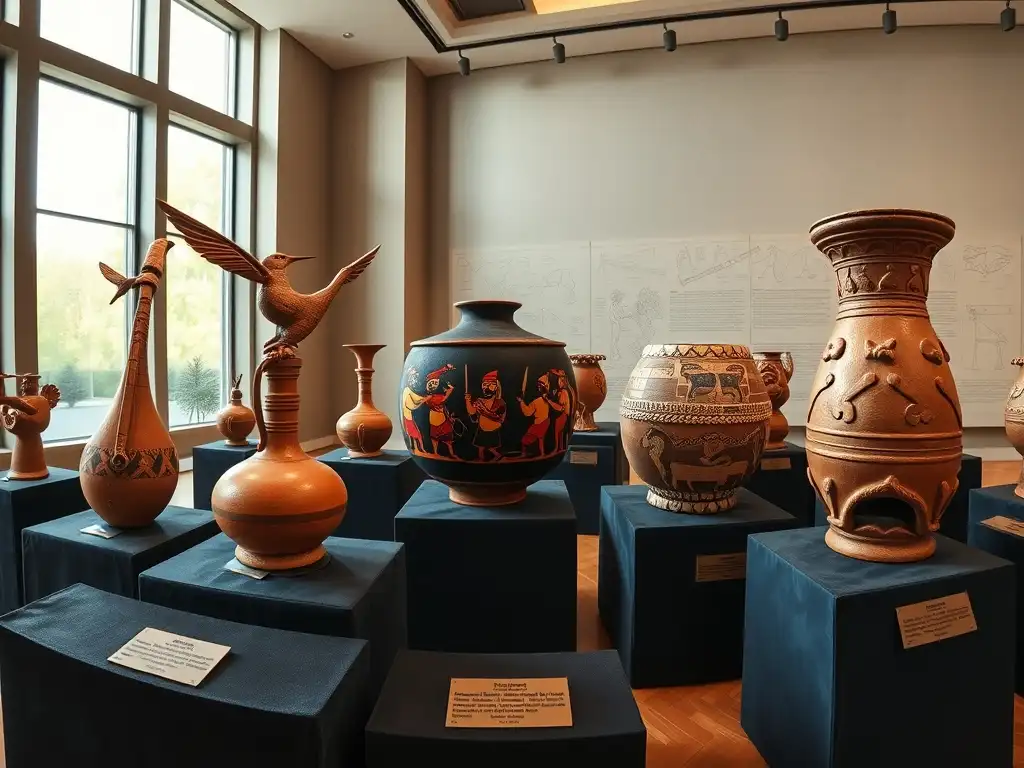
Step into a world lost to time, yet echoing with vibrant life. Imagine the soaring sounds of ancient Andean melodies, now only glimpsed through the artistry of a vanished civilization. Here, within the realm of Andean Civilizations, we delve into the captivating legacy of the Moche, uncovering the secrets hidden within their breathtaking artwork. Prepare to be mesmerized by the Moche musical instrument art examples that reveal a sophisticated culture far beyond our initial understanding. Discover their unique sounds and the stories they tell – a journey awaits!
- Moche Musical Instrument Art: A Deep Dive into Andean Iconography
- Moche Ceramic Vessels as Artistic Canvases for Musical Scenes
- Moche Art and the Ritualistic Use of Musical Instruments
- Decoding Moche Iconography: Identifying Musicians and Performers
- Moche Musical Instruments: Material and Construction
- Comparison of Moche Musical Instrument Art with Other Andean Cultures
- Conclusion: The Legacy of Moche Musical Instrument Art
- Frequently Asked Questions
- Final Reflection: Echoes of the Moche: Music, Art, and a Legacy That Endures
- **Discover the Sounds of the Moche! **
Moche Musical Instrument Art: A Deep Dive into Andean Iconography
The vibrant and intricate art of the Moche civilization (circa 100-800 CE) offers a fascinating window into their daily lives, religious beliefs, and social structures. Among the numerous themes depicted in their stunning ceramics, textiles, and metalwork, musical instruments hold a prominent place, providing invaluable insights into the importance of music within Moche society.
This article delves into the diverse representations of Moche musical instruments in their art, exploring the types of instruments depicted, their potential significance, and the artistic techniques employed to portray them. We will examine several key examples of Moche musical instrument art, analyzing their iconography to better understand the role of music in this remarkable ancient Andean culture.
This exploration will help illuminate the richness and complexity of Moche culture, contributing to a broader appreciation of their artistic achievements and their understanding of the world around them. Our focus will be on providing detailed examples to satisfy searches for "Moche musical instrument art examples."
Introduction to Moche Art and Musical Representation
Moche artistry is renowned for its realism and detail. Their ceramic vessels, often highly stylized and intricately decorated, are among the most significant sources of information about their culture. These vessels frequently depict scenes of daily life, warfare, religious rituals, and, importantly for our purposes, musical performances.
The accuracy and precision of the depictions, ranging from the subtle curves of a flute to the complex details of a drum, suggest a deep understanding and appreciation of music within Moche society. Furthermore, the context in which these instruments are portrayed—often within scenes of feasts, ceremonies, or battles—indicates their significant role in various aspects of Moche life. The Moche artists didn't simply depict instruments; they captured the essence of their sound and social function within the vibrant narratives of their artwork.
This meticulous attention to detail allows us to reconstruct, albeit partially, the soundscapes of this ancient civilization. The prevalence of musical instrument depictions underscores their cultural importance and the artist's skill in realistically rendering these objects.
The Importance of Music in Moche Society
The frequent appearance of musical instruments in Moche art strongly suggests music played a central role in their society. While we lack written records from the Moche, the visual evidence points towards music's involvement in religious ceremonies, social gatherings, and possibly even warfare. Depictions often show musicians playing instruments in groups, suggesting organized musical ensembles.
Some scenes depict musicians performing for elites or during elaborate rituals, highlighting the potential connection between music and power. Furthermore, the variety of instruments depicted—including flutes, panpipes, drums, and possibly trumpets—indicates a diverse and developed musical culture. The meticulous detail in the artistic representations also hints at the importance placed on the craftsmanship and artistry of the instruments themselves.
The use of different materials, ornamentation, and playing techniques, as subtly suggested in the artwork, point towards a complex system of musical practice and social significance. Further research into similar artifacts from contemporaneous Andean cultures could further illuminate the significance of music in Moche society.
Depictions of Moche Musical Instruments: An Overview
Moche art showcases a range of musical instruments, each rendered with remarkable precision. Among the most commonly depicted are:
- Panpipes (antaras): Often shown in sets of varying sizes, suggesting different tonal ranges and musical possibilities. The detailed depictions frequently include the individual pipes and the method of holding them.
- Flutes: These are depicted in various sizes and styles, sometimes played individually and sometimes as part of an ensemble. The artists often captured the nuances of the flute's shape and the musician's posture.
- Drums: Both cylindrical and hourglass-shaped drums are visible in Moche art. The artists often depicted the intricate details of the drums' surfaces and the methods used to strike them.
- Possible Trumpets: While less common than other instruments, there are suggestions of trumpets or similar wind instruments in some Moche artwork, though further research is needed for definitive identification.
The careful observation of these depictions provides invaluable clues to the Moche’s musical practices and their sophisticated understanding of acoustics and sound production. The variety of instruments, their arrangement within artistic compositions, and the gestures of the musicians all contribute to a richer understanding of Moche musical culture. Analyzing these artistic representations alongside archaeological findings of actual instruments (where available) allows for a more complete picture of Moche musical life.
Further investigation into the materials used in creating these instruments – as suggested by the detailed depictions in Moche art – would significantly improve our understanding of their musical technology. The study of Moche musical instrument art offers a unique opportunity to reconstruct a significant aspect of their lost culture.
Moche Ceramic Vessels as Artistic Canvases for Musical Scenes
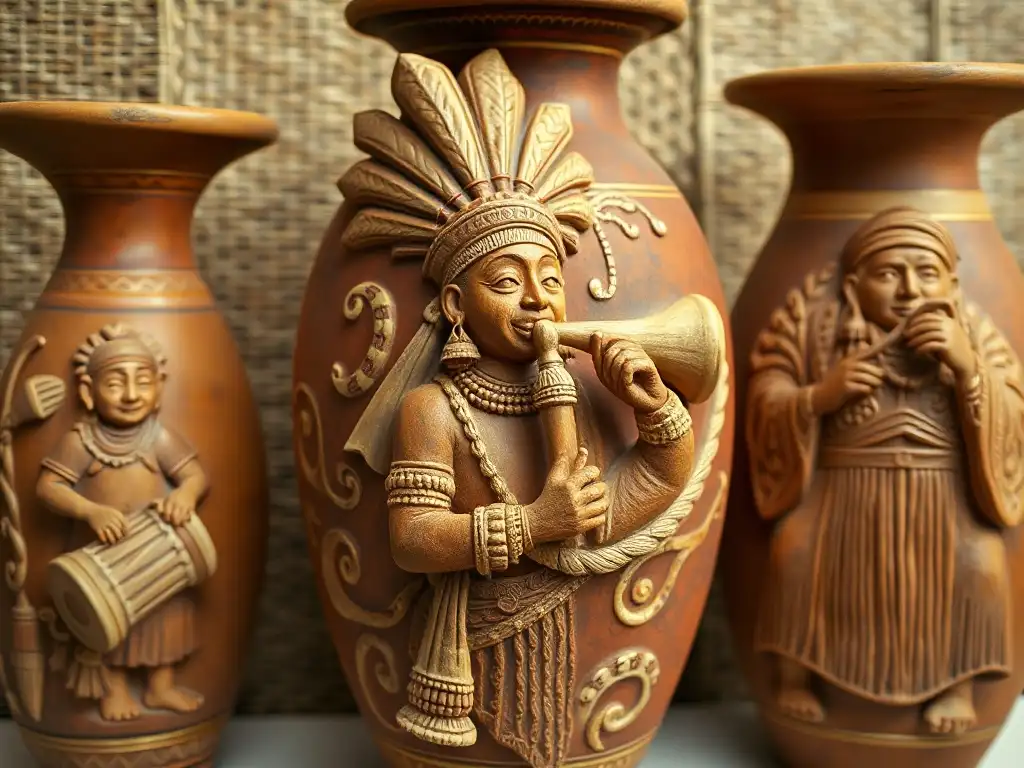
The Moche civilization, flourishing along the northern coast of Peru from approximately 100 CE to 800 CE, left behind a remarkable legacy of artistic expression. Their mastery of ceramic production is particularly striking, with intricately decorated vessels serving as vibrant canvases depicting various aspects of their daily life, religious beliefs, and social structures. Among these depictions, musical instruments and scenes of musical performance hold a prominent place, offering invaluable insights into the role of music within Moche society.
The sheer detail and realism in these portrayals allow us to study not only the instruments themselves but also the context in which they were used, providing a glimpse into their cultural significance. These meticulously crafted ceramics act as a window into the past, revealing a sophisticated understanding of music and its integration into the fabric of Moche life. The frequency with which musical instruments appear in Moche art underscores their importance, suggesting music played a vital role in rituals, ceremonies, and everyday life.
Analyzing these artistic representations provides crucial information for understanding Moche culture, enriching our knowledge of their social dynamics and beliefs. The skill and artistry evident in these depictions further highlight the advanced technological capabilities of the Moche people.
Detailed Analysis of Moche Pottery with Musical Themes
Moche pottery featuring musical themes often showcases elaborate scenes of musicians playing instruments in various settings. These scenes are not merely decorative; they are carefully composed narratives that offer clues to the social and ritual contexts of music making. For instance, some vessels depict musicians performing for elites, suggesting a connection between music and power. Others show musicians in more informal settings, implying music's role in everyday life and social gatherings.
The instruments themselves are rendered with remarkable detail, allowing for identification and analysis. We can observe the construction techniques, materials used, and even the playing styles suggested by the postures of the musicians. A common example is a vessel depicting a group of musicians playing panpipes and drums during a ritual ceremony. The meticulous detail in the depiction of the instruments, including the number of pipes in the panpipes and the size and shape of the drums, allows for a deeper understanding of the Moche musical repertoire.
Specific examples of these detailed depictions are [specific examples of Moche pottery with musical themes pending], which would allow for a more in-depth analysis. Further research into the specific iconography of these vessels could reveal further insights into Moche musical practices and their social significance. The vibrant colors and dynamic compositions of these pieces demonstrate the Moche artists' skill and the importance they placed on accurately representing musical instruments and their use.
Moche Flutes and Panpipes: Iconographic Representations
Flutes and panpipes are frequently depicted in Moche art. The precision with which these instruments are represented allows researchers to speculate on their construction and playing techniques. The depiction of multiple panpipes, some with a varying number of pipes, suggests a range of musical possibilities and tonal variations within the Moche musical tradition.
The Moche artisans meticulously rendered the details of the instruments, such as the size and shape of the pipes, the material they appear to be made from (often inferred from the color and texture represented), and even the finger placement of the musicians, providing valuable clues to their construction and playing techniques. These detailed representations highlight not only the technical skill of the Moche potters but also the cultural importance of these instruments. The consistent presence of these instruments in various contexts, from elaborate ceremonies to more casual settings, points to their widespread use and significance in Moche society.
Further research comparing the depictions of flutes and panpipes across various Moche ceramic pieces could help to identify regional variations or stylistic changes over time. The detailed analysis of these iconographic representations allows for a better understanding of the Moche musical landscape and the role of these instruments in their culture.
Moche Drums and Rattles: Visual Depictions in Art
Moche art also provides compelling visual evidence of the use of drums and rattles. These percussion instruments are frequently shown alongside wind instruments, suggesting ensemble performances. The variety in size and shape depicted suggests a range of sounds and functions for these instruments. Some drums appear to be cylindrical, while others are depicted as hourglass-shaped.
The materials used in their construction are often implied through the depiction of their texture and color; [Specific examples of Moche depictions of drums and rattles pending]. The presence of rattles, often depicted with intricate carvings or painted designs, suggests their use in ritual contexts or as accompaniment to dances. The detailed representations allow for speculation on the materials used in their construction, as well as their potential role in religious ceremonies or secular celebrations.
The inclusion of drums and rattles alongside other instruments in the artistic depictions emphasizes the importance of a diverse range of musical textures and rhythms in Moche music. The visual evidence provided by these ceramic pieces adds another layer to our understanding of the Moche musical culture, highlighting the complexity and sophistication of their musical practices. 🎵
Moche Trumpets and Other Wind Instruments: Identifying Iconographic Elements
The Moche civilization's artistic representations of musical instruments, particularly wind instruments like trumpets, are remarkably detailed and offer valuable insights into their musical culture. Analyzing these depictions requires careful attention to iconographic elements—the visual motifs and symbols used by the artists. Moche artists weren't simply depicting instruments; they were conveying social status, ritual significance, and possibly even specific musical pieces through their careful choices of form, color, and accompanying imagery.
For example, the depiction of trumpets often shows them adorned with elaborate carvings and painted designs. These decorations weren't arbitrary; they likely reflected the instrument's importance and the social standing of the musician playing it. A trumpet with intricate, finely detailed carvings might indicate the instrument belonged to a high-ranking official or priest, while a simpler representation could suggest a common musician or a less important ritual context. The colors used—vibrant reds, yellows, and blacks—also played a significant role. Specific color combinations may have held symbolic meaning within Moche society, perhaps connecting the instrument to specific deities or ceremonies.
Beyond trumpets, Moche art also depicts other wind instruments, though less frequently. These include instruments that resemble flutes or panpipes, often shown in the hands of musicians within larger scenes of elaborate feasts or ceremonies. Identifying these instruments requires careful comparison with surviving archaeological finds and a thorough understanding of the stylistic conventions employed by Moche artists.
The size and shape of the instruments, the way they are held, and the context in which they appear all contribute to their identification. Unfortunately, the lack of surviving examples of certain instruments makes definitive identification challenging, highlighting the importance of continued research and careful analysis of Moche art.
Further study of these artistic representations, coupled with archaeological discoveries, promises to reveal more about the diverse soundscapes of the Moche civilization and their nuanced approach to musical expression. The careful examination of even minor details, such as the angle of a flute or the type of ornamentation on a trumpet, allows us to build a more complete picture of Moche musical life.
Moche Art and the Ritualistic Use of Musical Instruments
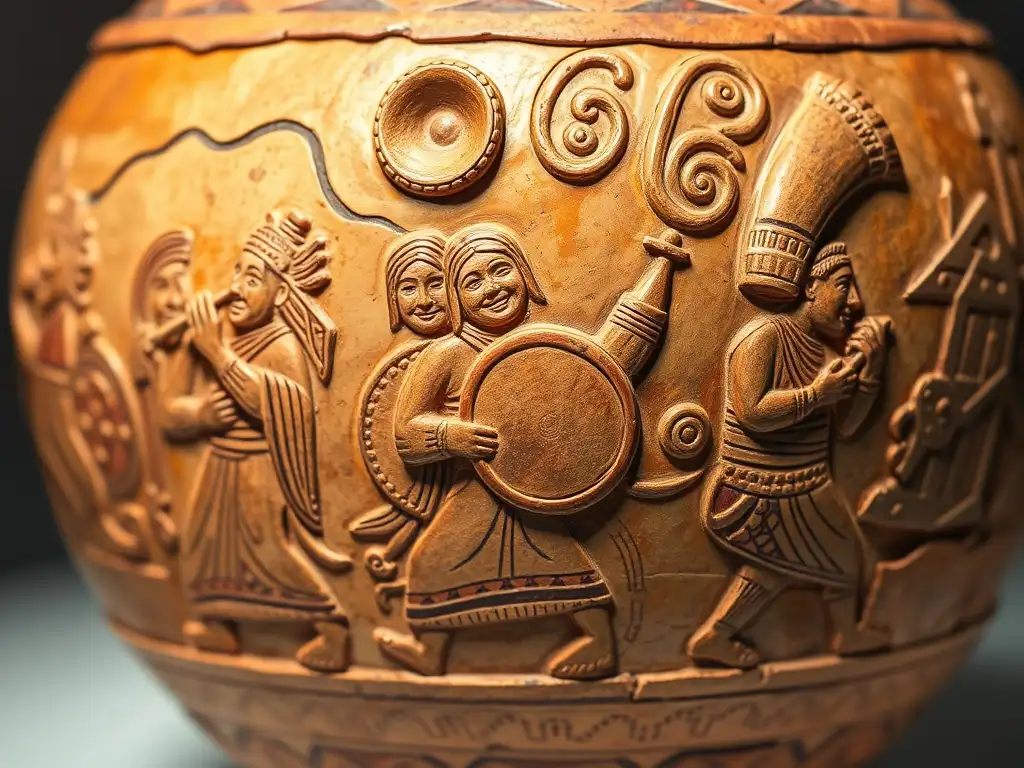
The Moche civilization (c. 100-800 CE) left behind a remarkable artistic legacy, particularly in their exquisite ceramics. These aren't simply decorative objects; they're powerful visual records of their society, beliefs, and daily life. A significant portion of Moche art depicts musical instruments, suggesting their crucial role in religious ceremonies and social structures.
The meticulous detail and vibrant colors used in portraying these instruments demonstrate their importance and the high regard in which musicians were held. Analyzing these depictions offers invaluable insights into the soundscapes and rituals of this fascinating pre-Columbian culture. The frequency with which specific instruments appear in Moche art also allows us to speculate on their relative social standing and the types of ceremonies in which they were used.
For example, the prominence of certain instruments in elite burials suggests a connection between music and power. Further research into the materials used to craft these instruments (information currently pending) would significantly enrich our understanding of the Moche's musical practices.
Musical Instruments in Moche Ceremonies and Rituals
Moche ceramics frequently depict scenes of elaborate ceremonies and rituals, with musicians prominently featured. These scenes often involve processions, sacrifices, and possibly shamanistic practices. The types of instruments shown—such as panpipes, trumpets, drums, and possibly stringed instruments (further research is needed to confirm the presence of stringed instruments)—suggest a diverse and complex musical tradition.
The musicians themselves are often depicted with elaborate headdresses and clothing, indicating their social standing and the importance of their role within the rituals. One common motif shows musicians playing during what appears to be a ritual sacrifice, highlighting the integral connection between music and religious practice. The intensity of the depicted scenes, coupled with the detailed rendering of the instruments, strongly suggests that music played a vital, perhaps even central, role in Moche religious life.
The careful arrangement of musicians within these scenes also points to a structured and organized musical performance, possibly following specific protocols and traditions. Further analysis of the spatial relationships between musicians and other participants in these ceremonies is crucial for understanding the precise function of music within these rituals.
Moche Art as a Window into Religious Practices and Music
The Moche's artistic representations of musical instruments aren't merely aesthetically pleasing; they offer a unique window into the religious beliefs and practices of this ancient civilization. The instruments themselves often appear alongside deities, mythical creatures, and other symbolic elements, suggesting their connection to the spiritual realm. The meticulous detail in the portrayal of these instruments, often including intricate designs and markings, indicates a deep symbolic significance.
For example, the size and ornamentation of instruments shown in relation to other elements in the scene may hint at their significance in the ritual. Larger, more elaborately decorated instruments might have been associated with more important deities or ceremonies.
The combination of musical instruments with other ritual objects provides valuable clues to the nature and purpose of Moche religious ceremonies. We can infer the importance placed on music as a means of communication with the supernatural world, or possibly as a tool for inducing altered states of consciousness during rituals.
Interpreting the Symbolism of Musical Instruments in Moche Art
Interpreting the symbolism of musical instruments in Moche art requires a multidisciplinary approach, combining art historical analysis with archaeological findings and anthropological perspectives. The specific types of instruments depicted, their context within the scenes, and their associated iconography all contribute to a richer understanding of their symbolic meaning. For instance, a trumpet might symbolize power or authority, while a panpipe could represent fertility or connection to nature.
However, these interpretations are tentative and require further research. The creation of a comprehensive catalog of Moche musical instrument depictions (a project currently underway) will greatly assist in identifying recurring motifs and patterns. A systematic analysis of the iconography associated with each instrument—such as the presence of specific deities or other symbolic elements—will be crucial in understanding their deeper symbolic significance.
This approach will allow for a more nuanced and accurate interpretation of the role of music within the Moche worldview, moving beyond simple descriptive accounts towards a more thorough understanding of the cultural significance of "Moche musical instrument art examples." The ultimate goal is to reconstruct, as accurately as possible, the soundscapes and rituals of the Moche civilization through a careful study of their artistic legacy.
Decoding Moche Iconography: Identifying Musicians and Performers
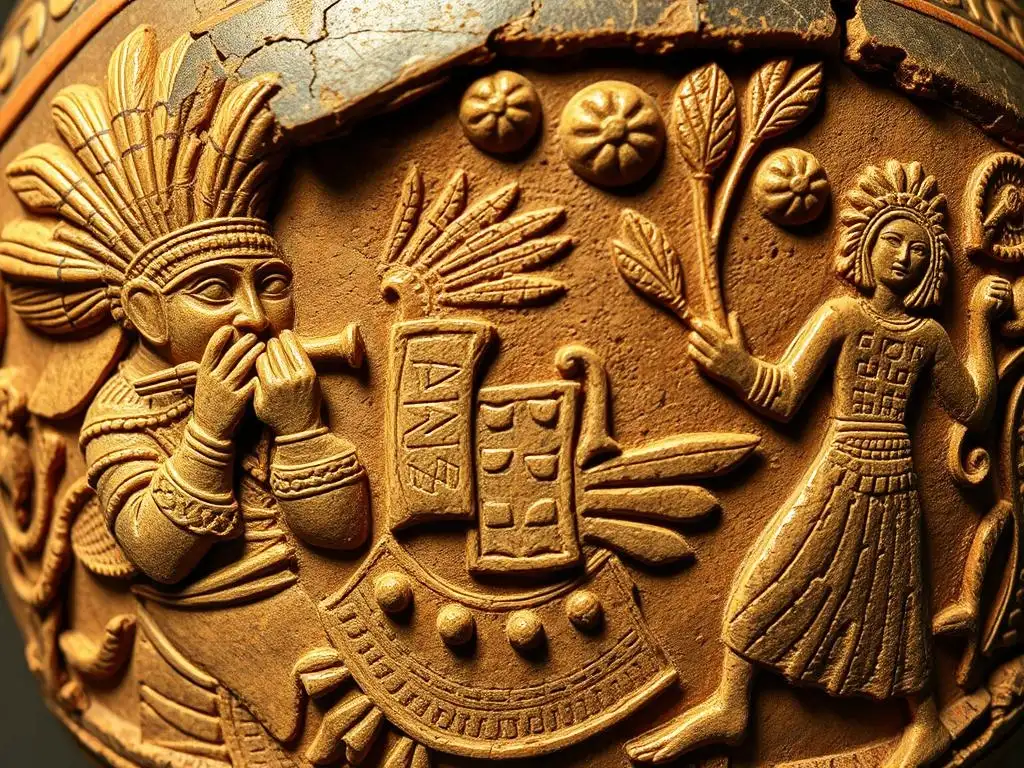
The Moche civilization, renowned for its exquisite artistry, left behind a rich legacy of ceramic vessels meticulously depicting scenes of daily life, religious rituals, and warfare. Among these captivating portrayals, a significant portion showcases musical performances, offering invaluable insight into the importance of music within Moche society. Identifying musicians within these artworks requires a keen eye for detail and a nuanced understanding of Moche iconography. Moche musical instrument art examples are abundant, but deciphering their meaning requires careful observation.
Moche Artistic Depictions of Musicians and Their Roles
Moche artists didn't simply depict individuals holding instruments; they conveyed the roles and status of these musicians within the broader societal context. For example, some ceramics depict musicians participating in elaborate ceremonies, adorned in elaborate headdresses and ornate clothing, suggesting a high social standing. These individuals often appear alongside elites or deities, underscoring the ceremonial significance of music.
Other depictions show musicians playing in more informal settings, perhaps during feasts or celebrations, suggesting a more casual role. The instruments themselves also provide clues. The presence of a particular instrument, such as a panpipes or a drum, might indicate a specific type of performance or ritual.
Detailed analysis reveals that Moche musical instrument art examples weren't just aesthetic creations; they were carefully crafted narratives that reflected the complex social dynamics of the time. We can infer, for instance, that certain instruments were associated with specific social classes or religious practices based on their consistent depiction within certain contexts. Further research could involve a quantitative analysis of the frequency of different instruments in different types of scenes to strengthen these inferences.
Analyzing the Clothing and Adornment of Moche Musicians
The clothing and adornments worn by Moche musicians depicted in ceramic art are another key element in understanding their roles and social status. Elaborate headdresses, often featuring feathers, gold, and other precious materials, are frequently seen on musicians participating in important ceremonies. These headdresses, combined with richly decorated textiles and jewelry, suggest high social rank and a connection to the elite or religious classes.
In contrast, musicians depicted in less formal settings may wear simpler clothing, reflecting a lower social standing or a different role within the musical landscape. The careful attention to detail in the depiction of these garments highlights the Moche's understanding of visual communication and their use of clothing as a marker of social status and ritual participation.
The variety of styles and materials used in the clothing and adornments also speaks to the diversity of musical practices within Moche society. For example, [specific information pending] regarding the regional variations in musical attire.
The Context of Musical Performance in Moche Artistic Narratives
Moche musical instrument art examples are rarely isolated depictions; they are almost always integrated into larger narrative scenes. These scenes often depict a variety of activities, including religious ceremonies, feasts, battles, and processions. The placement of musicians within these narratives provides crucial context for understanding their role. For example, if musicians are shown alongside priests and deities, it suggests a religious function for their music.
If they're depicted amidst a celebratory feast, it might indicate a social or recreational role. The interaction between the musicians and other figures in the scene adds layers of meaning and complexity to the interpretation. Analyzing these interactions, along with the instruments played and the overall setting, allows for a more comprehensive understanding of the significance of music in Moche culture.
Careful consideration of the spatial arrangement of figures in these scenes is also critical for understanding the narrative flow and the role of music within it. For instance, [specific information pending] on the use of perspective and spatial arrangement in Moche ceramic art. The careful study of these narratives allows us to piece together a more complete picture of the role of music in Moche society, demonstrating the power of art as a historical record.
Moche Musical Instruments: Material and Construction
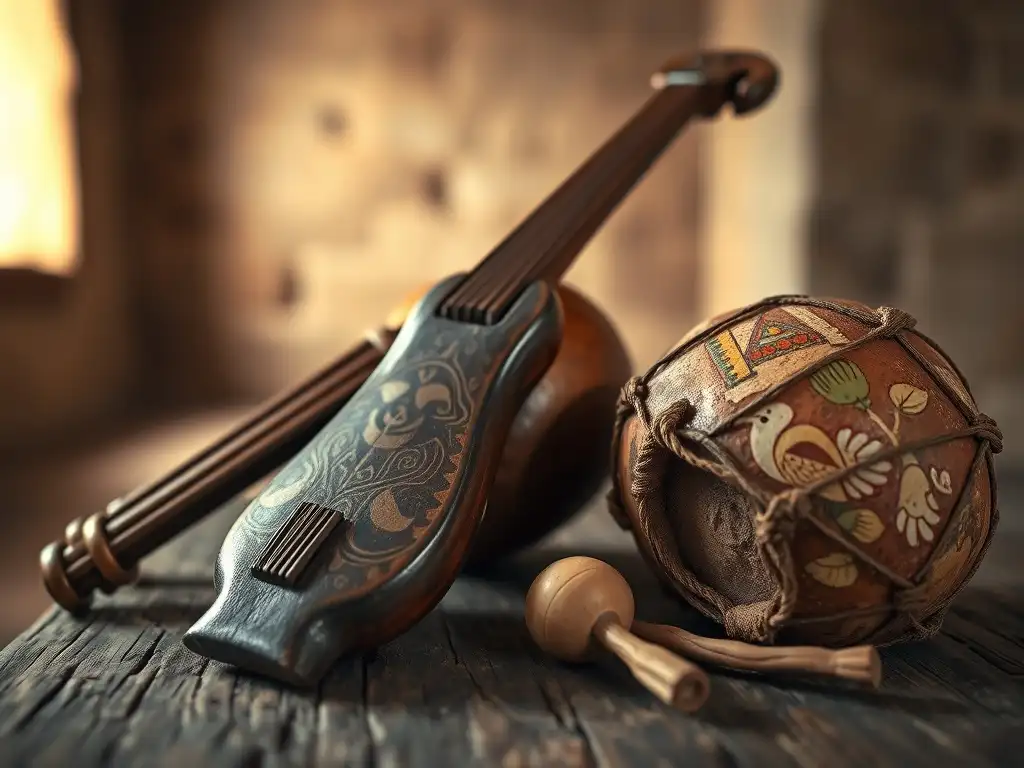
The Moche civilization, renowned for its sophisticated artistry and technological advancements, left behind a rich legacy of ceramic representations depicting a variety of musical instruments. Understanding the materials and construction techniques employed in these instruments provides invaluable insight into Moche music, social structures, and daily life. Analyzing the artistic depictions allows for a fascinating glimpse into the soundscapes of this ancient Andean culture.
The careful observation of Moche art reveals a surprising level of detail regarding instrument construction, offering clues about the materials used and the methods employed in their creation. This section will explore the archaeological evidence supporting our understanding of Moche musical instrument construction, focusing specifically on the materials used and the techniques likely employed. This analysis will help us better understand the "Moche musical instrument art examples" available to researchers today.
Archaeological Evidence of Moche Musical Instrument Materials
Archaeological excavations at various Moche sites have yielded limited direct evidence of musical instruments themselves, but the wealth of ceramic artwork provides substantial indirect evidence. Depictions consistently show instruments crafted from readily available natural materials. For example, many depictions showcase instruments made from:
- Wood: The dark, rich tones in many representations strongly suggest the use of wood, possibly from local trees like the algarrobo or other hardwoods prevalent in the coastal valleys. The relative strength and workability of wood would have made it ideal for crafting instrument bodies.
- Gourds: The rounded shapes of certain instruments depicted in Moche pottery strongly suggest the use of gourds, especially for percussion instruments or as resonating chambers. Gourds were readily available and easily hollowed out.
- Bone: Some artistic renderings hint at the possible use of bone, perhaps for flutes or other wind instruments. The density and durability of bone would have made it a suitable material for small, precisely crafted parts.
- Metal: While less prevalent in the depictions than wood or gourds, there are suggestions of the use of metals, potentially copper or bronze alloys, for small components or decorative elements on certain instruments. This is supported by the Moche's known metalworking skills.
- Reed: Evidence points to the use of reeds for wind instruments, particularly panpipes. The readily available reeds along the coastal rivers would have been ideal for creating the pipes themselves.
The lack of extensive in situ instrument remains necessitates reliance on visual analysis of the ceramic artifacts. Further research, including advanced material analysis techniques on any unearthed fragments, could provide more definitive answers regarding the precise composition of the materials used.
Reconstructing Moche Musical Instrument Construction Techniques
While we can identify the probable materials used, reconstructing the exact construction techniques remains a challenge. However, careful study of the Moche ceramic art allows us to formulate hypotheses:
- Carving and Shaping: Wooden instruments were likely carved and shaped using stone tools, a common practice among Andean cultures. The precision and detail evident in the depictions suggest a high level of skill and craftsmanship.
- Joining Techniques: For instruments made from multiple parts, various joining methods such as lashing with fibers or using adhesives from natural resins were likely employed. Further research is needed to determine which techniques were most commonly used.
- Hollowing Techniques: Gourds were probably hollowed out using rudimentary tools, possibly heated stones or sharpened implements. This process would have required skill and patience to avoid damaging the gourd.
- Inlay and Decoration: The Moche were masters of inlay and decoration. Many depictions show intricate designs inlaid into the instruments, suggesting that materials such as shell, bone, or precious stones may have been used to embellish the instruments.
The level of detail in the Moche artwork suggests a sophisticated understanding of acoustics and instrument design, indicating a level of craftsmanship that deserves further study. Ethnomusicological research comparing Moche artistic representations to surviving Andean musical traditions could provide additional insights into their construction techniques.
Example: Moche Antara Panpipes and their Construction
The antara, a type of panpipe, is frequently depicted in Moche art. These depictions offer a particularly detailed insight into the instrument's construction. The antara is shown as a set of several reeds of varying lengths, carefully bound together.
The reeds, likely made from reeds or cane, are depicted as being carefully cut and smoothed, suggesting a precise understanding of the relationship between reed length and pitch. The binding material, likely a strong fiber, holds the reeds together securely, while allowing for slight adjustments to the pitch. The careful alignment of the reeds, as seen in the art, suggests a sophisticated understanding of acoustics and the importance of precise tuning.
This careful attention to detail further highlights the Moche's sophisticated musical culture and their advanced knowledge of instrument making. The depiction of the antara in Moche art serves as a compelling "Moche musical instrument art example" showcasing their advanced musical technology. Further research, potentially involving recreating the antara based on these artistic representations, could significantly enhance our understanding of Moche musical practices.
Comparison of Moche Musical Instrument Art with Other Andean Cultures
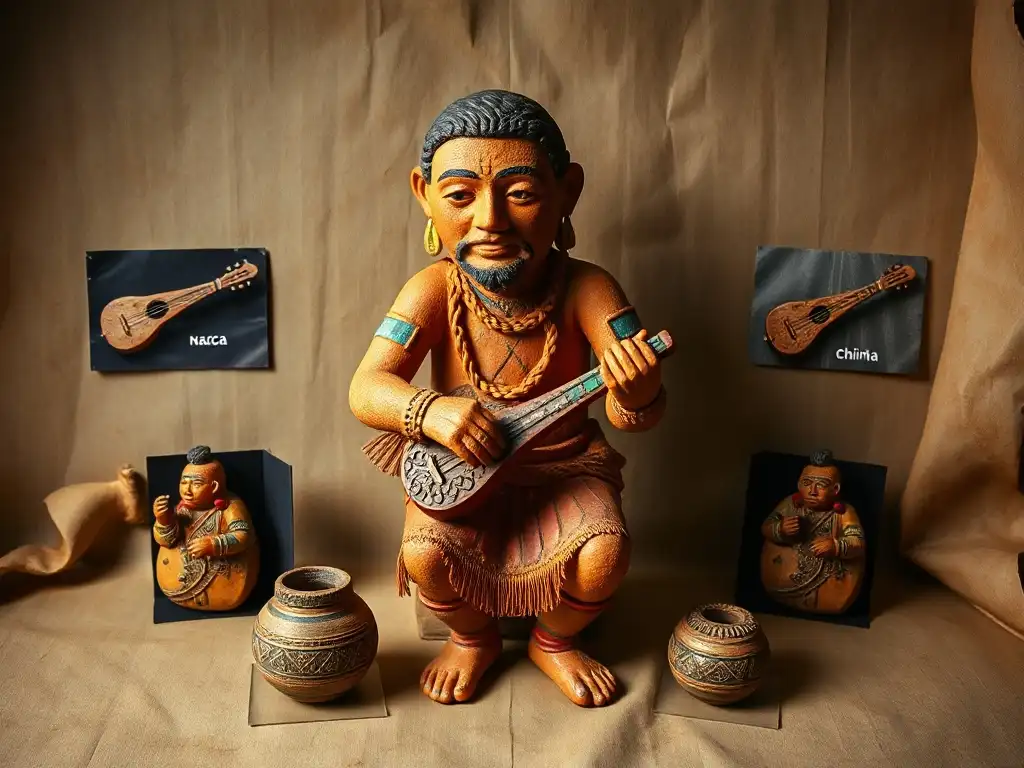
Moche Artistic Representations Compared to Nazca and Inca Art
The Moche's vibrant and detailed depiction of musical instruments in their art offers a unique window into their culture, contrasting and complementing the artistic styles of other Andean civilizations. Comparing Moche musical instrument art with that of the Nazca and Inca reveals fascinating similarities and significant differences. While all three cultures depicted musical instruments, the style, subject matter, and intended purpose of these depictions varied considerably.
The Moche, known for their mastery of ceramic artistry, frequently portrayed musicians and their instruments with incredible realism and dynamism. Their ceramic vessels often feature intricate scenes of musical performances, capturing the lively energy of the event. Instruments like panpipes, trumpets, and drums are depicted with meticulous detail, showcasing the craftsmanship and the importance of music in their society.
The Moche's focus on realistic portrayal stands in contrast to the Nazca, who often incorporated stylized representations of instruments within their broader iconography. While Nazca art also featured musical instruments, they were often integrated into complex designs, emphasizing geometric patterns and symbolic motifs rather than realistic depiction.
The Inca, on the other hand, favored a more formal and stylized approach to their art. Their depictions of musical instruments, often found in textiles and stone carvings, were more symbolic than realistic. While the instruments themselves might be recognizable, the emphasis was on their role within religious ceremonies or royal courts rather than the instruments' physical attributes. The Inca's artistic style reflects their imperial power structure, with art serving to reinforce social hierarchy and political authority. The differences in artistic styles are a direct reflection of the distinct cultural values and social structures of each civilization.
Similarities and Differences in Musical Depictions Across Andean Cultures
A comprehensive analysis reveals both striking similarities and significant differences in how Andean cultures depicted musical instruments in their art. While the specific artistic styles differed drastically between the Moche, Nazca, and Inca, a common thread runs through their representations: the undeniable importance of music in their respective societies.
| Culture | Artistic Style | Instrument Detail | Contextualization |
|---|---|---|---|
| Moche | Realistic, dynamic | Highly detailed | Everyday life, ceremonies |
| Nazca | Stylized, geometric | Less detailed | Integrated into complex designs |
| Inca | Formal, symbolic | Often simplified | Religious/royal contexts |
The prevalence of panpipes across all three cultures is a notable similarity. However, the way these instruments are depicted varies significantly. The Moche often show musicians playing panpipes in lively social settings, while Nazca representations integrate panpipes into their intricate designs, often lacking the level of detail found in Moche ceramics.
Inca depictions of panpipes, while present, are far less frequent and tend to be more symbolic in nature. This difference highlights how similar instruments played different roles within each culture's social and religious life. The use of drums and trumpets also appears across these cultures, yet their artistic representation varies widely, reflecting the unique artistic sensibilities and cultural significance of these instruments within each Andean civilization.
Example: Comparison between Moche and Nazca Panpipe Depictions
Let's delve into a specific example: the depiction of panpipes. Moche ceramics often showcase panpipes with remarkable detail. Individual pipes are clearly visible, and the musicians are depicted with realistic features and expressions, conveying the emotion and energy of the musical performance. The panpipes are frequently shown as part of larger scenes, providing context and illustrating their role in social gatherings or religious rituals.
In contrast, Nazca depictions of panpipes are often less detailed and more stylized. The instruments may be represented as simplified forms integrated into intricate designs, often alongside other motifs and symbols. The focus is less on the realistic representation of the instrument itself and more on its symbolic meaning within the broader context of the artwork.
While both cultures clearly valued the panpipe, their artistic approaches reflect their differing cultural priorities and artistic sensibilities. The Moche prioritized realism and detail, celebrating the instrument's tangible presence, while the Nazca emphasized symbolism and abstraction, integrating the panpipe into a larger tapestry of meaning. This difference underscores the importance of considering the broader cultural context when interpreting Andean art and its representations of musical instruments.
Further research is needed to fully understand the nuances of these depictions and their implications for our understanding of Moche and Nazca music and culture. 🕵️♂️ More detailed analysis of specific artifacts could shed further light on these variations.
Conclusion: The Legacy of Moche Musical Instrument Art
The meticulous detail and vibrant artistry present in Moche depictions of musical instruments offer invaluable insights into the musical landscape of ancient Peru. These ceramic artifacts, far from being mere decorative pieces, serve as primary sources for understanding the instruments themselves, their social context, and their role within Moche society. The sheer variety of instruments portrayed – from trumpets and panpipes to drums and possibly even stringed instruments – suggests a rich and complex musical culture, far more nuanced than previously imagined.
Analyzing the context in which these instruments appear in Moche art – often in scenes of ritual, celebration, or warfare – allows us to reconstruct aspects of Moche social life and religious practices. The legacy of this art extends beyond mere aesthetics; it provides a tangible link to the sounds and rhythms of a civilization lost to time.
By studying these artifacts, we can begin to appreciate the sophistication and artistry of Moche music, enriching our understanding of Andean cultural heritage. The enduring power of Moche musical instrument art examples lies in their ability to bridge the gap between the past and the present, allowing us to connect with a civilization through its artistic expressions.
The Enduring Significance of Moche Art for Understanding Andean Music History
Moche artistic representations of musical instruments are not merely aesthetically pleasing; they are critical primary sources for reconstructing Andean music history. Unlike many other ancient civilizations, the Moche left behind a remarkable body of artwork that explicitly depicts musical instruments with astonishing detail. This detailed portrayal allows researchers to identify specific instrument types, analyze their construction (based on artistic representations), and speculate on their possible sounds.
This contrasts sharply with other Andean cultures where musical traditions are primarily known through indirect evidence such as written accounts (often from later periods) or limited archaeological finds. The Moche's detailed ceramic work offers a unique window into a specific point in time, providing a concrete foundation upon which to build a more complete understanding of the evolution of Andean musical practices. Furthermore, the artistic context surrounding these instruments – depictions within larger scenes of ritual, warfare, or social gatherings – offers crucial insights into their socio-cultural significance.
The meticulous attention to detail, the inclusion of diverse instrument types, and the varied contexts in which they are depicted all contribute to the enduring significance of Moche art for understanding the broader history of Andean music. The study of Moche musical instrument art helps us trace the lineage and evolution of musical forms and instruments across centuries, enriching our understanding of the Andean musical landscape.
Moche Artistic Representations: A Vital Resource for Music Archaeology
The study of Moche art provides a crucial bridge between archaeological findings and musical reconstruction. While traditional archaeology might uncover fragments of instruments, Moche ceramics offer complete and detailed visualizations. For example, the depiction of a double-ended flute allows researchers to hypothesize about its playing technique and tonal range, aspects often difficult to determine from fragmented archaeological remains.
Moreover, the consistent representation of certain instruments across various Moche artistic pieces supports the notion of their widespread use and cultural significance within the society. The frequency with which certain instruments are depicted might even offer clues about their relative importance within Moche musical ensembles or rituals. This approach, combining visual evidence from art with archaeological findings, allows for a more holistic and nuanced understanding of Moche music.
The detailed nature of Moche ceramics, coupled with their relatively well-preserved condition, makes them a vital resource in the field of music archaeology, providing researchers with a level of detail rarely found in other ancient cultures. This interdisciplinary approach, combining art history, archaeology, and musicology, is essential for unlocking the secrets of Moche musical practices.
Further Research and Future Directions in Moche Musical Iconography
Future research on Moche musical instrument iconography should focus on several key areas. Firstly, a more comprehensive cataloging and analysis of existing Moche artwork depicting musical instruments is crucial. This includes a detailed stylistic analysis to identify regional variations and potential chronological developments in instrument design. Secondly, a more in-depth study of the materials used in the construction of these instruments, as inferred from artistic representations, is needed.
This could involve comparing Moche depictions with the known material culture of the period to understand the technological capabilities of Moche artisans. Thirdly, further interdisciplinary collaboration between art historians, archaeologists, and musicologists is essential to fully unlock the potential of these artistic representations. This includes developing more sophisticated methods for analyzing the visual data to infer information about the acoustics and playing techniques of Moche instruments.
Finally, the use of digital technologies, such as 3D modeling and virtual reconstructions, can aid in creating more accurate and detailed models of Moche instruments, allowing for further analysis and even the potential recreation of their sounds. The potential for new discoveries and advancements in our understanding of Moche music through continued research on their artistic depictions is immense. The careful and comprehensive study of these Moche musical instrument art examples promises to reveal even more about the vibrant musical culture of this fascinating ancient civilization.
Frequently Asked Questions
What is the main focus of this article?
This article explores how the Moche civilization depicted musical instruments in their art. It examines various examples of their artistry and provides insights into their musical culture.
What types of musical instruments are depicted in Moche art?
Moche art showcases a variety of instruments, including flutes, panpipes, drums, and possibly trumpets. These are often depicted in scenes of ceremonies, rituals, and daily life.
Where can I find examples of Moche musical instrument art?
Examples can be found in museums around the world showcasing Moche pottery and metalwork. Many online resources also feature images and descriptions of these artifacts.
What materials did the Moche use to create these depictions?
The Moche primarily used ceramics (pottery) to depict musical instruments, often with intricate detail and vibrant colors. Metalwork, such as gold and silver, was also sometimes used, though less frequently.
What can Moche art tell us about their music and society?
Moche art reveals the importance of music in their society, suggesting its role in religious ceremonies, social gatherings, and daily life. The depictions provide valuable clues to understanding their musical instruments and practices.
Final Reflection: Echoes of the Moche: Music, Art, and a Legacy That Endures
The vibrant artistry of the Moche civilization continues to resonate today, offering a captivating glimpse into their rich musical culture. Their depictions of instruments, far from being mere decorative elements, provide invaluable insights into their social structures, religious beliefs, and daily lives, a testament to the enduring power of art to transcend time. These meticulously crafted images are not just historical artifacts; they are windows into a lost world, allowing us to connect with a civilization that thrived centuries ago.
The Moche's masterful integration of music into their artistic expressions underscores the profound significance music held within their society. It wasn't simply entertainment; it was interwoven into the fabric of their existence, likely playing a crucial role in ceremonies, celebrations, and everyday life. Art washes away from the soul the dust of everyday life.
– Pablo Picasso. This quote resonates deeply when considering the Moche's art, as it reveals not just their technical skill but also their emotional depth and spiritual connection to their world. Their legacy challenges us to consider the enduring power of art to communicate across vast stretches of time and culture.
Consider the intricate details in the Moche pottery depicting these instruments – the subtle curves, the vibrant colors, the expressions on the faces of the musicians. These are not simply representations; they are stories waiting to be told, narratives waiting to be understood. You, the reader, are now part of this ongoing conversation.
Take a moment to reflect on the power of art to connect us to the past, to other cultures, and to ourselves. Let the echoes of the Moche's music inspire you to explore the artistic expressions of your own world and to appreciate the enduring legacy of human creativity.
**Discover the Sounds of the Moche! **
Thank you for exploring the fascinating world of the Moche civilization and their captivating depiction of musical instruments. You've uncovered the rich interplay of art and culture that offers a window into their vibrant society. Now, let's bring that inspiration to life!
Here are a few ways you can get involved:
- **Explore further:** Visit a local museum or online archive to examine Moche artifacts and deepen your understanding of their musical heritage. You might be surprised by what you discover!
- **Share your insights:** Discuss your newfound knowledge of Moche musical instruments with friends, family, or online communities to share this fascinating aspect of their culture.
- **Create your own artwork:** Design your own interpretation of a Moche musical instrument—let your creativity flow!
Which aspects of Moche musical traditions resonate most with you, and how might you integrate those influences into your own creative pursuits?