
The Chavín Jaguar: Symbol of Power and Transformation

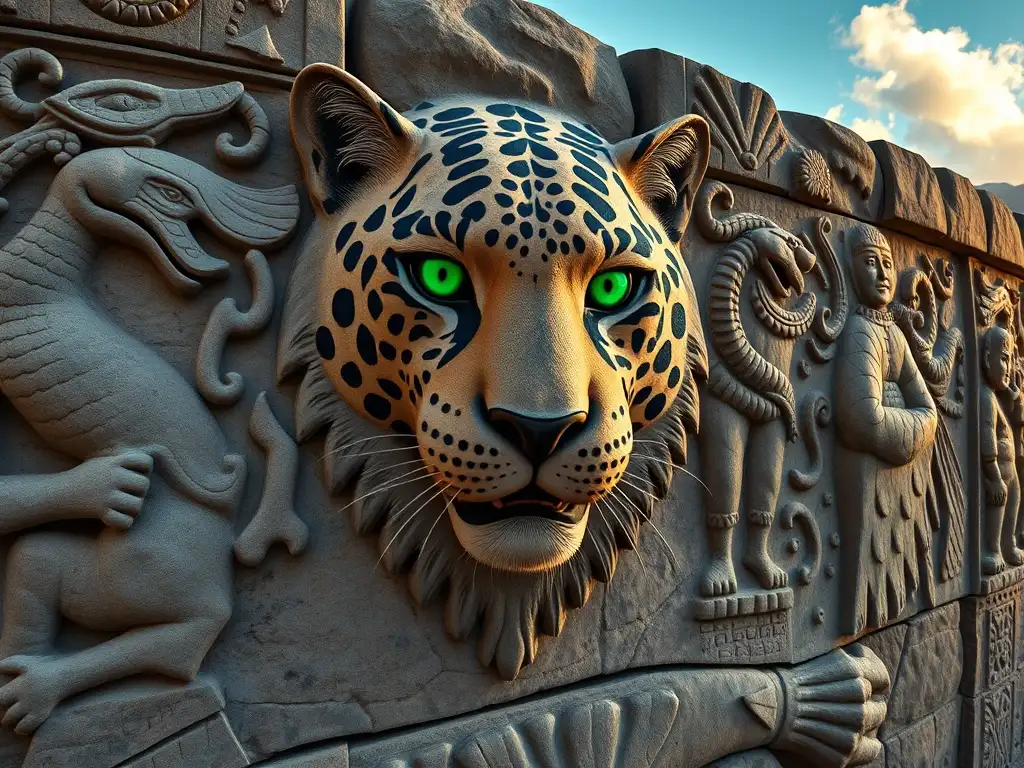
Step into a world lost to time, yet echoing with power and mystery. Journey with us through the captivating heart of the Andes, where ancient civilizations flourished, leaving behind a legacy of breathtaking artistry and complex societies. Uncover the secrets behind the Chavín jaguar, a symbol of profound meaning and transformation that holds the key to understanding these remarkable pre-Incan cultures. Dare to delve deeper and unlock the enigma of its significance – your exploration begins now.
The Chavín culture, flourishing in the Andes of Peru from approximately 900 to 200 BCE, left behind a legacy of monumental architecture, intricate artistry, and a complex religious system. Central to their worldview was the jaguar, a powerful feline whose image permeates Chavín art and iconography.
This article delves into the multifaceted meaning and symbolism of the Chavín jaguar, exploring its significance as a representation of power, transformation, and the spiritual realm within the context of the broader Andean cosmological beliefs. We will examine the artistic representations of the jaguar, analyze its recurring motifs, and discuss the scholarly interpretations that have shaped our understanding of this iconic symbol.
Understanding the Chavín jaguar is key to unlocking a deeper understanding of this enigmatic and influential pre-Inca civilization and its lasting impact on subsequent Andean cultures. Prepare to journey into the heart of the Andes and uncover the secrets held within the powerful gaze of the Chavín jaguar.
Understanding the Chavín Culture and its Artistic Expression
The Chavín culture, located in the northern highlands of Peru, is renowned for its sophisticated artistic style, characterized by a unique blend of realism and abstraction. Chavín art is often characterized by its intricate carvings, often found on monumental stone structures, ceramics, and textiles. The use of zoomorphic and anthropomorphic motifs is prevalent, reflecting the culture's complex religious beliefs and worldview.
The Chavín artistic tradition was not limited to a single medium; instead, it encompassed a wide range of materials and techniques. Stone carving, particularly in granite and diorite, was highly developed, enabling the creation of impressive sculptures and architectural elements. Ceramic production involved sophisticated techniques, resulting in finely decorated vessels with intricate designs. Textiles, though less readily preserved, likely played a significant role in Chavín society, potentially reflecting social status and religious significance. The artistic expression of the Chavín people wasn't merely decorative; it was deeply intertwined with their religious beliefs, social structures, and understanding of the natural world. The powerful imagery, often depicting supernatural beings and animals, served as a potent means of communication and ritual practice.
The Importance of the Jaguar in Ancient Andean Beliefs
The jaguar held profound significance throughout various Andean cultures, symbolizing power, strength, and the supernatural. In Chavín iconography, the jaguar is not merely depicted as a fierce predator; it often appears in hybrid forms, combined with other animals or human features, indicating its role as a mediator between the earthly and spiritual realms. These hybrid forms often incorporate elements that suggest shamanistic practices and altered states of consciousness.
The recurring depiction of the jaguar in Chavín art, often in prominent positions within religious structures, suggests its central role in the culture's religious beliefs and rituals. Scholars have interpreted the jaguar's presence as a symbol of the shaman's power to access and control the supernatural world. The jaguar's nocturnal habits and association with the underworld further reinforce its connection to the spiritual realm and shamanistic practices. The fierce gaze and powerful physique of the jaguar likely evoked feelings of awe and reverence, solidifying its status as a potent symbol of divine power and authority within the Chavín society. The jaguar's symbolism extended beyond the purely religious; it may have also represented earthly power and leadership within the Chavín social hierarchy.
The Chavín Jaguar: Key Characteristics and Representations
The Chavín jaguar, a central figure in the iconography of the Chavín culture (900-200 BCE), isn't a straightforward depiction of a real-life jaguar. Instead, it's a highly stylized representation, a potent symbol imbued with deep religious and cultural meaning. These representations often feature a blend of realistic and abstract elements, creating a powerful and somewhat unsettling image.
The jaguar's features are frequently exaggerated, with prominent fangs, wide eyes, and a powerful physique. The artists skillfully used the limited palette of materials available to them, primarily stone and ceramics, to create a sense of movement and intensity in their depictions. This mastery of artistic technique highlights the significant role the jaguar played within Chavín society.
The consistent appearance of the jaguar across various media – from monumental stone carvings to smaller ceramic objects – demonstrates its pervasive presence in Chavín culture and its importance as a cultural symbol. The stylistic consistency across different mediums also suggests a highly organized and centralized religious system.
Depictions of the Jaguar in Chavín Art
The Chavín jaguar appears in a wide variety of artistic forms. Monumental stone carvings, often found within the main temple complexes at Chavín de Huántar, depict jaguars in dynamic poses, sometimes engaged in ritualistic activities or in scenes of apparent struggle. Smaller ceramic pieces, such as vessels and figurines, often feature the jaguar motif as well, demonstrating the symbol's ubiquity across different social contexts.
Textiles, while less frequently preserved due to the perishable nature of the material, likely also incorporated jaguar imagery, further expanding the reach of this important symbol. The consistent use of the jaguar across different media and scales suggests its importance as a unifying symbol throughout Chavín society, transcending social hierarchies and geographical boundaries within the Chavín sphere of influence. The level of detail and skill demonstrated in these depictions further emphasizes the significance and reverence afforded to this powerful feline.
Identifying the Chavín Jaguar's Stylized Features
Identifying a Chavín jaguar requires careful observation of several key stylized features. While the basic feline form is recognizable, the Chavín artists employed several distinct characteristics to distinguish their jaguars from realistic portrayals. These include exaggerated features such as wide, staring eyes, often triangular or almond-shaped; prominent fangs, sometimes extending beyond the jawline; and a powerful, muscular body often depicted in a dynamic posture. The fur is typically rendered with intricate patterns, often featuring geometric designs or stylized representations of other symbolic elements.
The heads are frequently large in proportion to the body, adding to the overall sense of power and intensity. These stylistic choices served not only to create a visually arresting image but also to communicate the complex symbolic meanings associated with the jaguar within Chavín cosmology. Recognizing these specific features allows for a more nuanced understanding of Chavín art and its broader cultural significance.
Chavín Jaguar Meaning and Symbolism
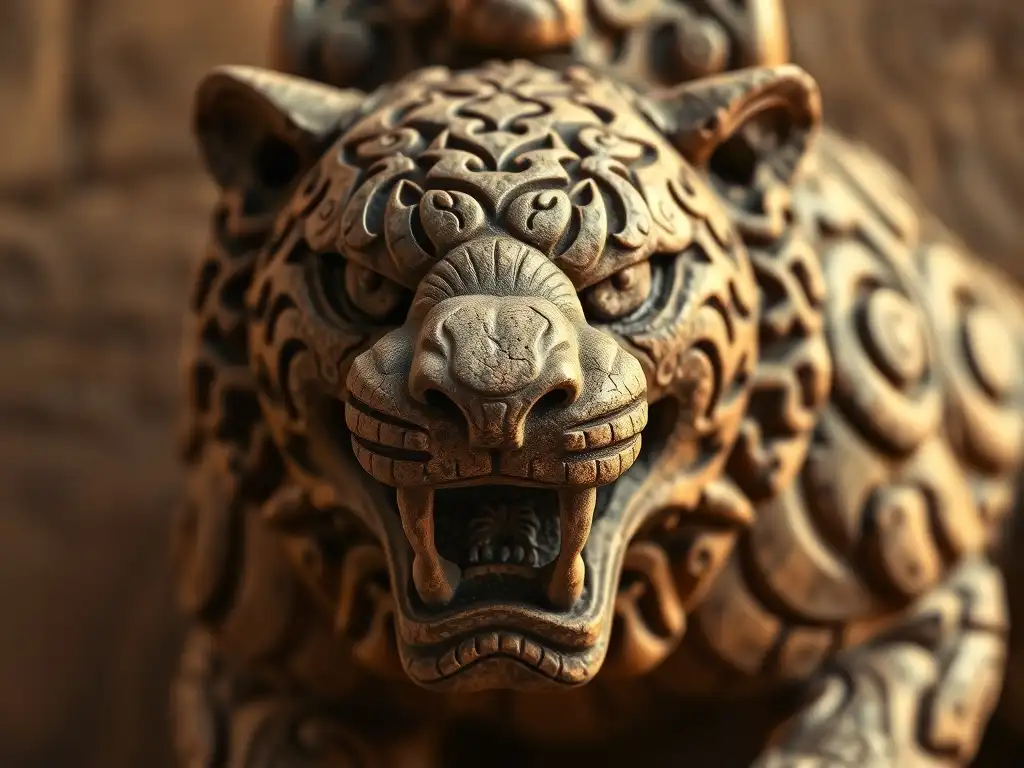
The Chavín jaguar's meaning extends far beyond a simple representation of a predatory animal. It represents a complex interplay of power, religious belief, and shamanic practice within Chavín society. The jaguar's symbolic significance likely stemmed from its inherent power and ferocity in the natural world, qualities that the Chavín people clearly associated with the supernatural realm.
The jaguar's presence in Chavín art is not merely decorative; it conveys profound religious and political messages, indicating a sophisticated understanding of symbolism and its use in social control. Analyzing the context in which the jaguar appears – whether in a temple setting, on a ceremonial object, or on a piece of everyday pottery – provides crucial insights into its multifaceted symbolic meaning. Further research is needed to fully unpack the nuances of its symbolism, but it's clear that the Chavín jaguar was a powerful icon of their culture.
The Jaguar as a Symbol of Power and Authority
The Chavín jaguar's association with power and authority is evident in its frequent depiction in contexts related to religious and political leadership. The jaguar's strength and predatory nature were likely seen as metaphors for the power wielded by the elite members of Chavín society. The monumental scale of some jaguar representations, particularly in stone carvings within temple complexes, further reinforces this association with authority and control.
The placement of jaguar imagery in prominent locations within temples suggests that it served as a visual manifestation of religious and political power. Such strategic placement would have served to reinforce the authority of the ruling class and to instill a sense of awe and reverence in the populace. The jaguar, therefore, acted not only as a religious symbol but also as a powerful political tool.
Jaguar's Role in Chavín Religious Beliefs
The Chavín jaguar played a crucial role in the religious beliefs of the Chavín culture. Its presence in temples and on ceremonial objects strongly suggests its association with the supernatural world and the power of the deities worshipped by the Chavín people. The jaguar likely represented a powerful intermediary between the human and spiritual realms, possibly embodying a deity or acting as a manifestation of divine power.
The jaguar's association with shamanic practices, as evidenced by its depiction in scenes of ritualistic activities, further strengthens its link to the supernatural. The jaguar's fierce nature and nocturnal habits likely contributed to its association with the underworld and the realm of the dead, further adding to its mystical significance. The jaguar's role in Chavín religion underscores the deep spiritual significance of this powerful feline within their cosmology.
The Jaguar and Shamanic Transformation
The Chavín jaguar is often linked to shamanic practices and the concept of transformation. The jaguar's ability to move between different realms – the physical world and the spiritual realm – mirrors the shaman's capacity to traverse these boundaries during altered states of consciousness. The depiction of jaguars in ritualistic contexts suggests their role in shamanic ceremonies and their connection to journeys into the supernatural.
The stylized features of the Chavín jaguar, its often-exaggerated form and unsettling gaze, may reflect the altered perceptions experienced during shamanic trances. The jaguar, therefore, functions as a powerful visual metaphor for the transformative power of shamanism and the ability to access otherworldly experiences. The jaguar's symbolic connection to shamanic practices highlights the importance of these practices within Chavín society and their connection to the broader spiritual landscape.
The Jaguar's Influence on Chavín Society and Ideology
The jaguar's pervasive presence in Chavín art and architecture speaks volumes about its profound influence on the society's ideology and worldview. The powerful feline wasn't merely a decorative motif; it represented a complex web of meanings related to power, authority, and the supernatural. Chavín artists meticulously depicted jaguars in various poses and contexts, highlighting their strength, ferocity, and mystical qualities.
These representations weren't random; they were carefully crafted to convey specific messages and reinforce the social hierarchy. The jaguar's association with the elite demonstrates its role in legitimizing power and reinforcing social order. The sheer scale and intricacy of jaguar depictions in monumental architecture, such as the Lanzón monolith, underscore the animal's central position within Chavín cosmology.
Its image served as a potent symbol, unifying disparate communities under a shared belief system and reinforcing the authority of the priestly class. The jaguar's symbolic power extended beyond the earthly realm, connecting the Chavín people to the spirit world and reinforcing their religious beliefs.
Chavín Elites and the Jaguar's Symbolism
The association between the Chavín elite and the jaguar was undeniable. Elite members likely used the jaguar's symbolism to reinforce their status and claim divine authority. Artifacts found in elite tombs and ceremonial centers frequently feature jaguar imagery, indicating a close connection between the animal and the ruling class.
This connection might have been established through ritualistic practices, where elites donned jaguar skins or masks, symbolically embodying the animal's power and connecting themselves to the supernatural realm. The use of jaguar imagery in elite paraphernalia, such as jewelry and clothing, further underscores its role as a symbol of high status and power. This wasn't simply about aesthetics; it was a deliberate strategy to consolidate power and maintain social control.
The jaguar's symbolic power served as a visual reminder of the elite's authority and their connection to the divine. Further research into burial practices and the distribution of jaguar-themed artifacts could provide more concrete evidence of this close relationship.
The Jaguar's Presence in Chavín Rituals
The jaguar's influence extended beyond visual representations into the realm of Chavín ritual practices. The animal likely played a central role in ceremonies aimed at communicating with the supernatural world, possibly acting as a mediator between the human and spirit realms. Evidence suggests that ritual sacrifices, perhaps involving jaguars or jaguar-related offerings, were integral parts of Chavín religious life. The presence of jaguar imagery on ritual objects, such as ceremonial vessels and staffs, further suggests its importance in these rites.
These rituals could have involved shamanistic practices, with individuals impersonating jaguars to channel the animal's power and interact with the spirit world. The specific rituals and their interpretations remain subjects of ongoing research, but the pervasive presence of the jaguar indicates its crucial role in the Chavín religious system. Analyzing the iconography associated with jaguar depictions in ritual contexts could offer further insights into the nature of these practices.
The Legacy of the Chavín Jaguar in Later Andean Cultures
The Chavín jaguar's influence transcended its own cultural context, leaving a lasting impact on subsequent Andean civilizations. The powerful symbolism associated with the feline continued to resonate throughout the Andes, evolving and adapting to the changing beliefs and artistic styles of later cultures. The jaguar's enduring presence in Andean iconography highlights its deep-seated importance in the region's cultural imagination. This continuity demonstrates the remarkable staying power of Chavín religious beliefs and artistic motifs.
Traces of Jaguar Symbolism in Subsequent Civilizations
The Moche, Nazca, and Inca cultures, among others, incorporated jaguar motifs into their art and religious practices, demonstrating the enduring legacy of Chavín influence. While the specific interpretations might have varied across different cultures, the underlying themes of power, prestige, and the supernatural remained consistent. Examining the stylistic variations of jaguar representations across different Andean cultures reveals a rich tapestry of adaptation and innovation.
The jaguar's enduring presence suggests that it served as a potent symbol across diverse Andean societies, reflecting shared cultural memories and beliefs. Detailed comparative studies of jaguar imagery in different Andean cultures are needed to further understand the nuances of this cultural transmission.
The Continuity of Animal Iconography in the Andes
The Chavín jaguar's lasting impact highlights a broader trend in Andean art: the continuous use of animal iconography to represent power, spirituality, and social status. The jaguar, alongside other animals like the condor and serpent, served as powerful symbols across various Andean cultures, reflecting a shared understanding of the natural world and its spiritual significance. The persistence of this iconography underscores the importance of animals in Andean cosmology and the deep connection between Andean peoples and their environment.
Further research into the symbolic meanings of other animals in Andean art could provide a richer understanding of the region's complex belief systems and artistic traditions. The continuous use of animal imagery shows the enduring power of these symbols to transcend cultural boundaries and shape Andean identity throughout history.
Exploring the Chavín Jaguar: A Journey Through Time
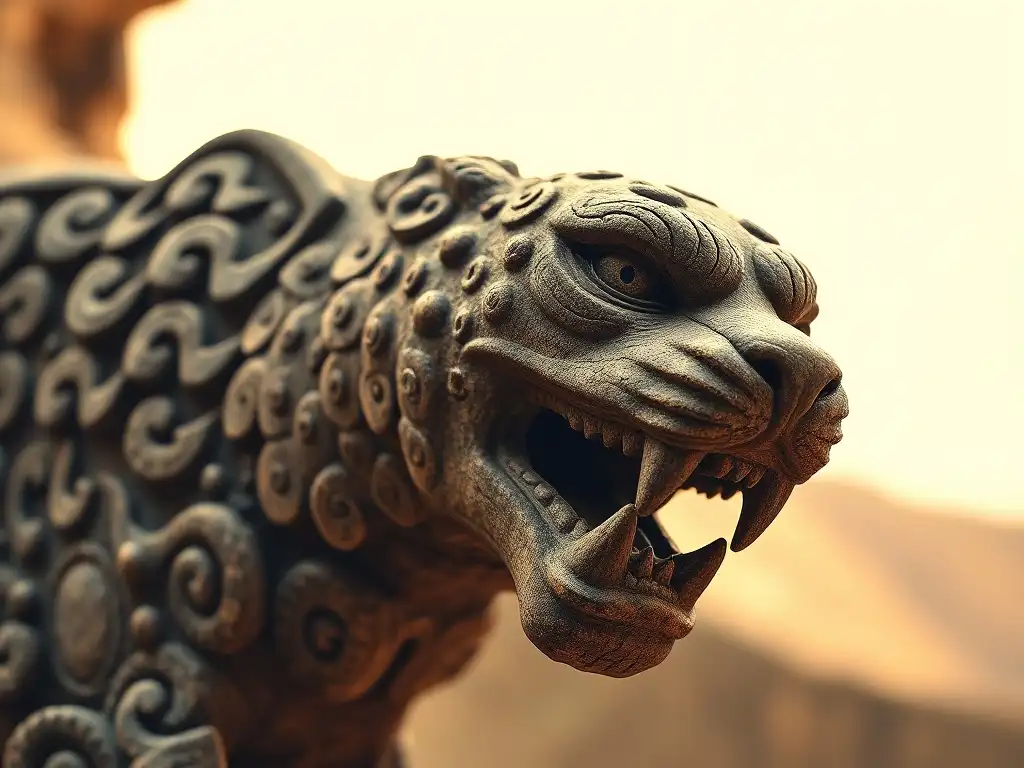
The Chavín jaguar, a powerful and enigmatic symbol, permeates the art and architecture of the Chavín culture (c. 900-200 BCE), a pre-Inca civilization that flourished in the Andes Mountains of modern-day Peru. Its presence isn't merely decorative; the jaguar's repeated depiction speaks volumes about the Chavín worldview, their understanding of power, and their sophisticated religious beliefs. Scholars have painstakingly analyzed countless artifacts, meticulously piecing together the significance of this iconic feline.
The journey to understand the Chavín jaguar is a journey through time, uncovering layers of meaning embedded within the intricate carvings and architectural designs of this remarkable civilization. The consistent presence of the jaguar across various media suggests its paramount importance in Chavín society, acting as a potent symbol that transcended mere aesthetic considerations.
Its pervasive use emphasizes the deep-seated cultural and religious significance bestowed upon this creature. Understanding this requires a close examination of its representation across different Chavín artistic expressions.
The Lanzón Stela and its Jaguar Imagery
The Lanzón, a massive monolithic sculpture found within the main temple at Chavín de Huántar, stands as a prime example of the Chavín jaguar's importance. This towering, intricately carved stone pillar depicts a deity, often interpreted as a jaguar-like figure, with features that blend feline and human characteristics. The Lanzón's powerful presence and the jaguar's prominent representation within its design solidify the creature's role as a central figure in Chavín religious practices.
The intricate carvings on the Lanzón showcase a sophisticated understanding of artistic techniques and a profound reverence for the jaguar deity. Its detailed features, including the fangs, claws, and human-like facial elements, suggest a complex symbolism that has captivated researchers for decades.
The Lanzón's position within the temple's central axis further underscores its significance as a focal point for religious ceremonies and ritualistic practices. The sheer scale of the Lanzón—its imposing height and weight—amplifies the awe-inspiring power associated with the jaguar deity and its role in the Chavín cosmology.
The Jaguar's Prominence in Chavín de Huántar Architecture
Beyond the Lanzón, the jaguar motif is woven into the very fabric of Chavín de Huántar's architecture. Intricate carvings depicting jaguars adorn the walls, doorways, and other architectural elements of the temple complex. These depictions are not randomly placed; their strategic location within the architecture suggests a deliberate attempt to integrate the jaguar's power and symbolism into the sacred space.
The jaguar's presence is not confined to mere ornamentation; its placement within the architectural design suggests a deeper integration of the feline into the very structure of the religious and social order. For instance, [Specific architectural examples and their jaguar depictions pending].
The careful positioning and recurring presence of the jaguar motif throughout the architectural complex strongly suggests a deliberate attempt to imbue the entire site with the power and symbolism associated with the creature. This intentional integration of the jaguar into the architecture highlights its central role in the Chavín worldview.
Deciphering the Chavín Jaguar's Message
The pervasive presence of the jaguar in Chavín art and architecture demands a deeper investigation into its meaning and symbolic significance. Scholars have proposed various interpretations, each adding a layer to our understanding of this complex symbol. The jaguar, far from being a simple decorative element, served as a powerful conduit for expressing the Chavín people's spiritual beliefs and social structures. The multifaceted nature of the jaguar's symbolism requires a multi-faceted approach to its interpretation. Understanding its message requires considering its various representations across different media and contexts within the Chavín culture.
Analysis of the Jaguar's Role in the Chavín Cosmology
The Chavín jaguar likely held a central position within their cosmology, representing powerful forces of nature and the supernatural. Its association with both the underworld and the celestial realm hints at a complex understanding of the interconnectedness of these different realms. The jaguar's predatory nature, its nocturnal habits, and its association with darkness might have contributed to its identification with the underworld and its powerful forces.
Conversely, its strength and agility may have connected it with the celestial sphere and its potent energies. [Specific details on Chavín cosmology and their connection with the jaguar pending]. This duality reflects the Chavín's sophisticated understanding of the cosmos and their ability to integrate seemingly opposing forces within their religious beliefs.
The Jaguar as a Link Between Worlds
The Chavín jaguar may have served as a powerful symbol representing the connection between different realms—the earthly world, the underworld, and the celestial sphere. This interpretation aligns with the complex and layered nature of Chavín religious beliefs and their sophisticated understanding of the cosmos. The jaguar's ability to navigate both terrestrial and potentially supernatural realms would have made it a fitting symbol for mediating between these worlds and facilitating communication with the deities.
The jaguar's position as a mediator between these realms suggests a complex understanding of power dynamics and the interconnectedness of the different spheres within the Chavín cosmology. [Specific examples illustrating the jaguar's mediating role pending]. This interpretation enhances our understanding of the Chavín jaguar as a multifaceted symbol that transcends simple representation and embodies a complex worldview.
Conclusion: The Enduring Significance of the Chavín Jaguar
The Chavín jaguar, far from being a mere artistic motif, served as a potent symbol encapsulating the core beliefs and worldview of the Chavín culture. Its multifaceted symbolism, encompassing power, transformation, and the supernatural, offers invaluable insight into the religious and social structures of this influential Andean civilization. The jaguar's recurring presence in Chavín art, architecture, and possibly even ritual practices, underscores its central role in their cosmology. The meticulous craftsmanship evident in these depictions highlights the reverence and significance afforded to this powerful feline.
Understanding the Chavín jaguar's meaning and symbolism allows us to better appreciate the complexity and sophistication of this pre-Inca society, enriching our comprehension of Andean cultural development. The legacy of the Chavín jaguar continues to resonate, reminding us of the enduring power of symbols to shape beliefs and transmit cultural values across generations. Further research, particularly focused on uncovering additional archaeological evidence and contextualizing existing artifacts, will undoubtedly deepen our understanding of the Chavín jaguar's role within the broader context of Chavín society and its impact on subsequent Andean cultures.
The enduring mystery surrounding some aspects of its symbolism only adds to its captivating allure and its importance in the ongoing study of Chavín culture. The careful examination of its representation across diverse media – from monumental stone carvings to smaller ceramic pieces – reveals a nuanced and multifaceted understanding of this powerful symbol, offering a glimpse into the beliefs and practices of a civilization that significantly shaped the course of Andean history. The Chavín jaguar remains a powerful testament to the creativity and spiritual depth of this ancient society, its enduring significance a testament to the enduring power of cultural symbols.
- Understanding the Chavín Culture and its Artistic Expression
- The Importance of the Jaguar in Ancient Andean Beliefs
- The Chavín Jaguar: Key Characteristics and Representations
- Chavín Jaguar Meaning and Symbolism
- The Jaguar's Influence on Chavín Society and Ideology
- The Legacy of the Chavín Jaguar in Later Andean Cultures
- Exploring the Chavín Jaguar: A Journey Through Time
- Deciphering the Chavín Jaguar's Message
- Conclusion: The Enduring Significance of the Chavín Jaguar
- What is the significance of the jaguar in Chavín culture?
- How did the Chavín people depict the jaguar?
- What is the connection between the Chavín jaguar and their religious beliefs?
- Where can I find examples of Chavín jaguar art?
- What is the broader meaning of the Chavín jaguar beyond religious context?
Frequently Asked Questions
What is the significance of the jaguar in Chavín culture?
The jaguar held immense religious and symbolic importance in Chavín culture. It represented power, ferocity, and shamanistic abilities, connecting the earthly and spiritual realms. Its imagery was prevalent in their art and architecture.
How did the Chavín people depict the jaguar?
Chavín depictions of jaguars often featured stylized features, combining realistic elements with abstract forms. These included feline features like fangs and claws, but also geometric patterns and supernatural elements.
What is the connection between the Chavín jaguar and their religious beliefs?
The Chavín jaguar was a central figure in their complex religious system. It symbolized the shaman's ability to transform and interact with the spirit world, often depicted in rituals and ceremonies.
Where can I find examples of Chavín jaguar art?
Examples of Chavín jaguar art can be found throughout their principal sites, including the Chavín de Huántar temple complex in Peru. Many artifacts featuring jaguar motifs are housed in museums worldwide.
What is the broader meaning of the Chavín jaguar beyond religious context?
Beyond religious significance, the jaguar also likely represented political power and authority. Its image may have been used to legitimize rulers and reinforce social hierarchies within Chavín society.
Final Reflection: The Enduring Roar of the Chavín Jaguar
The Chavín jaguar, a symbol of power and transformation, continues to resonate deeply within us, echoing across millennia to speak to our own desires for strength, renewal, and spiritual connection. Its intricate carvings, unearthed from the depths of ancient Peru, are not mere artifacts; they are powerful testaments to a civilization's profound understanding of the natural world and its own place within it. The jaguar's enduring presence challenges us to reconsider our own relationship with power, both personal and societal.
The Chavín jaguar's influence extends far beyond the archaeological record; its imagery has seeped into the cultural consciousness, inspiring artists, writers, and spiritual seekers alike. Its multifaceted symbolism—ferocity, healing, shamanic power—continues to inspire awe and wonder. The jaguar's gaze pierces the veil of the mundane, revealing the hidden energies that shape our world.
This quote, though not directly from a Chavín source, encapsulates the enduring mystery and power that the Chavín jaguar continues to evoke. Its enduring presence reminds us of the cyclical nature of power, its rise and fall, and the transformative potential inherent in both.
Consider the Chavín jaguar's legacy. What aspects of its symbolism resonate most strongly with you? How can you harness the spirit of transformation embodied by this ancient icon to navigate the complexities of your own life? Embrace the jaguar's strength, its wisdom, and its capacity for renewal. Let its enduring roar inspire you to pursue your own path of growth and self-discovery, leaving a mark on the world as powerful and enduring as the Chavín civilization itself.
Unveil Your Inner Power and Transform Today!
Thank you for exploring the fascinating world of the Chavín Jaguar. You've discovered its powerful symbolism of transformation and its deep cultural significance. Now, let's put that knowledge into action.
Here's how you can connect with the power of the Chavín Jaguar:
- Embrace Transformation: Reflect on an area of your life where you'd like to embrace change. Create a plan to begin that transformation today.
- Share Your Discoveries: Discuss the importance of cultural symbols with friends or a community group. Share your insights on the Chavín Jaguar and inspire others.
- Continue Your Exploration: Delve deeper into the rich history of Andean civilizations. Visit a local museum or explore online resources to further your understanding of ancient cultures and their powerful symbolism.
What positive change will you initiate today, drawing strength from the Chavín Jaguar? Let's discuss!