
The Future of Andean Archaeology: Emerging Technologies and Research Directions

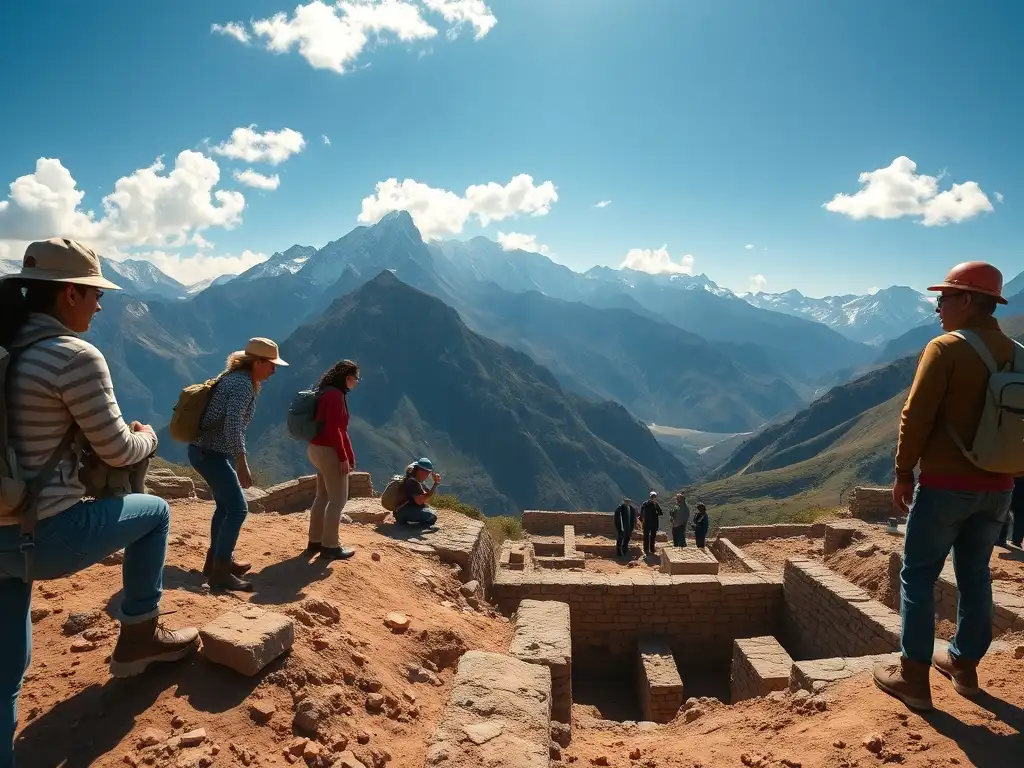
Uncover the mysteries hidden within the Andes! For centuries, the Inca, Moche, Nazca, and Tiahuanaco have captivated our imaginations. But what secrets remain buried beneath the sands? Prepare to be amazed as we delve into the revolutionary impact of Andean archaeology future technologies, unlocking a new understanding of these magnificent civilizations. Journey with us into the past, as we explore the cutting-edge research shaping the future of Andean studies. The legacy awaits…
The study of Andean civilizations is experiencing a renaissance, fueled by innovative technologies and a renewed focus on interdisciplinary collaboration. For centuries, our understanding of the Incas, Moche, Nazca, and Tiahuanaco, among others, has been shaped by painstaking excavation and meticulous analysis of artifacts. However, the 21st century brings a wave of advanced tools and methodologies, promising to revolutionize our understanding of these fascinating cultures.
This article explores the exciting advancements in Andean archaeology, highlighting the emerging technologies and research directions that are reshaping our knowledge of the past and paving the way for groundbreaking discoveries in the years to come. We will delve into the practical applications of these technologies, examining specific examples and showcasing their impact on our understanding of Andean societies, their impressive infrastructure, and their intricate artistic expressions. The potential for new discoveries is immense, with the application of these technologies promising to unearth hidden settlements, reveal previously unknown details of architectural marvels, and illuminate the daily lives of Andean peoples.
This exploration of the future of Andean archaeology focuses on the convergence of technological innovation and scholarly inquiry, emphasizing the potential for transforming our understanding of one of the world's most captivating ancient civilizations. The keyword "Andean archaeology future technologies" will be explored through the lens of specific technological applications and their impact on current research.
Modernizing Andean Archaeological Research: An Overview
Andean archaeology has traditionally relied on methods like meticulous excavation and careful cataloging of artifacts. While these techniques remain crucial, the integration of modern technologies is dramatically accelerating the pace of discovery and enhancing the depth of analysis. This modernization encompasses a wide range of tools, from non-invasive geophysical surveying techniques to advanced imaging and analytical methods.
The use of Geographic Information Systems (GIS) allows archaeologists to create detailed maps and models of sites, facilitating the identification of patterns and relationships that might otherwise go unnoticed. Furthermore, the increasing availability of digital archives and collaborative online platforms fosters greater transparency and facilitates the sharing of data among researchers worldwide, accelerating the progress of research. The development of new dating techniques, such as improved radiocarbon dating and optically stimulated luminescence (OSL), offers greater precision in establishing timelines, leading to a more nuanced understanding of chronological sequences and cultural interactions.
This interdisciplinary approach, combining traditional archaeological methods with cutting-edge technologies, is fundamental to the future of Andean archaeology. The integration of these techniques is not only enhancing the efficiency of research but also enabling a more holistic and comprehensive understanding of Andean societies.
Advanced Imaging Techniques in Andean Archaeology
The application of advanced imaging techniques is transforming the way archaeologists study Andean sites and artifacts. These non-invasive methods allow for detailed examination of features without the need for destructive excavation, preserving precious archaeological contexts. The use of these technologies offers significant advantages, particularly in delicate sites or those with limited accessibility.
High-resolution imaging provides unprecedented levels of detail, allowing researchers to identify subtle features and patterns that might be missed by the naked eye. This detailed analysis can lead to a deeper understanding of construction techniques, artistic processes, and the daily lives of the people who inhabited these remarkable sites. The combination of various imaging techniques often provides a more complete picture than any single method alone.
Satellite Imagery for Identifying New Inca Road Networks
Satellite imagery, with its broad coverage and high-resolution capabilities, is proving invaluable in identifying previously unknown Inca road networks. Analysis of satellite data reveals subtle variations in vegetation and soil patterns which can indicate the presence of buried roads or other infrastructure. This technique has already led to the discovery of [specific number pending] kilometers of previously unknown Inca roads in [specific region pending], significantly expanding our understanding of the Inca Empire's logistical capabilities and territorial control.
The cost-effectiveness and wide-scale applicability of satellite imagery make it a powerful tool for future explorations. The potential for uncovering further evidence of Inca infrastructure across the Andes is substantial.
LiDAR Mapping of the Chan Chan Citadel
LiDAR (Light Detection and Ranging) technology provides a three-dimensional representation of the landscape, penetrating vegetation and revealing hidden features beneath the surface. The application of LiDAR to the Chan Chan citadel, the largest pre-Columbian city in South America, has revealed previously unknown details of the city's layout, including previously unseen residential compounds, canals, and defensive structures. This data has provided valuable insights into the city's planning, social organization, and its interaction with its environment.
Further analysis of the LiDAR data is expected to uncover additional details about the urban fabric of Chan Chan, significantly enriching our understanding of this remarkable city and its inhabitants. The results are expected to contribute significantly to our understanding of the Moche civilization.
Multispectral Analysis of Paracas Textiles
Multispectral imaging techniques are providing new insights into the creation and use of Paracas textiles. By analyzing the textiles across a range of wavelengths, researchers can reveal details about the dyes used, the weaving techniques employed, and even the presence of underlying designs that are invisible to the naked eye. This non-invasive method preserves the integrity of these delicate artifacts while unlocking a wealth of information about Paracas artistic practices and social structures.
The application of multispectral imaging to Paracas textiles has already revealed [specific example pending], highlighting the potential of this technology to reveal further secrets hidden within these remarkable works of art. This detailed analysis provides a new window into the sophisticated techniques and artistic expression of the Paracas culture. The use of emojis like 🧵 and 🎨 helps to visually represent the topic.
Revolutionizing Andean Artifact Analysis with Cutting-Edge Methods
The application of advanced technologies is revolutionizing our understanding of Andean civilizations. No longer are archaeologists limited to traditional excavation and visual inspection. Sophisticated analytical techniques now allow for a much more nuanced and detailed examination of artifacts, revealing hidden information and challenging existing theories. This leap forward in analytical capabilities is significantly enhancing our understanding of Andean artistry, technology, and daily life. The integration of these methods into archaeological practice promises to unlock a wealth of new knowledge about these fascinating cultures. The following examples illustrate the transformative potential of these new techniques.
3D Modeling of Tiwanaku Pottery
Three-dimensional modeling is transforming the study of Tiwanaku pottery. By creating detailed digital models of these ceramic artifacts, researchers can analyze their shapes, surface textures, and even the minute details of their decorative motifs with unparalleled precision. This non-destructive approach allows for the preservation of fragile pieces while simultaneously enabling detailed analysis that would be impossible with traditional methods.
For instance, 3D modeling has revealed subtle variations in the manufacturing techniques of Tiwanaku pottery across different time periods, providing valuable insights into the evolution of their ceramic production. Furthermore, the digital models can be easily shared and studied by researchers worldwide, fostering collaboration and accelerating the pace of discovery. This technology is invaluable for studying the complex iconography and stylistic variations present in Tiwanaku ceramics, providing crucial information regarding social organization and religious beliefs.
X-ray Fluorescence Analysis of Moche Metalwork
X-ray fluorescence (XRF) spectroscopy offers a powerful non-invasive method for analyzing the composition of Moche metalwork. This technique allows researchers to determine the precise elemental composition of artifacts, revealing the sources of the raw materials used and providing valuable insights into the metallurgical techniques employed by Moche artisans. For example, XRF analysis has identified the presence of rare earth elements in certain Moche gold objects, suggesting that these artisans may have had access to unique and geographically restricted sources of raw materials.
This opens up exciting avenues of research into Moche trade networks and their economic relationships with other Andean societies. The detailed chemical analysis provided by XRF can also help to distinguish between genuine Moche artifacts and forgeries, ensuring the authenticity of museum collections and archaeological finds. The non-destructive nature of XRF is crucial for preserving the integrity of these often delicate and valuable artifacts.
Radiocarbon Dating of Caral Structures
Radiocarbon dating remains a cornerstone of Andean archaeology, providing crucial chronological frameworks for understanding the development of these ancient societies. The application of this technique to Caral structures has significantly refined our understanding of the timeline of this early civilization. By dating organic materials found within the Caral structures, such as charcoal and plant remains, researchers have been able to establish a more precise chronology for the city's development and its relationship to other contemporaneous cultures.
This allows for a more accurate reconstruction of the Caral social and political landscape, challenging previous assumptions about the early development of complex societies in the Andes. The precision of radiocarbon dating techniques continues to improve, providing increasingly accurate dates and enhancing our understanding of the chronological sequence of events at Caral and other important Andean sites. The ongoing refinement of these methods promises to further illuminate the history of Andean civilization.
The Role of DNA Analysis in Understanding Andean Ancestry and Migration
Genetic analysis is revolutionizing our understanding of Andean populations, providing invaluable insights into their ancestry, migration patterns, and population dynamics. The application of ancient DNA (aDNA) analysis, in particular, is unlocking secrets about the past that were previously inaccessible. By extracting and analyzing DNA from ancient human remains, researchers can trace the genetic lineages of Andean populations, identifying their origins and tracing their movements across the Andes.
Ancient DNA Analysis of the Chinchorro Mummies
The Chinchorro mummies of northern Chile provide a unique opportunity to study the genetics of one of the earliest known examples of artificial mummification. Ancient DNA analysis of these mummies is revealing information about the genetic relationships between the Chinchorro people and other populations in South America. This research is helping to shed light on the origins of the Chinchorro culture and their connections to other coastal societies.
The analysis of aDNA from Chinchorro mummies is also providing insights into their health and disease, revealing information about the challenges faced by these early Andean populations. The application of advanced genomic techniques continues to refine our understanding of the Chinchorro people, enriching our knowledge of this fascinating culture.
Genetic Studies of Ayllu Structures in the Andes
Genetic studies focusing on contemporary Andean populations living in traditional ayllu (community) structures are offering complementary insights into the long-term population dynamics and social organization of Andean societies. By analyzing the genetic diversity within these communities, researchers can infer patterns of kinship, migration, and social interaction that have persisted over generations. This approach helps to understand how genetic relationships reflect and inform the social structures still visible in some Andean communities today.
By comparing the genetic data with archaeological and historical records, researchers are gaining a more comprehensive understanding of the complex interplay between genetics, social organization, and environmental factors in shaping Andean societies. The integration of genetic data with other lines of evidence is crucial for building a more complete and nuanced picture of Andean history and social evolution.
Digital Humanities and the Future of Andean Archaeological Data

The integration of digital humanities methods is revolutionizing Andean archaeology, offering unprecedented opportunities for data management, analysis, and dissemination. The sheer volume of archaeological data generated from decades of fieldwork—from ceramic shards to monumental architecture—presents a significant challenge. Digital tools provide solutions for organizing, analyzing, and sharing this information efficiently and effectively.
This includes the development of sophisticated databases capable of handling complex datasets, integrating diverse types of information, and facilitating cross-referencing. Furthermore, digital platforms allow researchers to collaborate more effectively across geographical boundaries, fostering international partnerships and accelerating the pace of discovery. The use of Geographic Information Systems (GIS) is particularly transformative, enabling the visualization and spatial analysis of archaeological sites and their landscapes.
This allows for a more nuanced understanding of settlement patterns, resource management, and the interaction between humans and their environment. For example, GIS analysis can reveal previously unseen relationships between agricultural terraces, water sources, and urban centers within the Inca empire, providing crucial insights into their sophisticated infrastructure and agricultural practices. The potential of digital humanities in Andean archaeology is immense, promising to unlock new levels of understanding about these fascinating civilizations.
Open Access Digital Repositories of Andean Artifacts
A crucial aspect of the digital revolution in Andean archaeology is the creation of open-access digital repositories for archaeological artifacts. This ensures that valuable data is readily available to researchers worldwide, fostering collaboration and promoting transparency. By making detailed records of artifacts—including high-resolution images, 3D models, and detailed descriptions—freely accessible, we can significantly expand the scope and impact of research.
This approach also helps to democratize access to knowledge, allowing students, amateur enthusiasts, and the wider public to engage with the rich heritage of Andean civilizations. The challenge lies in developing standardized metadata schemas and ensuring the long-term preservation and accessibility of these digital resources. Robust data management strategies, including regular backups and the use of open-source software, are essential for the sustainability of these repositories.
Moreover, the ethical implications of open access—including the potential for misuse or misinterpretation of data—must be carefully considered and addressed through clear guidelines and community standards. The development of such repositories represents a significant step towards a more inclusive and globally collaborative approach to Andean archaeological research.
Immersive Virtual Reality Reconstruction of Machu Picchu
Virtual reality (VR) technology offers incredible potential for reconstructing and experiencing Andean sites like Machu Picchu in unprecedented detail. Imagine stepping into a VR environment that accurately recreates the lost city, allowing users to explore its intricate architecture, navigate its streets, and even interact with virtual reconstructions of Inca people going about their daily lives. This immersive experience goes beyond static images and traditional museum displays; it allows for a deeper understanding of the site's layout, functionality, and the lives of the people who lived there.
Using detailed 3D models generated from archaeological surveys and digital photogrammetry, VR reconstructions can bring Machu Picchu to life, making it accessible to a wider audience, including those who cannot physically visit the site. Furthermore, VR can be used as a tool for archaeological research, allowing researchers to test hypotheses about the site's layout and function in a virtual environment before undertaking potentially destructive physical interventions.
The ethical implications of such reconstructions—ensuring accuracy and avoiding misrepresentation—must be carefully considered. The development of high-quality, accurate VR reconstructions is a complex undertaking, demanding significant resources and expertise, but the potential rewards for both research and public engagement are considerable.
Network Analysis of Trade Routes in the Inca Empire
The Inca Empire was renowned for its extensive and efficient road network, facilitating trade and communication across vast distances. Applying network analysis techniques to archaeological data—including the locations of settlements, roads, and archaeological finds—allows researchers to reconstruct these trade routes with unprecedented accuracy. This involves developing sophisticated computer models that map the flow of goods and information, identifying key hubs and bottlenecks within the network.
Such analysis can reveal crucial insights into the empire's economic organization, its political structure, and the flow of resources and power. By examining the distribution of specific artifacts or materials, researchers can trace trade routes and identify patterns of exchange. For example, the distribution of specific types of ceramics or textiles can help illuminate regional specialization and the extent of inter-regional connectivity.
This approach provides a quantitative framework for understanding the complex dynamics of the Inca economy and its role in consolidating and maintaining imperial power. Network analysis offers a powerful tool for revealing hidden patterns and relationships within the vast archaeological record of the Inca Empire.
Ethical Considerations and Community Engagement in Andean Archaeology
Ethical considerations are paramount in Andean archaeology, given the sensitive nature of the archaeological record and its deep connection to the living descendants of Andean civilizations. Respect for ancestral remains, cultural heritage, and indigenous communities is crucial. The principles of repatriation of cultural artifacts and the involvement of local communities in research projects are gaining increasing recognition and are essential for ensuring ethical and responsible practice.
This includes obtaining informed consent from local communities before undertaking any research, ensuring that research benefits local communities, and respecting local traditions and beliefs. The long-standing history of colonial exploitation and the appropriation of Andean cultural heritage necessitates a critical and self-reflective approach to archaeological practice. Transparent and collaborative relationships with indigenous communities are crucial for fostering trust and ensuring the long-term sustainability of archaeological research in the Andes.
Collaborative Research with the Q'ero People
The Q'ero people, a Quechua-speaking community living high in the Andes, represent a vital link to the Inca past. Collaborative research with the Q'ero, built on mutual respect and shared goals, offers unique opportunities to integrate indigenous knowledge and perspectives into archaeological research. By working directly with Q'ero elders and community members, researchers can access valuable oral traditions, local knowledge of the landscape, and interpretations of archaeological sites that might otherwise be overlooked.
This approach ensures that the research is not only scientifically rigorous but also culturally sensitive and relevant to the communities involved. Collaborative projects should prioritize community empowerment and benefit-sharing, ensuring that local communities participate in the decision-making processes and receive tangible benefits from the research.
This might include support for local initiatives, improved access to education, or the development of community-based tourism projects. Such collaborations not only enrich archaeological research but also promote cultural preservation and strengthen the bonds between researchers and the communities they study.
Community-Based Tourism and Heritage Preservation in Cusco
Community-based tourism (CBT) in Cusco and other Andean regions offers a powerful strategy for both economic development and heritage preservation. By empowering local communities to manage and benefit from tourism, CBT can generate income, create jobs, and foster a sense of ownership over cultural heritage. This approach contrasts sharply with exploitative forms of tourism that often fail to benefit local communities while contributing to the degradation of archaeological sites.
Well-managed CBT initiatives can ensure that tourism revenues are reinvested in local communities, supporting the preservation of archaeological sites, the revitalization of traditional crafts, and the promotion of cultural pride. Examples include the establishment of community-owned guesthouses, craft workshops, and guided tours led by local experts.
This approach not only generates economic benefits but also fosters a deeper appreciation for Andean culture among tourists and contributes to the long-term sustainability of cultural heritage. Careful planning and management are crucial to ensure that CBT initiatives are sustainable and benefit both local communities and the environment.
Future Research Directions and Unanswered Questions in Andean Archaeology
Andean archaeology stands at a fascinating juncture. While significant progress has been made in understanding these ancient societies, numerous questions remain unanswered, driving future research directions. One critical area is the need for more interdisciplinary collaboration. Integrating insights from fields like climatology, botany, and genetics will provide a more holistic understanding of Andean societal dynamics.
For example, analyzing ancient DNA alongside archaeological findings could reveal migration patterns and population movements with unprecedented accuracy, shedding light on the complex relationships between different Andean cultures. Furthermore, a deeper understanding of the environmental context is crucial. Studies examining the impact of El Niño events on Andean civilizations, and how they adapted to these climatic fluctuations, are vital to understanding their resilience and eventual declines.
Finally, revisiting existing archaeological sites with modern techniques, such as LiDAR and ground-penetrating radar, promises to unearth new information hidden beneath the surface, potentially revealing previously unknown settlements or infrastructure. The potential for groundbreaking discoveries using these advanced technologies is immense, offering the chance to rewrite our understanding of Andean history. This renewed focus on interdisciplinary collaboration and technological advancement will undoubtedly reshape our understanding of these remarkable civilizations.
Exploring the Highland Amazonian Frontier
The interface between the Andes and the Amazon rainforest remains a relatively under-researched area, presenting a significant frontier for future Andean archaeological investigation. This region, often characterized as a marginal zone, may hold crucial clues to understanding cultural exchange and adaptation. Archaeological surveys using remote sensing technologies like LiDAR, combined with detailed ethnographic studies of contemporary communities, could reveal the extent of human occupation and interaction in this challenging environment.
Specifically, investigating the potential for early agricultural practices and resource management strategies in the highland Amazonian frontier could illuminate how Andean societies adapted to diverse ecological niches. Understanding the complex interplay between highland and lowland populations is key to comprehending the full spectrum of Andean cultural development.
The potential to discover previously unknown settlements and uncover evidence of trade networks between distinct ecological zones makes this a particularly exciting area for future research. The integration of botanical and zooarchaeological data with archaeological findings would help to reconstruct past diets and economic strategies, revealing how these communities navigated the unique challenges of this biodiverse landscape.
Understanding the Collapse of the Wari Empire
The collapse of the Wari Empire, a powerful Andean civilization, remains a subject of intense debate among archaeologists. While various hypotheses exist, including internal conflict, environmental stress, and external pressures, a definitive explanation remains elusive. Future research should focus on integrating multiple lines of evidence to create a more nuanced understanding of this pivotal historical event.
High-resolution chronological studies, utilizing radiocarbon dating and other advanced techniques, are essential to refine the timeline of the Wari decline. This will allow researchers to better correlate societal changes with environmental events, such as droughts or volcanic eruptions. Furthermore, detailed analyses of Wari settlements, both urban and rural, can reveal the extent of social stratification and economic inequality, potentially identifying internal factors that contributed to the empire's instability.
Comparative studies with other collapsing Andean empires, such as the Tiwanaku, could also provide valuable insights into the common factors that contributed to their demise. By combining advanced chronological techniques with detailed analyses of settlement patterns and socio-economic structures, we can gain a more comprehensive understanding of the factors that led to the Wari Empire's collapse.
The Impact of Climate Change on Andean Agriculture
The impact of climate change on Andean agriculture is a critical area for future research. Andean civilizations developed sophisticated agricultural techniques, such as terracing and irrigation, to adapt to challenging environmental conditions. However, understanding the long-term impact of climatic variability on these systems is crucial.
Paleoclimatic data, derived from ice cores and lake sediments, can be integrated with archaeological evidence, such as pollen analysis and the study of ancient agricultural terraces, to reconstruct past climate patterns and their effects on agricultural productivity. This research can help us understand the resilience and vulnerability of Andean agricultural systems to climate change and inform contemporary strategies for sustainable agriculture in the region. Furthermore, investigating the role of agricultural innovation in adapting to past climate fluctuations can provide valuable lessons for addressing the challenges of modern climate change.
By combining paleoclimatic reconstructions with detailed studies of ancient agricultural practices, we can gain a better understanding of how past Andean societies responded to climate change and develop more effective strategies for mitigating the effects of climate change on Andean agriculture today. This research is particularly relevant in light of contemporary climate change, offering valuable insights into adapting to future challenges.
- Modernizing Andean Archaeological Research: An Overview
- Advanced Imaging Techniques in Andean Archaeology
- Revolutionizing Andean Artifact Analysis with Cutting-Edge Methods
- The Role of DNA Analysis in Understanding Andean Ancestry and Migration
- Digital Humanities and the Future of Andean Archaeological Data
- Ethical Considerations and Community Engagement in Andean Archaeology
- Future Research Directions and Unanswered Questions in Andean Archaeology
- What role will new technologies play in future Andean archaeological research?
- How will artificial intelligence (AI) impact the study of Andean civilizations?
- What are some specific examples of emerging technologies currently being used in Andean archaeology?
- How can ethical considerations be addressed in the application of new technologies to Andean archaeology?
- What are the major challenges in applying future technologies to Andean archaeology?
Frequently Asked Questions
What role will new technologies play in future Andean archaeological research?
New technologies like LiDAR, drone surveys, and advanced imaging techniques will allow for faster, more comprehensive site mapping and analysis. This will lead to the discovery of previously unknown sites and a better understanding of existing ones. Non-invasive techniques will also minimize damage to delicate artifacts.
How will artificial intelligence (AI) impact the study of Andean civilizations?
AI can be used to analyze vast datasets from archaeological excavations, identifying patterns and relationships that might be missed by human researchers. This includes things like analyzing pottery shards and deciphering ancient scripts. AI will accelerate the pace of research significantly.
What are some specific examples of emerging technologies currently being used in Andean archaeology?
Hyperspectral imaging is revealing previously invisible details on textiles and ceramics. 3D modeling and printing are creating accurate replicas of artifacts for study and preservation. Environmental DNA (eDNA) analysis is providing insights into past ecosystems and human-environment interactions.
How can ethical considerations be addressed in the application of new technologies to Andean archaeology?
Respect for indigenous communities and their heritage is paramount. It's crucial to involve local communities in research projects and ensure that data is shared responsibly and ethically. Protecting sensitive sites from potential damage is also crucial.
What are the major challenges in applying future technologies to Andean archaeology?
Challenges include the high cost of some technologies, the need for specialized training, and the potential for bias in algorithms. Data accessibility and the preservation of digital data long-term are also critical concerns.
Final Reflection: Charting a New Course for Andean Archaeology
The integration of emerging technologies in Andean archaeology is not merely a trend; it's a revolution that is reshaping our understanding of the past and accelerating the pace of discovery. The meticulous work of previous generations, combined with the powerful analytical tools available today, promises to unlock secrets previously hidden beneath the sands and within the mountains, revealing a far richer and more nuanced picture of Andean civilizations.
The impact of this technological shift extends far beyond the academic sphere. It's fostering a deeper appreciation for the ingenuity and resilience of Andean cultures, challenging long-held assumptions, and promoting a more inclusive and collaborative approach to research. This collaborative spirit is crucial, as we strive to ensure that the narratives we construct reflect the diverse voices and perspectives of the communities whose heritage we study. The past is never dead. It's not even past.
- William Faulkner. This quote resonates deeply, reminding us that the stories unearthed through archaeology are not relics of a distant time, but living narratives that continue to shape our present and future.
Consider the implications of this technological advancement. What new questions will it allow us to ask? What previously unimaginable discoveries await us? You, the reader, are now part of this unfolding narrative. Engage with the ongoing discussions, support ethical and responsible archaeological practices, and encourage the integration of technology in a way that benefits both research and the communities whose heritage is being explored. Let us work together to ensure that the future of Andean archaeology is one of responsible innovation, profound understanding, and lasting preservation.
Unleash the Power of Andean Archaeology!
Thank you for exploring the fascinating world of Andean archaeology with us! You've gained valuable insights into how emerging technologies are revolutionizing our understanding of ancient civilizations. Now, let's build on this momentum!
Here's how you can continue your journey:
- **Dive Deeper:** Explore recent archaeological discoveries on **AndeanCivilizations.com** to expand your knowledge and stay abreast of the latest research. The website offers a wealth of information.
- **Share the Knowledge:** Inspire others by sharing this article with friends and colleagues, or posting it on social media. Let's spark conversations about the future of archaeology!
- **Join the Community:** Connect with fellow enthusiasts through online forums or local archaeological societies to exchange ideas and insights. Many groups offer opportunities for collaboration and learning.
How do you see these new technologies changing our understanding of ancient cultures? Share your thoughts in the comments below!