
Andean Irrigation and the Development of Agricultural Calendars

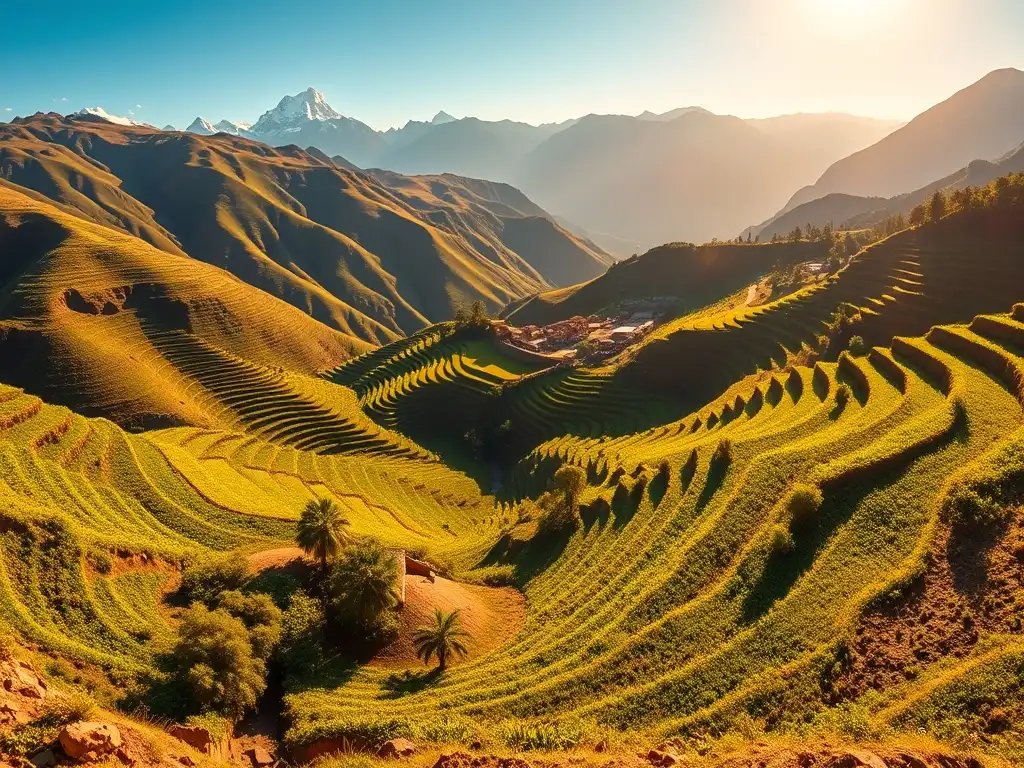
Unravel the mysteries of the Andes! Journey back in time to discover how ingenious Andean agricultural calendar systems shaped the rise and fall of mighty civilizations. From the intricate irrigation networks of the Incas to the breathtaking achievements of the Nazca, we delve into the remarkable architectural and engineering feats that sustained these ancient societies. Prepare to be amazed by the ingenuity and resilience of a people who harnessed the power of nature itself. Explore the secrets hidden within the landscapes, and uncover the captivating story of their remarkable achievements.
The ingenuity of the Andean civilizations is profoundly reflected in their mastery of water management and its intricate relationship with agricultural practices. This article delves into the fascinating world of Andean irrigation systems and their crucial role in the development of sophisticated agricultural calendars.
We'll explore how these ancient societies, including the Incas, Moche, Nazca, and Tiahuanaco, harnessed the power of water to cultivate diverse crops in challenging terrains, ultimately shaping their social structures, religious beliefs, and economic prosperity. Understanding their sophisticated approach to irrigation provides a crucial lens through which to appreciate the complexity and resilience of Andean agricultural calendar systems and their enduring legacy.
This exploration will reveal how precise observation of celestial events and meticulous water management techniques intertwined to create a sustainable and productive agricultural system capable of supporting large populations in a geographically diverse and often unforgiving environment. The development of these systems demonstrates a deep understanding of both the natural world and the cyclical nature of time, showcasing the remarkable ingenuity of Andean engineers and astronomers.
The Interplay Between Water Management and Andean Agriculture
Andean agriculture was not simply a matter of planting seeds and harvesting crops; it was a carefully orchestrated system deeply intertwined with the availability and management of water resources. The diverse geography of the Andes – ranging from arid coastal deserts to high-altitude plains – presented significant challenges. To overcome these challenges, Andean societies developed innovative irrigation techniques tailored to their specific environments. These techniques weren't merely practical solutions; they were integral to the cultural and religious fabric of these societies.
The construction and maintenance of irrigation canals often involved communal labor, reinforcing social bonds and contributing to a sense of shared identity. Furthermore, the successful implementation of these systems required a deep understanding of seasonal variations, rainfall patterns, and the relationship between water availability and crop yields. This understanding was directly translated into the creation of highly specific and accurate agricultural calendars.
The success of Andean agriculture hinged on the precise timing of planting and harvesting, dictated by the availability of water. Different crops had different water requirements and optimal planting seasons. Farmers needed to know when to plant, when to irrigate, and when to harvest to maximize yields.
This knowledge was not gained through guesswork, but through generations of meticulous observation and the development of complex astronomical and agricultural knowledge systems. These systems helped predict seasonal changes with remarkable accuracy, enabling farmers to plan their activities effectively. The accuracy of their predictions is evidenced by the remarkable success of their agricultural endeavors, which supported large and complex societies for centuries.
The Crucial Role of Irrigation in Andean Civilizations
Irrigation was not merely a practical tool for the Andean civilizations; it was a foundational element of their societal structures and beliefs. The elaborate canal systems, terraces, and reservoirs constructed by these societies are testaments to their advanced engineering skills and their profound understanding of hydraulic principles. For example, the Nazca Lines, while famous for their enigmatic designs, also served as channels for directing water to agricultural fields.
Similarly, the Incas developed extensive systems of canals and aqueducts that transported water across vast distances, allowing them to cultivate crops in otherwise arid regions. These impressive feats of engineering required significant coordinated effort, highlighting the importance of community involvement and social organization in the construction and maintenance of these essential infrastructure projects.
The development of these complex irrigation systems demonstrably impacted the social and political organization of Andean societies. Control over water resources often translated into political power and economic influence. Elites often played a key role in overseeing irrigation projects, further solidifying their authority and influence.
The successful implementation of these systems also enabled the development of more complex social structures, supporting larger populations and enabling the growth of urban centers. Moreover, the rituals and ceremonies surrounding water management underscore the profound spiritual significance attached to these systems, integrating them into the broader cosmological worldview of the Andean cultures. The precise scheduling of agricultural activities, guided by the agricultural calendars, further reinforced the importance of these water management systems within the social fabric of these impressive civilizations.
Types of Irrigation Systems Used in the Andes
The Andes Mountains, with their diverse geography and challenging terrain, presented unique obstacles to agriculture. Ancient Andean civilizations, however, overcame these hurdles by developing sophisticated irrigation systems tailored to their specific environments. These systems weren't uniform; instead, they varied considerably depending on altitude, rainfall patterns, and the available resources. The ingenuity of these systems is a testament to the Andean people's deep understanding of their environment and their ability to adapt their technologies to suit local conditions.
Their success in developing these systems allowed for the expansion of agriculture into areas previously unsuitable for farming, supporting population growth and the development of complex societies. This sophisticated water management also played a crucial role in shaping their social structures and religious beliefs, with water often being viewed as a sacred resource. The impact of these irrigation systems on the Andean cultural landscape is undeniable, shaping their societies in profound ways.
Terraced Farming and Irrigation Techniques
Terraced farming is perhaps the most iconic image associated with Andean agriculture. These meticulously crafted terraces, carved into hillsides, were not merely aesthetic features; they were crucial components of an intricate irrigation system. The terraces themselves served to reduce water runoff and soil erosion, allowing for more efficient water distribution.
The construction of these terraces required an immense amount of labor and planning, demonstrating the high level of organization and societal cooperation within Andean communities. Different techniques were employed depending on the terrain and water availability. In some areas, channels were carved directly into the terraces to direct water to the crops.
In others, more complex systems of canals and ditches were used to convey water from higher elevations to lower terraces. The effectiveness of terraced farming is evident in its continued use in many parts of the Andes even today, highlighting the enduring legacy of this ancient technology. The precise techniques varied regionally, reflecting the adaptability of the Andean people to their diverse environment.
Canal Systems and Water Distribution
Beyond terraced farming, Andean civilizations constructed extensive networks of canals to transport water over long distances. These canals, often built with remarkable precision, channeled water from rivers, springs, and glacial meltwater to agricultural fields. The construction of these canals involved sophisticated engineering skills, including the use of sophisticated surveying techniques and the development of durable materials to withstand the effects of weathering and erosion.
The scale of some of these canal systems is truly impressive, showcasing the Andean people's ability to undertake large-scale public works projects. The maintenance of these systems required ongoing collective effort, highlighting the importance of community cooperation in Andean society. Archaeological evidence suggests that some of these canal systems were remarkably long and intricate, demonstrating a deep understanding of hydraulic engineering.
Qochas: Artificial Ponds for Water Storage
Qochas, artificial ponds or reservoirs, were another ingenious element of the Andean irrigation system. These structures served as crucial water storage facilities, providing a reliable source of water during dry seasons or periods of drought. The construction of qochas involved a combination of engineering skill and an intimate understanding of the local hydrology. Their location and design were carefully chosen to maximize water storage capacity and minimize water loss through evaporation or seepage.
The size and complexity of qochas varied widely depending on local needs and resources, ranging from small, localized ponds to large-scale reservoirs capable of supporting extensive agricultural areas. Their presence not only ensured a consistent water supply but also contributed to the overall stability and resilience of Andean agricultural systems. These structures stand as a testament to the resourcefulness and foresight of Andean communities.
How Irrigation Shaped Andean Agricultural Calendars
The development of sophisticated irrigation systems had a profound influence on the development of Andean agricultural calendars. The predictability of water availability, thanks to the engineered systems, allowed for more precise planning of planting and harvesting cycles. These calendars weren't simply lists of dates; they were deeply embedded in the social and religious fabric of Andean society, reflecting a profound understanding of the interplay between nature and human activity. The calendars integrated astronomical observations, meteorological data, and empirical knowledge of crop growth cycles, creating a complex system that guided agricultural practices and ensured food security.
The development of these calendars is a testament to the close relationship between Andean societies and their environment. The precise nature of the calendars varied regionally, reflecting the diversity of climates and agricultural practices across the Andes. The accuracy and sophistication of these calendars highlight the advanced level of astronomical and agricultural knowledge possessed by the Andean people.
The intricate relationship between irrigation and the calendar is clearly demonstrated by the fact that the timing of agricultural activities was directly linked to the availability of water. The success of Andean agriculture depended heavily on the careful management of water resources and the precise timing of planting and harvesting, as dictated by their sophisticated calendar systems. This close connection highlights the importance of water management in shaping the cultural and social structures of Andean societies.
Understanding Andean Agricultural Calendars Systems

Andean agricultural calendar systems were not merely lists of dates; they were intricate, interwoven systems reflecting a profound understanding of the environment and celestial cycles. These calendars guided agricultural practices, religious ceremonies, and social organization, demonstrating the sophisticated knowledge of Andean civilizations. Their accuracy and complexity varied across different cultures and time periods, reflecting the diverse environments and agricultural needs across the Andes.
The development of these calendars was a gradual process, evolving over centuries through meticulous observation and adaptation to changing conditions. Understanding these systems requires appreciating their multifaceted nature and the close relationship between astronomical observation, environmental awareness, and agricultural planning. The calendars were not static; they were dynamic tools, constantly refined and adapted to ensure the success of Andean agriculture.
The Importance of Astronomical Observation
The cornerstone of Andean agricultural calendar systems was astronomical observation. Precise observations of the sun, moon, and stars allowed Andean peoples to predict seasonal changes with remarkable accuracy. Ancient structures, such as Machu Picchu, are believed to have been strategically aligned with key celestial events, facilitating accurate calendar tracking. For example, the solstices and equinoxes marked crucial planting and harvesting times.
The precise positioning of agricultural terraces and canals also suggests a deep understanding of solar angles and their impact on crop yields. Furthermore, the observation of constellations provided additional cues about the timing of rains and other weather patterns crucial for agricultural success. This reliance on celestial cues demonstrates the integrated nature of Andean cosmology and agriculture.
Seasonal Cycles and Agricultural Planning
Andean agricultural planning was intimately tied to the seasonal cycles dictated by their calendars. Different crops required specific planting and harvesting times, which were meticulously determined through observation and recorded, often through mnemonic devices or knotted strings (quipus). The timing of planting was crucial to ensure that crops matured before the onset of frost or drought. Similarly, harvesting needed to be completed before the arrival of heavy rains or other adverse weather conditions.
The calendar system, therefore, played a vital role in optimizing agricultural yields and ensuring food security. The integration of these precise timings into the calendar system was vital for the survival and prosperity of Andean communities. This intricate understanding of seasonal variations and their impact on agriculture is a testament to the deep knowledge and adaptive strategies employed by Andean farmers.
The Inca Calendar: A Solar and Lunar System
The Inca calendar, while less well-documented than some other aspects of Inca civilization, is known to have been a complex system combining solar and lunar cycles. It likely involved a 365-day solar year, divided into twelve lunar months of approximately 30 days each. This complex interplay of solar and lunar cycles required sophisticated astronomical understanding and meticulous tracking. The Inca calendar was not just an agricultural tool; it also regulated religious festivals, public works projects, and other aspects of Inca society.
Its integration into various facets of life highlights its significance in organizing and structuring Inca society. While the precise details of the Inca calendar remain a subject of ongoing research, its integration of both solar and lunar cycles showcases the advanced level of astronomical knowledge possessed by the Inca civilization. Further research into Inca records and surviving structures may shed more light on its intricacies.
The Relationship Between Water Availability and Calendar Accuracy
The accuracy of Andean agricultural calendar systems was directly linked to the availability of water. Irrigation was crucial for Andean agriculture, and the timing of irrigation was often dictated by the calendar. The effectiveness of irrigation systems depended on the accurate prediction of rainfall patterns and the timing of snowmelt in the high Andes. A precise understanding of water availability was, therefore, essential for successful agricultural planning.
Inaccurate predictions could lead to crop failure, highlighting the critical link between calendar accuracy and water management. The sophistication of Andean irrigation systems, such as those found in the Nazca and Moche cultures, demonstrates the importance placed on water management and its direct correlation with the accuracy and functionality of their agricultural calendars. This interconnectedness underscores the holistic approach of Andean civilizations towards agriculture.
The Development of Sophisticated Agricultural Calendars
The development of sophisticated Andean agricultural calendars was a gradual process spanning centuries. It involved accumulating observational data, developing sophisticated astronomical knowledge, and refining agricultural techniques. Early calendars were likely simpler, relying on readily observable celestial events. Over time, however, calendars became increasingly complex, incorporating more refined astronomical observations and a deeper understanding of seasonal variations.
The development of these calendars was a collective effort, passed down through generations of Andean communities. The continuous refinement of these calendars reflects the adaptive capacity and resilience of Andean societies in the face of environmental challenges. This ongoing process of observation, refinement, and adaptation showcases the remarkable ingenuity and resourcefulness of Andean civilizations in their pursuit of agricultural success. The evolution of these calendars is a testament to the deep connection between Andean people and their environment.
The Evolution of Andean Timekeeping and Agriculture
The development of sophisticated agricultural calendar systems in the Andes was intricately linked to the evolution of their irrigation techniques. The challenging Andean terrain, with its diverse altitudes and microclimates, demanded a deep understanding of seasonal variations and water availability. Early Andean societies, long before the Inca Empire, developed ingenious methods for harnessing water resources and predicting agricultural cycles.
This knowledge, passed down through generations, allowed them to cultivate diverse crops and sustain thriving populations in seemingly inhospitable environments. The precision of their agricultural practices demonstrates a remarkable understanding of astronomy, meteorology, and hydrology, all interwoven into a complex system of timekeeping and agricultural planning. This wasn't simply a matter of planting and harvesting; it was a deeply integrated system that shaped their social structures, religious beliefs, and overall way of life.
The relationship between the meticulous observation of celestial events and the successful cultivation of crops was paramount to their survival and prosperity. Their advancements in both irrigation and timekeeping stand as a testament to their remarkable ingenuity and adaptability.
Pre-Incan Calendar Systems
Evidence suggests that pre-Inca Andean cultures possessed sophisticated calendar systems, albeit varying in complexity and specific details across different regions. The Nazca, for example, are renowned for their intricate geoglyphs, many of which are believed to have astronomical significance, potentially serving as markers for solstices and equinoxes, crucial for agricultural planning. The Moche civilization, known for its elaborate irrigation systems, likely utilized a calendar system closely tied to the agricultural cycle, evidenced by their ceramic art depicting agricultural scenes and celestial bodies.
These calendars were not standardized across all pre-Inca groups; they were adapted to the specific needs and environments of each region. Archaeological findings continue to shed light on the diversity and sophistication of these early Andean timekeeping methods, revealing a nuanced understanding of the agricultural calendar well before the Inca's dominance.
The complexity of these systems, reflected in the meticulousness of their irrigation works, underscores the deep connection between their cosmology and agricultural practices. Further research is needed to fully understand the intricacies of these diverse pre-Inca calendar systems and their regional variations.
Inca Agricultural Calendars
The Inca Empire inherited and refined the existing agricultural calendar systems, creating a more centralized and standardized approach. Their calendar, based on a solar year, was divided into twelve months, each associated with specific agricultural tasks and rituals. This calendar, meticulously observed by priests and officials, guided the planting and harvesting of crops, ensuring optimal yields across the vast empire.
The Inca's intricate knowledge of the Andean environment, coupled with their sophisticated irrigation systems, allowed them to cultivate a wide range of crops, including potatoes, maize, quinoa, and beans. The organization of labor around the agricultural calendar was crucial to the Inca’s success. The mita system, a form of obligatory labor, ensured that agricultural tasks were completed efficiently, contributing to the empire's food security and stability.
The Inca agricultural calendar was not merely a timetable; it was an integral part of their socio-political and religious life. The system's effectiveness is evidenced by the empire's ability to sustain a large population despite challenging environmental conditions.
The Use of the Intihuatana to Track the Sun
The Intihuatana, a stone structure found at various Inca sites, played a crucial role in their astronomical observations and calendar calculations. While its precise function remains debated, it is widely believed that the Intihuatana was used to track the sun's movement, particularly during solstices and equinoxes, providing crucial information for agricultural planning. The precise alignment of the Intihuatana with celestial events demonstrates a sophisticated understanding of astronomy and its practical applications.
These structures were not merely astronomical instruments; they held profound religious significance, serving as focal points for rituals and ceremonies associated with agricultural cycles. The accuracy of the Intihuatana's alignment and its integration into the Inca's religious practices highlight the close connection between their scientific knowledge and their spiritual beliefs. The study of Intihuatana continues to reveal insights into the Inca's advanced understanding of astronomy and its impact on their agricultural practices.
The Legacy of Andean Irrigation and Calendars
The legacy of Andean irrigation and calendar systems continues to resonate today. Many of the techniques developed by ancient Andean civilizations, particularly their understanding of water management and agricultural cycles, are still relevant in modern Andean agriculture. The ingenuity of their irrigation systems, their ability to adapt to diverse environments, and their sophisticated calendar systems offer valuable lessons for sustainable agriculture in challenging environments.
Furthermore, the cultural significance of these systems remains strong, reflected in contemporary Andean traditions and practices. The knowledge of ancient Andean agricultural techniques is increasingly being incorporated into modern agricultural practices to enhance sustainability and resilience. The study of Andean irrigation and calendar systems not only provides insights into the past but also offers valuable lessons for addressing the challenges of modern agriculture, particularly in regions with limited water resources.
The preservation and study of these ancient systems are crucial for understanding and responding to contemporary environmental challenges. The Andean legacy serves as a powerful reminder of the deep connection between human societies and their environment.
Impact of Andean Water Management on Modern Agriculture

The ingenious water management systems developed by Andean civilizations continue to resonate in modern agricultural practices. Their sophisticated understanding of water distribution and conservation, honed over centuries, offers valuable lessons for contemporary farmers grappling with challenges like climate change and water scarcity. For example, the intricate canal systems built by the Inca, such as those found in the Sacred Valley of the Urubamba River, demonstrate a mastery of hydraulic engineering that allowed for efficient irrigation across diverse terrains.
These systems, while ancient, highlight the importance of careful planning and sustainable resource management – principles that remain crucial today. Modern agricultural projects in the Andes often incorporate elements of traditional Andean irrigation techniques, adapting them to current needs and technologies. This integration of ancient wisdom and modern innovation ensures efficient water utilization and contributes to increased crop yields while minimizing environmental impact.
The legacy of Andean water management is not merely historical; it's a living testament to the enduring value of sustainable agricultural practices. The success of these ancient systems serves as inspiration and a practical guide for addressing modern agricultural challenges in arid and semi-arid regions worldwide.
Lessons from Ancient Andean Agricultural Practices
The Andean civilizations’ agricultural achievements offer invaluable insights for modern agriculture. Their understanding of environmental factors, such as altitude, soil type, and microclimates, allowed them to cultivate a remarkable diversity of crops within their challenging environment. This adaptability is a crucial lesson for today's farmers facing climate variability and the need for diversified cropping systems.
For instance, the terraces built by the Inca and other Andean cultures not only increased arable land but also improved soil conservation and water retention. These techniques, combined with their sophisticated knowledge of crop rotation and fertilization, resulted in high agricultural productivity. Furthermore, the integration of livestock management within their agricultural systems promoted biodiversity and resilience.
By studying these ancient practices, we can gain a deeper understanding of sustainable agricultural models that are both productive and environmentally responsible. The resilience of Andean agricultural systems in the face of environmental challenges offers a valuable blueprint for developing more sustainable and climate-resilient agricultural practices globally.
Sustainable Irrigation Techniques
Ancient Andean civilizations employed a range of sustainable irrigation techniques that are remarkably relevant today. They understood the importance of water conservation and developed methods to minimize water loss during irrigation. Techniques such as suyus (channels) and andenes (terraces) demonstrate a sophisticated understanding of water flow and soil management.
The suyus, often lined with stone or clay to prevent leakage, efficiently channeled water to fields, minimizing evaporation and runoff. The andenes, by creating level platforms on steep slopes, increased the available land for cultivation and facilitated better water retention. These techniques not only increased agricultural productivity but also minimized soil erosion and protected water resources.
Modern interpretations of these techniques can help address issues of water scarcity and land degradation in contemporary Andean agriculture and other regions facing similar environmental challenges. The ingenuity of these ancient methods underscores the importance of integrating traditional knowledge with modern technologies for sustainable water management in agriculture.
The Importance of Understanding Natural Cycles
Central to Andean agricultural success was a deep understanding of natural cycles, particularly the seasonal variations in rainfall and temperature. Their knowledge of these cycles allowed them to develop accurate agricultural calendars that guided planting, harvesting, and other agricultural activities. This understanding wasn't just based on observation; it was deeply integrated into their cosmology and social organization. Festivals and rituals often coincided with key agricultural events, reinforcing the importance of these cycles within their culture.
For example, the Inca's precise knowledge of the rainy and dry seasons allowed them to optimize water usage and crop production. This intimate connection between their agricultural practices and the natural world ensured the sustainability and resilience of their food systems. This profound understanding of natural rhythms is a critical lesson for modern agriculture, emphasizing the need for careful observation, data collection, and adaptation to environmental variability.
The Application of Ancient Techniques in Modern Andean Farming
The resurgence of interest in ancient Andean agricultural techniques has led to their application in modern farming practices. Many farmers are reviving traditional methods, such as andenes construction and the use of indigenous crop varieties, to enhance productivity and sustainability. The integration of traditional knowledge with modern agricultural technologies has proven particularly effective in addressing contemporary challenges.
For example, the use of traditional irrigation systems combined with modern water management techniques has improved water efficiency and crop yields in many Andean communities. Moreover, the revival of indigenous crop varieties, often better adapted to local conditions, has increased resilience to climate change and pests. This integration demonstrates the potential of combining ancient wisdom with modern innovations to create more sustainable and productive agricultural systems.
The success of these initiatives underscores the importance of valuing and preserving traditional ecological knowledge in addressing modern agricultural challenges. The ongoing efforts to integrate ancient and modern practices highlight a path towards a more sustainable future for Andean agriculture.
Conclusion: The Enduring Significance of Andean Agricultural Calendar Systems and Irrigation
The sophisticated irrigation systems and intricate agricultural calendar systems developed by Andean civilizations weren't merely technological achievements; they were integral to the very fabric of their societies. These systems represent a profound understanding of their environment, a testament to their ingenuity in harnessing natural resources, and a cornerstone of their social and political structures.
The ability to predict and manage water resources, coupled with precise knowledge of planting and harvesting cycles, allowed for surplus food production, supporting larger, more complex populations and fostering social stratification. This surplus, in turn, fueled the development of specialized labor, sophisticated art, monumental architecture, and expansive empires.
The legacy of these Andean innovations continues to resonate today. While the specific techniques may have evolved, the underlying principles of water management and agricultural planning remain crucial in the face of modern challenges like climate change and population growth. Modern agricultural practices in the Andes still draw upon the wisdom of their ancestors, adapting ancient techniques to contemporary needs.
Studying these systems offers valuable insights into sustainable agriculture, resource management, and community organization. Understanding how Andean societies successfully navigated environmental constraints and built resilient agricultural systems provides a rich case study for addressing similar challenges in the 21st century. The ingenuity and foresight demonstrated in the development of Andean agricultural calendar systems and irrigation serve as a powerful reminder of the enduring human capacity for innovation and adaptation, offering valuable lessons for the future.
Furthermore, the preservation and study of these systems are essential for understanding the complexities and achievements of Andean civilizations, enriching our knowledge of human history and culture. The sophisticated integration of astronomical observations, agricultural practices, and social organization continues to inspire researchers and offers valuable lessons for sustainable development in challenging environments.
- The Interplay Between Water Management and Andean Agriculture
- The Crucial Role of Irrigation in Andean Civilizations
- Types of Irrigation Systems Used in the Andes
- How Irrigation Shaped Andean Agricultural Calendars
- Understanding Andean Agricultural Calendars Systems
- The Development of Sophisticated Agricultural Calendars
- The Evolution of Andean Timekeeping and Agriculture
- The Legacy of Andean Irrigation and Calendars
- Impact of Andean Water Management on Modern Agriculture
- Lessons from Ancient Andean Agricultural Practices
- Conclusion: The Enduring Significance of Andean Agricultural Calendar Systems and Irrigation
- What role did irrigation play in the development of Andean agricultural calendar systems?
- How accurate were the Andean agricultural calendars?
- Which Andean cultures developed sophisticated agricultural calendar systems?
- What methods did Andean civilizations use to track time and seasons for their calendars?
- How did Andean agricultural calendar systems impact their societal structures?
Frequently Asked Questions
What role did irrigation play in the development of Andean agricultural calendar systems?
Andean civilizations relied heavily on irrigation systems to cultivate crops in diverse terrains. These systems, crucial for predictable harvests, directly influenced the development of precise agricultural calendars. Water availability dictated planting and harvesting times.
How accurate were the Andean agricultural calendars?
The calendars were remarkably accurate, reflecting a deep understanding of seasonal patterns and astronomical cycles. Their precision allowed for optimal planting and harvesting, maximizing crop yields and supporting large populations. Observational astronomy was key to their success.
Which Andean cultures developed sophisticated agricultural calendar systems?
Many Andean cultures developed sophisticated systems, but the Inca, Moche, and Nazca are particularly well-known for their advanced understanding and implementation. Each culture adapted their calendars to their specific environment and agricultural needs, using unique methods of tracking time.
What methods did Andean civilizations use to track time and seasons for their calendars?
Andean civilizations employed a variety of techniques, including observing constellations, tracking the solstices and equinoxes, and using elaborate knot systems (quipus) to record agricultural data and seasonal changes. They also utilized natural markers in the landscape.
How did Andean agricultural calendar systems impact their societal structures?
The calendars were fundamental to social organization and governance. They facilitated resource management, labor allocation, and religious practices. The successful implementation of these calendars ensured social stability and economic prosperity.
Final Reflection: The Enduring Legacy of Andean Agricultural Calendars
The intricate systems of Andean irrigation and their associated agricultural calendars remain profoundly relevant today, offering invaluable lessons in sustainable resource management and community resilience in the face of climate change. These ancient practices, far from being relics of the past, provide a blueprint for navigating the challenges of a rapidly changing world, demonstrating the power of human ingenuity and adaptation.
The profound impact of these calendars extends far beyond mere agricultural scheduling; they represent a deep connection between Andean communities and their environment, a symbiotic relationship built on observation, respect, and a profound understanding of ecological cycles. The calendar was not just a tool for planting and harvesting; it was a living expression of the community's relationship with the cosmos and the land.
This understanding, woven into the fabric of Andean culture for millennia, continues to inspire innovative approaches to sustainable agriculture and resource management globally, reminding us of the importance of respecting the delicate balance of nature.
Consider the wisdom embedded within these ancient systems. Think about how their principles of water conservation, crop diversification, and community cooperation can be applied to your own life, your community, and your approach to environmental stewardship. You, too, can cultivate a deeper connection with the natural world and build a more sustainable future by embracing the timeless lessons of the Andean agricultural calendars. Let the ingenuity and resilience of these ancient cultures inspire you to act, to innovate, and to build a more harmonious relationship with the Earth.
**Cultivate Your Knowledge – Join the Andean Journey! **
Thank you for exploring the fascinating world of Andean irrigation and agricultural calendars! We hope you've gained valuable insights into how these ancient practices shaped the rich agricultural heritage of the Andean civilizations. Now, let's put that knowledge to use!
- Dive Deeper: Experiment with growing traditional Andean crops like quinoa or potatoes in your own garden. Researching their unique cultivation needs will enhance your understanding and yield.
- Share the Wisdom: Discuss the importance of sustainable agriculture practices with friends and family, highlighting the environmental benefits.
- Connect with Others: Join online communities dedicated to Andean cultures and sustainable farming to share ideas and learn from others' experiences. Engaging in these discussions will broaden your perspective and foster collaboration.
What aspects of Andean agricultural practices resonate most with you, and how will you integrate these principles into your life or community projects?