
The Inca's Social Structure and its Impact on Agriculture

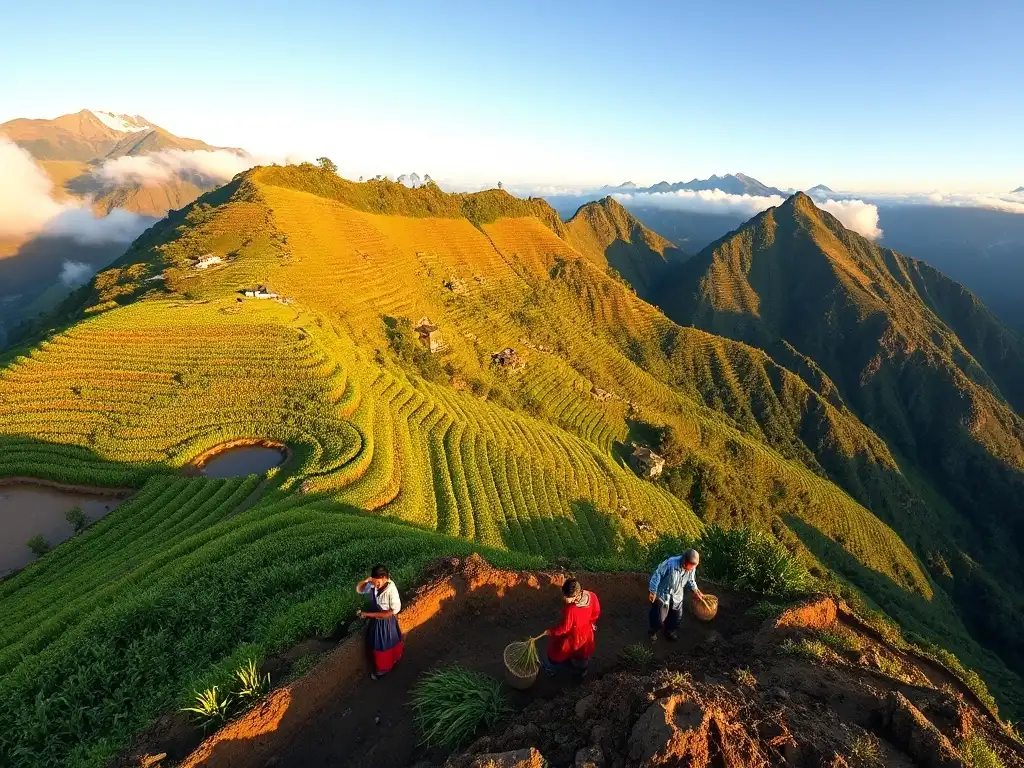
Step into a world lost to time, yet echoing with the whispers of a magnificent empire. Discover the intricate tapestry of Andean Civilizations, where innovation thrived amidst breathtaking landscapes. Prepare to be captivated by the Inca social structure and its profound agricultural impact, a testament to ingenuity that shaped a civilization's destiny. Unravel the secrets behind their success – their farming techniques, their societal organization – and delve into a story far richer than you ever imagined. Continue reading to uncover the fascinating details of this remarkable achievement.
-
The Inca Social Structure and its Agricultural Impact: A Deep Dive
- Understanding Inca Society: Foundations of Agricultural Success
- The Inca Hierarchy: Roles and Responsibilities
- Inca Labor Systems and Agricultural Production
- Land Ownership and Distribution in the Inca Empire
- Inca Agricultural Techniques and Social Structure
- The Interplay between Inca Social Hierarchy and Food Security
- The Legacy of the Inca Social Structure on Andean Agriculture
- Frequently Asked Questions
- Final Reflection: Echoes of the Andes: The Enduring Legacy of Inca Agricultural Innovation
- Unveil the Secrets of Inca Agriculture Today!
The Inca Empire, renowned for its sophisticated agricultural practices, achieved remarkable feats of engineering and productivity largely due to its meticulously organized social structure. This intricate system, far from being a simple hierarchy, was a complex web of roles and responsibilities, directly impacting every aspect of agricultural production, from land allocation and irrigation to crop cultivation and storage. This article delves into the intricacies of the Inca social structure, demonstrating how its hierarchical organization played a crucial role in shaping and sustaining the empire's agricultural success.
We will explore the various levels of Inca society, highlighting the specific contributions of each group to the overall agricultural output and the empire's impressive food security. Understanding this interconnectedness is key to appreciating the ingenuity and efficiency of Inca agricultural practices and their lasting legacy. The keyword "Inca social structure agricultural impact" will be explored in depth throughout this analysis.
Understanding Inca Society: Foundations of Agricultural Success
The Inca social structure was fundamentally based on a system of ayllus, kinship-based communities that formed the bedrock of Inca society. These communities were not merely social groups; they were also the primary units of agricultural production. Land was collectively owned by the ayllu, and its members worked together to cultivate the land, utilizing sophisticated techniques such as terracing, irrigation canals, and fertilizer management. The success of Inca agriculture was inextricably linked to the communal spirit and collaborative efforts fostered within the ayllu system.
This collaborative approach ensured efficient resource allocation and maximized agricultural output, contributing significantly to the empire's stability and prosperity. The strong sense of community within the ayllus ensured that everyone contributed to the agricultural process, making it a truly collective endeavor. This system also provided a safety net, ensuring that even in times of hardship, the community could support its members.
The Inca Hierarchy: Roles and Responsibilities
The Inca social structure was hierarchical, with the Sapa Inca at its apex, followed by a series of ranked officials and commoners. Each level played a distinct role in the agricultural system, contributing to its overall efficiency and productivity. The hierarchical structure ensured clear lines of authority and responsibility, facilitating the efficient management of resources and labor. This system, however, was not rigid; social mobility was possible, albeit limited, based on merit and service to the empire. This fluidity, while limited, helped to maintain a sense of purpose and motivation within the population.
The Sapa Inca: Divine Ruler and Land Authority
The Sapa Inca, considered a divine ruler, held ultimate authority over all aspects of Inca life, including agriculture. He was not only the political leader but also the supreme land owner. His control over land allocation, resource distribution, and the overall direction of agricultural policy was paramount. The Sapa Inca's decisions directly impacted the productivity and success of the entire agricultural system. His decrees often involved large-scale projects such as the construction of irrigation systems or the implementation of new agricultural techniques.
The Royal Family and High Priests: Governing and Land Management
Below the Sapa Inca, the royal family and high priests played significant roles in agricultural governance. They oversaw the management of vast estates, often employing specialized labor for specific tasks. They were responsible for the efficient distribution of resources and for ensuring that agricultural practices were followed correctly. Their expertise in land management and agricultural techniques played a vital role in maintaining the empire's food security. The high priests, in particular, often held considerable influence due to their religious authority and their role in predicting weather patterns and conducting agricultural rituals.
The Common People: The Backbone of Inca Agriculture
The vast majority of the Inca population were commoners, organized into ayllus. They formed the backbone of Inca agriculture, directly involved in all aspects of cultivation, harvesting, and storage. Their labor was essential for the success of the empire's agricultural system. While their lives were largely dictated by agricultural cycles, the communal nature of their work and the social safety net provided by the ayllu ensured a degree of stability and security.
Their hard work and dedication directly contributed to the empire's agricultural abundance and its ability to sustain a large population. The system provided incentives for hard work, as the success of the ayllu directly impacted the well-being of its members. This system ensured a high level of participation and commitment to agricultural production.
Inca Labor Systems and Agricultural Production
The Inca Empire's sophisticated agricultural achievements were inextricably linked to its highly organized social structure. The Inca state didn't rely solely on individual initiative for food production; instead, it implemented complex labor systems that mobilized the population for large-scale agricultural projects. This system ensured sufficient food supplies for the entire empire, supporting its substantial population and military campaigns.
The effectiveness of these systems stemmed from a finely tuned blend of mandatory labor, reciprocal work, and meticulous resource management, all overseen by a centralized authority. The impact of this structure was profound, allowing the Inca to cultivate diverse terrains and achieve remarkable agricultural yields, even in challenging environments. This organizational prowess ultimately contributed significantly to the empire's longevity and power.
Mita: Mandatory Public Service and Agricultural Projects
Mita, a cornerstone of the Inca labor system, was a form of mandatory public service. While it encompassed various tasks, including mining, construction, and military service, a significant portion of mita labor was dedicated to agriculture. Communities were obligated to provide a quota of workers for state-sponsored agricultural projects, such as terracing mountainsides, building irrigation canals, and cultivating state-owned lands. The scale of these projects was impressive; the intricate network of canals and terraces across the Andean landscape stands as a testament to the manpower mobilized through the mita system.
While demanding, the mita system ensured the completion of crucial infrastructure vital for agricultural productivity and the empire's overall sustenance. Records show that mita workers were often provided with food and basic necessities during their service, mitigating some of the potential hardships. The system's efficiency, however, depended heavily on the effective organization and management by Inca officials.
Ayni: Reciprocal Labor and Community Cooperation
Complementing the mita system was ayni, a form of reciprocal labor based on community cooperation. Unlike mita, ayni was not mandated by the state but rather arose from customary practices within communities. Neighbors would assist each other with agricultural tasks, such as planting, harvesting, and tending to livestock. This system fostered strong social bonds and ensured that everyone had the support needed for successful farming, particularly during peak seasons.
Ayni wasn't solely about agricultural tasks; it extended to other aspects of community life, reinforcing social cohesion. The combination of mita and ayni demonstrates the Inca's understanding of the importance of both centralized organization and decentralized community cooperation in achieving agricultural success. The interplay between these two systems made the Inca agricultural system remarkably resilient and adaptable.
The Impact of Social Organization on Agricultural Efficiency
The Inca social organization had a profound and demonstrably positive impact on agricultural efficiency. The combination of mita and ayni allowed for the completion of large-scale infrastructure projects that dramatically increased arable land and improved irrigation. The state's control over resources and labor ensured that these projects were executed efficiently and effectively. This resulted in increased agricultural yields and a surplus of food, which supported the empire's growing population and contributed to its economic and political stability.
The Inca's ability to manage and distribute resources effectively minimized waste and ensured that food reached those who needed it, even in times of scarcity. This efficient system is a prime example of how a well-structured society can optimize its resources to achieve remarkable agricultural feats. The organization, therefore, was a key ingredient in the Inca's success.
Land Ownership and Distribution in the Inca Empire
Land ownership and distribution within the Inca Empire were intricately tied to the social structure and played a crucial role in agricultural production. The Inca state exerted significant control over land resources, allocating them based on social status and the needs of the empire. This centralized system ensured that agricultural resources were managed efficiently and that food production met the demands of the entire population. The system was far from static, adapting to changing circumstances and needs.
State Control of Land Resources
The Inca state held ultimate ownership of all land within the empire. This centralized control allowed the state to direct agricultural production, ensuring that sufficient food was produced to support the population and the military. The state allocated land for various purposes, including state-owned farms ( tambos), religious institutions, and the support of the ruling class.
This centralized control, while potentially oppressive in some aspects, allowed for efficient resource allocation and the execution of large-scale agricultural projects that benefited the entire empire. This model ensured that even in times of drought or other natural calamities, the empire had reserves to sustain itself.
Allocation of Land Based on Social Status
Land allocation within the Inca Empire was hierarchical, reflecting the social structure. The elite, including the emperor, the nobility, and the priesthood, received the most fertile and productive lands. Commoners received land to cultivate for their own subsistence, typically in smaller plots.
This system ensured the survival of the population while also providing the means for the support of the ruling class and religious institutions. The system, though seemingly unequal, fostered a stable social order, with each group contributing to the overall agricultural output. The distribution of land reflected a complex balance between individual needs and the requirements of the state.
Maintaining Agricultural Surplus through Controlled Distribution
The Inca state's control over land and labor allowed it to maintain a significant agricultural surplus. This surplus served several crucial functions. It provided food reserves for times of scarcity, supported the military, and allowed for the distribution of goods to maintain social order and loyalty. The warehouses ( qollqas) strategically located throughout the empire stored surplus food, demonstrating the sophisticated logistical capabilities of the Inca administration.
This controlled distribution system played a critical role in the stability and longevity of the Inca Empire. The surplus also allowed for trade and diplomacy, strengthening the empire's connections with neighboring regions. The ability to consistently produce and manage a surplus was a testament to the effectiveness of the Inca's social and agricultural organization.
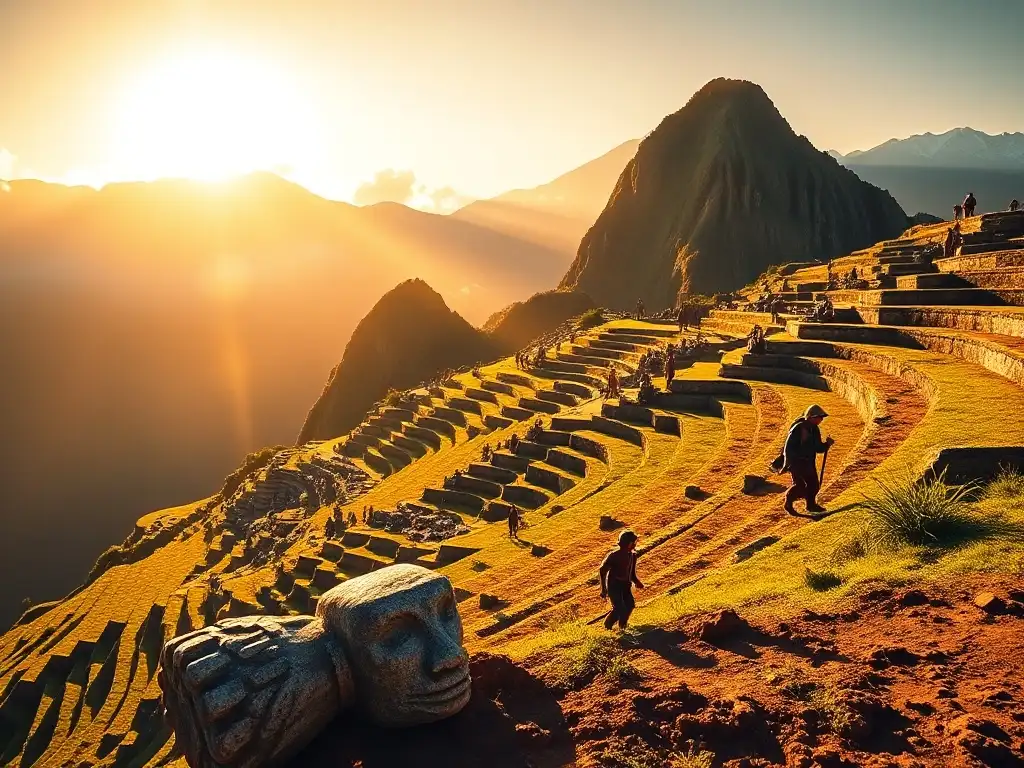
The Inca Empire's agricultural success wasn't merely a matter of technological prowess; it was deeply intertwined with their sophisticated social structure. The Inca's hierarchical system, with its ayllu community at its base, played a crucial role in organizing and executing the labor-intensive agricultural practices that sustained their vast empire. This intricate relationship between social organization and agricultural techniques is key to understanding the Inca's remarkable achievements in food production.
The empire’s success relied on a highly organized system that efficiently allocated resources and labor, ensuring food security for a large and diverse population. This system was not rigid, however, and demonstrated remarkable adaptability to various ecological conditions across the Andean landscape. The effectiveness of the Inca’s agricultural system was directly linked to the societal structure which ensured its continued operation and adaptation.
Terrace Farming and its Labor Demands
Terrace farming, a hallmark of Inca agriculture, exemplifies the link between social structure and agricultural productivity. Constructing and maintaining these terraced fields required a massive, coordinated effort. The ayllu, a kinship-based community, formed the backbone of this labor force.
Each ayllu was assigned specific tasks, from clearing land and building retaining walls to planting, harvesting, and maintaining the terraces. This system ensured that the burden of labor was distributed equitably within the community, fostering a sense of collective responsibility and shared success. The effectiveness of the system is evident in the enduring legacy of Inca terraces that can still be seen across the Andes today, a testament to their engineering skill and social organization.
Failure to maintain the terraces would have had catastrophic consequences, highlighting the importance of communal responsibility for the Inca’s social stability. Detailed records, though scarce, suggest a system of rotating labor assignments, minimizing individual burden and maximizing long-term productivity.
Irrigation Systems and Community Collaboration
The Inca’s extensive irrigation systems, another testament to their engineering prowess, relied heavily on community participation. The construction and maintenance of canals, aqueducts, and other irrigation infrastructure demanded significant collective effort. The ayllu system, once again, provided the framework for organizing and managing these projects. Community members worked together to plan, build, and maintain the irrigation networks, ensuring that water resources were distributed efficiently throughout the agricultural lands.
This collaborative approach not only maximized agricultural output but also strengthened social bonds within the ayllu, promoting cohesion and mutual support. Evidence of sophisticated water management techniques, such as diverting water from rivers and constructing reservoirs, showcases the advanced understanding of hydraulic engineering within the Inca civilization and the crucial role social cooperation played in its success. The efficient distribution of water through these systems directly impacted the overall agricultural productivity of the Inca Empire.
Crop Diversification and Social Organization
The Inca's impressive agricultural achievements were not limited to a single crop; they practiced extensive crop diversification, adapting their agricultural practices to varying altitudes and climates. This strategy, crucial for food security, was directly linked to their social structure. Different ayllus were often responsible for cultivating different crops, reflecting the varied ecological zones and agricultural specializations within the empire.
This division of labor ensured a robust and resilient food supply. The social hierarchy played a vital role in coordinating the production and distribution of these diverse crops, ensuring that resources were efficiently allocated and that all parts of the empire had access to a variety of foods. This sophisticated system minimized risks associated with crop failure and ensured that the Inca population had a balanced diet, further strengthening the empire’s resilience.
The Inca social hierarchy played a crucial role in ensuring food security across the vast empire. The emperor and his elite controlled the surplus agricultural production, using it to maintain power and support the administrative structure. This control facilitated the redistribution of food during times of scarcity or famine, preventing widespread starvation and social unrest.
This system, while centralized, was remarkably effective in ensuring that the population had access to food, even in the face of environmental challenges. The intricate network of storage facilities and distribution channels, managed under the watchful eye of the ruling class, was instrumental in maintaining food security across the empire. The system’s success was deeply reliant upon the efficient functioning of the social hierarchy and its ability to manage resources effectively.
How the Social System Ensured Food Supply
The Inca social system ensured a relatively stable food supply through a combination of strategies. The mit'a system, a form of mandatory labor service, was employed to support large-scale agricultural projects. This ensured that sufficient labor was available for tasks such as irrigation construction and maintenance, and terrace farming.
Furthermore, the central government’s control over land and resources allowed for efficient allocation of land to different ayllus based on their agricultural capabilities and needs. This strategic allocation, combined with the redistribution of surplus food, minimized the risk of food shortages and ensured that even remote communities had access to essential supplies. The system's efficiency hinged on the effective communication and coordination facilitated by the Inca's hierarchical structure.
The Role of Storage and Distribution Networks
The Inca's sophisticated network of storage facilities, known as qollqas, played a vital role in ensuring food security. These strategically located storehouses were used to store surplus agricultural produce, providing a buffer against crop failures and ensuring a steady food supply throughout the year. The distribution of food from these qollqas was managed by the Inca bureaucracy, ensuring that food reached even the most remote communities.
This system effectively mitigated the impact of environmental variability and ensured that the population had a consistent supply of food, even during periods of drought or other adverse conditions. The strategic placement of these warehouses and the efficient distribution networks highlight the sophistication of the Inca’s logistical capabilities and their commitment to food security.
The Impact of Social Structure on Long-Term Sustainability
The Inca social structure, while hierarchical, contributed to the long-term sustainability of their agricultural practices. The communal nature of the ayllu fostered a sense of collective responsibility for the land and its resources. This, combined with the Inca government’s emphasis on resource management and conservation, ensured that agricultural practices were sustainable over the long term.
The Inca's success in maintaining agricultural productivity for centuries demonstrates the effectiveness of their integrated approach, which successfully balanced centralized control with community-level participation and responsibility. This sustainable approach to agriculture highlights the crucial interconnection between social organization and environmental stewardship. The Inca's legacy serves as a testament to the potential of integrating social structures and environmental practices for long-term sustainability.
The Inca social structure, a complex system built upon a hierarchical framework, profoundly impacted Andean agriculture, leaving an enduring legacy that continues to shape agricultural practices in the region even today. The ayllu, a community-based system of collective labor and land ownership, was central to Inca agricultural production. This system fostered a strong sense of communal responsibility for the success of agricultural endeavors, ensuring that resources were managed sustainably and that everyone contributed to the collective good.
The Inca state meticulously organized and controlled agricultural production, leveraging the ayllu system to maximize yields and ensure food security for the entire empire. This involved sophisticated irrigation systems, terracing techniques, and the cultivation of diverse crops adapted to different altitudes and climates.
The impact of this organized system is still visible in the terraced fields that cling to the steep Andean slopes, a testament to the ingenuity and organizational prowess of the Inca civilization. The Inca's commitment to agricultural innovation and sustainable resource management provided a foundation for future generations, influencing agricultural practices long after the fall of the empire.
Modern Influences and Traditional Practices
Despite centuries of change, the echoes of Inca agricultural practices resonate in modern Andean agriculture. Many communities continue to utilize traditional Inca techniques, such as terracing and irrigation systems, adapting them to contemporary needs and challenges. The ayllu system, though modified, still plays a role in some communities, influencing land management and resource distribution. The emphasis on collective action and community-based agriculture continues to be a vital aspect of Andean farming, reflecting the enduring legacy of Inca social organization. However, modern agricultural practices also introduce new challenges. The integration of modern technologies and market demands often clashes with traditional methods, leading to a complex interplay between tradition and innovation. This dynamic interaction highlights the enduring influence of the Inca social structure on Andean agriculture, even amidst significant societal shifts. The challenge now lies in finding a balance between preserving valuable traditional practices and adapting to the realities of modern agriculture.
Lessons Learned from Inca Agricultural Management
The Inca's success in agricultural management offers valuable lessons for contemporary agricultural practices. Their emphasis on sustainability, biodiversity, and community-based resource management provides a compelling model for addressing modern agricultural challenges such as climate change, soil degradation, and food insecurity. The Inca's sophisticated irrigation systems and terracing techniques demonstrate a deep understanding of water management and soil conservation, principles that are highly relevant in today's context of increasingly scarce water resources and environmental degradation.
Their ability to cultivate a diverse range of crops adapted to varying altitudes and climates highlights the importance of biodiversity in ensuring food security and resilience to environmental fluctuations. By studying and understanding the Inca's agricultural practices, we can gain valuable insights into sustainable and resilient agricultural systems, helping us to develop more effective and environmentally responsible approaches to food production.
Contemporary Studies on Inca Society and Agriculture
Ongoing research continues to shed light on the intricacies of Inca society and its impact on agriculture. Archaeological excavations uncover new evidence of Inca agricultural practices, revealing further details about their sophisticated techniques and organizational structures. Ethnohistorical studies explore the enduring legacy of Inca agricultural practices in modern Andean communities, documenting the ways in which traditional methods are adapted and integrated into contemporary farming systems.
Anthropological studies examine the social and cultural aspects of Inca agriculture, focusing on the role of the ayllu system and the social dynamics that shaped agricultural production. These diverse research approaches contribute to a richer and more comprehensive understanding of the Inca's agricultural achievements and their lasting impact on Andean agriculture.
The ongoing analysis of Inca agricultural techniques and social structures provides valuable insights for developing sustainable and equitable agricultural systems in the Andean region and beyond. The collaborative work of archaeologists, anthropologists, and agricultural scientists is crucial in harnessing the lessons from Inca society for the benefit of contemporary agriculture.
Frequently Asked Questions
The Inca social structure was rigidly hierarchical, based on kinship and service to the Inca emperor. It was a system of reciprocity, where loyalty and labor were exchanged for protection and resources. This system permeated all aspects of life, including agriculture.
The strict hierarchy dictated agricultural production and distribution. Ayllus, or community groups, were responsible for cultivating land and contributing to state-controlled storehouses. This ensured food security for the entire empire.
What role did the Inca state play in agriculture?
The Inca state played a central role, organizing and controlling agricultural production. They developed advanced irrigation systems and terracing techniques, and controlled the distribution of food and resources, ensuring that everyone had enough.
What was the impact of the Inca's agricultural innovations?
Inca agricultural innovations, such as terracing and irrigation, allowed them to cultivate diverse crops in varied terrains. This led to increased food production and supported a large population, contributing to the empire's success and stability.
The efficient and organized social structure, coupled with innovative agricultural practices, ensured food security and resource management. This centralized system facilitated the construction of infrastructure and supported the Inca empire's expansion and longevity.
Final Reflection: Echoes of the Andes: The Enduring Legacy of Inca Agricultural Innovation
The intricate social structure of the Inca Empire wasn't merely a political construct; it was the very engine that powered their remarkable agricultural achievements, a system whose echoes resonate even in contemporary agricultural practices. The sophisticated techniques employed by the Inca, from terracing and irrigation to the meticulous management of resources, stand as a testament to the power of collective action and sustainable development, offering valuable lessons for a world grappling with food security challenges.
The Inca's ability to cultivate diverse and challenging terrains underscores the profound interconnectedness between social organization and environmental adaptation. Their success wasn't solely based on technological prowess, but on a deeply ingrained social ethic that prioritized community well-being above individual gain. The Inca system was not merely a system of production, but a system of social reproduction, ensuring the continued prosperity and stability of the empire.
This quote highlights the holistic nature of their approach, a perspective we can learn from as we strive to create more equitable and sustainable food systems today.
Consider the ingenuity of the Inca's agricultural innovations, their understanding of water management, and their commitment to community. You, too, can contribute to building a more sustainable future by embracing principles of collaboration, resourcefulness, and a deep respect for the environment. Let the legacy of the Inca inspire you to cultivate not only food, but also a sense of shared responsibility for the well-being of our planet and its people.
Unveil the Secrets of Inca Agriculture Today!
Thank you for exploring the fascinating world of Inca social structures and their profound impact on agriculture. We hope you gained valuable insights into this remarkable civilization.
Now, let's delve deeper! Here are some ways to continue your exploration:
- **Experience Inca-inspired farming techniques firsthand**—visit a local farm employing traditional methods, or participate in a hands-on workshop.
- Share your newfound knowledge! **Spark your friends' and family's interest in Andean history** by engaging them in conversation or hosting a casual learning session.
- **Connect with fellow enthusiasts** by joining a historical or archaeological society focused on Andean cultures and their enduring legacy.
What aspect of Inca agriculture most fascinates you, and how might these ancient techniques benefit modern society? We'd love to hear your thoughts!