
Tiahuanaco's Gate of the Sun: A Portal to Other Dimensions?

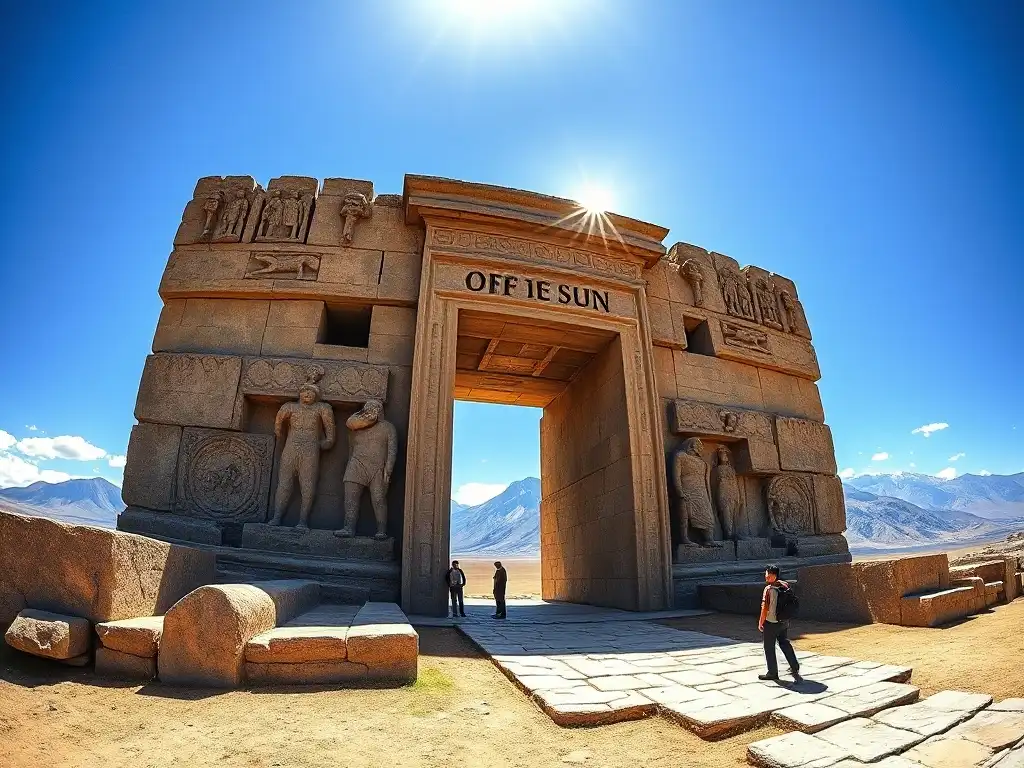
Welcome to Andean Civilizations, where the echoes of a lost world whisper secrets of ingenuity and wonder. Prepare to journey through time, unraveling the intricate tapestry of Andean history, culture, and art. But first, dare to confront the enigma of Tiahuanaco's Gate of the Sun, a monumental mystery shrouded in ancient cosmology and potentially holding the key to understanding a civilization far beyond our comprehension. Is it a mere architectural marvel, or a portal to other dimensions? Dive in and discover the answers...
The enigmatic Gate of the Sun at Tiahuanaco, Bolivia, stands as a testament to the sophisticated astronomical knowledge and complex cosmology of the pre-Columbian Andean civilizations. This monumental structure, carved from a single block of red andesite, continues to fascinate and inspire awe, fueling countless theories and interpretations, including the captivating, if controversial, idea that it served as a portal to other dimensions. This exploration delves into the mysteries surrounding the Gate of the Sun, examining its intricate carvings, astronomical alignments, and the enduring questions it poses about the Tiahuanaco culture and their understanding of time and space.
We will explore the evidence, the interpretations, and the enduring allure of this remarkable artifact, examining the "Tiahuanaco Gate of the Sun mystery" from multiple perspectives. The article will analyze both scientific explanations and alternative interpretations to provide a comprehensive overview of this captivating subject.
The Astronomical Significance of the Gate of the Sun
The Gate of the Sun's intricate carvings depict a central figure, often interpreted as a deity, surrounded by smaller figures and symbols. Many scholars believe these carvings represent a complex calendar system or a representation of the cosmos, reflecting the Tiahuanaco people's advanced understanding of astronomy. Detailed analysis reveals alignments with solstices and equinoxes, suggesting a sophisticated knowledge of celestial movements.
The precision of these alignments is remarkable, indicating a deep understanding of astronomical cycles and their relationship to agricultural practices and religious beliefs. Further research is needed to fully decipher the meaning of all the symbols, but the evidence strongly suggests a sophisticated astronomical observatory function.
The carvings themselves are incredibly detailed, with intricate patterns and figures that continue to challenge researchers to this day. The sheer scale of the carving, and the precision with which it was executed, is further evidence of the advanced technological capabilities of the Tiahuanaco civilization.
Interpretations and Theories: Beyond the Astronomical
Beyond the astronomical interpretations, numerous theories surround the Gate of the Sun, ranging from practical applications to more esoteric explanations. Some suggest it served as a ceremonial entrance to a significant religious site, while others propose it functioned as a royal tomb or a marker of political power. The "portal to other dimensions" theory, while lacking concrete scientific evidence, taps into the enduring fascination with the unknown and the mysteries surrounding ancient civilizations.
This theory often intertwines with discussions of advanced technology and spiritual practices, highlighting the enduring mystery of the Gate's purpose. However, it's crucial to balance these speculative interpretations with the rigorous analysis of the available archaeological evidence. Further research, including advanced imaging techniques and detailed analysis of the carvings, is needed to shed more light on its true meaning.
The Enduring Mystery and Ongoing Research
Despite centuries of study, the Gate of the Sun continues to hold its secrets. New discoveries and technological advancements offer the possibility of further unraveling its mysteries. Ongoing research focuses on analyzing the carvings using advanced imaging techniques, exploring the site's broader context within the Tiahuanaco culture, and comparing its features to other similar structures in the Andes.
The enduring mystery of the Gate of the Sun serves as a powerful reminder of the richness and complexity of the Andean civilizations and their advanced understanding of the cosmos. The "Tiahuanaco Gate of the Sun mystery" is not just about solving a puzzle; it's about understanding a civilization that was far more advanced than previously thought.
The ongoing research is crucial not only for understanding the gate itself, but also for broadening our understanding of Andean cosmology and the development of human civilization. The future holds the promise of new discoveries that will further illuminate this fascinating enigma.
- The Astronomical Significance of the Gate of the Sun
- Interpretations and Theories: Beyond the Astronomical
- The Enduring Mystery and Ongoing Research
Unveiling the Enigma of the Tiahuanaco Gate of the Sun
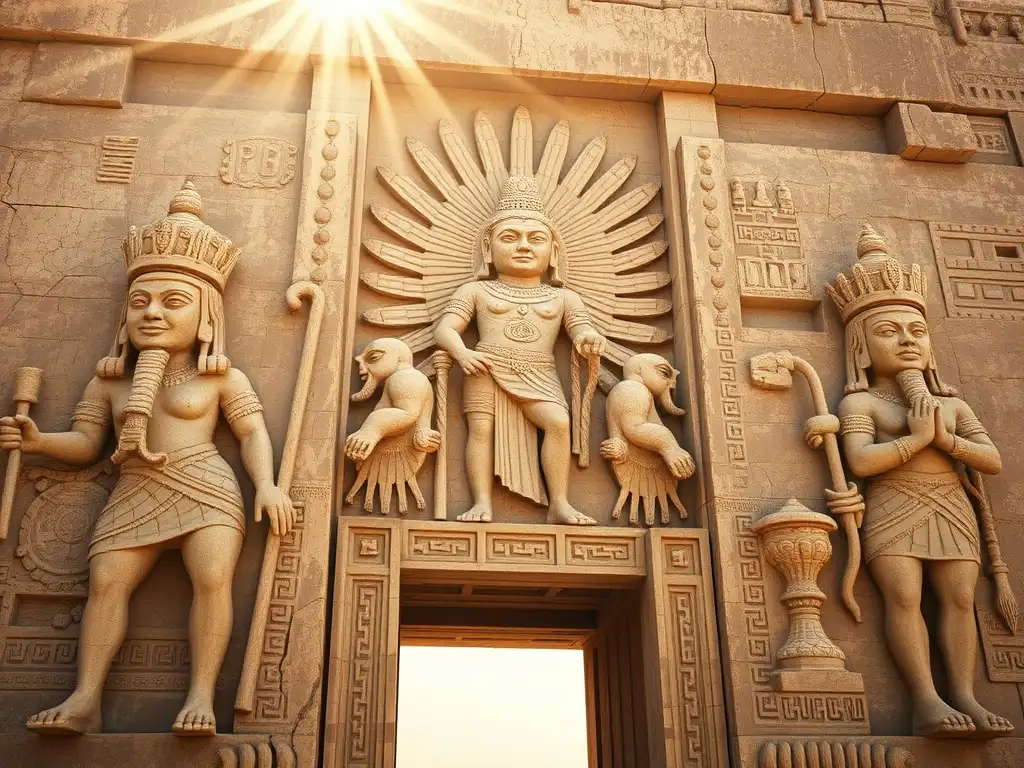
The Tiahuanaco Gate of the Sun, a monolithic masterpiece of pre-Columbian engineering, continues to captivate researchers and enthusiasts alike. Its intricate carvings, astronomical alignments, and sheer scale fuel endless debate regarding its purpose and the advanced knowledge possessed by the Tiahuanaco culture. The "Tiahuanaco Gate of the Sun mystery," as it's often called, encompasses not only the gate itself, but also its broader context within the wider Tiahuanaco civilization and its unique cosmological worldview.
This section delves into the specifics of this enduring puzzle, examining the evidence and exploring various interpretations. Unraveling the secrets of the Gate of the Sun offers a unique window into the sophisticated understanding of time, space, and the cosmos held by the ancient Andean peoples. The mystery isn't just about the gate's physical construction, but also about its symbolic representation and potential connection to a deeper, perhaps spiritual, understanding of the universe.
The Gate of the Sun: A Monumental Mystery
The Gate of the Sun is a massive andesite monolith, approximately 3 meters high and 3.8 meters wide. Its weight is estimated to be around 10 tons. The most striking feature is its intricate relief carving, depicting a central figure, often interpreted as a deity or a powerful ruler, surrounded by various other figures and symbols. These figures represent a complex iconography, including stylized human forms, birds, feline figures, and intricate geometric patterns. The precision of the carving, considering the tools available to the Tiahuanaco people, is astounding, and raises questions about their advanced technological capabilities and their understanding of stone manipulation.
The very act of quarrying, transporting, and assembling such a massive stone structure is in itself a testament to their engineering prowess. The meticulous detail in the carvings suggests a profound symbolic significance, hinting at a sophisticated religious or cosmological system. The mystery lies not just in how it was created, but why. What story does this monumental piece tell?
What knowledge did the creators hope to convey? These are some of the core questions that fuel the ongoing fascination with the Tiahuanaco Gate of the Sun mystery. Further research into the precise composition of the andesite and the techniques used for carving could shed additional light on the technological sophistication of the Tiahuanaco culture. The precise methods used for shaping and carving the andesite remain a subject of ongoing research and debate.
Location and Significance of the Tiahuanaco Archaeological Site
The Gate of the Sun is located within the larger Tiahuanaco archaeological site, situated on the shores of Lake Titicaca in present-day Bolivia. This site is considered one of the most important pre-Columbian archaeological sites in South America. The Tiahuanaco culture flourished between approximately 500 and 1200 CE, leaving behind a remarkable legacy of monumental architecture, intricate ceramics, and sophisticated agricultural techniques. The site itself is strategically located at a high altitude, commanding a view of the surrounding landscape and the lake.
This location may have held significant cosmological importance for the Tiahuanaco people, influencing their worldview and the construction of monumental structures like the Gate of the Sun. The site's layout, with its carefully planned plazas, temples, and residential areas, suggests a complex social and political organization. The discovery of numerous smaller artifacts within the site helps to contextualize the Gate of the Sun, shedding light on the culture's beliefs, rituals, and daily life. The interplay between the Gate of the Sun and the overall layout of Tiahuanaco is crucial to understanding its significance.
Further archaeological investigation into the surrounding structures and the site's overall cosmology could help to better understand the role of the Gate of the Sun within the broader Tiahuanaco worldview. Detailed mapping of the site and careful analysis of the artifacts found in association with the Gate of the Sun are essential to fully unravel the mysteries surrounding this remarkable monument. The ongoing excavations and research at Tiahuanaco continue to provide new insights into the "Tiahuanaco Gate of the Sun mystery" and the rich cultural heritage of this ancient civilization. The site's elevation and proximity to Lake Titicaca may have contributed to its spiritual and cosmological significance for the Tiahuanaco people.
Exploring the Tiahuanaco Gate of the Sun's Construction
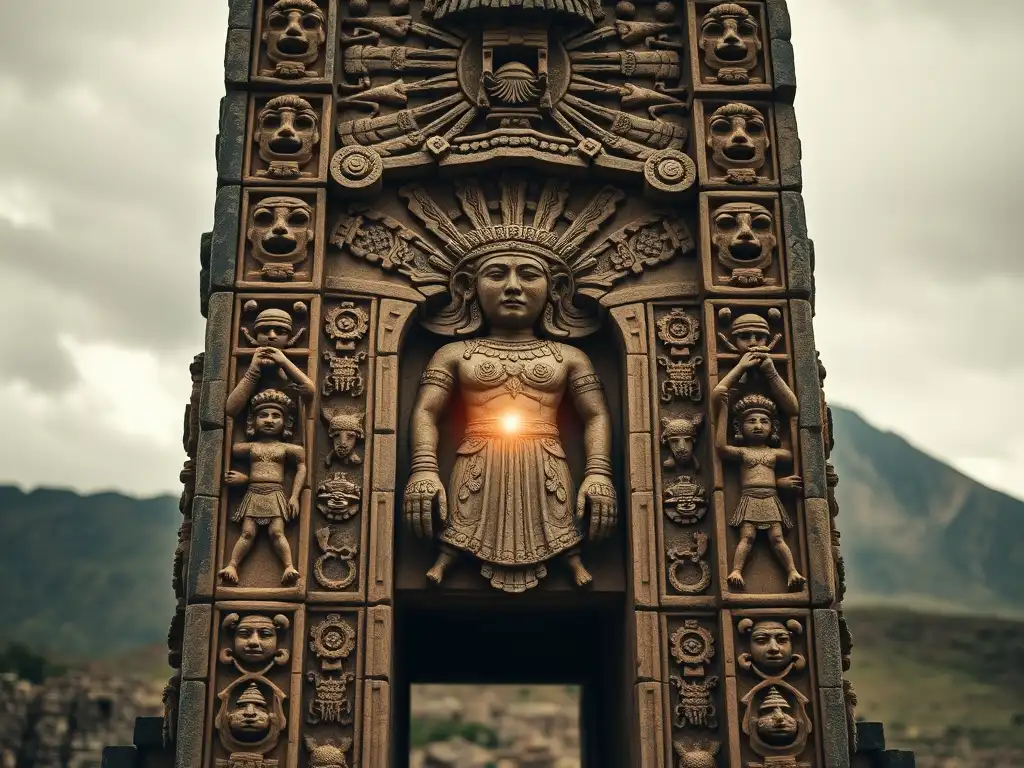
The Tiahuanaco Gate of the Sun, a monolithic masterpiece of Andean engineering, presents a captivating enigma wrapped in the mysteries of its construction. Its sheer size and the precision of its intricate carvings continue to baffle modern engineers and archaeologists, fueling the enduring "Tiahuanaco Gate of the Sun mystery." The very act of quarrying, transporting, and assembling such colossal blocks of andesite, a remarkably hard volcanic rock, across challenging terrain remains a testament to the advanced technological capabilities of the Tiahuanaco civilization.
Understanding the construction techniques employed provides invaluable insight into their societal organization, resource management, and overall technological prowess. The scale of the project itself hints at a highly structured society capable of mobilizing significant labor and resources over an extended period. The precision of the work suggests a deep understanding of geometry, astronomy, and engineering principles far exceeding expectations for a pre-Columbian civilization.
Architectural Marvels of the Tiahuanaco Civilization
The Gate of the Sun is not an isolated wonder; it's a reflection of the broader architectural achievements of the Tiahuanaco civilization. The city of Tiahuanaco itself, situated near Lake Titicaca, showcases sophisticated urban planning, intricate stonework, and monumental structures. The precision of the stone fitting in many Tiahuanaco structures, with minimal use of mortar, is astounding. This level of precision, evident in the Gate of the Sun's perfectly fitted blocks, is rarely seen in other ancient civilizations.
The use of andesite, a notoriously difficult material to work with, further underscores the advanced tooling and expertise of the Tiahuanaco artisans. They possessed a remarkable ability to shape and carve this incredibly hard stone with exceptional accuracy, suggesting the use of specialized tools and techniques that are still not entirely understood. Evidence suggests the use of copper and bronze tools, perhaps even aided by techniques utilizing water and abrasive materials.
Further research into the Tiahuanaco quarry sites and potential workshops could shed more light on this fascinating aspect of their construction methods. The sheer scale of the project, involving the transport of massive blocks of stone over considerable distances, points towards a well-organized society with a sophisticated understanding of logistics and labor management. The Gate itself, with its weight estimated at [specific weight pending], is a remarkable feat of engineering that challenges our understanding of pre-Columbian capabilities.
Analyzing the Stone Carving Techniques
The intricate carvings adorning the Gate of the Sun are another key element of the "Tiahuanaco Gate of the Sun mystery." The high relief carvings depict a complex array of figures, including a central figure often interpreted as a deity, surrounded by other figures and symbolic representations. The precision and detail of these carvings are remarkable, showing a mastery of stone carving techniques that is rarely matched in other ancient civilizations.
The tools used remain a subject of ongoing debate, with scholars suggesting the use of various tools made from copper, bronze, and potentially other materials. The depth and consistency of the carvings, the fine details of the facial features, and the intricate patterns suggest a sophisticated understanding of artistic principles and a high level of skill among the Tiahuanaco artisans. The absence of visible tool marks in many areas further contributes to the mystery, prompting speculation about potentially advanced techniques or the use of unknown tools.
Analyzing the wear patterns on the carvings themselves might offer clues about the tools and techniques employed. Microscopic examination and advanced imaging techniques could potentially reveal further details about the carving process and the types of tools used. The sheer volume of work required to create these intricate carvings, in addition to the overall construction of the Gate, is a testament to the Tiahuanaco civilization's dedication and organizational capabilities.
The Purpose Behind the Gate's Unique Design
The unique design of the Gate of the Sun remains a subject of much speculation and debate. The central figure, often interpreted as a deity, and the surrounding figures and symbols have been interpreted in various ways, leading to numerous theories about the Gate's purpose. Some scholars believe it served as a ceremonial gateway or a part of a larger religious complex. Others suggest it might have had astronomical significance, possibly used for observing celestial events or marking important dates within the Tiahuanaco calendar.
The arrangement of the figures and symbols could hold clues to a complex cosmology and worldview. The presence of repeated motifs and patterns suggests a systematic approach to the design, possibly reflecting a deeper symbolic meaning related to the Tiahuanaco religious beliefs and social structure. The "Tiahuanaco Gate of the Sun mystery" is further fueled by the lack of definitive evidence to confirm any single interpretation.
Further research into Tiahuanaco iconography and religious practices could shed light on the symbolic meaning of the figures and symbols depicted on the Gate. Comparative studies with other Andean sites and artifacts could provide additional context and insights into the Gate's purpose and significance within the broader context of the Tiahuanaco civilization. The Gate of the Sun, therefore, remains a powerful symbol of the enigmatic culture that created it, a testament to their sophisticated artistry and engineering capabilities, and a continuing source of fascination and scholarly inquiry.
Decoding the Iconography of the Tiahuanaco Gate of the Sun
The Tiahuanaco Gate of the Sun, a monolithic masterpiece of Andean engineering and artistry, continues to fascinate and perplex researchers. Its intricate carvings, depicting a complex array of figures and symbols, have fueled countless interpretations, ranging from astronomical charts to representations of a sophisticated cosmology. Unraveling the mysteries of the Gate requires a detailed examination of its iconography, a task that has challenged scholars for centuries. The enduring allure of the "Tiahuanaco Gate of the Sun mystery" stems from the sheer complexity and ambiguity of its visual language. Understanding its iconography is key to approaching this enduring enigma.
The Central Figure: The Sun God Wiracocha?
The central figure of the Gate, often interpreted as the creator god Wiracocha, dominates the composition. This deity, prominent in Inca and pre-Inca Andean religions, is depicted with a seemingly serene yet powerful countenance. However, the precise identification remains debated.
Some scholars suggest alternative interpretations, proposing that the central figure represents a different deity altogether, or perhaps a symbolic representation of the sun itself, embodying power, creation, and cosmic order. The figure's headdress, adorned with intricate details, is crucial to interpreting its identity. The stylistic similarities between the headdress and those found in other Tiahuanaco artifacts provide some clues, but further research is needed to definitively confirm its meaning.
The figure's posture, hands, and facial expression all contribute to the overall enigmatic nature of the central figure and its possible connection to the broader cosmology of Tiahuanaco. Analyzing the stylistic details, comparing them with other representations of deities from the region, and considering the context within the Gate's overall design are crucial steps in solving the "Tiahuanaco Gate of the Sun mystery". Further research into the specific materials used in carving the figure might reveal additional clues about its significance.
Symbolic Representations and Their Possible Meanings
Beyond the central figure, the Gate is adorned with a multitude of smaller figures and symbols, each potentially holding significant meaning. These include stylized human figures, often depicted in regalia suggestive of high status or religious importance. Additionally, various animal representations are present, such as birds and felines, which may represent shamans, messengers, or guardians. The precise meaning of each element is a subject of ongoing debate, with multiple interpretations proposed.
For instance, some scholars suggest that the arrangement of figures reflects an astronomical calendar, aligning with celestial events. Others posit that the symbols represent a complex system of beliefs and rituals, reflecting Tiahuanaco's unique worldview. The presence of repeated motifs and patterns throughout the Gate suggests a deliberate and carefully planned design, emphasizing the importance of each element within the overall composition.
The intricate detail and precision of the carvings further highlight the advanced artistic and technological capabilities of the Tiahuanaco civilization. The diversity of symbols and their potential meanings underscores the complexity of the "Tiahuanaco Gate of the Sun mystery". A deeper understanding requires a more holistic approach that considers the Gate within its broader cultural and historical context.
Interpretations of the Gate's Intricate Carvings
Numerous interpretations of the Gate's intricate carvings exist, each offering a unique perspective on its meaning and purpose. Some scholars focus on the astronomical alignments of certain elements, suggesting the Gate functioned as an astronomical observatory. Others emphasize the religious significance, proposing that the Gate served as a focal point for rituals and ceremonies.
Still others suggest a more complex combination of functions, combining astronomical observation with religious practices. The lack of definitive textual evidence adds to the challenge, forcing researchers to rely on careful analysis of the iconography, comparative studies with other Andean artifacts, and archaeological context. The potential for multiple interpretations highlights the richness and complexity of Tiahuanaco culture and its lasting impact on our understanding of Andean cosmology.
The ongoing research, combining archaeological findings with interdisciplinary approaches, offers promising avenues for further unraveling the "Tiahuanaco Gate of the Sun mystery." The enduring mystery of the Gate serves as a testament to the sophistication and ingenuity of the ancient Andean civilizations and their profound connection to the cosmos. Future discoveries and advancements in research methodologies will undoubtedly shed more light on this captivating enigma.
The Tiahuanaco Gate of the Sun and the Concept of Time and Space
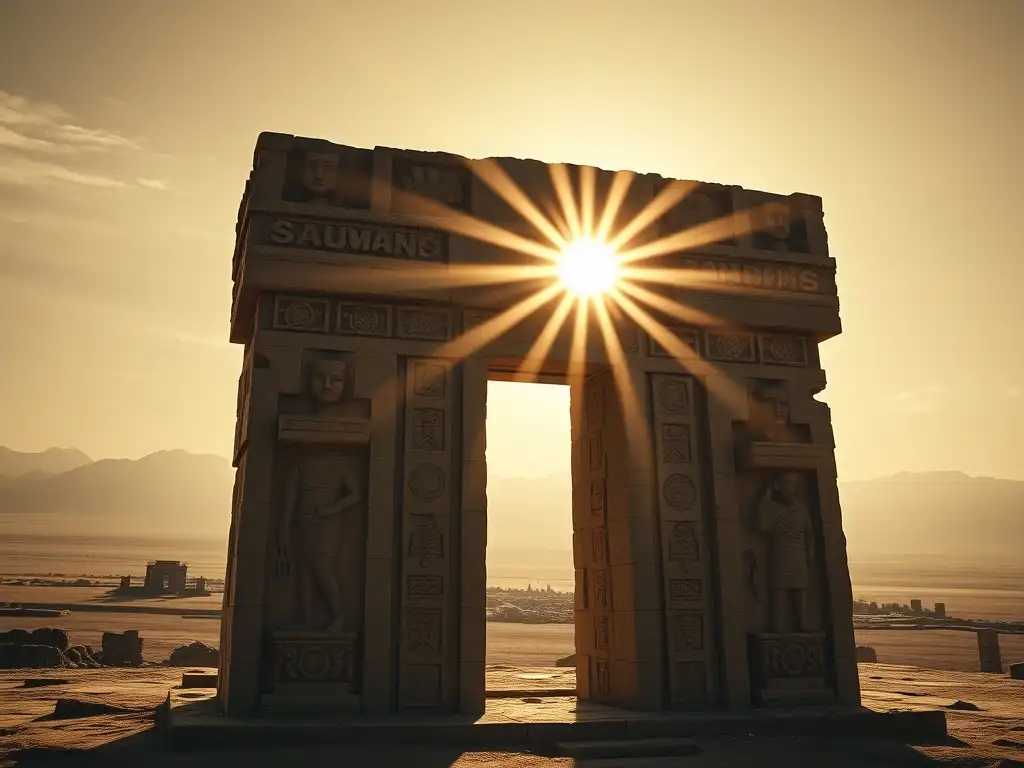
The Tiahuanaco Gate of the Sun, a monolithic masterpiece of pre-Columbian Andean engineering, continues to captivate researchers and enthusiasts alike. Its intricate carvings, depicting a complex array of figures and symbols, have fueled countless interpretations, many focusing on the Tiahuanaco Gate of the Sun mystery surrounding its possible astronomical and cosmological significance.
This section explores the Gate's potential role within the broader context of Andean cosmology and its relationship to concepts of time and space, challenging conventional understandings of its purpose. The sheer scale and precision of the Gate's construction suggest a level of sophistication far exceeding what was previously attributed to the Tiahuanaco civilization, further adding to the enigma.
Understanding the Gate requires moving beyond simple descriptions of its physical attributes and delving into the symbolic language embedded within its design. The very act of creating such a monument speaks volumes about the worldview and beliefs of the people who crafted it.
Andean Cosmology and the Gate's Potential Role
Andean cosmology differed significantly from Western perspectives. Time wasn't perceived as linear but rather cyclical, interwoven with a complex understanding of the cosmos. The Andean worldview emphasized a close relationship between the human world and the supernatural, with celestial bodies playing a crucial role in shaping daily life and ritual practices.
The Gate of the Sun, with its intricate carvings of deities, mythical creatures, and celestial symbols, may have served as a focal point for rituals designed to connect the terrestrial and celestial realms. Some scholars suggest the Gate's central figure, often interpreted as a deity, represents a cosmic intermediary, facilitating communication between the human and divine spheres. This interpretation aligns with the Andean emphasis on maintaining balance and harmony within the cosmos, a concept central to their worldview.
Further research is needed to definitively link specific carvings to specific cosmological beliefs, but the potential for such a connection is undeniable. The enigmatic nature of many symbols further contributes to the Tiahuanaco Gate of the Sun mystery.
Astronomical Alignments and Calendar Systems
The precise astronomical alignments of the Gate of the Sun remain a subject of ongoing debate. While some researchers have proposed connections to specific solstices or equinoxes, definitive proof remains elusive. The challenge lies in the lack of comprehensive data regarding the Gate's original orientation and the potential impact of subsequent earthquakes and erosion on its alignment.
However, the presence of seemingly astronomical motifs within the Gate's carvings strongly suggests a deliberate attempt to incorporate celestial observations into its design. The detailed carvings might represent constellations, planets, or other celestial phenomena significant to the Tiahuanaco calendar system.
The possibility that the Gate served as a sophisticated astronomical instrument, used to track celestial movements and predict agricultural cycles, is certainly plausible. Further study, including advanced techniques like 3D modeling and digital reconstruction, could shed light on the Gate's potential astronomical functions, potentially resolving aspects of the Tiahuanaco Gate of the Sun mystery.
The Gate and its potential connection to the Tiahuanaco Calendar
The Tiahuanaco calendar, if it indeed existed in a form similar to what some researchers propose, likely played a vital role in regulating agricultural practices, social organization, and religious rituals. The Gate of the Sun, with its potential astronomical alignments, could have functioned as a monumental calendar, marking significant dates and events within the Tiahuanaco year. This interpretation is supported by the presence of repeated motifs and patterns within the carvings, which could represent cyclical events or phases within the calendar.
The lack of direct textual evidence makes deciphering the precise meaning of these symbols a complex undertaking. However, by comparing the Gate's carvings with those found on other Tiahuanaco artifacts and by analyzing similar calendar systems used by other Andean cultures, researchers can begin to piece together a more comprehensive understanding of the Gate's role within the broader context of Tiahuanaco society.
The potential connection between the Gate and the calendar strengthens the argument for its significance as a central element within the Tiahuanaco worldview, contributing to the enduring fascination surrounding the Tiahuanaco Gate of the Sun mystery. Further interdisciplinary research, combining archaeology, astronomy, and anthropology, is crucial to unraveling this fascinating aspect of Andean history.
The "Portal to Other Dimensions" Theory: Examining the Evidence
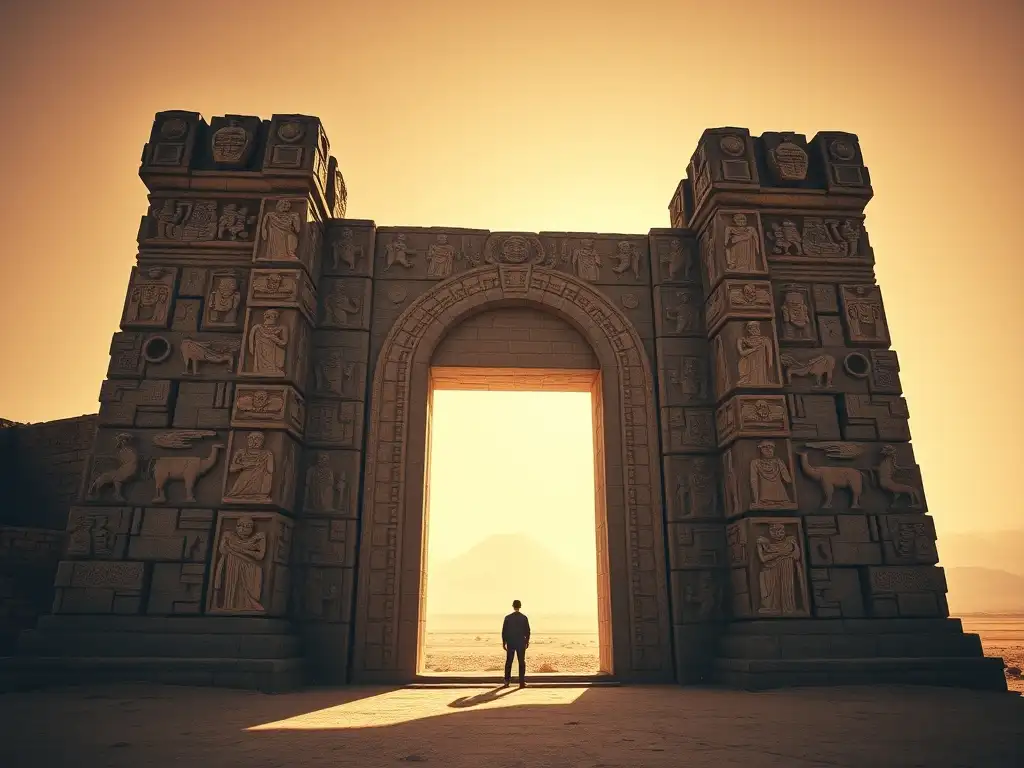
The Tiahuanaco Gate of the Sun, a monolithic masterpiece of Andean engineering, has captivated imaginations for centuries. Beyond its undeniable artistic and architectural merit, a persistent and intriguing theory suggests it served as a "portal to other dimensions." This theory, while lacking definitive scientific proof, taps into a fascination with the unknown and fuels ongoing discussions about the Tiahuanaco Gate of the Sun mystery.
This section explores the origins of this speculative theory, analyzes the supporting arguments (or lack thereof), and presents counterarguments from a scientific perspective. The mystery surrounding this ancient structure continues to inspire debate and research, pushing the boundaries of our understanding of Andean cosmology and the Tiahuanaco civilization's advanced capabilities.
Origins of the Speculative Theories
The "portal" theory surrounding the Tiahuanaco Gate of the Sun isn't rooted in ancient Andean texts or traditions. Instead, its origins lie in more recent interpretations, heavily influenced by modern esoteric beliefs and interpretations of archaeological findings. Many proponents point to the Gate's intricate carvings, particularly the central figure often interpreted as a deity, and the overall precision of its construction.
These elements, combined with a lack of complete understanding of the Gate's intended function, create fertile ground for speculation. The absence of concrete documentation from the Tiahuanaco culture itself regarding the Gate's purpose contributes significantly to the proliferation of such theories.
Early explorers and researchers, encountering this enigmatic structure, often projected their own beliefs and cultural biases onto its meaning, further fueling the mystery and the subsequent development of the "portal" hypothesis. The ambiguity surrounding the Tiahuanaco Gate of the Sun mystery has thus become a canvas for various interpretations, ranging from the purely scientific to the highly speculative.
The rise of pseudoscience and alternative histories in the late 20th and early 21st centuries also played a significant role. Increased accessibility to information, coupled with a growing interest in the paranormal and unexplained phenomena, has led to a surge in interpretations framing the Gate as a conduit to other realms. The internet, in particular, has facilitated the rapid dissemination of these ideas, regardless of their scientific validity. This has resulted in a complex interplay of fact and fiction surrounding the Tiahuanaco Gate of the Sun mystery, blurring the lines between legitimate research and unsubstantiated claims.
Analyzing the Arguments for Interdimensional Travel
Arguments supporting the "portal" theory are largely based on circumstantial evidence and interpretations open to considerable debate. Proponents often cite the Gate's astronomical alignments, suggesting a sophisticated understanding of celestial mechanics beyond what is typically attributed to pre-Columbian cultures. They might also highlight the precision of the stonework and the intricate carvings as evidence of advanced technology, possibly even extraterrestrial intervention, exceeding the capabilities of known Andean techniques.
However, these arguments lack concrete proof and are often based on subjective interpretations. For example, the astronomical alignments could be coincidental, or they might have served a different purpose, such as marking solstices or other significant calendar events. Similarly, while the craftsmanship is impressive, it's not necessarily evidence of interdimensional capabilities.
The Tiahuanaco civilization demonstrated remarkable skill in stonework, as evidenced by other structures in the complex. Therefore, the precision of the Gate's construction, while impressive, doesn't automatically validate the "portal" theory. The Tiahuanaco Gate of the Sun mystery, therefore, remains open to multiple interpretations, requiring further research to clarify its true function.
Counterarguments and Scientific Perspectives
From a scientific perspective, the "portal to other dimensions" theory lacks empirical evidence. Archaeological research has yielded significant insights into Tiahuanaco culture, revealing a highly sophisticated civilization with advanced agricultural practices, complex social structures, and remarkable artistic abilities. However, no evidence suggests the existence of technology capable of interdimensional travel.
The intricate carvings are generally interpreted as representations of deities, cosmological concepts, and calendar systems, reflecting the complex worldview of the Tiahuanaco people. Furthermore, the physical properties of the Gate itself offer no indication of unusual energy fields or other phenomena that might suggest interdimensional capabilities. Scientific investigations, including geological and material analyses, have focused on understanding the Gate's construction techniques and its place within the broader context of Tiahuanaco culture.
While the Tiahuanaco Gate of the Sun mystery continues to fascinate, scientific inquiry seeks to explain its features through established principles rather than resorting to speculative hypotheses about interdimensional travel. The lack of credible evidence strongly suggests that the "portal" theory, while intriguing, remains firmly within the realm of speculation.
Tiahuanaco Gate of the Sun: Beyond the Dimensions Debate
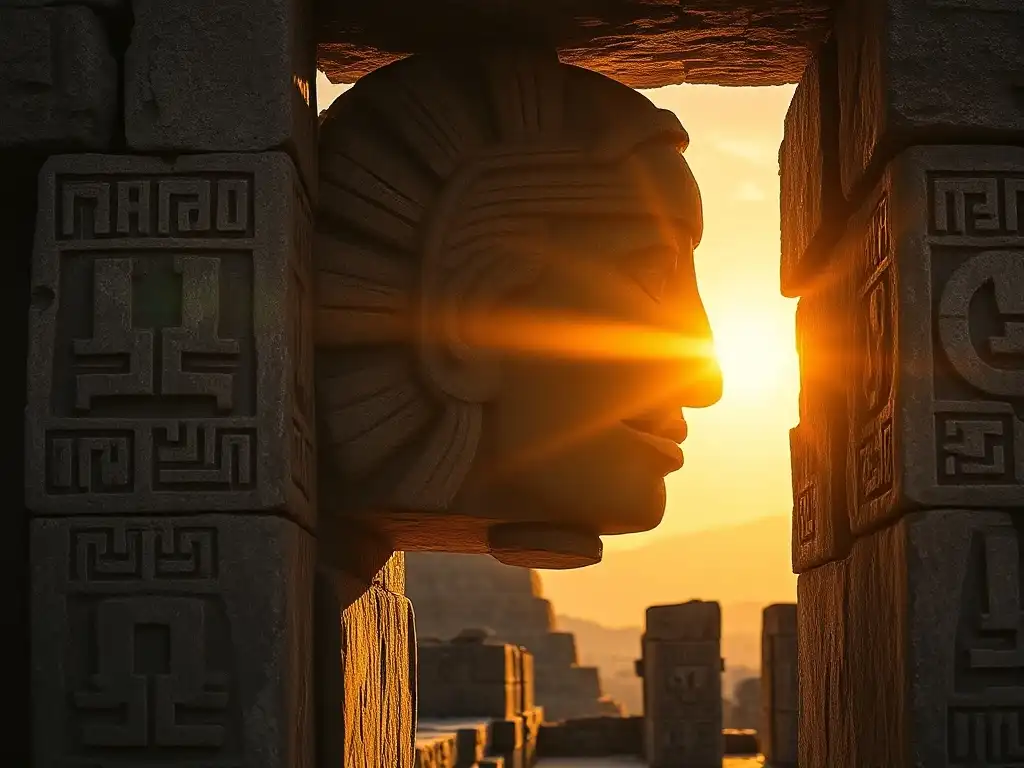
The Tiahuanaco Gate of the Sun, a monolithic masterpiece of Andean artistry, continues to captivate and confound researchers and enthusiasts alike. The "Tiahuanaco Gate of the Sun mystery" centers not only on its intricate carvings and astronomical alignments, but also on the enduring questions surrounding its purpose and the advanced technological skills required for its creation. While some posit its function as a purely ceremonial or astronomical device, others propose more esoteric interpretations, speculating about its potential connection to other dimensions or advanced knowledge systems lost to time.
This debate, fueled by the sheer scale and complexity of the Gate, highlights the enduring power of Tiahuanaco's legacy and the enduring fascination with its enigmatic artifacts. The sheer precision of the stonework, the complex iconography, and the potential astronomical significance all contribute to the enduring allure of this enigmatic structure. The debate, however, is not simply about the Gate itself, but about our understanding of Andean civilization's capabilities and worldview.
Did they possess a level of knowledge and technology beyond our current understanding? The mystery persists, stimulating ongoing research and fueling speculation that continues to evolve over time.
The Enduring Legacy of Tiahuanaco's Art and Architecture
The Gate of the Sun is not an isolated artifact; it's a testament to the sophisticated artistry and architectural prowess of the Tiahuanaco culture. The intricate carvings depicting various figures, including a central figure often interpreted as a deity, showcase a remarkable understanding of stone carving techniques. The precision with which these figures were carved, even in the smallest details, is astonishing, especially considering the tools available at the time.
This level of craftsmanship is reflected in other Tiahuanaco structures, such as the Kalasasaya Temple and the Akapana pyramid, demonstrating a widespread mastery of stonework and architectural design. Analysis of the stone itself, its origin, and the methods used to transport and carve it, reveals a complex logistical operation requiring significant organizational skills and technological innovation. The enduring legacy of Tiahuanaco isn't just about the Gate of the Sun; it's about the entire civilization's artistic and architectural achievements, which continue to inspire awe and wonder centuries later.
The complex interplay of religious symbolism, astronomical alignments, and advanced engineering techniques presents a fascinating case study in the intersection of art, technology, and belief systems within a pre-Columbian Andean context. The intricate details of the carvings, for example, continue to be debated, with new interpretations emerging as scholars delve deeper into the cultural context. This ongoing engagement speaks to the richness and complexity of Tiahuanaco's artistic and architectural heritage.
Preserving the Gate of the Sun for Future Generations
The preservation of the Gate of the Sun and the broader Tiahuanaco site is paramount for understanding the past and safeguarding this invaluable cultural heritage. The challenges are significant, encompassing the effects of weathering, erosion, and human impact. Efforts to preserve the Gate include ongoing monitoring of its structural integrity, implementing protective measures against environmental damage, and carefully managing tourist access.
These efforts require collaboration between archaeologists, conservationists, and local communities. The successful preservation of the Gate of the Sun is not just about preventing physical deterioration; it's about ensuring the continued accessibility of this site for future generations of researchers and visitors, and preventing the further loss of information through neglect. Furthermore, educational initiatives play a crucial role in raising awareness of the importance of preserving this precious legacy.
These initiatives must aim at promoting responsible tourism and fostering a sense of ownership and pride in the site amongst the local population. The long-term preservation of the Gate of the Sun requires a multi-faceted approach that balances the need for access and research with the imperative of protecting this irreplaceable cultural treasure. The ongoing investment in conservation efforts is a testament to the global recognition of the Gate's significance and the commitment to preserving it for future generations.
Understanding the Tiahuanaco Gate of the Sun within its Cultural Context
To fully appreciate the "Tiahuanaco Gate of the Sun mystery," it's crucial to understand its place within the broader cultural and cosmological framework of the Tiahuanaco civilization. The intricate carvings are not mere decorations; they are likely representations of religious beliefs, cosmological concepts, and possibly even historical events. Interpretations vary, with scholars proposing different meanings for the various figures and symbols depicted. Some suggest astronomical alignments, others focus on religious iconography, and still others consider the possibility of a combination of both.
Understanding the Gate's cultural context requires examining other Tiahuanaco artifacts, studying their religious practices, and analyzing their social structure. By placing the Gate within this wider context, we can gain a more nuanced understanding of its significance and purpose. Furthermore, the study of related sites and artifacts helps to illuminate the broader context of Tiahuanaco culture and its beliefs.
The Gate of the Sun is not an isolated monument, but rather a piece of a larger puzzle that helps us understand the complex worldview of this fascinating Andean civilization. The ongoing research into Tiahuanaco's culture and its religious practices continues to provide valuable insights into the meaning and purpose of the Gate of the Sun, enriching our understanding of this enigmatic artifact and its place in history. The more we learn about Tiahuanaco society, the better equipped we are to interpret the symbols and figures etched into the Gate, thereby unraveling more of the "Tiahuanaco Gate of the Sun mystery."
Conclusion: The Enduring Mystery of the Tiahuanaco Gate of the Sun
The Tiahuanaco Gate of the Sun, a monolithic masterpiece of pre-Columbian engineering, continues to captivate researchers and enthusiasts alike. Its intricate carvings, astronomical alignments, and sheer scale defy easy explanation, fueling speculation and debate surrounding its true purpose and meaning. While we can analyze its artistic style, identify potential astronomical correlations, and explore its role within the broader context of Tiahuanaco society, the core mystery remains: what was the true intention behind this monumental structure?
Was it purely a ceremonial gateway, a calendar, a representation of a cosmological worldview, or something more enigmatic still? The lack of definitive written records from the Tiahuanaco culture leaves us reliant on careful archaeological investigation, meticulous analysis of the carvings, and informed speculation based on comparative studies of other Andean sites.
The Tiahuanaco Gate of the Sun mystery persists, inviting further research and interpretation for generations to come. This enduring mystery is precisely what makes the Gate of the Sun such a compelling subject of study within the broader context of Andean cosmology and worldview.
Reflecting on the various interpretations of the Gate of the Sun
Numerous theories attempt to unravel the Gate of the Sun's significance. Some scholars focus on its astronomical alignments, suggesting it served as a sophisticated calendar or observatory, reflecting a deep understanding of celestial cycles. Others emphasize the iconography, proposing that the central figure represents a deity or a powerful ruler, while the surrounding figures depict various aspects of the Tiahuanaco worldview, perhaps illustrating a complex mythology or cosmology.
The intricate details, from the central figure’s headdress to the smaller figures flanking it, offer a rich tapestry of symbols open to multiple interpretations. These interpretations often intertwine, suggesting the Gate served multiple functions, acting simultaneously as a religious focal point, an astronomical instrument, and a powerful symbol of royal authority.
The lack of a single, universally accepted interpretation underscores the complexity of the artifact and the challenges in deciphering the intentions of its creators. The ongoing debate itself highlights the enduring fascination with the Tiahuanaco Gate of the Sun mystery.
Reiterating the importance of the Tiahuanaco site
The Gate of the Sun is not simply an isolated artifact; it stands as a testament to the advanced capabilities and sophisticated worldview of the Tiahuanaco civilization. Its presence within the broader context of the Tiahuanaco site, a sprawling complex of monumental structures, further emphasizes its importance. The site itself, with its meticulously planned architecture, intricate carvings, and evidence of advanced engineering techniques, provides crucial context for understanding the Gate of the Sun.
Studying the site as a whole allows researchers to piece together a more comprehensive picture of Tiahuanaco society, its beliefs, and its technological prowess. Understanding the Gate requires understanding the city that built it. The Tiahuanaco Gate of the Sun mystery, therefore, is deeply intertwined with the larger mystery of Tiahuanaco itself – a civilization that continues to challenge our understanding of pre-Columbian Andean history and culture.
Further research into the site and its artifacts is essential to unlocking more secrets and deepening our understanding of this fascinating and enigmatic culture. The ongoing excavation and analysis of Tiahuanaco continue to reveal new insights, enriching our understanding of the Gate of the Sun and the profound legacy of the Tiahuanaco people.
Frequently Asked Questions
What is the Gate of the Sun?
The Gate of the Sun is a massive monolithic gateway located in Tiahuanaco, Bolivia. It's a key archaeological find from the Tiahuanaco culture, featuring intricate carvings and astronomical alignments. Its purpose remains a subject of debate.
What is the significance of the carvings on the Gate of the Sun?
The carvings depict various mythological figures and symbols, potentially representing deities, astronomical events, or cosmological beliefs of the Tiahuanaco people. Scholars continue to interpret their meanings.
Why is the Gate of the Sun considered a mystery?
Its precise purpose and construction techniques remain largely unknown. The scale of the stonework and the complexity of the carvings are impressive, leaving many questions unanswered about the civilization's capabilities.
What are some of the theories surrounding the Gate of the Sun?
Some theories suggest astronomical significance, relating it to solar cycles or constellations. Others propose it served as a ceremonial entrance or held religious or symbolic importance. The "portal to other dimensions" idea is a less academically supported interpretation.
How old is the Gate of the Sun, and how was it built?
The Gate of the Sun dates back to the Tiahuanaco period (around 500-1000 CE). The exact methods used to quarry, transport, and carve such massive stones remain a source of fascination and ongoing research.
Final Reflection: Unlocking the Enduring Enigma of Tiahuanaco's Gate of the Sun
The mysteries surrounding Tiahuanaco's Gate of the Sun resonate powerfully today, not just as archaeological puzzles, but as potent symbols of humanity's enduring quest for understanding our origins and our place in the cosmos. The intricate carvings, the astronomical alignments, and the sheer scale of the structure continue to challenge our assumptions about ancient civilizations and their capabilities, sparking endless debate and fueling our imaginations. This enduring fascination speaks to something deeper within us, a yearning to connect with something beyond the tangible.
The Gate of the Sun's influence extends far beyond the academic sphere; it has become a powerful cultural icon, a symbol of mystery and wonder that inspires artists, writers, and spiritual seekers alike. Its enigmatic nature continues to shape our understanding of ancient Andean cultures, forcing us to reconsider our preconceived notions about their technological prowess and spiritual beliefs. The past is never dead. It's not even past.
– William Faulkner. This quote perfectly encapsulates the enduring power of Tiahuanaco and its enigmatic Gate, constantly reminding us that the past holds keys to unlocking our present and future.
Consider the intricate details etched into the Gate's surface. Let the unanswered questions spark your own curiosity. What stories do those carvings whisper to you? What connections can you draw between the ancient Andean worldview and your own understanding of the universe? Embrace the mystery, for it is in the exploration of the unknown that we truly discover ourselves and our place within the grand tapestry of existence. Let the Gate of the Sun be a catalyst for your own journey of exploration and understanding.
Unveil the Mysteries of Tiahuanaco Today!
Thank you for exploring the fascinating world of Tiahuanaco and its enigmatic Gate of the Sun! We hope you've gained valuable insights into this ancient gateway and its potential significance. Now, let's delve even deeper!
Here's how you can continue your exploration of this captivating subject:
- Expand your knowledge: Begin by researching other archaeological marvels of the Andean region, particularly those with potentially similar mystical attributes. Explore our related articles to further enrich your understanding.
- Share your insights: Discuss your thoughts on the Gate of the Sun and its possible connections to theories about alternate realities in the comments below or on social media.
- Connect with other enthusiasts: Join online forums or local groups dedicated to Andean civilizations to exchange ideas, theories, and discoveries.
What aspect of Tiahuanaco most captivates you, and how do you believe it contributes to our understanding of ancient cultures?