
The Future of Andean Studies: New Perspectives and Discoveries

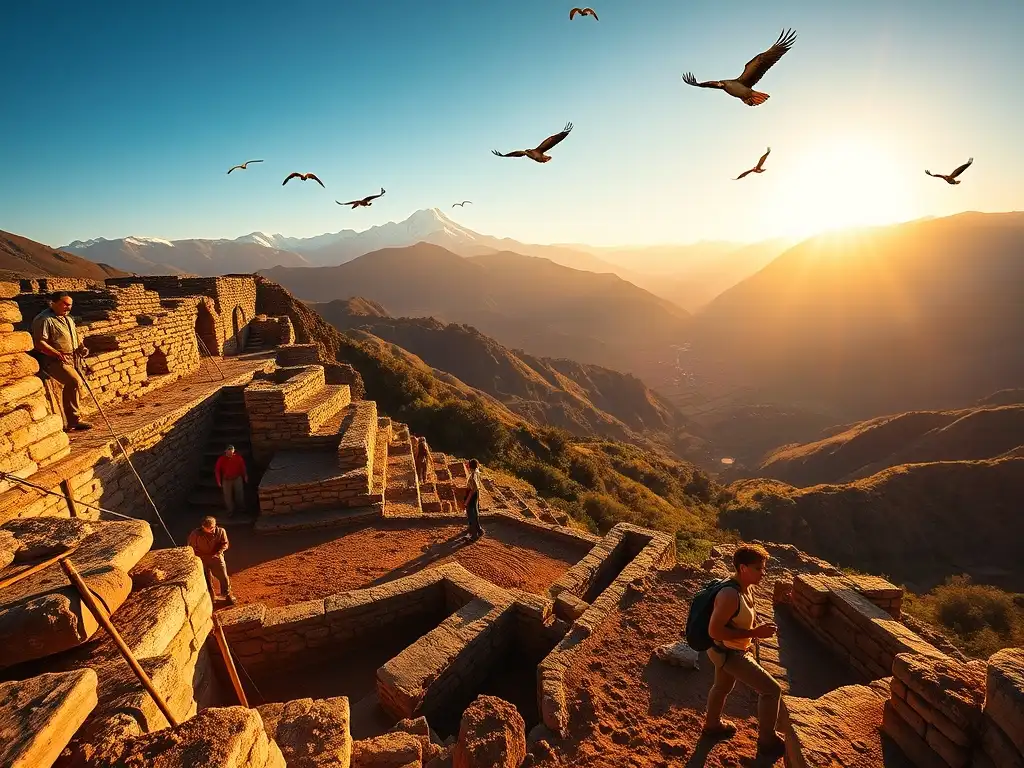
Uncover the mysteries hidden within the majestic Andes! For centuries, the Incas, Moche, Nazca, and Tiahuanaco have captivated our imaginations. But what secrets remain untold? Journey with us as we delve into the fascinating world of Andean civilizations, exploring not only their remarkable past but also the exciting frontiers of Andean civilizations future research. Prepare to be amazed by the groundbreaking discoveries and innovative perspectives shaping our understanding of these ancient powerhouses. What will the future uncover? Read on to find out...
The study of Andean civilizations, encompassing the rich tapestry of cultures such as the Inca, Moche, Nazca, and Tiahuanaco, is experiencing a renaissance. Driven by technological advancements and a renewed focus on interdisciplinary collaboration, Andean studies are poised for groundbreaking discoveries that will reshape our understanding of these fascinating societies. This article explores the emerging trends and technological innovations that are revolutionizing our approach to Andean archaeology, history, and anthropology, ultimately enriching our knowledge of these impactful ancient civilizations and their lasting legacy.
We will delve into the exciting possibilities presented by cutting-edge technologies and examine how these advancements are leading to new perspectives and a deeper appreciation for the ingenuity and complexity of Andean societies. The future of Andean research is bright, promising to unveil untold stories and reshape our understanding of these captivating cultures.
This exploration is crucial for understanding the lasting impact of Andean civilizations and their continued relevance in our modern world. The keyword "Andean civilizations future research" is central to this investigation.
Emerging Trends in Andean Civilizations Research
Current research in Andean civilizations is moving beyond traditional approaches, embracing interdisciplinary collaborations and innovative methodologies. There's a growing emphasis on:
- Environmental Archaeology: Studying the interplay between Andean societies and their environment, revealing how climate change, resource management, and agricultural practices shaped their development and decline. This includes analyzing paleoclimate data to understand the impact of El Niño events on Andean societies.
- Bioarchaeology: Analyzing human remains to understand health, diet, social structures, and migration patterns within Andean populations. Recent studies are using isotopic analysis to trace dietary habits and movement across vast distances.
- Ethnohistory: Combining archaeological findings with historical accounts and indigenous oral traditions to provide a more holistic and nuanced understanding of Andean societies. This approach bridges the gap between the archaeological record and contemporary Andean communities.
- Digital Humanities: Utilizing digital tools and databases to manage, analyze, and visualize vast amounts of data, creating new opportunities for collaboration and knowledge sharing among researchers worldwide. This includes creating interactive 3D models of Andean sites and artifacts.
The integration of these diverse approaches is crucial for a comprehensive understanding of Andean civilizations and their complex interactions with their environment and each other. This multi-faceted approach allows for a more nuanced and complete picture of Andean life, challenging previous assumptions and revealing new layers of complexity.
Technological Advancements in Andean Archaeology
Technological innovations are transforming the field of Andean archaeology, enabling researchers to explore previously inaccessible sites and analyze artifacts with unprecedented precision. These advancements are directly impacting our ability to answer key questions about Andean civilizations and their development. The use of sophisticated technologies is leading to a more detailed and accurate understanding of Andean culture and history.
LiDAR Applications in Andean Site Mapping
Light Detection and Ranging (LiDAR) technology is revolutionizing Andean site mapping. By penetrating dense vegetation, LiDAR reveals hidden features such as ancient terraces, irrigation canals, and settlements that were previously undetectable through traditional methods. This allows for a more accurate assessment of the scale and complexity of Andean urban planning and agricultural practices. The detailed maps produced by LiDAR are invaluable for understanding the spatial organization of Andean societies and their relationship to the landscape. The impact of LiDAR on Andean archaeology is undeniable and continues to grow.
Photogrammetry for Detailed Andean Artifact Analysis
Photogrammetry, the science of making measurements from photographs, is providing detailed three-dimensional models of Andean artifacts. This non-destructive technique allows researchers to examine intricate details of ceramics, textiles, and metalwork without risking damage to fragile objects. These 3D models can then be shared globally, facilitating collaborative research and enhancing our understanding of Andean artistic techniques and cultural practices. The ability to manipulate and analyze these models digitally offers unparalleled opportunities for research and education.
Accelerator Mass Spectrometry for Precise Dating of Andean Materials
Accelerator Mass Spectrometry (AMS) allows for the precise dating of organic materials such as charcoal, bone, and textiles, providing crucial chronological frameworks for understanding the development of Andean civilizations. AMS dating is significantly more precise than traditional radiocarbon dating, enabling researchers to refine chronologies and establish more accurate timelines for major cultural events. This precision is essential for understanding the sequence of events and the relationships between different Andean cultures. The accuracy of AMS dating significantly improves the reliability of our understanding of Andean history.
Reinterpreting Andean History
Recent Discoveries at Huaca de la Luna
Recent excavations at Huaca de la Luna, a significant Moche archaeological site on the north coast of Peru, have yielded exciting new insights into Moche social structures and religious practices. The discovery of elaborately decorated tombs containing the remains of high-ranking individuals, accompanied by exquisite gold artifacts and intricate ceramics, challenges previous assumptions about Moche power dynamics. The artifacts suggest a more complex social hierarchy than previously understood, with evidence of specialized craftspeople and a sophisticated system of religious rituals.
Further analysis of the organic materials found within the tombs, such as textiles and food remains, promises to provide a more complete picture of Moche daily life and dietary habits. This research directly impacts our understanding of Moche societal organization and the role of religion in shaping their culture. The ongoing analysis of the recovered artifacts and human remains offers the potential to significantly revise existing narratives of Moche history.
The meticulous documentation of the site's stratigraphy and the application of advanced dating techniques are crucial for ensuring the accuracy and reliability of these new interpretations. Furthermore, the interdisciplinary nature of the research team, combining archaeologists, anthropologists, and conservators, promises a more holistic understanding of this crucial Andean civilization.
Analysis of 17th-Century Spanish Chronicles on Inca Governance
The 17th-century Spanish chronicles, while often biased and incomplete, remain valuable sources for understanding Inca governance. Recent scholarship focuses on critically examining these accounts, considering the perspectives and motivations of the chroniclers themselves. By comparing multiple chronicles and cross-referencing them with archaeological evidence, researchers are beginning to reconstruct a more nuanced picture of Inca administration.
For example, the analysis of Garcilaso de la Vega's Royal Commentaries alongside other accounts reveals discrepancies in the portrayal of Inca power structures and the extent of centralized control. This comparative approach is crucial for identifying potential biases and reconstructing a more objective representation of Inca governance. The use of digital tools and text analysis techniques allows researchers to identify recurring themes and patterns within the chronicles, leading to more accurate interpretations.
This renewed focus on critically evaluating primary sources is essential for a deeper understanding of Inca political organization and its impact on Andean society. The careful consideration of indigenous perspectives, where possible, is also crucial for a more balanced and accurate representation of Inca history.
Ancient DNA Analysis of Populations in the Lake Titicaca Basin
Ancient DNA (aDNA) analysis is revolutionizing our understanding of population movements and genetic relationships in the Andes. Recent studies focusing on the Lake Titicaca Basin have revealed surprising insights into the genetic diversity of pre-Columbian populations. By extracting and analyzing aDNA from ancient skeletal remains, researchers can trace the genetic lineages of past populations and identify patterns of migration and admixture.
This data can shed light on the origins of different ethnic groups in the region and challenge previously held assumptions about population continuity. For example, studies have shown evidence of genetic exchange between different Andean groups, highlighting the complex interactions that shaped the region's demographic landscape. Furthermore, aDNA analysis can help researchers understand the impact of disease outbreaks and environmental changes on past populations.
This interdisciplinary approach, combining genetics with archaeology and anthropology, is vital for a more comprehensive understanding of Andean population history and the factors that shaped its development. The continuing refinement of aDNA extraction and analysis techniques promises even more detailed insights in the years to come. The ethical considerations surrounding the use of human remains in research must always be carefully addressed.
Interdisciplinary Approaches to Andean Studies
Combining Ethnography, Quechua Studies, and Iconography in Andean Research
Modern Andean studies benefit significantly from combining ethnographic research with the study of Quechua language and iconography. Ethnographic fieldwork offers invaluable insights into contemporary Andean communities and their cultural practices, allowing researchers to connect past and present. Quechua studies provide a crucial linguistic lens for interpreting ancient texts and oral traditions, revealing nuances often lost in translation.
Furthermore, the analysis of Andean iconography—the visual symbols and motifs found in textiles, ceramics, and rock art—provides valuable insights into religious beliefs, social structures, and cosmological views. By combining these three approaches, researchers can develop a more holistic and nuanced understanding of Andean cultures. For instance, studying contemporary Quechua rituals alongside iconography from ancient pottery can reveal the continuity of certain religious practices over centuries.
Similarly, ethnographic research can illuminate the significance of certain symbols that might otherwise be misinterpreted. This integrated approach, embracing diverse methodologies and perspectives, is essential for a richer and more accurate understanding of Andean civilization. This interdisciplinary approach is vital for a more complete and nuanced picture of the past.
Oral Histories and Andean Cultural Resilience
Oral histories play a crucial role in understanding Andean cultural resilience. The transmission of knowledge and traditions through generations of storytelling offers a powerful counterpoint to written historical narratives. By documenting and analyzing oral histories, researchers can gain insights into the ways in which Andean communities have adapted and preserved their cultural identities in the face of colonialism, globalization, and other challenges.
These narratives often reveal the strategies used by Andean communities to maintain their languages, customs, and worldview. For example, the preservation of traditional agricultural practices, despite external pressures, showcases the enduring strength of Andean cultural traditions. The careful recording and preservation of oral histories are essential for safeguarding invaluable cultural knowledge.
This approach allows for a more inclusive and representative understanding of Andean history, recognizing the contributions of marginalized communities and perspectives. Furthermore, the analysis of oral histories can illuminate the ways in which Andean communities have negotiated their relationship with the broader world while retaining their unique cultural identities.
Andean Cosmology and its Archaeological Manifestations
Andean cosmology, with its intricate relationship between humans, nature, and the supernatural, is profoundly reflected in the archaeological record. The study of monumental architecture, such as Machu Picchu and Sacsayhuamán, reveals the importance of astronomical alignments and the integration of built environments with the surrounding landscape. Analysis of ceramic designs, textiles, and other artifacts provides further insights into Andean beliefs about the cosmos, the deities, and the cyclical nature of time.
Researchers are increasingly employing sophisticated techniques, including Geographic Information Systems (GIS) and 3D modeling, to analyze the spatial relationships between archaeological sites and their astronomical context. This allows for a more precise understanding of the cosmological significance of these locations and their role in Andean religious practices. For example, the alignment of certain structures with solstices and equinoxes suggests a sophisticated understanding of astronomy and its integration into daily life.
By combining archaeological evidence with ethnohistorical sources and the insights of contemporary Andean communities, researchers can build a more complete picture of Andean cosmology and its enduring influence. This detailed approach is crucial for understanding the worldview that shaped Andean societies and their remarkable achievements.
Specific Areas of Focus in Andean Civilizations Research

The future of Andean studies promises exciting breakthroughs across various specialized fields. Researchers are increasingly employing interdisciplinary approaches, combining traditional archaeological methods with cutting-edge technologies like LiDAR, GIS, and advanced imaging techniques to unlock the secrets of these fascinating civilizations. This allows for a more nuanced and comprehensive understanding, moving beyond simplistic narratives and embracing the complexity of Andean societies.
The focus is shifting towards a more holistic interpretation, considering the interplay of environmental factors, social structures, and technological advancements in shaping the trajectory of these cultures. This integrated approach is crucial to avoid misinterpretations and to offer a more accurate and complete picture of Andean history.
For example, understanding the impact of climate change on the agricultural practices of the Inca is crucial to grasping their societal resilience and eventual decline. Similarly, analyzing the intricate network of roads and communication systems within the Inca empire sheds light on their impressive administrative capabilities.
Deciphering the Iconography of the Moche Culture
The Moche culture, known for its exquisite pottery depicting vivid scenes of daily life, warfare, and ritual practices, presents a rich field for future research. Scholars are working to decipher the complex iconography of these artifacts, utilizing comparative analysis across different Moche sites and employing new methodologies to understand symbolic representations. This includes analyzing the stylistic variations in pottery across different regions and time periods to identify potential regional differences in beliefs and practices.
Furthermore, the study of human sacrifice rituals depicted in Moche art offers insights into the social dynamics and religious beliefs of this civilization. The use of advanced imaging techniques can reveal hidden details within the pottery, offering clues to the meaning of certain symbols and motifs that were previously overlooked.
By combining art historical analysis with anthropological and sociological perspectives, researchers can build a deeper understanding of the Moche worldview and their social structures. The goal is to move beyond simply describing the artwork to understanding its function and meaning within the context of Moche society.
The Geoglyphs of Nasca: Astronomical Alignments and Symbolic Meanings
The enigmatic Nasca lines, vast geoglyphs etched into the desert landscape, continue to fascinate researchers. Future research will focus on refining our understanding of their purpose, exploring possibilities beyond the currently dominant theories. While astronomical alignments are a significant aspect, the potential symbolic meanings embedded within the figures themselves remain largely unexplored.
High-resolution aerial photography and satellite imagery, coupled with advanced digital modeling, are crucial tools in this endeavor. These technologies allow for a more precise mapping of the geoglyphs and their relationship to the surrounding landscape. Moreover, analyzing the soil composition and dating the creation of the lines can provide invaluable insights into the techniques used and the timescale of their creation.
Further investigation into the social organization and beliefs of the Nasca culture is necessary to fully interpret the meaning and function of these remarkable creations. The integration of archaeological data with astronomical and geographical studies is essential to unlocking the mysteries of the Nasca lines.
The Socio-Political Organization of the Wari Empire
The Wari empire, a precursor to the Inca, represents a significant yet understudied period in Andean history. Future research will focus on unraveling the complexities of its socio-political organization, including its administrative structures, its control over vast territories, and its interactions with other contemporary cultures. Understanding the Wari's system of urban planning and its impact on regional populations is crucial.
Analyzing the distribution of artifacts and architectural styles across different Wari sites can shed light on the nature of their political authority and the degree of centralization within the empire. The role of religion and ideology in maintaining social order also requires further investigation.
The use of isotopic analysis of human remains can provide insights into the mobility of populations and the nature of interactions between the Wari and their subjects. By combining archaeological data with ethnohistorical accounts, we can develop a more comprehensive understanding of the Wari's political and social systems.
The Role of Metallurgy in the Chimor Kingdom
The Chimor kingdom, known for its sophisticated metalworking techniques, offers a fascinating case study in the relationship between technology and social power. Future research will explore the role of metallurgy in the Chimor economy, politics, and religious practices. This includes analyzing the production processes, the distribution networks, and the symbolic significance of metal artifacts.
Identifying the sources of raw materials and tracing the movement of metals across the Chimor territory can shed light on trade routes and economic interactions. Furthermore, studying the stylistic variations in Chimor metalwork can reveal regional differences and potential social hierarchies.
The application of advanced metallurgical analysis can provide detailed information on the techniques used and the quality of the materials, contributing to a deeper understanding of Chimor technological capabilities and its impact on their society. This research will also contribute to broader discussions about the role of technology in shaping social structures and power dynamics in Andean civilizations.
Community Engagement in Andean Research
Engaging local communities is no longer optional but essential for responsible and ethical Andean research. This collaborative approach ensures that the voices and perspectives of those directly connected to the sites and artifacts are central to the research process, fostering mutual respect and understanding. It also helps to mitigate potential negative impacts of research on communities and their cultural heritage.
Community-Based Archaeology and Co-Management of Sites
Community-based archaeology prioritizes collaboration between researchers and local communities in all stages of a project, from planning and excavation to interpretation and dissemination of findings. This collaborative approach ensures that research benefits local communities, fostering a sense of ownership and pride in their heritage. Co-management of archaeological sites empowers communities to actively participate in the preservation and interpretation of their cultural heritage, promoting sustainable tourism and economic development.
This approach is crucial for safeguarding archaeological sites from looting and damage and ensuring that research contributes to the well-being of the communities involved. Successful examples of community-based archaeology demonstrate the benefits of this approach, highlighting the importance of long-term partnerships and mutual respect.
Safeguarding Andean Intangible Cultural Heritage
Beyond tangible artifacts, the intangible cultural heritage of the Andes—including traditional knowledge, languages, music, and rituals—requires urgent safeguarding. This involves documenting and preserving these aspects of Andean culture before they are lost forever. Working closely with communities is crucial for ensuring that this process is respectful and sensitive to local traditions and beliefs.
The integration of digital technologies can facilitate the preservation and dissemination of intangible cultural heritage, making it accessible to wider audiences while respecting the intellectual property rights of the communities involved. This approach fosters cultural revitalization and promotes the transmission of cultural knowledge to future generations. It also contributes to the broader understanding and appreciation of the rich cultural diversity of the Andes.
Challenges and Opportunities in Andean Studies
Andean studies, a vibrant and ever-evolving field, faces numerous challenges while simultaneously presenting exciting opportunities for future research. The sheer scale and complexity of the Andean region, encompassing diverse cultures and environments across millennia, demands interdisciplinary approaches. Researchers must grapple with the vastness of the archaeological record, the complexities of indigenous languages and oral traditions, and the ethical considerations inherent in studying past societies.
However, these challenges are also opportunities. The integration of new technologies, such as LiDAR and advanced imaging techniques, allows for unprecedented insights into Andean landscapes and settlements. The growing collaboration between archaeologists, anthropologists, historians, and indigenous communities promises a more nuanced and ethically responsible understanding of Andean history and culture.
This collaborative approach is crucial for ensuring that research not only advances scientific knowledge but also benefits the communities directly connected to the past. Furthermore, the increasing availability of digital resources and online databases facilitates wider access to research data and promotes greater collaboration amongst scholars worldwide, fostering a more inclusive and globally connected field.
Navigating Issues of Repatriation of Andean Artifacts
The repatriation of Andean artifacts is a complex and sensitive issue demanding careful consideration. Many artifacts currently housed in museums and private collections around the world were acquired under often ethically questionable circumstances, reflecting colonial practices and a disregard for the cultural heritage of Andean communities. The growing movement towards repatriation seeks to redress these historical injustices and return these significant cultural objects to their rightful places of origin.
However, the process is often fraught with legal and logistical challenges. International laws, national policies, and the differing perspectives of museums, governments, and indigenous communities require careful negotiation and compromise. Successful repatriation efforts require open dialogue, mutual respect, and a commitment to collaborative solutions that prioritize the wishes and perspectives of Andean communities.
This process also necessitates a reassessment of how museums and other institutions present and interpret Andean artifacts, moving away from colonial narratives and towards collaborative storytelling that centers the voices and perspectives of the descendants of the creators of these objects. The successful navigation of these challenges will be critical in forging a more equitable and respectful relationship between the global scholarly community and Andean communities.
Securing Funding for Long-Term Andean Research Initiatives
Long-term research projects in the Andes require substantial and sustained funding. The scale and complexity of these projects, often involving fieldwork, laboratory analysis, and community engagement, necessitate significant financial investment. Competition for research grants is fierce, and securing funding for large-scale, multi-year projects can be particularly challenging. Innovative approaches to securing funding, such as public-private partnerships, collaborative grants involving multiple institutions, and crowdfunding initiatives, are becoming increasingly important.
Furthermore, increased investment in infrastructure, such as research facilities and digital archives, is essential for supporting long-term research in the Andes. The establishment of sustainable funding mechanisms is crucial for ensuring the continuity and success of future research efforts, promoting the long-term preservation of Andean cultural heritage, and enabling scholars to contribute meaningfully to the understanding and appreciation of Andean civilizations. Without sustained funding, many vital research projects risk being prematurely curtailed, impacting the advancement of the field significantly.
Andean Studies: A Path Towards Inclusive Knowledge Production
The future of Andean studies rests on the development of more inclusive and equitable knowledge production practices. This means actively engaging with and centering the voices and perspectives of Andean communities in all stages of the research process, from project design to dissemination of findings.
This includes prioritizing community-based research initiatives, ensuring meaningful collaboration with indigenous scholars and knowledge keepers, and implementing ethical guidelines that respect cultural sensitivities and intellectual property rights. The goal is to move away from extractive research models, which often prioritize the interests of external researchers over the needs and perspectives of Andean communities, towards collaborative and reciprocal relationships that benefit all stakeholders.
By prioritizing inclusive research practices, Andean studies can contribute not only to the advancement of scholarly knowledge but also to the empowerment and well-being of Andean communities, fostering a more just and equitable future for the field. This involves actively seeking out and supporting the participation of Andean scholars and community members, thereby diversifying perspectives and ensuring that the narratives and interpretations of Andean history and culture are representative of the richness and complexity of the region.
Future Directions in Andean Research
Future research in Andean studies will likely focus on several key areas. Technological advancements will continue to play a vital role, with the application of new methods in remote sensing, DNA analysis, and digital humanities opening up new avenues of inquiry. A deeper understanding of Andean environmental history, including the impact of climate change and human interaction with the landscape, will be crucial.
Furthermore, increased emphasis on interdisciplinary collaboration will be essential to tackle the complexities of Andean societies and their interactions with their environments. Research will increasingly focus on issues of social inequality, power dynamics, and the diverse experiences of Andean peoples throughout history. The integration of indigenous knowledge systems and perspectives will be central to a more holistic and nuanced understanding of Andean civilizations.
Finally, the field will continue to grapple with ethical considerations, ensuring that research is conducted in a responsible and respectful manner, prioritizing the well-being and self-determination of Andean communities. These future directions highlight the field's dynamism and its potential to contribute significantly to our understanding of human history and culture. The integration of diverse perspectives and methodologies will be key to unlocking a richer and more complete understanding of the Andean world.
- Emerging Trends in Andean Civilizations Research
- Technological Advancements in Andean Archaeology
- Reinterpreting Andean History
- Interdisciplinary Approaches to Andean Studies
- Specific Areas of Focus in Andean Civilizations Research
- Community Engagement in Andean Research
- Challenges and Opportunities in Andean Studies
- Future Directions in Andean Research
- What areas of Andean civilizations are ripe for future research?
- How can new technologies contribute to Andean studies?
- What ethical considerations are important in researching Andean civilizations?
- What are some of the current debates in Andean studies?
- How can the public engage with research on Andean civilizations?
Frequently Asked Questions
What areas of Andean civilizations are ripe for future research?
Future research could focus on several key areas: environmental impact on societal changes, comparative studies between different Andean cultures, and a better understanding of Andean technologies like sophisticated irrigation systems.
How can new technologies contribute to Andean studies?
Advanced imaging techniques like LiDAR and ground-penetrating radar can reveal hidden settlements and structures. DNA analysis can shed light on migration patterns and population dynamics. Digital humanities can help organize and access vast amounts of existing data.
What ethical considerations are important in researching Andean civilizations?
Respect for indigenous communities and their heritage is paramount. Collaboration with local communities is crucial, ensuring their voices are heard and their rights are protected during any research and excavation. Repatriation of artifacts should also be considered.
What are some of the current debates in Andean studies?
Current debates involve re-evaluating traditional narratives, considering diverse perspectives beyond the Inca, and focusing on the complexity of Andean societies rather than simplistic hierarchies. The impact of climate change on past Andean societies is also heavily debated.
How can the public engage with research on Andean civilizations?
The public can engage by visiting museums, supporting archaeological projects, and reading academic publications and popular books. Participating in citizen science initiatives can also contribute to ongoing research efforts.
Final Reflection: Charting the Course of Andean Futures
The vibrant tapestry of Andean civilizations continues to unravel before us, revealing new layers of complexity and challenging long-held assumptions. The sheer volume of undiscovered sites, coupled with advancements in technology and interdisciplinary approaches, promises a future brimming with groundbreaking discoveries that will reshape our understanding of these remarkable societies. This isn't simply about unearthing artifacts; it's about understanding the enduring legacy of Andean ingenuity and resilience, a legacy that holds profound lessons for our own time.
The enduring power of Andean culture is evident not only in the archaeological record but also in the vibrant traditions and communities that persist today. Their intricate systems of knowledge, their sophisticated agricultural practices, and their deep connection to the environment offer invaluable insights into sustainable living and societal harmony. As we grapple with the challenges of climate change and globalization, understanding the wisdom of these ancient societies becomes increasingly crucial. The past is never dead. It's not even past.
- William Faulkner. This quote resonates deeply, reminding us that the study of Andean civilizations is not a historical exercise alone, but a vital conversation with the present and future.
Consider the implications of this research for your own life. How can we apply the principles of resilience and adaptation demonstrated by Andean societies to the challenges we face today? What innovative solutions can we glean from their ingenuity?
I urge you to engage with this ongoing conversation, to explore the resources available, and to support the continued research that will illuminate the remarkable story of Andean civilizations and, in doing so, illuminate our own path forward. The future of Andean studies is not merely an academic pursuit; it is a journey of discovery that holds the potential to enrich our understanding of ourselves and the world around us.
**Unveil the Future of Andean Studies Today! **
Thank you for exploring the fascinating world of Andean studies! Your interest in this rich field offers a unique perspective on the development of Andean civilizations. Now, let's take your passion further.
Here are some exciting ways to continue your journey:
- **Deepen your knowledge:** Participate in an online webinar or workshop to connect with leading experts and learn about the latest research.
- **Share your enthusiasm:** Discuss your favorite Andean discoveries with friends, family, or in local history groups to inspire others.
- **Join the conversation:** Follow reputable organizations and scholars on social media for the latest articles, insights, and engaging discussions with fellow enthusiasts.
What aspect of Andean studies most captivates you, and how will you explore it further?