
The Secrets of Surplus: How Food Production Led to Social Stratification in the Andes

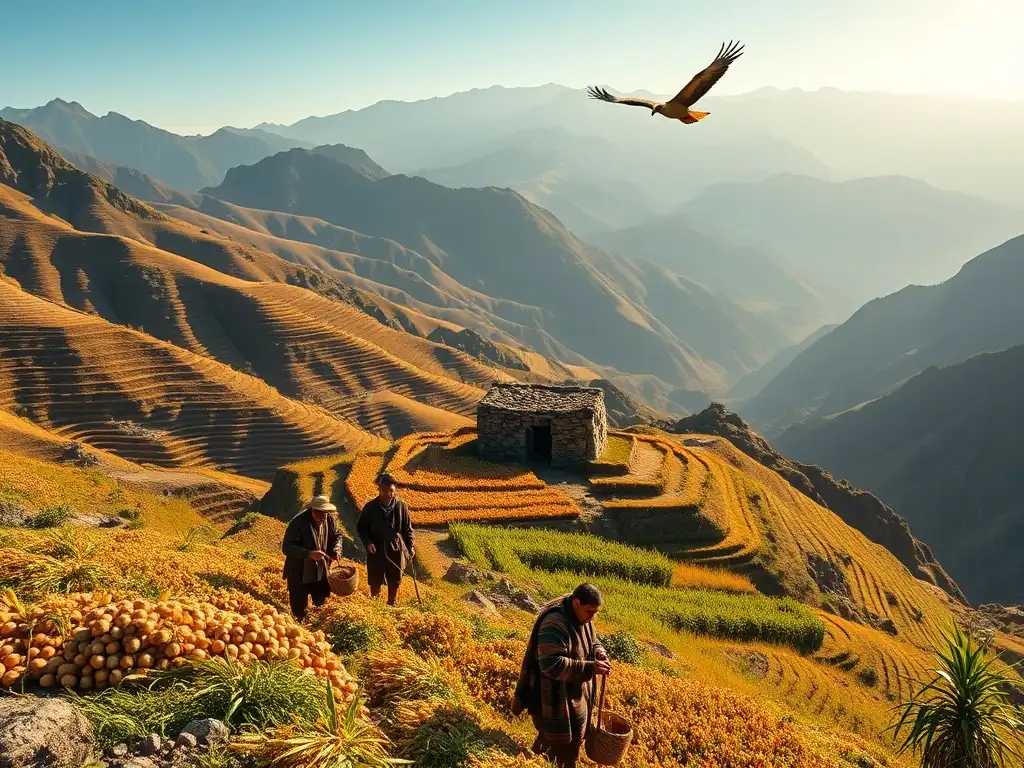
Step into a world lost to time, yet echoing with the whispers of empires. Imagine a landscape sculpted by ingenuity and ambition, where towering citadels and intricate artistry rose from the fertile heart of the Andes. Uncover the astonishing story behind the Andean civilizations' food surplus, a pivotal factor that shaped their complex societies and led to unprecedented social stratification. Prepare to be captivated by the secrets of their agricultural prowess and the lasting legacy they left behind. Dive in and discover how this surplus fueled the rise and fall of magnificent civilizations.
The remarkable rise of complex societies in the Andes Mountains wasn't solely a matter of ingenious engineering or divine inspiration. A critical, underlying factor was the development of sophisticated agricultural techniques that led to significant food surpluses.
This surplus, far from being simply a matter of having enough to eat, became the engine driving social stratification, the creation of specialized labor, and the emergence of powerful elites in civilizations like the Inca, Moche, Nazca, and Tiahuanaco. This article explores the fascinating connection between food production, surplus, and the development of complex social structures in the Andes, examining the agricultural innovations that made it all possible and their profound impact on Andean societies.
We will delve into the specifics of Andean agricultural practices, the key crops cultivated, and the resulting societal transformations, ultimately revealing how the seemingly simple act of growing food shaped the destiny of entire civilizations. Understanding this dynamic is key to comprehending the rich tapestry of Andean history and the enduring legacy of these remarkable cultures.
The Andes Mountains, a geographically challenging environment, paradoxically fostered the development of some of the most sophisticated pre-Columbian civilizations in the Americas. These societies, characterized by impressive feats of engineering, intricate social hierarchies, and remarkable artistic achievements, share a common thread: their ability to harness the power of agriculture to produce a surplus of food. This surplus provided the foundation for population growth, specialization of labor, and the emergence of centralized political structures.
Without the ability to consistently produce more food than was immediately needed for survival, the complex societies of the Andes simply wouldn't have been possible. The transition from small, egalitarian bands to large, stratified societies was a gradual process, intricately linked to the increasing efficiency and productivity of Andean agriculture. The story of Andean social complexity is, therefore, fundamentally a story of agricultural innovation.
The Foundation: Agricultural Innovations and Food Abundance in the Andes
The remarkable agricultural achievements of Andean civilizations were not accidental. They were the product of centuries of careful observation, experimentation, and adaptation to the unique environmental challenges of the Andes. The development of sophisticated farming techniques, combined with the domestication of a diverse range of crops uniquely suited to the high-altitude environment, allowed Andean populations to produce consistent and substantial food surpluses. This surplus was the cornerstone upon which the complex social and political structures of these civilizations were built.
Early Andean Agriculture: Domestication and Crop Diversity
Early Andean farmers successfully domesticated a wide variety of crops, demonstrating a deep understanding of plant genetics and adaptation. The process involved selecting and cultivating plants with desirable traits, leading to the development of crops uniquely suited to the harsh conditions of the Andes. This process, spanning millennia, laid the groundwork for the later intensification of agricultural production.
The diversity of domesticated crops provided a crucial buffer against crop failure, ensuring food security even in the face of unpredictable weather patterns. Evidence suggests that this early experimentation with plant domestication was a crucial step towards the later development of large-scale agricultural systems.
Key Crops of the Andes: Potatoes, Quinoa, and Maize
Three crops stand out as particularly significant in the Andean agricultural system: potatoes, quinoa, and maize. Potatoes, with their remarkable adaptability to diverse altitudes and climates, became a staple food throughout the Andes. Quinoa, a highly nutritious grain, provided essential protein and other vital nutrients. Maize, although less widely adapted than potatoes, played a significant role in certain regions and contributed to the overall agricultural diversity of the Andes. The cultivation of these three crops, along with other important plants like beans and squash, formed the basis of the Andean diet and fueled the growth of these complex societies.
Advanced Farming Techniques: Terracing and Irrigation Systems
The success of Andean agriculture wasn't solely dependent on crop diversity. Ingenious farming techniques, such as terracing and irrigation systems, played a crucial role in maximizing crop yields. Terracing transformed steep slopes into cultivatable land, increasing the available agricultural area dramatically. Irrigation systems, often involving complex canals and aqueducts, ensured a reliable water supply, even in arid regions. These impressive feats of engineering demonstrate the advanced technological capabilities of Andean societies and their commitment to efficient food production. The construction and maintenance of these systems likely required significant coordinated labor, further contributing to the development of social hierarchies.
The Impact of Increased Crop Yields on Andean Societies
The increased crop yields resulting from these innovations had a profound impact on Andean societies. Surplus food allowed for population growth and the emergence of specialized labor. Individuals could dedicate themselves to crafts, religious activities, or governance, rather than solely focusing on food production.
This specialization led to the development of complex social structures, with elites controlling the distribution of resources and wielding significant power. The surplus also facilitated the construction of monumental architecture, the development of elaborate religious rituals, and the expansion of trade networks, all hallmarks of complex Andean civilizations. The ability to produce a surplus, therefore, was not just a matter of survival; it was the catalyst for the development of the remarkable societies that thrived in the Andes.
The Emergence of Food Surplus: A Catalyst for Change
The development of sophisticated agricultural techniques in the Andes, particularly the mastery of irrigation systems and terracing, proved pivotal in generating food surpluses. This wasn't a sudden event but rather a gradual process spanning centuries, involving experimentation, adaptation, and innovation. Early Andean farmers, initially focused on subsistence agriculture, gradually improved their methods.
The cultivation of staple crops like potatoes, maize, and quinoa, along with the domestication of llamas and alpacas for meat and wool, provided a more stable and abundant food supply. This increased productivity was not merely about producing enough to survive; it was about producing more than was needed for immediate consumption. This excess, this surplus, became the foundation upon which complex Andean societies were built.
The shift from a predominantly hunter-gatherer lifestyle to settled agricultural communities, facilitated by this increasing food security, marked a profound transformation in Andean social structures. The ability to consistently produce more food than necessary allowed for population growth, the development of villages, and eventually, the rise of powerful, centralized states.
Defining Food Surplus: Beyond Subsistence Farming
Food surplus in the Andean context isn't simply about having a little extra food left over at the end of the harvest. It represents a significant and consistent excess of agricultural production beyond the immediate needs of the population for survival. This means not only enough food to feed everyone but also a reserve to account for lean times, such as droughts or crop failures, and to support specialized labor and a growing non-agricultural population.
The concept of surplus is therefore intrinsically linked to the efficiency of agricultural production, the effectiveness of storage and distribution systems, and the overall capacity of a society to manage and utilize its resources. The accumulation of surplus food allowed Andean societies to move beyond the limitations of subsistence farming, fostering economic diversification and societal complexity. Understanding this distinction is crucial for interpreting the social and political consequences of agricultural intensification in the Andes.
The Role of Storage and Distribution in Managing Surplus
The management of food surplus wasn't a simple matter of piling up extra crops. Sophisticated storage techniques were essential to preserve the excess food and ensure its availability during periods of scarcity. Andean civilizations developed diverse storage solutions, ranging from simple pits and granaries to elaborate storehouses built from stone and adobe. These structures were often strategically located to minimize risks of spoilage and theft.
Furthermore, effective distribution networks were crucial for channeling the surplus to where it was needed most within the society. This involved complex systems of organization and logistics, requiring coordination among different communities and social groups. The effective management of surplus, therefore, involved not only the production of excess food but also the development of robust systems for its storage, preservation, and equitable distribution. The efficiency of these systems played a vital role in the stability and prosperity of Andean societies.
How Food Surplus Freed Labor for Other Activities
The availability of surplus food had profound implications for the labor force. When individuals no longer needed to dedicate all their time to farming just to survive, they could dedicate their skills and energy to other activities. This led to the development of specialized labor. Artisans could focus on crafting intricate textiles, pottery, and metalwork. Priests could devote their time to religious rituals and ceremonies.
Warriors could train and defend the community. This diversification of labor is a hallmark of complex societies, and the Andean civilizations are a prime example of this phenomenon. The surplus acted as a catalyst, allowing for the emergence of specialized roles that contributed to the overall growth and complexity of Andean societies. This specialization, in turn, fueled further innovation and social development.
The emergence of food surplus in the Andes was not simply an economic phenomenon; it had profound social consequences. The control and distribution of this surplus became a major source of power and influence, leading to the development of social hierarchies and inequalities. This isn't to say that all Andean societies were rigidly stratified; the degree of inequality varied across different cultures and time periods.
However, the consistent availability of surplus food invariably led to the concentration of wealth and power in the hands of certain individuals and groups, resulting in a more complex and stratified social structure compared to their earlier, more egalitarian predecessors. This stratification was further reinforced by other factors, such as religious beliefs, kinship ties, and military prowess.
The Rise of Elite Classes: Control Over Resources and Labor
The control over surplus food and other resources was a primary factor in the rise of elite classes in Andean societies. These elites, often comprising chiefs, priests, and warriors, accumulated power and prestige through their ability to manage and distribute the surplus. They often controlled access to land, water, and other essential resources, giving them considerable leverage over the rest of the population.
This control was often legitimized through religious beliefs and elaborate rituals, which solidified their position within the social hierarchy. The accumulation of wealth and power by the elites was a direct consequence of the food surplus and its effective management, creating a stark contrast between the privileged few and the majority of the population who engaged in agricultural labor.
Development of Specialized Labor: Artisans, Priests, and Warriors
The surplus food production allowed for the emergence of specialized labor, which further contributed to social stratification. Artisans, skilled in weaving, pottery, metalworking, and stone carving, were no longer solely focused on producing necessities. Instead, they created elaborate artifacts and luxury goods for the elite classes, reinforcing the social hierarchy and demonstrating the power and status of those who could afford such items.
Similarly, a priestly class emerged, dedicated to religious practices and ceremonies, playing a significant role in maintaining social order and legitimizing the authority of the ruling elites. Warriors, tasked with protecting the community and expanding its territory, also formed a distinct social group, often enjoying high status and privileges.
The Influence of Surplus on Power Dynamics and Hierarchy
The control over the surplus food supply directly impacted power dynamics within Andean societies. Those who controlled the production, storage, and distribution of food held significant power and influence. This power could be used to exert control over labor, extract tribute, and maintain social order.
The accumulation of surplus led to the development of centralized political systems, with powerful rulers and complex bureaucracies responsible for managing the resources and maintaining social control. The influence of surplus on power dynamics was multifaceted and complex, shaping the political landscape and influencing the social structure of Andean civilizations. This control over resources was crucial in determining the social standing of individuals and groups within the society.
Social Classes in Andean Societies: From Farmers to Rulers
Andean societies were characterized by a hierarchical social structure, with distinct social classes. At the base were the farmers, who constituted the majority of the population and were responsible for agricultural production. Above them were artisans, priests, and warriors, who enjoyed higher social status and specialized skills.
At the apex of the social hierarchy were the elites – chiefs, nobles, and rulers – who controlled the surplus resources and held considerable political and religious power. The specific composition and characteristics of these classes varied across different Andean cultures and time periods, but the underlying principle of social stratification, rooted in the control over surplus food and resources, remained consistent. The extent of social mobility within these societies remains a subject of ongoing research and debate.
The Moche Civilization: Irrigation, Surplus, and Social Structure
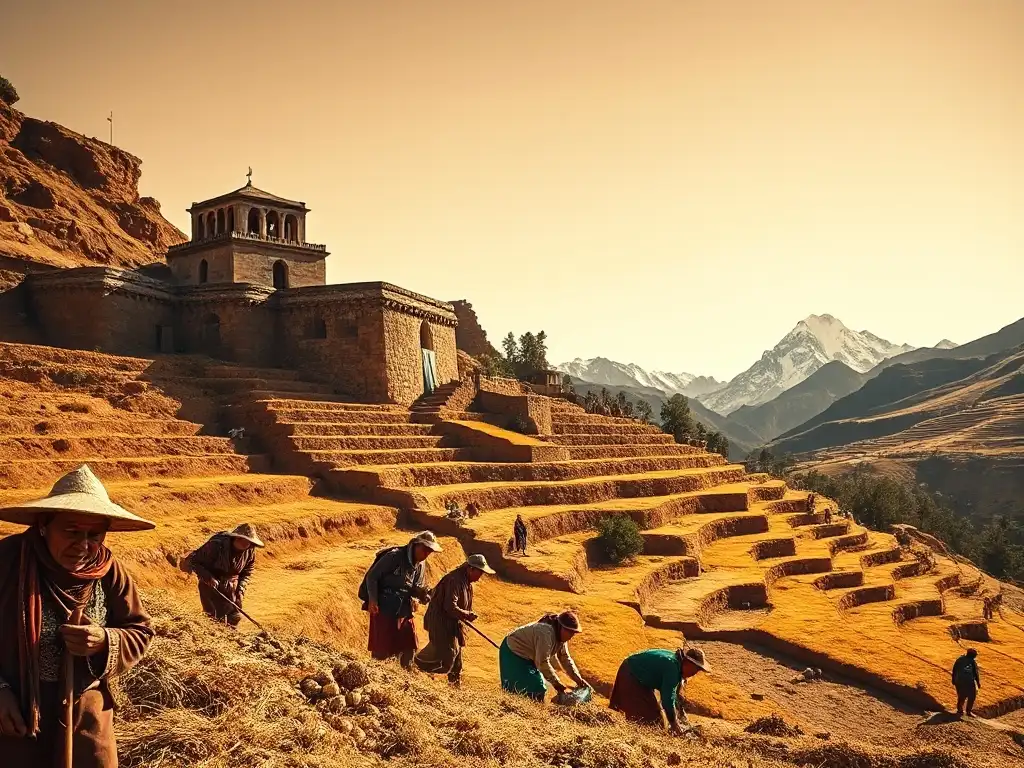
The Moche civilization (100-800 CE) in northern Peru is a prime example of how sophisticated irrigation systems led to agricultural surplus and subsequent social stratification. Their mastery of water management, utilizing canals and intricate networks of aqueducts, allowed them to cultivate vast expanses of arid coastal land. This resulted in an abundance of crops like maize, beans, and squash, exceeding the needs of the immediate population.
This surplus wasn't equally distributed. Archaeological evidence, including monumental architecture like the Huaca del Sol and Huaca de la Luna, and the elaborate burials of elite individuals laden with gold and other precious artifacts, demonstrates a clear social hierarchy. The elite class, likely comprised of priests and rulers, controlled the surplus, utilizing it to maintain their power and influence.
The commoners, who worked the land, provided the labor and resources to support this elite structure. The visual arts of the Moche, particularly their pottery, vividly depict scenes of warfare, feasts, and religious rituals, all reflecting this stratified society fueled by agricultural abundance. The sheer scale of their irrigation projects and the opulence of their elite burials are testaments to the power of food surplus in shaping Moche society.
The Inca Empire: State-Controlled Agriculture and Social Hierarchy
The Inca Empire (1438-1533 CE) took state-controlled agriculture to a new level. Their sophisticated agricultural techniques, including terracing, irrigation, and the creation of waru waru raised fields, allowed them to produce a massive surplus of food. Unlike the Moche, the Incas centralized control over food production. The ayllu, a communal land-holding system, ensured that agricultural output contributed to the state's granaries.
This surplus wasn't merely a matter of economic prosperity; it was crucial to maintaining the Inca's vast empire. The emperor and the ruling elite controlled the distribution of food, using it to reward loyal subjects, appease conquered populations, and maintain a vast army. The elaborate road system facilitated the movement of food and resources throughout the empire, further solidifying the Inca's control.
The social hierarchy was rigid, with the emperor at the apex, followed by nobles, priests, and commoners. The control over food production directly translated into political and social power, ensuring the Inca's dominance across the Andes. The Inca's system was remarkably efficient, allowing them to support a large population and a complex administrative structure, all underpinned by the surplus generated through their state-controlled agricultural system.
Tiahuanaco: Food Production and its Social Implications
The Tiahuanaco culture (c. 1500-1100 BCE), located on the shores of Lake Titicaca, developed advanced agricultural practices adapted to the high-altitude environment. Their mastery of raised fields and irrigation systems allowed for significant food production, despite the challenging climate. While the exact nature of their social structure is still debated, archaeological evidence suggests a complex society with a hierarchical organization.
The monumental architecture of Tiahuanaco, such as the Akapana pyramid and the Gate of the Sun, points to a centralized power structure capable of mobilizing large-scale labor for construction projects. The surplus generated from agriculture likely provided the resources necessary for these massive undertakings. The distribution of this surplus and the control over its distribution likely played a crucial role in maintaining social order and the power of the ruling elite.
Further research is needed to fully understand the intricacies of Tiahuanaco’s social stratification and the precise role of food surplus in shaping their society. However, the scale of their agricultural achievements and monumental constructions strongly suggests a direct correlation between food production and social complexity.
The Chavin Culture: Religious Influence and Social Structure
The Chavin culture (c. 900-200 BCE) in the northern Andes is known for its sophisticated religious iconography and its influence on subsequent Andean civilizations. While their agricultural practices weren't as technologically advanced as those of later cultures, their control over fertile valleys and access to resources likely contributed to social stratification. The impressive architecture at Chavin de Huantar, including massive temples and intricate carvings, indicates a centralized religious authority that likely controlled the distribution of resources, including food.
The religious elite, potentially acting as intermediaries between the gods and the people, may have used their control over food to consolidate their power and influence. The Chavin's artistic style, featuring stylized jaguars and other powerful symbols, reflects a complex worldview and a hierarchical social structure.
Although the precise mechanisms of social stratification in Chavin society remain somewhat unclear, the evidence points to a connection between religious authority, access to resources, and the emergence of a stratified social order. Further research into their agricultural techniques and settlement patterns could provide a more complete picture of the relationship between food production and social organization in this formative Andean culture.
The Connection Between Food Control and Political Power
Across various Andean civilizations, control over food production directly translated into political power. The ability to generate and distribute surplus resources allowed elites to maintain their authority and influence. This was achieved through various mechanisms: direct control over land and labor, the establishment of state granaries, and the use of food as a tool for reward and punishment.
The elite's control over food resources allowed them to consolidate their power, fund public works, and support a complex administrative structure. The capacity to manage and distribute food surpluses was a fundamental element in maintaining social order and political stability. The connection between food and power was not merely economic; it was deeply ingrained in the social and religious fabric of Andean societies.
How Food Surplus Fueled Expansion and Conquest
The ability to produce a surplus of food allowed Andean civilizations to expand their territories and conquer neighboring groups. A well-fed population provided a larger pool of laborers for construction projects, agriculture, and military campaigns. Surplus resources also provided the means to equip and maintain armies, allowing for successful military expansion. The Inca Empire, for example, used its vast agricultural surplus to support a large standing army, facilitating its conquest of much of the Andes.
The control over food resources was a crucial factor in their ability to subdue other groups and consolidate their power. Food surplus, therefore, was not simply an economic advantage; it was a vital component in the political and military power of Andean empires. The ability to feed a larger population and a strong military was a cornerstone of their dominance.
The Long-Term Impact of Social Stratification in Andean History
The social stratification that emerged from food surpluses had a lasting impact on Andean societies. The hierarchical structures established during the pre-Columbian era persisted, albeit in modified forms, even after the Spanish conquest. The patterns of land ownership, access to resources, and social inequality established by earlier civilizations continued to shape Andean societies for centuries.
Understanding the historical roots of social inequality is crucial to comprehending the challenges faced by Andean communities today. The legacy of surplus-driven social stratification continues to resonate in the social and economic structures of the region, highlighting the enduring impact of pre-Columbian history. The historical patterns of power and inequality established by the control of food resources continue to shape the social and political landscape of the Andes.
The legacy of Andean food production profoundly shaped the social structures and power dynamics of these remarkable civilizations. The ability to consistently produce surpluses, particularly of staple crops like potatoes, maize, and quinoa, fueled population growth and enabled the development of complex societal hierarchies. This surplus wasn't just about having enough to eat; it allowed for specialization of labor.
Individuals could dedicate themselves to crafts, religious practices, or governance, rather than solely focusing on subsistence farming. This specialization led to the creation of sophisticated urban centers, monumental architecture, and intricate social systems characterized by distinct classes and specialized roles. The control and distribution of this surplus food became a central mechanism of power, solidifying the influence of elites and shaping the political landscape of the Andes.
The intricate systems of storage, irrigation, and redistribution developed by Andean societies stand as testaments to their ingenuity and the crucial role of food surplus in their societal evolution. The impact resonates even today, influencing modern agricultural practices and social structures in the region.
Lessons from the Past: Understanding Societal Development
Studying Andean civilizations offers invaluable lessons for understanding societal development across different cultures and time periods. The relationship between food production, population growth, and social stratification seen in the Andes mirrors patterns observed in other parts of the world.
The development of sophisticated agricultural techniques, such as terracing and irrigation, allowed for increased food production, leading to population density and the emergence of complex social structures. Analyzing the Andean case allows researchers to identify common threads in the development of complex societies while also highlighting the unique adaptations and innovations spurred by specific environmental and cultural contexts.
Understanding how Andean societies managed their resources and dealt with periods of scarcity can inform contemporary approaches to sustainable development and resource management. Furthermore, studying the ways in which power and inequality were expressed in these societies offers valuable insights into the dynamics of social stratification and the ongoing struggle for equitable distribution of resources.
Modern Relevance: Food Security and Social Equity
The challenges of food security and social equity in the modern Andes are directly linked to the historical legacy of food production and social stratification. Understanding how past Andean societies managed surplus and scarcity can inform contemporary strategies for addressing food insecurity and promoting social justice. The sophisticated irrigation systems and agricultural techniques developed by ancient Andean civilizations continue to inspire modern agricultural practices aimed at increasing food production and resilience to climate change.
Moreover, the historical patterns of inequality highlight the ongoing need for equitable distribution of resources and access to food. Modern social programs aimed at poverty reduction and food security can learn from the successes and failures of past Andean societies in managing resources and addressing social inequalities. The lessons learned from the past can help shape more effective and sustainable policies for ensuring food security and promoting social equity in the Andes today.
Future Research: Climate Change and Andean Agriculture
Climate change poses a significant threat to Andean agriculture, potentially reversing centuries of progress in food production and jeopardizing the livelihoods of millions. Future research should focus on understanding the vulnerability of modern Andean agricultural systems to climate change and developing climate-resilient strategies. This includes investigating the resilience of traditional Andean crops and farming practices, as well as exploring innovative technological solutions to mitigate the impacts of climate change.
Studying the adaptive strategies employed by past Andean civilizations in the face of environmental challenges can offer valuable insights for developing climate-resilient agricultural systems. The interdisciplinary nature of this research necessitates the collaboration of agricultural scientists, climatologists, historians, and social scientists to address the complex interplay between climate change, agriculture, and social equity in the Andes. Investing in this research is crucial for ensuring the long-term sustainability of Andean agriculture and the well-being of its people.
Conclusion: The Enduring Impact of Food Surplus on Andean Civilizations
The impact of food surplus on the development of Andean civilizations is undeniable. From the intricate social hierarchies to the impressive feats of engineering and architecture, the ability to produce and manage surplus food fundamentally shaped these societies. The legacy of Andean food production continues to resonate in modern-day practices and challenges, highlighting the importance of understanding the complex interplay between food production, social structures, and environmental factors.
The lessons learned from the past can inform contemporary approaches to food security, social equity, and climate change adaptation in the Andes and beyond. Further research is needed to fully unravel the intricate details of Andean agricultural practices and their societal implications, deepening our understanding of these remarkable civilizations and their enduring legacy. The story of Andean food surplus is not just a historical account; it is a living narrative that continues to shape the present and future of the region.
- Introduction: Andean Civilizations and the Genesis of Social Complexity
- The Foundation: Agricultural Innovations and Food Abundance in the Andes
- The Emergence of Food Surplus: A Catalyst for Change
- Social Stratification in the Andes: The Consequences of Abundance
- Case Studies: Examples of Surplus-Driven Social Stratification
- The Interplay of Surplus, Power, and Social Organization
- The Legacy of Andean Food Production and Social Systems
- Conclusion: The Enduring Impact of Food Surplus on Andean Civilizations
- What role did food surplus play in the development of Andean civilizations?
- How did Andean civilizations achieve such significant food surpluses?
- What evidence exists to support the idea of significant food surpluses in the Andes?
- Did the control of food surpluses contribute to the rise of powerful elites in Andean societies?
- What were some of the consequences of food surpluses in Andean societies beyond social stratification?
Frequently Asked Questions
What role did food surplus play in the development of Andean civilizations?
A food surplus, achieved through advanced agricultural techniques like terracing and irrigation, was crucial. It allowed for population growth, the development of specialized labor, and the emergence of complex social structures including social stratification.
How did Andean civilizations achieve such significant food surpluses?
Innovative agricultural practices were key. Techniques like terracing, irrigation systems, and the cultivation of diverse crops like potatoes, maize, and beans allowed for increased yields and supported larger populations.
What evidence exists to support the idea of significant food surpluses in the Andes?
Archaeological evidence, including large storage facilities, the presence of specialized craft production, and monumental architecture, all suggest the existence of substantial food surpluses that supported complex societies.
Did the control of food surpluses contribute to the rise of powerful elites in Andean societies?
Yes, the control and distribution of food surpluses was a major source of power and influence. Elites likely used their control over resources to maintain their social standing and authority.
Food surpluses facilitated population growth, urban development, specialized labor, and the development of complex political and religious institutions. This led to significant cultural and technological advancements.
Final Reflection: Harvesting History's Lessons from Andean Surplus
The impact of food surplus on societal structures isn't merely a historical curiosity; it's a fundamental principle shaping our world today. Understanding how the ingenious agricultural techniques of the Andean civilizations led to complex social hierarchies provides a crucial lens through which to examine contemporary inequalities rooted in resource control and distribution. The echoes of past power dynamics resonate powerfully in our present-day challenges.
The legacy of Andean agricultural innovation and its consequences continues to shape our understanding of civilization's trajectory. The intricate systems of terracing, irrigation, and crop diversification weren't simply about feeding a growing population; they were instruments of power, solidifying the influence of elites and shaping the social fabric of entire societies. The history of agriculture is largely the history of the struggle for control of the surplus.
This quote, while not specifically about the Andes, perfectly encapsulates the enduring relevance of this research. The control of food, then as now, translates directly into control of people and resources.
Consider the implications of this historical narrative in your own life. How do systems of food production and distribution impact your community? What role do you play, consciously or unconsciously, in perpetuating or challenging existing inequalities? Let the story of Andean surplus inspire you to critically examine the systems that shape our access to essential resources and to actively work towards a more equitable future. The lessons from the past hold the key to building a more just and sustainable world for all.
Unveil the Power of Surplus: Take Action Today!
Thank you for exploring the fascinating relationship between surplus and social inequality in the Andes! Your insights into the role of food production in shaping ancient civilizations are truly valuable. Let's now translate this knowledge into meaningful action.
Here are some ways you can contribute and further your understanding:
- Explore Local Farming Initiatives: Attend a workshop or community event focused on sustainable agriculture in your area. This is a great way to connect with others who share your interest and gain a deeper appreciation for food production.
- Share Your Knowledge: Discuss the importance of food security and its social implications with friends and family. Share your key takeaways from this exploration on social media!
- Engage in Community Dialogue: Join an online forum or local group dedicated to historical social structures and their contemporary relevance. Participating in these discussions will foster a rich exchange of ideas.
How might a deeper understanding of surplus food production shape our society's future?