
The Role of Agriculture in Shaping Andean Social Classes

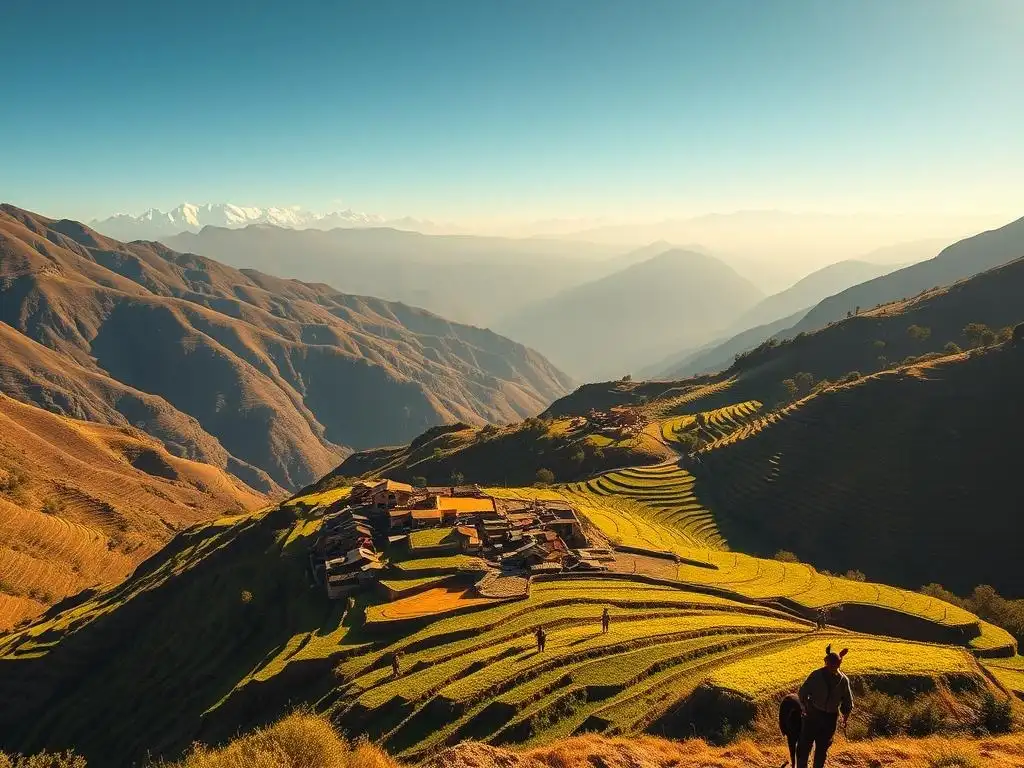
Unravel the mysteries of the Andes! Journey through millennia of breathtaking ingenuity and societal complexity, where towering mountains met astonishing advancements. Discover how Andean agriculture wasn't merely sustenance, but the very bedrock upon which the intricate social structures of civilizations like the Inca, Moche, and Nazca were built. Prepare to be amazed as we explore the profound connection between Andean agriculture and social classes – a story far richer and more intricate than you ever imagined. Read on to uncover the secrets…
-
Andean Agriculture and the Formation of Social Classes: A Historical Perspective
- The Significance of Agriculture in Andean Societies
- Early Andean Agricultural Practices and Social Differentiation
- The Impact of Agriculture on Social Stratification in Andean Civilizations
- The Influence of Specific Crops on Andean Social Structures
- Regional Variations in Agricultural Practices and Social Classes
- Andean Agriculture Social Classes and the Inca Empire
- The Legacy of Andean Agriculture on Contemporary Social Dynamics
-
Frequently Asked Questions
- What role did agriculture play in the development of Andean social classes?
- How did different Andean civilizations utilize agriculture to maintain their social structures?
- What were the main agricultural products that influenced Andean social classes?
- Did Andean agricultural practices lead to any social inequalities?
- How did the Inca Empire's agricultural policies affect its social structure?
- Final Reflection: Cultivating Understanding: Agriculture's Enduring Legacy in the Andes
- Embrace the Power of Andean Agriculture!
The Andes Mountains, a geographically challenging yet remarkably fertile region, witnessed the rise and fall of numerous sophisticated civilizations whose social structures were profoundly shaped by agricultural practices. This article explores the intricate relationship between Andean agriculture and the development of social stratification, focusing on how advancements in farming techniques, resource management, and surplus production directly influenced the emergence and consolidation of distinct social classes amongst the Incas, Moche, Nazca, and Tiahuanaco cultures.
We will delve into the significance of agriculture in Andean societies, examining early practices and their impact on social differentiation, the development of sophisticated irrigation systems and their implications for labor organization, and finally, how surplus production fueled the rise of powerful elites. Understanding this interplay is crucial to grasping the complexities of Andean social hierarchies and the enduring legacy of these remarkable civilizations.
The keyword "Andean agriculture social classes" will be explored throughout this analysis, revealing the profound impact of agricultural innovation on social structures.
The Significance of Agriculture in Andean Societies
Agriculture wasn't merely a means of subsistence in the Andes; it was the very foundation of Andean societies. The challenging terrain – steep slopes, diverse microclimates, and unpredictable weather patterns – demanded innovative farming techniques. These included terracing, which allowed for cultivation on steep slopes, and the development of sophisticated irrigation systems to manage water resources effectively.
The success of these agricultural innovations directly correlated with a society's prosperity and stability, influencing population density, political power, and the very structure of social classes. The ability to produce a surplus beyond immediate needs was a key factor in the formation of elites and the differentiation of social roles. Without the mastery of Andean agriculture, the complex social structures that characterized these civilizations would have been impossible.
The sheer ingenuity displayed in overcoming the environmental challenges is a testament to the importance of agriculture in shaping Andean culture and society. The intricate relationship between agricultural productivity and social standing is a recurring theme throughout Andean history.
Early Andean agricultural practices, while rudimentary compared to later advancements, already laid the groundwork for social differentiation. The cultivation of staple crops like potatoes, maize, and quinoa required considerable labor, leading to the emergence of cooperative work structures within communities. However, even at this early stage, variations in land ownership, access to resources, and agricultural expertise likely contributed to the initial stratification of society. Those with more fertile land or greater knowledge of farming techniques likely enjoyed a higher social standing and greater access to resources.
Archaeological evidence suggests that even in the earliest Andean societies, there existed a degree of inequality, albeit less pronounced than in later periods. This initial social stratification, though subtle, was directly influenced by the distribution of agricultural resources and the varying levels of agricultural proficiency within the community. The seeds of social hierarchy were sown in the fields themselves.
Development of Irrigation Systems and Labor Organization
The development of large-scale irrigation systems marked a turning point in Andean agriculture and social organization. These complex projects, requiring significant coordinated effort and specialized knowledge, led to increased agricultural productivity and the consolidation of power in the hands of those who oversaw their construction and maintenance.
The organization of labor for these projects involved the mobilization of large workforces, often through a system of reciprocal labor exchange ( ayni ) or mandated labor service ( mita ). This system, while ensuring the completion of crucial infrastructure, also reinforced existing social hierarchies, as those in positions of authority controlled the allocation of resources and the distribution of labor.
The construction of these systems was not only a technological feat but also a crucial step in solidifying social hierarchies and the power of ruling elites. The scale of these projects is a clear indicator of the growing social complexity in Andean societies.
Surplus Production and the Rise of Elites
The increased agricultural productivity enabled by sophisticated irrigation systems and other technological advancements resulted in significant surplus production. This surplus became a crucial factor in the rise of powerful elites. Those who controlled the surplus – whether through land ownership, political authority, or religious influence – were able to accumulate wealth and power, consolidating their position at the top of the social hierarchy.
This surplus wasn't just used for consumption; it was also used to support specialized craftspeople, religious leaders, and administrators, further solidifying the social stratification. The control of surplus agricultural production, therefore, was directly linked to the consolidation of power and the establishment of distinct social classes within Andean societies.
The accumulation of wealth, based on agricultural output, became the cornerstone of elite status, shaping the social and political landscape of the Andean world. The relationship between surplus production and social stratification is a key element in understanding the development of Andean civilizations.
The development of sophisticated agricultural techniques in the Andes profoundly shaped the social structures of various civilizations. The ability to cultivate crops successfully, particularly in challenging terrains, led to surpluses that fueled population growth and the emergence of complex societies. This surplus, however, wasn't evenly distributed.
Control over land, water resources, and agricultural production became key factors in determining social status and power. The more productive a community or individual, the higher their position in the social hierarchy often became. This wasn't solely based on individual effort, but also on access to resources and the ability to organize and manage large-scale agricultural projects.
The concentration of wealth and power in the hands of a select few, often elites or ruling classes, is directly linked to the control and management of agricultural production. This dynamic played out differently across various Andean cultures, yet the underlying principle – control of agricultural resources equating to social dominance – remained consistent.
The Role of Land Ownership in Defining Social Status
Land ownership in Andean societies was intrinsically linked to social standing. Elite classes, such as the Inca nobility or the Moche priests, controlled vast tracts of fertile land, often the best for irrigation and cultivation. This land ownership wasn't merely about possessing property; it represented control over the means of production, labor, and ultimately, wealth.
The common people, often ayllus or other community groups, typically worked the land under the authority of the elite, paying tributes in the form of agricultural products or labor. The size and quality of land holdings directly correlated with social status; larger and more productive estates signaled greater power and prestige within the society.
This system of land tenure, though varying in specifics across different Andean cultures, provided the foundation for a hierarchical social structure where access to land determined one's position. The absence of private land ownership amongst the common people highlights the extent to which land was a tool for social control.
Agricultural Labor and its Relation to Social Hierarchies
Agricultural labor formed the backbone of Andean societies, and its organization reflected the existing social hierarchies. Elite classes rarely participated directly in manual labor; instead, they supervised and directed the work of commoners. The mit'a system, a form of mandatory labor service in the Inca Empire, is a prime example. This system required commoners to dedicate a portion of their time to working on state-sponsored agricultural projects, infrastructure development, and other tasks beneficial to the ruling class.
Other Andean societies had similar systems of obligatory labor, illustrating the strong link between agricultural production and social control. The division of labor, with the elite overseeing and the commoners performing the physical work, reinforced the existing social inequalities. The value placed on agricultural output directly translated into the value placed on the labor that produced it; those who controlled the production also controlled the laborers.
Specialization of Labor and Craft Production Fueled by Agriculture
Agricultural surpluses didn't just sustain populations; they also enabled the specialization of labor beyond farming. The availability of food allowed individuals to dedicate themselves to crafts, creating textiles, pottery, metalwork, and other goods. This specialization further stratified Andean societies. Skilled artisans, often working under the patronage of elites, held a higher social status than those engaged solely in agricultural labor.
The production of luxury goods, such as finely woven textiles or intricate gold jewelry, required specialized skills and often involved complex social relationships. The artisans themselves may have held a relatively privileged position compared to agricultural laborers, yet they still remained subordinate to the elite who controlled the resources and markets for their products. This intricate web of specialized labor was ultimately fueled by the success of agriculture, showcasing the far-reaching impact of farming on Andean social organization.
Certain crops held particular significance in shaping Andean social structures, reflecting their importance in the economy, religion, and daily life. The cultivation and control of these crops often directly influenced social hierarchies and power dynamics. The social implications varied based on the unique properties and uses of each crop, impacting different aspects of Andean society. The cultivation of these key crops wasn't just about sustenance; it was about power, prestige, and social control.
The Importance of Potato Cultivation and its Social Implications
The potato was a staple crop in the Andes, crucial to the survival of its inhabitants. Its cultivation wasn't simply a matter of subsistence; it also played a significant role in social organization. Different varieties of potatoes were cultivated at diverse altitudes, requiring sophisticated knowledge of agriculture and environmental conditions.
Access to diverse potato varieties often indicated a higher social status, as did the ability to store and manage surpluses. The control over potato production and distribution influenced social relationships, economic stability, and even religious practices. The potato's importance in Andean diets and economies made its cultivation a central aspect of social life and power dynamics.
Maize Production and its Link to Power and Prestige
Maize, another staple crop, held significant symbolic and economic importance. In many Andean cultures, maize was associated with divinity and fertility, making its cultivation a matter of religious and social significance. Control over maize production often signified power and prestige, linking it directly to the social status of those who controlled its cultivation and distribution. Large-scale maize cultivation often involved complex irrigation systems and significant labor investment, further strengthening the link between agricultural production and social hierarchy. The symbolic and economic importance of maize solidified its position as a key element shaping Andean social structures.
Coca and Other Specialized Crops: Their Impact on Social Roles
Coca, along with other specialized crops like chili peppers or certain medicinal plants, played crucial roles in Andean societies, influencing social roles and relationships. Coca, in particular, held significant religious and medicinal importance, and its cultivation and distribution were often controlled by elites. The control over these crops, whether for religious ceremonies, medicinal purposes, or trade, granted significant social power and influence.
Access to these specialized crops often denoted high social status, reinforcing the existing social hierarchies. The social significance of these crops extended beyond their practical uses, highlighting their integral role in shaping social norms and power structures within Andean civilizations.
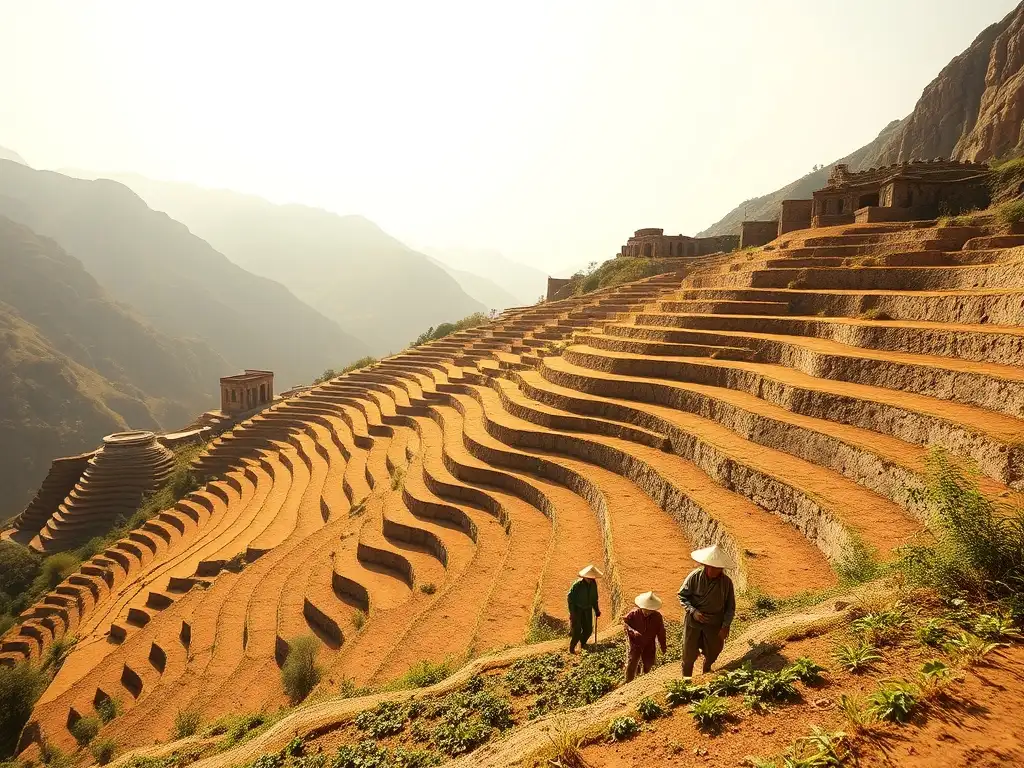
Andean agriculture wasn't a monolithic system; it varied significantly across different ecological zones, directly impacting the social structures that emerged. The diverse geography—from arid coastal deserts to the high-altitude Andes—necessitated unique agricultural techniques and, consequently, distinct social hierarchies. The availability of water, the type of terrain, and the suitability of crops all played crucial roles in shaping social stratification. For instance, coastal communities reliant on irrigation systems often developed complex social organizations to manage water resources, leading to powerful elites controlling access to this vital resource.
In contrast, highland communities, dependent on terrace farming and herding, developed different social structures reflecting their unique environmental challenges and agricultural practices. The intricate relationship between environment and social organization is a key theme in understanding Andean social classes. This dynamic relationship is explored further in the following subsections.
Coastal Agriculture and its Unique Social Dynamics
Coastal regions, characterized by arid deserts and limited rainfall, relied heavily on sophisticated irrigation systems. The Moche civilization, for example, is renowned for its extensive canal networks that enabled intensive agriculture in otherwise uninhabitable land. The construction and maintenance of these systems required substantial labor, often organized through a hierarchical system with specialized workers and administrators.
This led to a powerful elite class controlling the water resources and the agricultural surplus, wielding significant political and economic influence. Archaeological evidence points to elaborate tombs and monumental architecture belonging to this elite class, showcasing their wealth and power derived from their control over agricultural production. The social organization mirrored the controlled access to water, resulting in a stratified society with distinct social classes directly linked to agricultural productivity.
Highland Agriculture and its Influence on Social Organization
The high Andes presented a different set of challenges. Steep slopes and limited arable land necessitated the development of innovative agricultural techniques, such as terracing. This labor-intensive method, requiring significant community effort, fostered a different type of social organization compared to the coastal regions. In the highlands, the collective effort required for terracing often resulted in a more communal social structure, although hierarchies still existed.
The control of land and the distribution of agricultural resources, even in a more collaborative setting, still played a crucial role in determining social standing. The Inca Empire, with its extensive terrace farming systems, is a prime example of how highland agriculture influenced social organization on a large scale. The Inca's sophisticated agricultural techniques and centralized control over resources reinforced their imperial power and social hierarchy.
The Interplay Between Agriculture and Trade in Different Regions
The diverse agricultural practices across different Andean regions led to a complex system of trade and exchange. Coastal areas, producing cotton, fish, and other specialized goods, traded with highland communities that cultivated potatoes, maize, and other crops. This exchange was not simply economic; it reinforced existing social hierarchies and created new ones.
Control over trade routes and the distribution of goods became another source of power and influence, strengthening the position of certain social groups. For example, communities situated along major trade routes often gained significant economic and political power through their control over the flow of goods, consolidating their social standing within the broader Andean context. This complex interplay between agriculture and trade underscores the multifaceted nature of Andean social structures.
The Inca Empire represents a crucial case study in the relationship between agriculture and social classes in the Andes. The Inca state actively intervened in agricultural production, implementing policies that had profound social consequences. Their highly organized and centralized system of agricultural management significantly shaped the social landscape of the empire. The Inca’s ability to effectively manage and control agricultural production was a cornerstone of their power and authority. This control extended to the management of labor, the distribution of resources, and the maintenance of social order.
Inca Agricultural Policies and their Impact on Social Structure
Inca agricultural policies aimed at maximizing production and ensuring the stability of the empire. They implemented intensive agricultural techniques like terracing, irrigation, and the cultivation of diverse crops. These policies, while increasing agricultural output, also reinforced the existing social hierarchy.
The elite class, consisting of the emperor, nobles, and priests, controlled the most fertile lands and received a significant share of the agricultural surplus. The commoners, organized into ayllus (kinship-based communities), were responsible for the bulk of agricultural labor, contributing to the state's resources through labor obligations and tribute. This system perpetuated a clear social stratification based on access to land and resources.
The Mit'a System and its Role in Agricultural Production and Social Control
The mit'a system, a form of labor tribute, was instrumental in Inca agricultural production and social control. Commoners were obligated to provide labor for public works projects, including agricultural infrastructure such as irrigation canals and terraces. While the mit'a system ensured a consistent labor force for large-scale agricultural projects, it also served as a mechanism for social control, reinforcing the power of the Inca state and its elite.
The ability to mobilize a large workforce for agricultural endeavors was directly linked to the centralized power of the Inca empire. The system ensured that the state had the resources to maintain its vast infrastructure and support its population.
The Redistribution of Agricultural Goods and its Social Consequences
The Inca state controlled the redistribution of agricultural goods, using this as a powerful tool to maintain social order and consolidate its power. Surplus agricultural products were collected from various regions and redistributed to support the elite, the army, and those in need. This system, while providing a degree of social safety net, also reinforced the hierarchical structure of the empire.
The state's control over the distribution of food and other essential resources ensured its continued dominance, cementing the social classes and the power dynamics within the Inca Empire. The efficient management of resources and the redistribution system were integral to the stability and longevity of the Inca state.
Andean agriculture, despite centuries of change, continues to profoundly shape social dynamics in the region. The intricate systems of water management, terracing, and crop diversification developed by ancient civilizations like the Incas, still inform modern agricultural practices and influence land ownership patterns. For example, the ayllu, a traditional Andean community-based system of reciprocal labor and resource sharing, though modified, persists in many rural communities.
This enduring legacy underscores the deep-rooted connection between agriculture and social structures. The historical inequalities embedded within these systems, where access to fertile land and water resources directly correlated to social status, continue to resonate in contemporary socioeconomic disparities. Understanding this historical context is crucial for addressing present-day challenges related to land distribution, food security, and rural poverty.
The impact of colonization and subsequent economic policies further complicated this legacy, leading to the concentration of land ownership and resources in the hands of a few, exacerbating existing inequalities. This historical perspective is vital for developing effective policies aimed at promoting equitable access to resources and fostering sustainable agricultural practices.
The Persistence of Traditional Agricultural Practices
Despite the introduction of modern agricultural technologies and techniques, many Andean communities continue to utilize traditional agricultural methods alongside or in place of them. This persistence reflects not merely tradition, but also the practical effectiveness of these methods in challenging Andean environments. Terracing, for example, remains essential for cultivating crops on steep slopes, minimizing erosion and optimizing water usage.
Similarly, the cultivation of native Andean crops like potatoes, quinoa, and maize, adapted to high altitudes and harsh climates, continues to be central to food security and cultural identity. The knowledge and skills associated with these traditional practices are often passed down through generations, contributing to the resilience and sustainability of Andean farming communities. This preservation of traditional knowledge is not only valuable for maintaining biodiversity and food security, but also for understanding the historical relationship between Andean agriculture and social structures.
The Social Impact of Modern Agricultural Development in the Andes
The introduction of modern agricultural technologies and practices, while aiming to increase productivity, has had a complex and often uneven impact on Andean social structures. The adoption of chemical fertilizers and pesticides, for example, while boosting yields in some cases, has also led to environmental degradation and health concerns in others. Furthermore, the shift towards monoculture farming, often driven by global market demands, has diminished biodiversity and made farming communities more vulnerable to climate change and market fluctuations.
The increasing mechanization of agriculture has also contributed to rural-urban migration, as fewer laborers are needed for large-scale farming operations, disrupting traditional community structures and social networks. Moreover, access to these modern technologies and resources is often unevenly distributed, further exacerbating existing social inequalities. The social costs of modern agricultural development therefore need to be carefully considered and addressed through policies that promote sustainable and equitable practices.
Understanding Andean Social Classes through an Agricultural Lens
Analyzing Andean social classes through the lens of agriculture reveals a complex and dynamic relationship between land ownership, production, and social hierarchy. From the earliest civilizations to the present day, control over agricultural resources and production has been a primary determinant of social status and power. In ancient societies like the Inca Empire, elite classes often controlled vast agricultural estates, utilizing the labor of commoners to produce surplus for their own consumption and for redistribution within the empire.
This system of centralized control over agricultural production directly contributed to the stratification of Andean society. Even today, access to fertile land and water resources remains a key factor in determining socioeconomic standing in many Andean communities.
Studying the historical evolution of agricultural practices and their impact on social structures provides valuable insights into the formation and persistence of social inequalities in the Andes. This approach allows for a more nuanced understanding of the complexities of Andean social history and its enduring legacies.
Frequently Asked Questions
Agriculture was the cornerstone of Andean societies. Surplus production, controlled by elites, led to the development of complex social hierarchies with specialized labor and powerful ruling classes. This surplus also fueled the growth of urban centers and monumental architecture.
Each civilization had unique agricultural techniques but all relied on intensive farming to support their populations. The control of water resources and fertile land were key factors in maintaining power and social stratification. For example, the Inca's mit'a system involved labor obligations tied to agricultural production.
Potatoes, maize (corn), quinoa, and beans were staple crops supporting large populations. Access to and control over these resources directly impacted social status. Elites often had access to more desirable and diverse foods than commoners.
Yes, control over land and water created significant inequalities. Elites often owned vast tracts of land and utilized the labor of commoners to cultivate them. This unequal distribution of resources contributed to a rigid class system.
The Inca implemented sophisticated agricultural techniques, including terracing and irrigation, to maximize food production. The mit'a system, while demanding, ensured food security for the empire, but also reinforced social hierarchy through obligatory labor.
Final Reflection: Cultivating Understanding: Agriculture's Enduring Legacy in the Andes
The intricate relationship between Andean agriculture and social stratification remains profoundly relevant today, a stark reminder that the seeds of inequality are often sown in the very foundations of a society's economic structure. Understanding this historical dynamic is crucial not only for comprehending the complexities of Andean societies past and present, but also for addressing persistent socioeconomic disparities worldwide. The methods of agricultural production, land ownership, and access to resources continue to shape power dynamics in many regions, echoing the patterns established centuries ago in the Andes.
The enduring impact of agricultural practices on Andean social structures is undeniable, shaping not only economic hierarchies but also cultural identities and political power. The legacy of this system continues to influence contemporary social dynamics, reminding us that historical injustices often have long-lasting consequences. The past is never dead. It's not even past.
– William Faulkner. This quote perfectly encapsulates the ongoing relevance of understanding the historical interplay between agriculture and social class in the Andes, highlighting how the past continues to inform the present.
Consider the implications of this historical narrative in your own life. How do systems of resource distribution and access affect the communities around you? What role can you play in fostering more equitable and sustainable practices, both locally and globally? By acknowledging the enduring influence of agriculture on social structures, we can work towards creating a future where access to resources and opportunities is more fairly distributed, building a more just and prosperous world for all.
Embrace the Power of Andean Agriculture!
Exploring the vital role of agriculture in shaping Andean societies offers a profound understanding of these ancient civilizations and their rich cultures. Let's delve deeper into this fascinating connection.
- Connect with fellow enthusiasts by joining a local or online community dedicated to Andean history and agriculture.
- Support sustainable agriculture in the Andes through volunteering or donations to relevant initiatives.
- Share this information with friends and family to spark discussions about the crucial link between agricultural practices and societal structures.
How can modern society learn from the innovative agricultural techniques of the ancient Andean civilizations to build a more sustainable future?