Moche Civilization

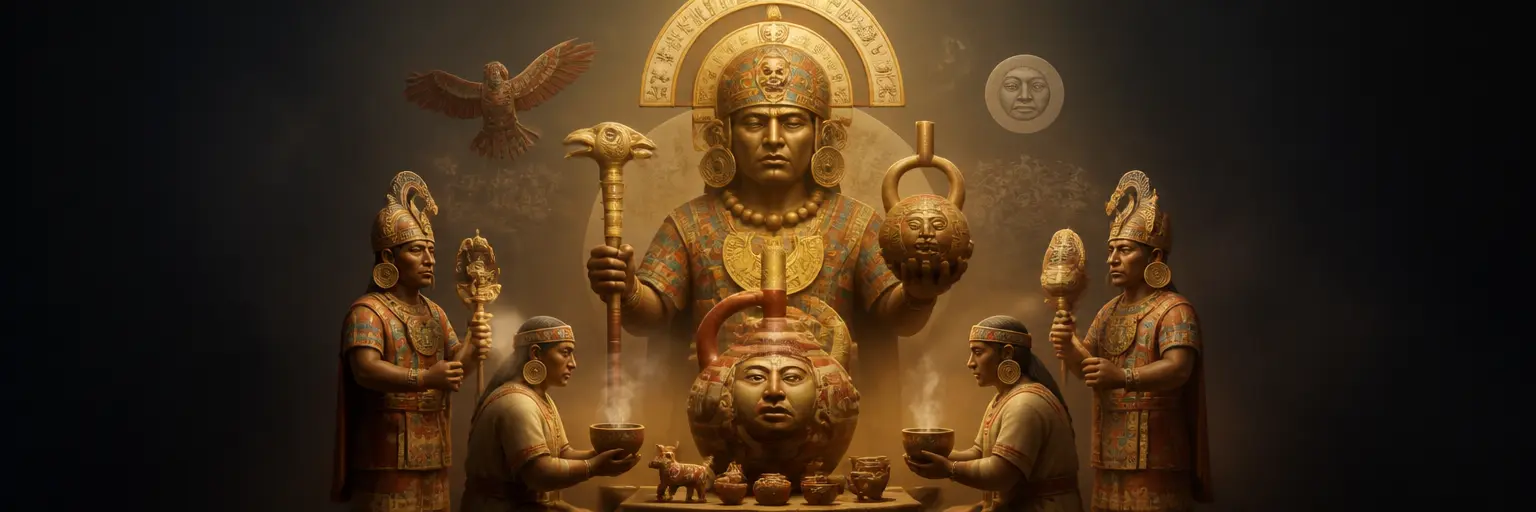
Explore the spiritual world of the Moche civilization 🏺, where powerful gods, sacred rituals, ancestor veneration, and ceremonial practices shaped daily life and social order. Discover how Moche religion and beliefs influenced iconic art, temple architecture, elite traditions, and fascinating archaeological discoveries across ancient Peru.
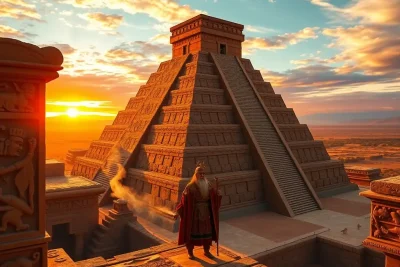
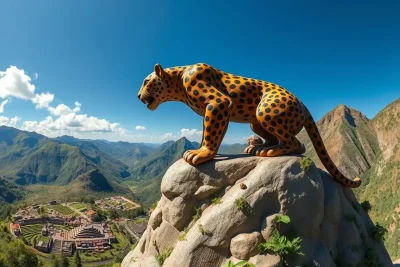
Discover the spiritual world of the Moche civilization through its gods, myths, temples, ceremonies, and sacred symbols. This subcategory explores how religion shaped Moche society between approximately 100 and 700 CE along the northern coast of ancient Peru. Learn how archaeologists interpret Moche religion and beliefs through ceramic art, monumental architecture, tombs, murals, burial offerings, and archaeological discoveries. From the powerful deity known as Ai Apaec to ritual sacrifice and ancestor veneration, these resources reveal the deep connection between Moche spirituality, political authority, agriculture, warfare, and the natural environment.
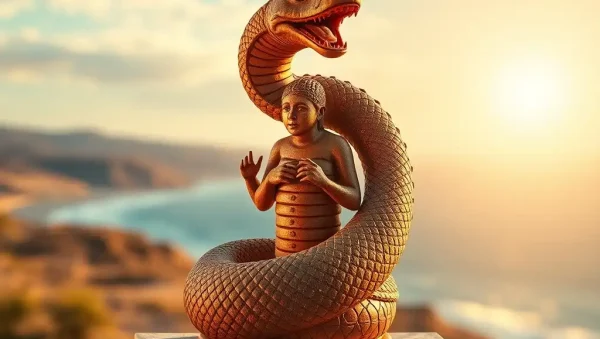
Explore the complex pantheon of Moche gods and supernatural figures represented in pottery, murals, metalwork, and temple decoration. One of the best-known figures is Ai Apaec, often called the “Decapitator” because of his association with severed heads, warfare, power, and ritual authority. Moche artists also portrayed divine beings with feline, bird, serpent, and marine characteristics, reflecting the importance of animals and the coastal landscape in Moche mythology.
Readers can expect clear explanations of how scholars identify Moche deities and interpret their roles. Because the Moche left no known written language, their religious beliefs are reconstructed through visual storytelling and archaeological evidence. Discover how divine imagery communicated ideas about fertility, rain, death, cosmic balance, leadership, and the relationship between humans and the supernatural world.
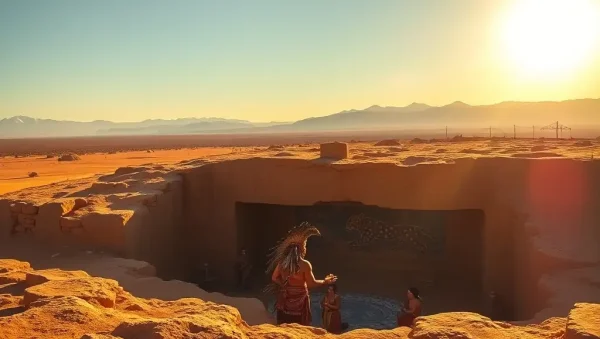
Learn about the ceremonies that formed the center of Moche religious life. Ritual activities may have included processions, feasting, music, dancing, offerings, bloodletting, warfare, and public displays of authority. Decorated vessels and temple scenes provide important evidence for understanding how religious rituals were performed and how priests, rulers, warriors, and captives participated in sacred events.
This section examines the connection between ceremony and social power in Moche society. Religious rituals were not only expressions of faith; they also reinforced political control, social hierarchy, and elite status. Discover how sacred performances may have brought communities together while presenting Moche rulers as intermediaries between ordinary people, ancestors, gods, and powerful natural forces.
The Moche are widely known for archaeological evidence of ritual sacrifice, especially from the Huaca de la Luna and the broader area of the Moche Valley. Research on sacrificed individuals, ceremonial imagery, and blood-drinking scenes helps scholars investigate the role of warfare, captives, violence, and divine offerings in Moche religion. The famous “Sacrifice Ceremony” shown on painted ceramics appears to have involved elite figures, ceremonial vessels, and highly organized religious practices.
Readers will find balanced discussions that distinguish archaeological evidence from speculation. Discover what skeletal remains, iconography, temple architecture, and scientific analysis reveal about Moche sacrifice, while also considering unanswered questions about who was selected, why sacrifices occurred, and how these events were connected to political legitimacy, climatic crises, and religious belief.
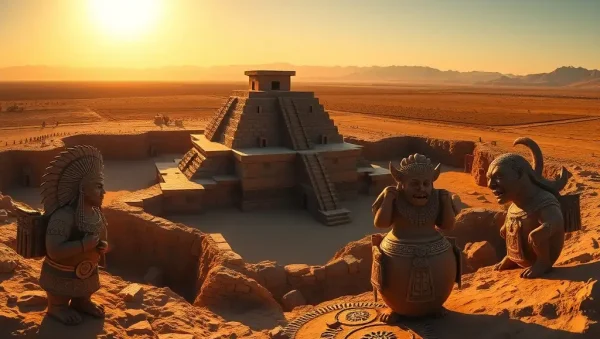
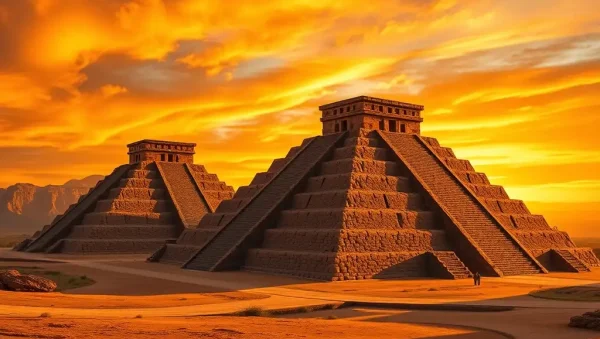
Explore the monumental architecture of Moche religion, including Huaca de la Luna, Huaca del Sol, ceremonial plazas, burial platforms, and decorated adobe temples. These sacred spaces were carefully designed for processions, offerings, public ceremonies, and elite rituals. Their painted reliefs and architectural layers preserve important images of deities, warriors, prisoners, animals, and supernatural events.
Moche sacred landscapes were closely tied to rivers, mountains, deserts, farmland, and the Pacific Ocean. Learn how temples functioned as religious, political, and economic centers and how their location reflected the importance of water and agricultural fertility. Archaeological discoveries continue to show that Moche religious architecture changed over time as communities responded to environmental pressures and shifting centers of power.
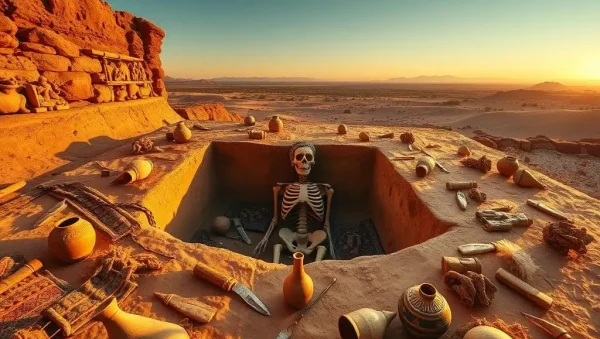
Investigate Moche ideas about death and the afterlife through royal tombs, elite burials, grave goods, funerary ceremonies, and human remains. The tomb of the Lord of Sipán provides remarkable evidence of Moche beliefs about status, transformation, and the continued power of rulers after death. Jewelry, weapons, ceramics, textiles, animals, and attendants placed in tombs reveal the importance of social identity and sacred ancestry.
This section explains how burial practices help archaeologists understand Moche religion and social organization. Funerary objects were more than possessions: they could represent authority, occupation, ancestry, and relationships with supernatural forces. Discover how Moche communities may have honored ancestors as active members of society who continued to influence fertility, political legitimacy, protection, and community memory.
Moche art is filled with powerful animals and natural symbols, including jaguars, foxes, birds, owls, serpents, llamas, deer, fish, sharks, and octopuses. These creatures were not merely decorative. They often represented strength, transformation, fertility, the sea, the sky, the underworld, or connections between humans and the divine. Animal-human hybrids reveal the imaginative and symbolic richness of Moche mythology.
Readers can explore how the Moche interpreted their environment through religion. Coastal deserts, seasonal rivers, marine resources, mountains, storms, and agricultural cycles all influenced spiritual traditions. By studying recurring symbols in ceramics, murals, and metalwork, researchers can identify themes related to rainfall, ocean power, warfare, fertility, death, and the movement between different cosmic realms.
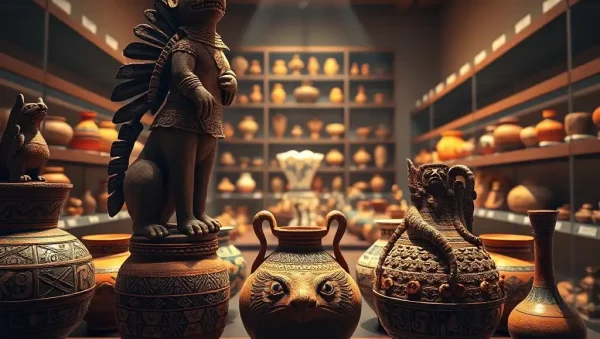
Moche pottery is one of the most important sources for understanding Moche mythology and religious beliefs. Portrait vessels, stirrup-spout bottles, modeled figures, painted scenes, and ceremonial ceramics portray gods, priests, warriors, captives, animals, ceremonies, and supernatural narratives. Many vessels functioned as visual records of religious ideas in a society without a known writing system.
Learn how to interpret Moche iconography by examining repeated figures, gestures, costumes, weapons, headdresses, vessels, and ceremonial settings. This approach helps explain why Moche ceramics are essential for studying ancient Peruvian religion. It also highlights the limits of interpretation, since images can be symbolic, ceremonial, historical, or mythological in ways that remain open to scholarly debate.
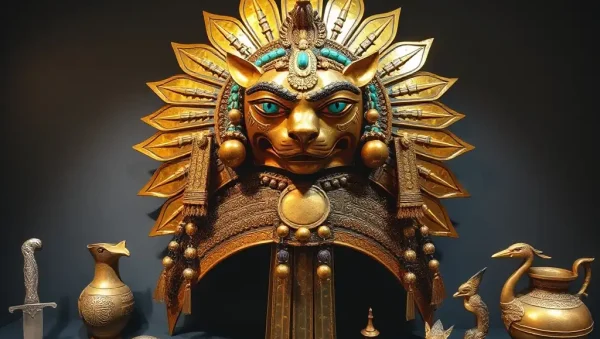
Religion and government were closely connected in Moche civilization. Explore the roles of Moche rulers, priests, warriors, and ritual specialists who organized ceremonies and represented divine power. Elite costumes, headdresses, metal ornaments, and ceremonial weapons often distinguished high-ranking individuals from the wider population.
This section examines how religious authority supported political leadership. By controlling temples, rituals, offerings, and access to sacred knowledge, elites could strengthen their influence over agricultural communities and regional networks. Discover how Moche leaders used religion to legitimize warfare, organize labor, manage resources, honor ancestors, and present themselves as essential links between people and the gods.
The Moche believed in a world populated by powerful gods, ancestors, supernatural beings, and forces associated with nature. Their religion included ideas about fertility, rain, warfare, death, transformation, and communication between humans and divine powers. Archaeologists reconstruct these beliefs through temples, burials, ceramics, murals, and ritual objects.
Ai Apaec is a modern name commonly associated with a major Moche deity often depicted with fangs, elaborate headdresses, and powerful supernatural features. He is frequently connected with authority, warfare, sacrifice, and the “Decapitator” imagery found in Moche art. Scholars continue to debate the exact identity and functions of this figure.
Archaeological evidence indicates that human sacrifice occurred in certain Moche ceremonial contexts. Findings at sites such as Huaca de la Luna include human remains showing signs consistent with violent ritual death, while ceramics portray captives and sacrificial ceremonies. However, researchers continue to study when these rituals took place, who participated, and what religious or political purposes they served.
A huaca was a sacred place or object in the Andean religious world. Moche huacas included monumental adobe temples, platforms, burial sites, natural features, and locations connected with supernatural power. Huacas served as centers for ceremonies, offerings, pilgrimage, political authority, and communication with gods or ancestors.
Because the Moche left no confirmed written texts, scholars rely on archaeological and visual evidence. Important sources include painted ceramics, sculptural vessels, temple murals, reliefs, tombs, offerings, human remains, ritual architecture, and scientific studies of materials and sites. Comparing these sources allows researchers to develop informed interpretations while recognizing that some aspects of Moche religion remain uncertain.