Andean Cosmology and Worldview

Explore how ancient Andean civilizations understood time, space, and the cosmos 🌄✨. Discover the sacred cycles, celestial observations, landscapes, and symbolic directions that shaped Andean cosmology and worldview—from Inca traditions to earlier Moche, Nazca, and Tiahuanaco cultures. Gain insight into how communities connected daily life, ritual, nature, and the universe through a profound sense of harmony and interdependence.
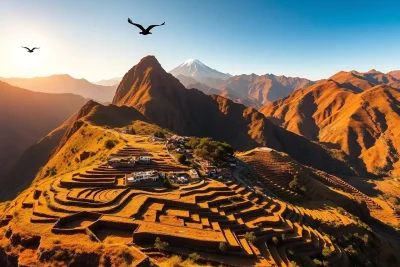
Discover how the ancient Andes understood time, space, nature, and existence through the subcategory Concepts of Time and Space, part of Andean Cosmology and Worldview. This collection explores the intellectual and spiritual traditions of the Inca, Moche, Nazca, Tiahuanaco, and other Andean civilizations. Readers will learn how mountains, celestial bodies, sacred landscapes, agricultural cycles, and community rituals shaped Indigenous Andean ideas about the universe. From cyclical time and ancestral memory to sacred geography and the relationship between the visible and invisible worlds, these resources reveal a worldview in which humans, nature, ancestors, and the cosmos were deeply interconnected.
Andean civilizations often understood time as a cyclical process rather than a strictly linear sequence. Seasonal changes, agricultural activities, ritual calendars, astronomical observations, and recurring ceremonies helped communities organize social and religious life. This perspective makes it possible to explore how the past continued to influence the present and how future events were connected to ancestral experience.
Articles in this section examine concepts such as renewal, repetition, transformation, and the return of cosmic or natural forces. Readers can expect information about Andean calendars, solstices, equinoxes, planting and harvesting cycles, and the role of ritual in maintaining balance. These themes are essential for understanding Inca timekeeping, Andean religious traditions, agricultural knowledge, and Indigenous concepts of history.
In Andean cosmology, space was not merely geographical. Mountains, caves, springs, rivers, valleys, islands, and cultivated fields could possess spiritual importance and serve as places of origin, worship, memory, or communication with supernatural powers. This section explores the idea of sacred geography and the ways Andean societies interpreted their environment as a living and meaningful world.
Readers will discover how places known as huacas, as well as revered mountains or apus, shaped settlement patterns, pilgrimage routes, political authority, and religious practice. The content also considers how the Andes themselves functioned as a cultural map, connecting communities through ritual landscapes and shared beliefs. These interpretations provide valuable context for understanding Inca architecture, ceremonial centers, Andean archaeology, and Indigenous environmental knowledge.
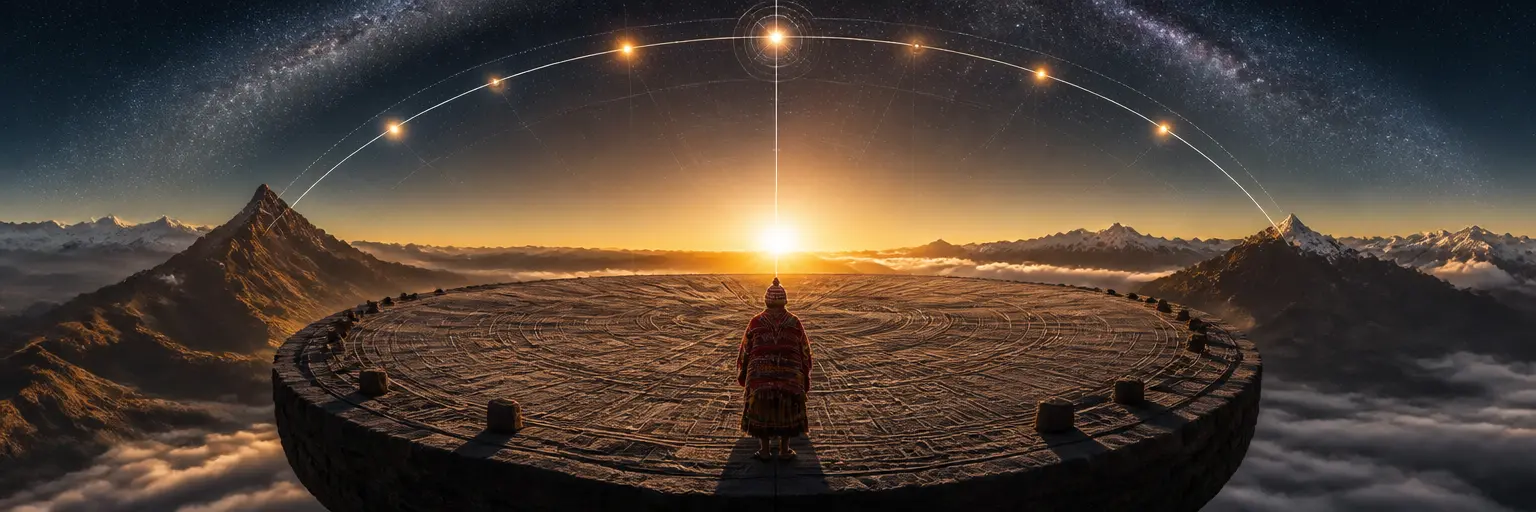
Celestial observation played a central role in the worldview of the Inca, Nazca, Moche, and Tiahuanaco civilizations. The movement of the Sun, Moon, planets, and stars helped communities establish calendars, plan agricultural tasks, and determine the timing of ceremonies. Andean astronomy was therefore both a practical science and a sacred system of knowledge.
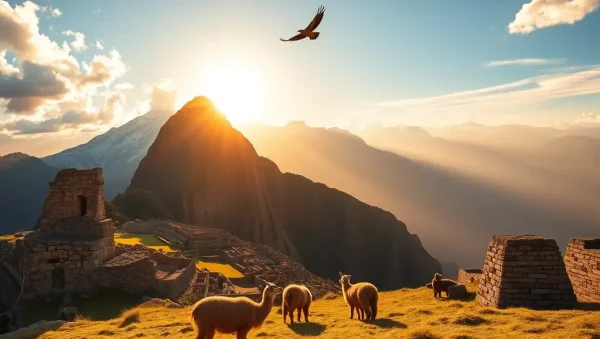
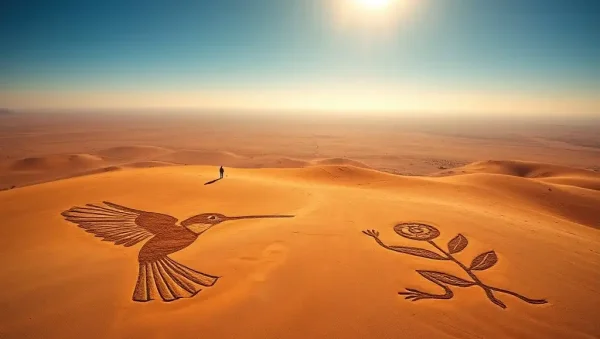
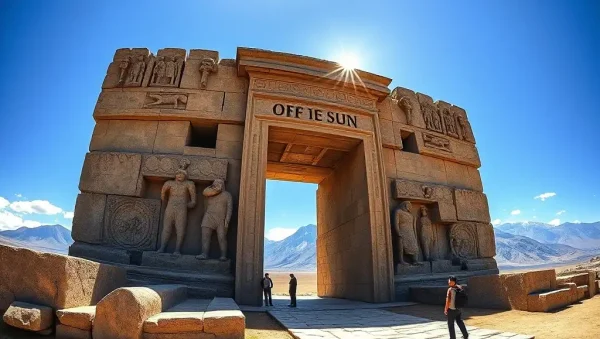
This subcategory explores solar worship, lunar cycles, constellations, horizon markers, and astronomical alignments found in temples, plazas, geoglyphs, and ceremonial structures. Readers can learn how sites such as Machu Picchu, Tiahuanaco, and the Nazca Lines may reflect relationships between architecture, landscape, and the sky. The emphasis is on Andean archaeoastronomy, Indigenous astronomy, celestial symbolism, and the religious significance of the heavens.
Many explanations of Andean cosmology refer to a structured universe composed of interconnected realms. Hanan Pacha is commonly associated with the upper or celestial world, Kay Pacha with the world of present human life, and Uku Pacha with the inner, subterranean, or underworld realm. These concepts help explain how Andean traditions connected the heavens, the earth, and the forces beneath it.
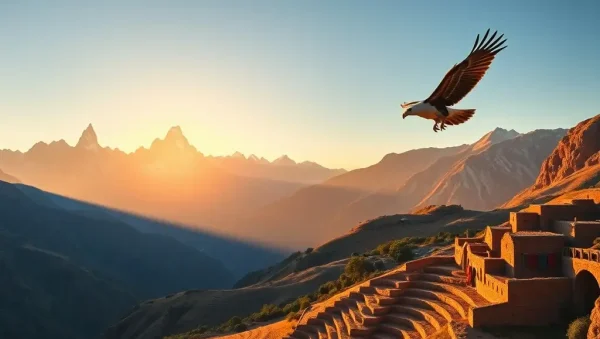
Content in this section examines how these realms appeared in religious symbolism, architecture, myths, ceremonies, and representations of animals such as the condor, puma, and serpent. Rather than treating the three worlds as completely separate, Andean traditions emphasized their constant interaction and balance. Readers will gain a deeper understanding of Andean mythology, Inca symbolism, sacred animals, and the spiritual structure of the universe.
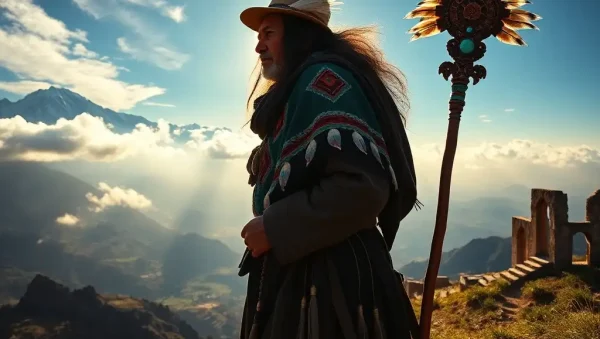
Mountains held exceptional importance throughout the Andes. They could be understood as powerful beings, protectors, ancestors, sources of water, and points of contact between different cosmic realms. Stories of emergence from caves, lakes, rocks, and mountains connected communities to their origins and explained their relationship with the surrounding landscape.
These resources explore how origin narratives and mountain worship shaped Andean identity, political legitimacy, and community obligations. Readers will find discussions of apus, ancestral landscapes, sacred origins, pilgrimage, water worship, and the continuing importance of mountains in Andean cultures. This perspective also highlights how ancient beliefs remain relevant in contemporary Indigenous communities across Peru, Bolivia, Ecuador, Chile, and Argentina.
Andean concepts of time and space were closely related to principles of reciprocity and balance. Humans were expected to maintain respectful relationships with the earth, water, animals, plants, ancestors, and spiritual powers. Practices such as offerings, communal labor, and seasonal ceremonies expressed the belief that the wellbeing of society depended on cooperation with the natural and supernatural worlds.
Readers can expect explanations of ayni, agricultural rituals, offerings to Pachamama, and the relationship between environmental stewardship and Andean spirituality. The section shows how cosmology influenced everyday life, from farming and architecture to political organization and community festivals. It also provides useful context for studying Andean sustainability, ecological knowledge, reciprocity, Pachamama, and traditional Indigenous worldviews.
Time in Andean cosmology was often understood as cyclical and connected to natural rhythms, agricultural seasons, celestial movements, ritual repetition, and ancestral memory. Rather than viewing the past as completely separate from the present, Andean traditions recognized that earlier events, ancestors, and origins continued to influence contemporary life.
These terms are commonly used to describe three interconnected dimensions of the Andean universe. Hanan Pacha refers to the upper or celestial realm, Kay Pacha to the present world of human experience, and Uku Pacha to the inner or subterranean realm. Their meanings could vary according to region and tradition, but together they express the relationship between sky, earth, and the underworld.
Mountains were considered powerful beings, ancestral places, protectors, and sources of water and fertility. Known in many contexts as apus, sacred mountains connected communities with the divine and influenced settlement, agriculture, pilgrimage, and ritual practice. Their importance can be seen in Inca religion and in traditions that continue across the Andes today.
Observations of the Sun, Moon, stars, and planets helped Andean communities organize agricultural work, ceremonial events, and religious calendars. Astronomical knowledge was incorporated into architecture, horizon markers, temples, geoglyphs, and other ceremonial spaces. It therefore served both practical and spiritual purposes.
These concepts remain important for understanding Indigenous identity, environmental ethics, community traditions, festivals, and relationships with sacred landscapes. They also offer valuable insights into ancient Andean science, agriculture, architecture, astronomy, and spirituality. Studying them helps readers appreciate the continuing cultural significance of the Inca, Moche, Nazca, and Tiahuanaco civilizations.