
Inca Government and Administration
Read more about this topic
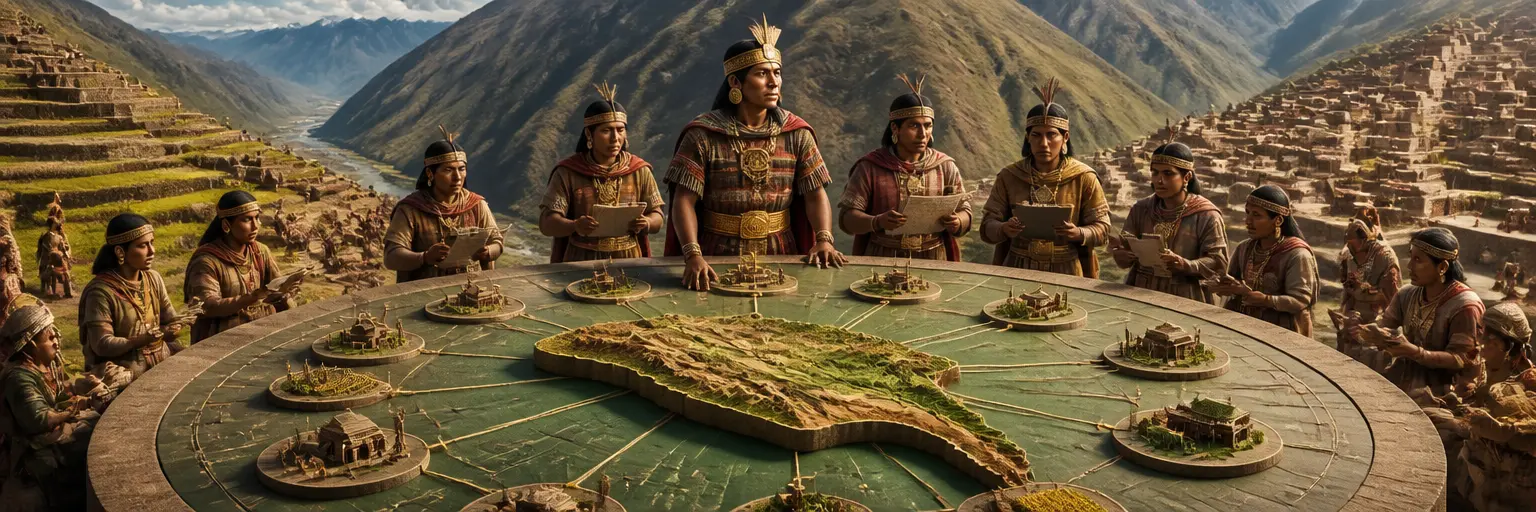
Discover how the Inca government and administration organized one of South America’s greatest empires 🏛️. Explore the sophisticated systems of centralized rule, provincial governance, taxation, labor service, record-keeping, and road-based communication that connected diverse peoples across the Andes. Learn how Sapa Inca leadership, royal officials, ayllus, and quipus supported imperial expansion, resource management, and social order.
64 articles
The Inca Empire
The Inca Fortresses: Defending the Empire's Borders

The Inca Empire
Inca Road Network: Connecting the Vast Realm of Tawantinsuyu
All articles in Inca Government and Administration
The Inca's View of Time: Cyclical Patterns and Cosmic Order
Inca Myths and Legends: Tales of Creation and Heroic Deeds
The Tawantinsuyu: Exploring the Four Regions of the Inca World

The Inca's Legacy: Lasting Influence on Andean Culture

Inca Prophecy and Divination: Glimpsing the Future
Inca Taxation System: How the Empire Collected Tribute and Resources
Cracking the Code of Inca Bureaucracy: How the Empire Maintained Order
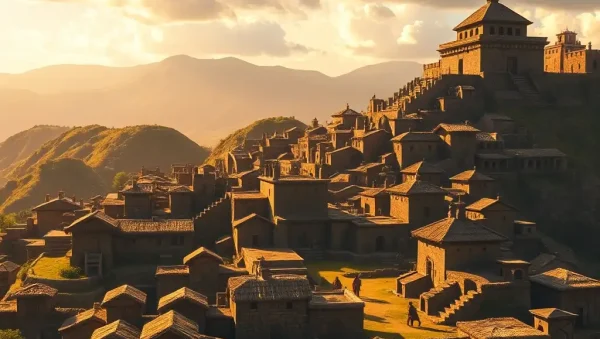
Inca Social Stratification: Classes and Roles in Society
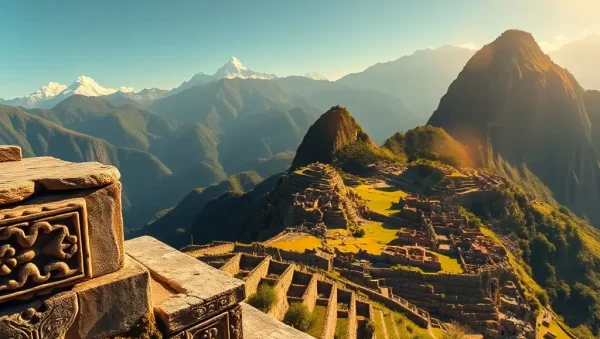
The Inca's Impact on Modern Andean Societies
🏛️ Inca Government and Administration: Organization of the Inca Empire
Discover how the Inca government and administration managed one of the largest and most sophisticated empires in pre-Columbian America. This subcategory explores the political structure, administrative divisions, royal authority, taxation, labor systems, laws, officials, and communication networks that connected the diverse peoples of Tawantinsuyu. Through carefully researched articles, Andean Civilizations explains how the Inca state governed vast territories across the Andes while coordinating agriculture, trade, religion, military defense, and public works.
👑 The Sapa Inca and Imperial Authority
Learn about the Sapa Inca, the supreme ruler of the Inca Empire, and the religious, political, and military responsibilities associated with imperial power. Articles examine royal succession, dynastic legitimacy, court ceremonies, royal estates, and the sacred relationship between the ruler, the sun god Inti, and the people of the Andes.
Readers can also explore how the Sapa Inca used alliances, conquest, diplomacy, marriage, and ceremonial displays to strengthen centralized authority. This section explains the role of the royal family, nobles, priests, and military commanders in maintaining the stability of Tawantinsuyu.
🗺️ Tawantinsuyu and Its Administrative Divisions
Understand the territorial organization of the Inca Empire, known as Tawantinsuyu, or “the four regions.” The empire was divided into Chinchaysuyu, Antisuyu, Qullasuyu, and Kuntisuyu, each contributing to the political, economic, and military strength of the Inca state.
Discover how local communities were incorporated into imperial administration through provinces, districts, ayllus, and regional centers. These articles explain how the Incas governed diverse landscapes, from coastal valleys and highland settlements to eastern Andean forests, using a combination of central oversight and local leadership.
📋 Inca Officials, Nobility, and Local Leaders
Explore the hierarchy of Inca officials and administrators who carried out imperial policies. Topics may include governors, provincial administrators, military leaders, quipucamayocs, priests, tax collectors, and representatives of the royal court.
This section also examines the relationship between the Inca ruling class and local curacas, or community leaders. Readers will learn how the empire often preserved local authority while requiring tribute, labor, loyalty, military service, and participation in state-sponsored projects.
🌾 Taxation, Tribute, and the Mit’a Labor System
Learn how the Inca economy supported government through organized labor rather than a conventional monetary tax system. The mit’a required communities to contribute time and work to agriculture, road construction, military campaigns, mining, religious ceremonies, and public building projects.
Articles explain how labor obligations were recorded, distributed, and managed by administrators. Readers can discover how state storehouses, agricultural terraces, herding systems, and redistribution allowed the Inca government to supply armies, officials, workers, and communities during times of need.
🧮 Quipus, Record Keeping, and Imperial Communication
Investigate the role of quipus, knotted-string recording devices used by trained specialists called quipucamayocs. Quipus helped administrators track populations, labor obligations, agricultural production, storehouse supplies, and other information essential to governing the empire.
Explore the Inca communication system, including the famous Chasqui relay runners and the extensive road network. Together, roads, bridges, way stations, messengers, and record keeping enabled the state to transmit orders and information across challenging Andean terrain.
🛣️ Roads, Storehouses, and Public Administration
Discover how the Inca road system, often called the Qhapaq Ñan, supported administration, trade, military movement, religious travel, and communication. The road network connected imperial capitals, provincial centers, agricultural zones, fortresses, and ceremonial sites throughout the Andes.
This section also explores qolqas, or state storehouses, which held food, clothing, weapons, tools, and other supplies. Readers will learn how strategic storage and transportation helped the Inca government manage environmental challenges, support distant communities, and maintain imperial armies.
⚖️ Inca Law, Social Order, and Justice
Examine the principles that shaped Inca law and social organization, including communal responsibility, labor obligations, respect for authority, and the protection of agricultural productivity. Inca society was structured through ayllus, kinship groups, class distinctions, and reciprocal relationships between communities and the state.
Learn how officials enforced public order and addressed theft, disobedience, rebellion, and failures to meet obligations. This section considers both the practical and moral dimensions of Inca governance, including the importance of reciprocity, discipline, cooperation, and service to the empire.
🤝 Diplomacy, Conquest, and Integration
Explore the strategies used by the Inca Empire to expand across the Andes. Military campaigns were combined with diplomacy, negotiation, alliances, marriage arrangements, religious influence, and administrative integration to bring new populations under imperial control.
Readers can discover how conquered communities were incorporated into Tawantinsuyu through tribute, labor service, resettlement, language policies, local agreements, and the construction of imperial facilities. These methods reveal the flexibility and complexity of Inca expansion.
❓ Frequently Asked Questions About Inca Government and Administration
👑 Who ruled the Inca Empire?
The Inca Empire was ruled by the Sapa Inca, who held supreme political, military, religious, and economic authority. The ruler governed with the assistance of royal relatives, nobles, priests, military commanders, provincial officials, and local leaders.
🗺️ What was Tawantinsuyu?
Tawantinsuyu was the name used for the Inca Empire, meaning “the land of the four quarters.” It consisted of four major regions—Chinchaysuyu, Antisuyu, Qullasuyu, and Kuntisuyu—organized around the imperial capital of Cusco.
🌾 How did the Incas collect taxes?
The Inca state primarily collected taxation through labor, a system known as the mit’a. Communities contributed workers for farming, road building, military service, mining, construction, and other state projects instead of paying taxes with coins.
🧮 How did the Incas keep administrative records?
Inca administrators used quipus, made from knotted cords, to record numerical and possibly other forms of information. Quipucamayocs were trained specialists responsible for creating, reading, and maintaining these records.
🛣️ Why were Inca roads important to government?
Inca roads connected remote regions with Cusco and other administrative centers. They allowed officials, armies, messengers, goods, and information to move efficiently across the Andes, making centralized imperial administration possible.