The Inca Empire

Discover the remarkable legacy of Inca art, textiles, and metalwork 🏔️✨ Explore finely woven fabrics, symbolic patterns, ceremonial objects, and masterfully crafted gold and silver pieces that reveal the Inca Empire’s sophisticated artistry, spirituality, and social traditions. Learn how ancient Andean artisans transformed natural materials into enduring works of cultural significance.
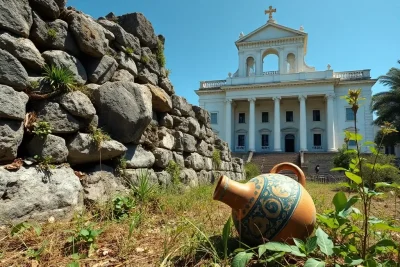
Explore the extraordinary artistic traditions of the Inca Empire through its textiles, sculpture, ceramics, jewelry, and finely worked metals. This subcategory examines how Inca artisans transformed wool, cotton, clay, gold, silver, copper, and precious stones into objects that expressed religious beliefs, political authority, social identity, and sophisticated Andean technology. From brilliantly colored woven garments to ceremonial goldwork and practical household objects, Inca art reveals how creativity and craftsmanship shaped life across Tawantinsuyu. Learn how Inca visual culture connected with earlier Andean civilizations, including the Moche, Nazca, and Tiahuanaco, while developing its own distinctive imperial style.
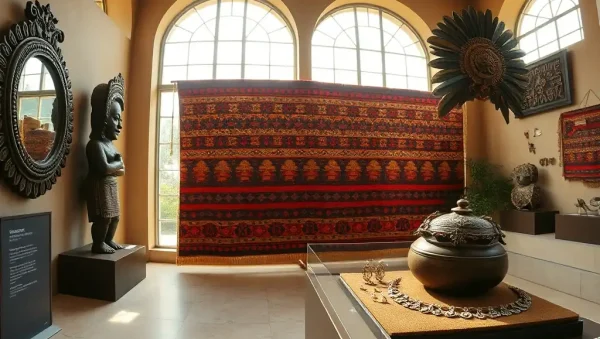
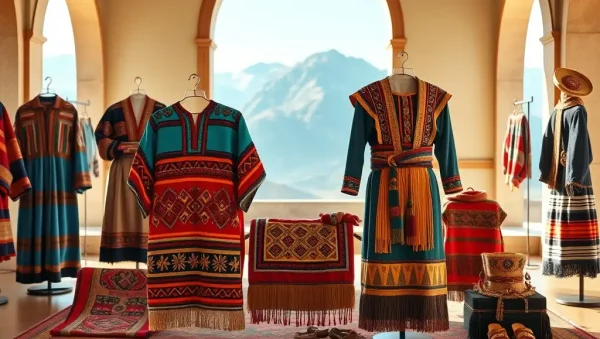
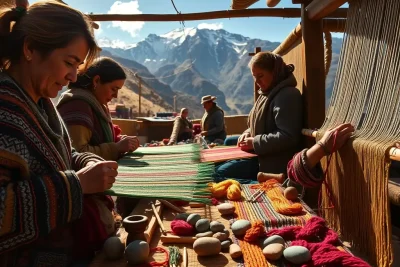
Inca textiles were among the most valuable and meaningful objects in the empire. Discover the importance of alpaca wool, vicuña fiber, llama wool, and cotton, as well as the weaving methods used to create tunics, mantles, belts, bags, and ceremonial garments. Articles in this section explain how color, pattern, fiber quality, and weaving density communicated rank, regional identity, and religious significance.
Readers can also learn about Inca textile technology, including backstrap looms, tapestry weaving, embroidery, dyeing, and complex geometric designs. Explore how textiles functioned as currency, diplomatic gifts, military rewards, and tools of imperial administration, making woven cloth one of the clearest expressions of Inca power and cultural organization.
Inca art often combined visual beauty with symbolic purpose. Explore recurring motifs such as stepped diamonds, checkerboard patterns, stylized animals, plants, celestial forms, and geometric compositions. These designs can reveal connections to Inca religion, cosmology, nature, ancestor worship, and imperial ideology.
This section examines how artistic symbols appeared across textiles, ceramics, architecture, ornaments, and ceremonial objects. You will discover how Inca artists used repetition, symmetry, color contrast, and abstract imagery to create a visual language that communicated identity and authority throughout the Andes.
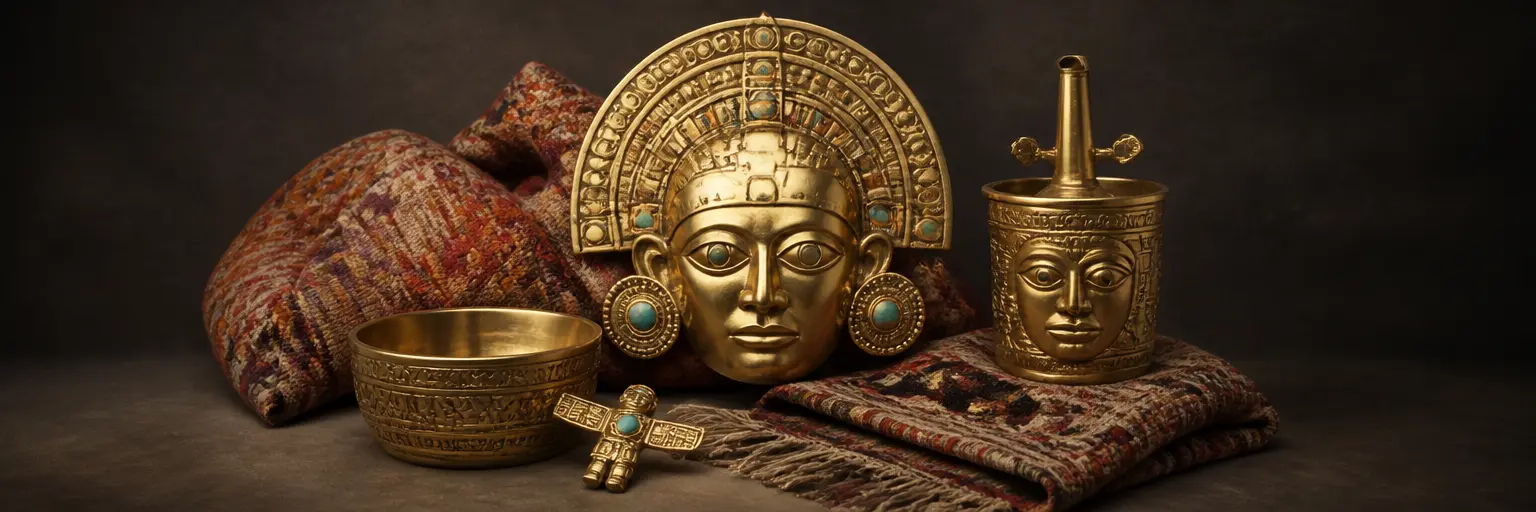
Learn how Inca metalworkers shaped gold, silver, copper, bronze, and tumbaga into exquisite objects for temples, rulers, priests, and elite communities. Topics include Inca jewelry, ceremonial vessels, masks, crowns, breastplates, figurines, pins, and ritual ornaments, along with the techniques used to hammer, cast, alloy, polish, and decorate metal.
Inca precious metalwork was valued not only for material wealth but also for its sacred associations. Gold was linked to the sun and the god Inti, while silver was associated with the moon and other supernatural forces. Discover how metal objects reinforced the status of the Sapa Inca and served as offerings in religious ceremonies and state rituals.
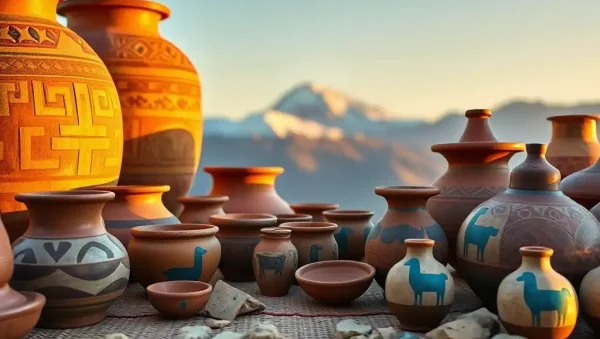
Inca ceramics combined practical function with distinctive imperial decoration. Explore vessels such as aryballos, plates, cups, storage jars, and ceremonial containers, including their shapes, painted patterns, and connections to food preparation, chicha production, tribute, and ritual exchange.
Articles also explain how Inca pottery developed from earlier Andean ceramic traditions while spreading standardized forms across the empire. Compare Inca ceramics with the artistic achievements of the Moche, Nazca, and Tiahuanaco cultures to understand continuity, adaptation, and cultural influence in ancient South America.
Inca art was closely connected to government, spirituality, and the organization of society. Discover how textiles, metal objects, carved materials, and ceremonial artworks were used in temples, royal estates, funerary practices, festivals, and diplomatic events. Art served as a visible expression of Inca authority and helped unite diverse peoples across Tawantinsuyu.
This section explores the relationship between artists and the state, including the role of specialized craftspeople, palace workshops, temple treasuries, and communities assigned to produce luxury goods. Learn how the Inca administration controlled valuable resources and distributed artistic objects to reward loyalty, establish alliances, and reinforce imperial identity.
The Inca Empire incorporated many peoples, languages, and artistic traditions. Explore regional variations in weaving, metalworking, pottery, dyes, and decorative motifs across the Andes, from the highlands to the coast. This approach highlights the diversity hidden within the broader category of Inca art and material culture.
You will also discover how Inca artists borrowed, adapted, and preserved ideas from earlier civilizations. Comparisons with Moche metalwork, Nazca textiles and pottery, and Tiahuanaco iconography provide a deeper understanding of the long artistic history that shaped the Inca world.
Inca artisans worked with alpaca, llama, vicuña, and cotton fibers, as well as clay, wood, stone, gold, silver, copper, bronze, shell, feathers, and gemstones. Material choice often reflected an object’s function, regional origin, social status, or religious importance.
Textiles represented wealth, labor, identity, and political power. Fine cloth could be more valuable than precious metals and was used for clothing, tribute, diplomatic gifts, military rewards, temple offerings, and state ceremonies.
Gold was associated with the sun god Inti and was considered sacred rather than simply a form of money. Gold objects decorated temples, royal spaces, and ceremonial settings, while their brilliance symbolized divine power and the authority of the Inca ruler.
Inca art expressed beliefs about the sun, moon, mountains, ancestors, fertility, and the natural world. Religious meaning appeared in textile patterns, metal ornaments, ceremonial vessels, animal imagery, and objects used in offerings and rituals.
The Incas inherited and adapted artistic knowledge from earlier Andean civilizations, including the Moche, Nazca, and Tiahuanaco. Their influence can be seen in metalworking techniques, iconography, textile production, pottery forms, and religious imagery, which the Incas incorporated into a broader imperial style.