The Spanish Conquest

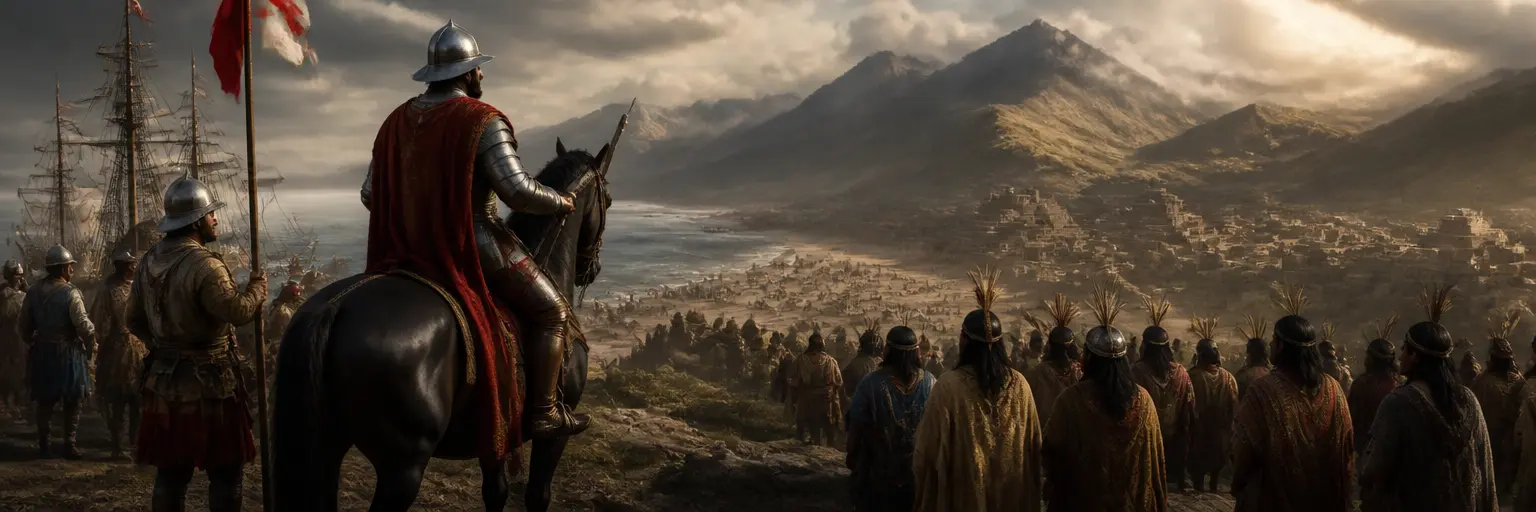
The arrival of the Spanish in the Andes marked a dramatic turning point in the history of South America. Explore the encounters, alliances, conflicts, and cultural transformations that shaped the Spanish conquest of the Inca Empire, from the first expeditions to the fall of Cusco. Discover the key figures, strategies, indigenous resistance, and lasting legacy of this pivotal era in Andean history. 🏔️📜⚔️
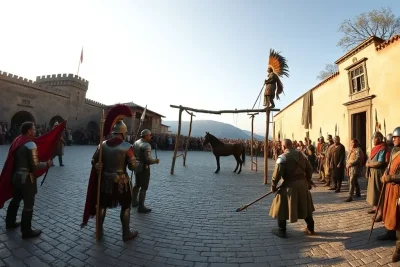
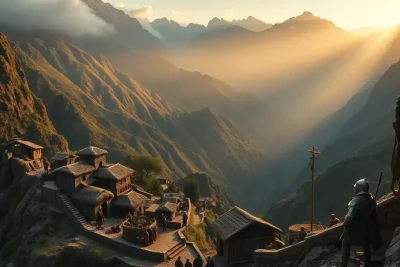
The arrival of the Spanish in the Andes marked a decisive turning point in the history of South America. This subcategory explores the first encounters between Spanish explorers and the powerful Andean civilizations, especially the Inca Empire, during the sixteenth century. Discover how military expansion, political divisions, diplomacy, disease, religion, and technology shaped the Spanish conquest of the Andes and transformed the societies of Peru, Ecuador, Bolivia, Chile, and surrounding regions.
Learn how Spanish expeditions moved from the Caribbean and Central America toward the Pacific coast of South America. These journeys introduced Spanish soldiers, missionaries, interpreters, and adventurers to unfamiliar landscapes, including coastal deserts, mountain valleys, highland plateaus, and the vast Andean road system. Readers can explore the voyages of Francisco Pizarro, Diego de Almagro, and their companions as they searched for wealth, territory, and political influence.
This section explains the challenges faced by the first Spanish explorers, including difficult geography, limited supplies, resistance from local communities, and communication barriers. It also examines how early reports about the wealth of the Inca Empire encouraged further expeditions and helped establish the historical conditions for the Spanish conquest of Peru.
Discover what happened when Spanish conquistadors entered the territories controlled by the Inca state, known as Tawantinsuyu. The first encounters were shaped by cultural misunderstandings, negotiations, displays of power, and competing interpretations of authority. This subcategory examines how Spanish observers described Andean cities, roads, armies, temples, agricultural terraces, and administrative centers.
Readers will also learn about the importance of interpreters and local intermediaries, including figures who helped translate languages and customs between the Spanish and Andean peoples. These encounters were not simple meetings between two unified groups; they involved complex alliances and rivalries among the Inca, regional ethnic groups, and Spanish forces.
The capture of Atahualpa in Cajamarca in 1532 is one of the most significant events in the history of the Spanish conquest. Explore how a relatively small Spanish force confronted the Inca ruler, how negotiations unfolded, and why the encounter ended in violence and imprisonment. The section considers the roles of Atahualpa, Francisco Pizarro, Hernando Pizarro, Vicente de Valverde, and the soldiers who participated in the dramatic meeting.
Rather than presenting the event as the result of weapons alone, this content examines the wider circumstances that favored the Spanish. These included the recent Inca civil war, political tensions within the empire, the strategic use of surprise, Spanish cavalry and firearms, and the effects of unfamiliar military tactics. The capture of Atahualpa severely weakened imperial authority and accelerated the conquest of the Andes.
Before the Spanish arrived in the central Andes, the Inca Empire had been weakened by a succession conflict between Atahualpa and Huáscar. Learn how this civil war divided elites, armies, provinces, and local communities. The struggle created resentment and instability in regions that had recently been incorporated into the expanding Inca state.
This section explains how Spanish commanders exploited existing rivalries through alliances with groups opposed to Inca rule. It also highlights the importance of regional politics, showing why the conquest cannot be understood only as a battle between Spaniards and Incas. Local alliances, negotiated support, and indigenous resistance played a central role in determining the outcome.
Explore the many Andean communities that supported, negotiated with, or resisted the Spanish invasion. Groups such as the Huanca, Cañari, Chachapoya, and others made strategic decisions based on their own political interests, memories of Inca expansion, and hopes for greater autonomy. Their participation influenced Spanish campaigns and demonstrates the active role of Indigenous peoples in the conquest.
Readers will also discover that resistance continued long after the fall of Cusco. Andean leaders and communities challenged Spanish authority through military uprisings, regional rebellions, religious movements, preservation of traditions, and the establishment of independent political centers. The history of the Spanish conquest is therefore also a history of Indigenous agency, adaptation, survival, and resistance.
Examine how Catholic missionaries and Spanish religious authorities interpreted Andean beliefs, sacred places, rituals, and deities. The arrival of Christianity introduced new religious institutions while Spanish officials attempted to suppress or transform Indigenous spiritual practices. This section explores the cultural encounters that affected temples, festivals, sacred landscapes, and community traditions.
The conquest also brought major changes to language, education, law, art, architecture, and social organization. Readers can learn how Spanish colonial culture interacted with Andean traditions to produce new forms of identity and expression. Religious conversion was a complex process, involving both coercion and Indigenous reinterpretation of Christian symbols and practices.
Understand how the Andean environment influenced the conquest. The Spanish encountered steep mountains, narrow valleys, high-altitude routes, coastal deserts, and extensive agricultural terraces. At the same time, the Inca Empire possessed sophisticated roads, bridges, storehouses, communication systems, and administrative centers that shaped the movement of armies and supplies.
This section compares Spanish and Andean military systems, including cavalry, steel weapons, firearms, armor, slings, spears, and organized infantry. It also explains why technology alone does not fully account for Spanish victories. Geography, disease, political fragmentation, intelligence, alliances, and surprise were equally important factors in the conquest of the Andes.
Study the chronicles and testimonies that preserve information about the arrival of the Spanish in the Andes. Spanish chroniclers such as Pedro Cieza de León, Juan de Betanzos, and Pedro Pizarro recorded observations about Andean society, while Indigenous and mestizo writers such as Titu Cusi Yupanqui and Inca Garcilaso de la Vega offered different perspectives on the conquest.
Because many surviving accounts were written after the events and often reflected colonial interests, readers will learn how historians compare sources, identify bias, and reconstruct the past. This approach encourages a more balanced understanding of the Spanish conquest by placing European narratives alongside Indigenous memories and archaeological evidence.
The Spanish began reaching the western coast of South America during the early sixteenth century. Francisco Pizarro’s expeditions explored the region in the 1520s and early 1530s, and the capture of Atahualpa at Cajamarca in 1532 marked a crucial stage in the conquest of the Inca Empire.
Francisco Pizarro led the main Spanish expedition that conquered the Inca Empire, supported by Diego de Almagro, Hernando Pizarro, Hernando de Luque, and other conquistadors. Their success also depended heavily on Indigenous allies and local political divisions within the Andes.
The Spanish victory resulted from several combined factors, including the Inca civil war, Indigenous alliances, military surprise, cavalry, steel weapons, firearms, disease, and the capture of Atahualpa. It was not caused by technology alone, and the conquest involved prolonged resistance and negotiation.
Atahualpa was captured by Spanish forces at Cajamarca in 1532. Although he offered a large ransom of gold and silver, he was executed by the Spanish in 1533. His death created a major political crisis and weakened the central authority of the Inca Empire.
Yes. Indigenous peoples resisted the Spanish through battles, rebellions, political alliances, religious movements, preservation of traditions, and the creation of independent centers of power. Resistance continued for decades after the Spanish entered the Andes, demonstrating the resilience of Andean societies.